
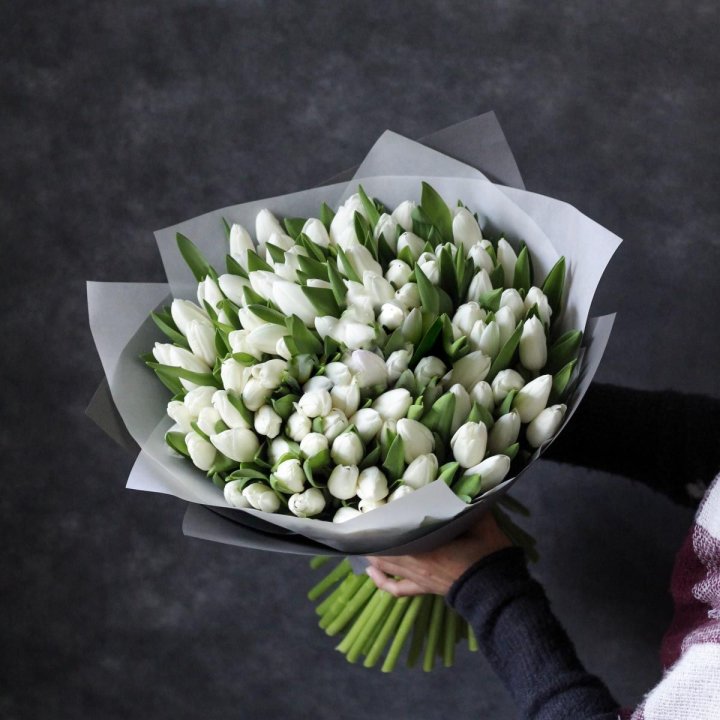

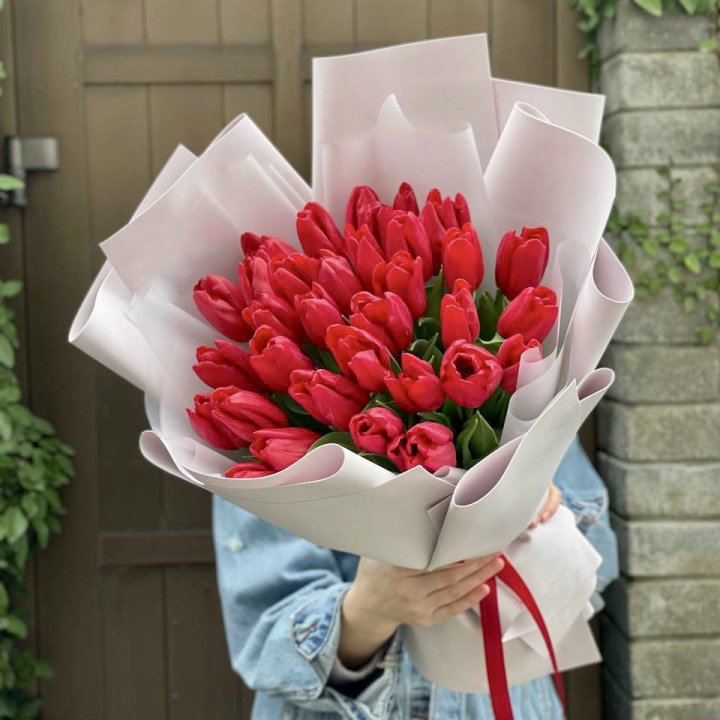
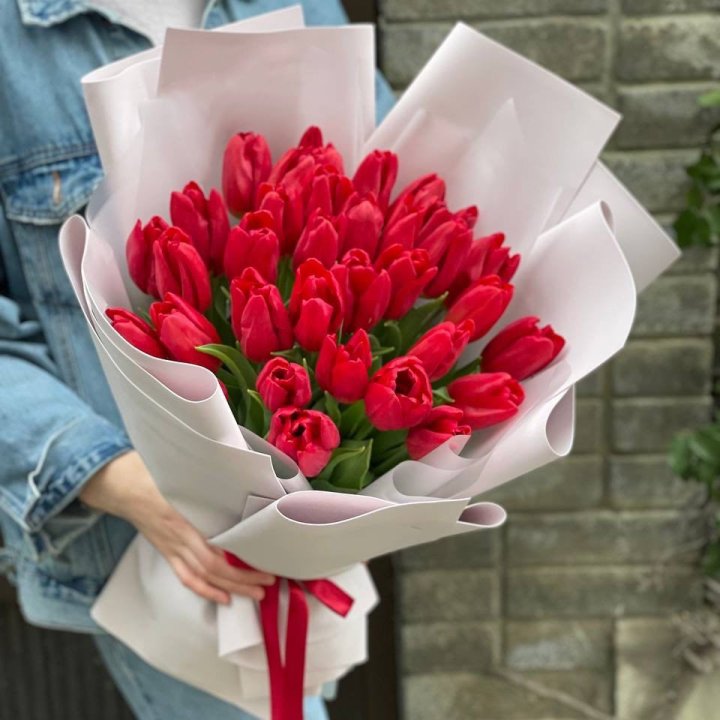
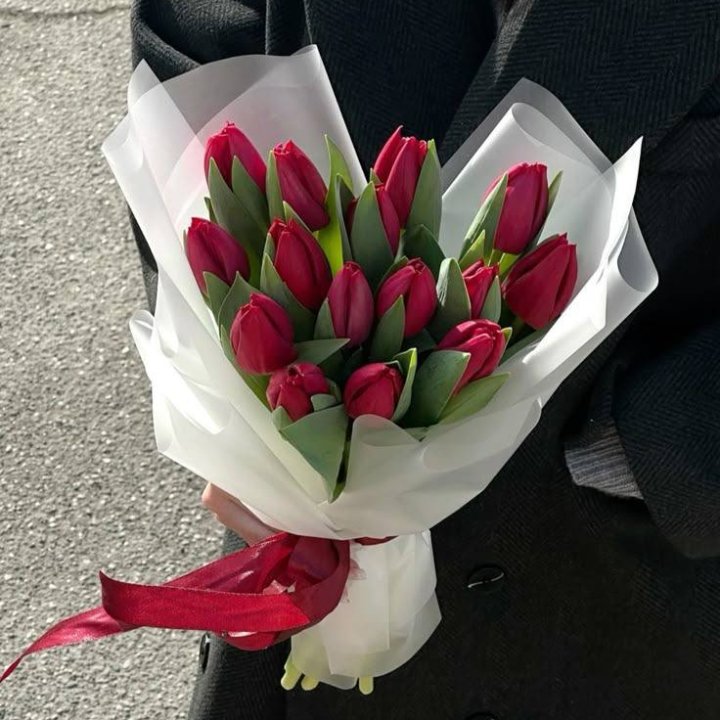
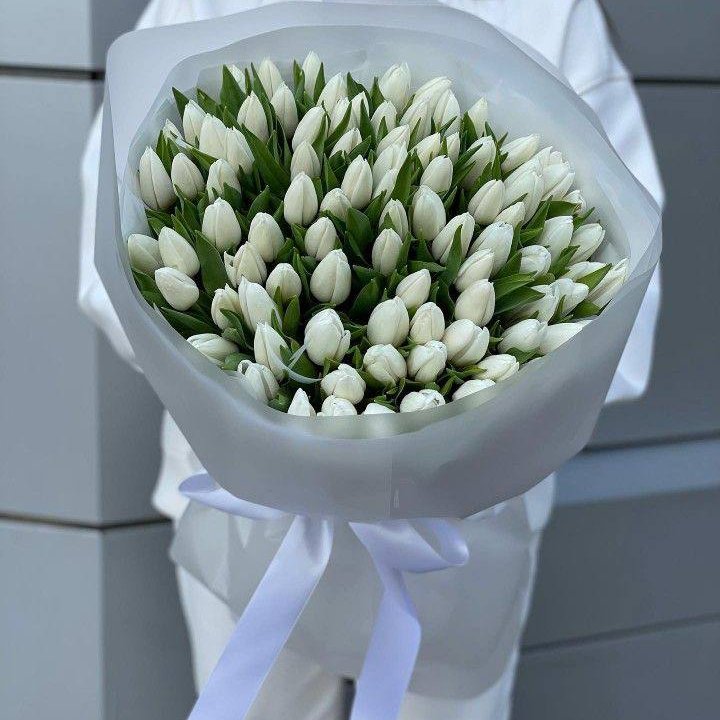
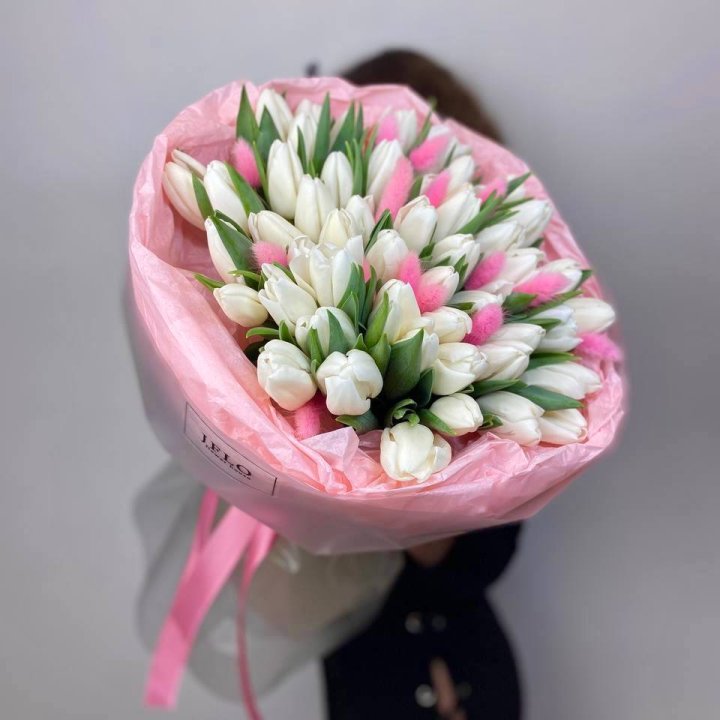
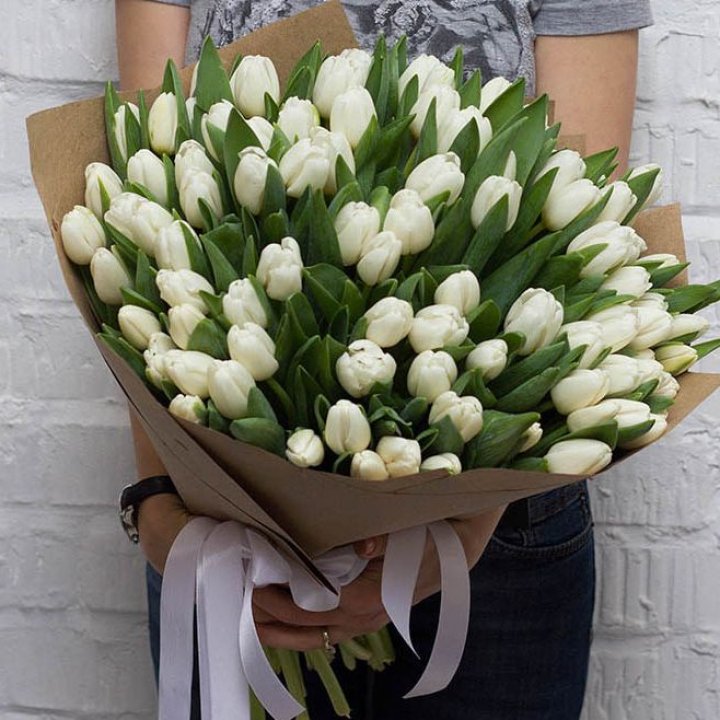
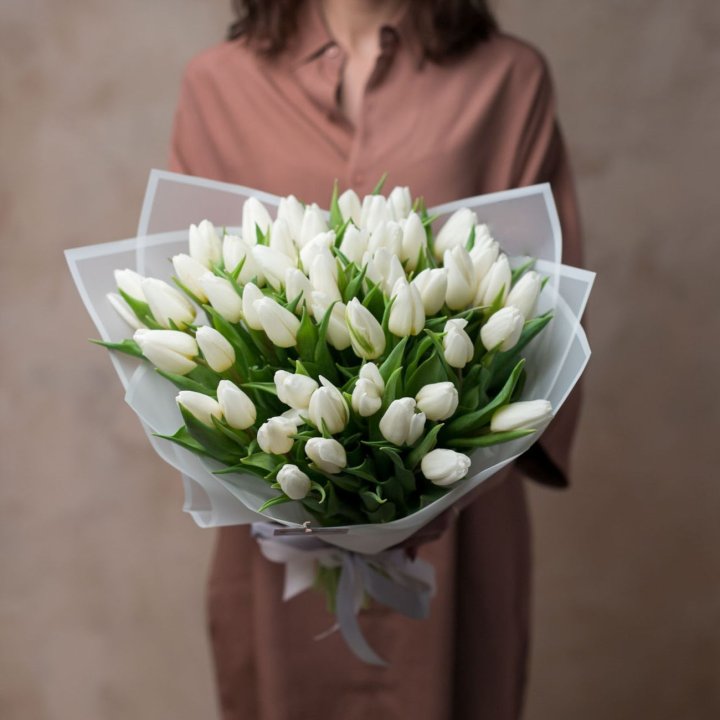

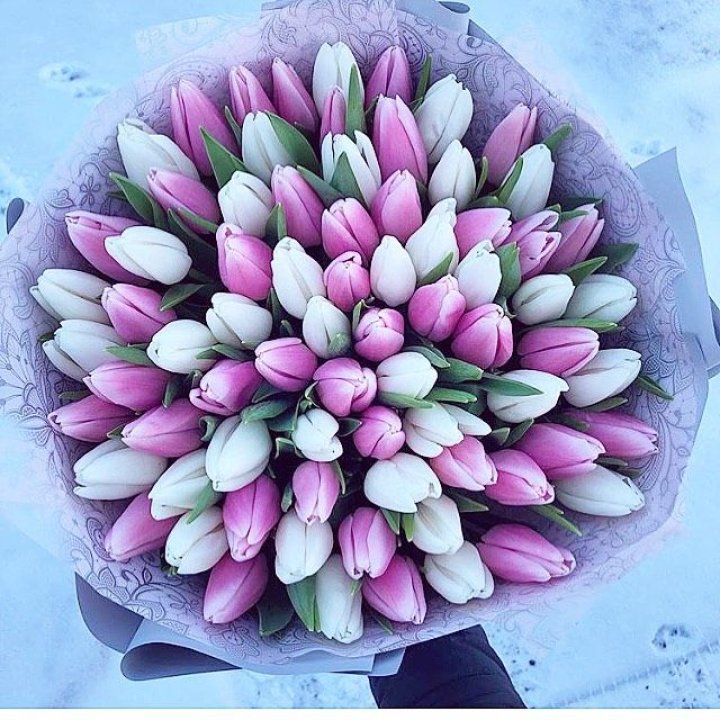
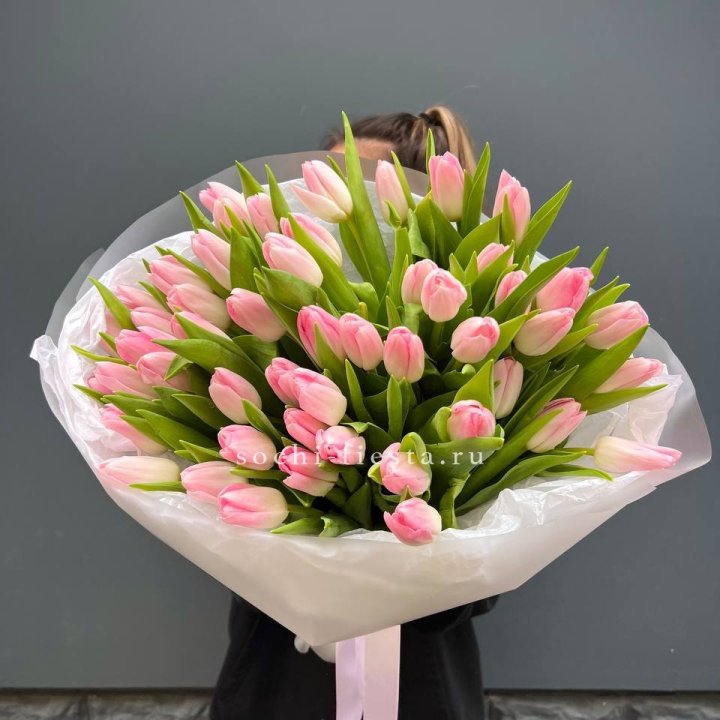
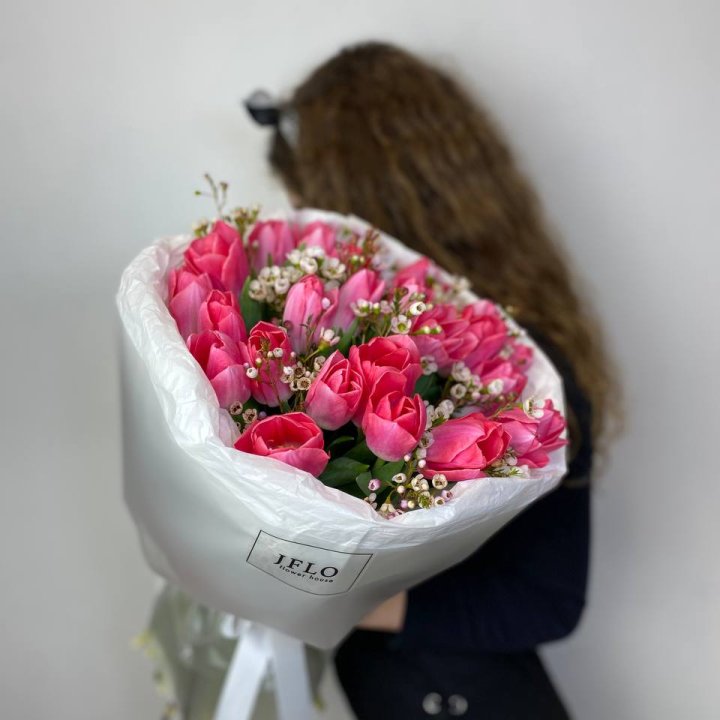
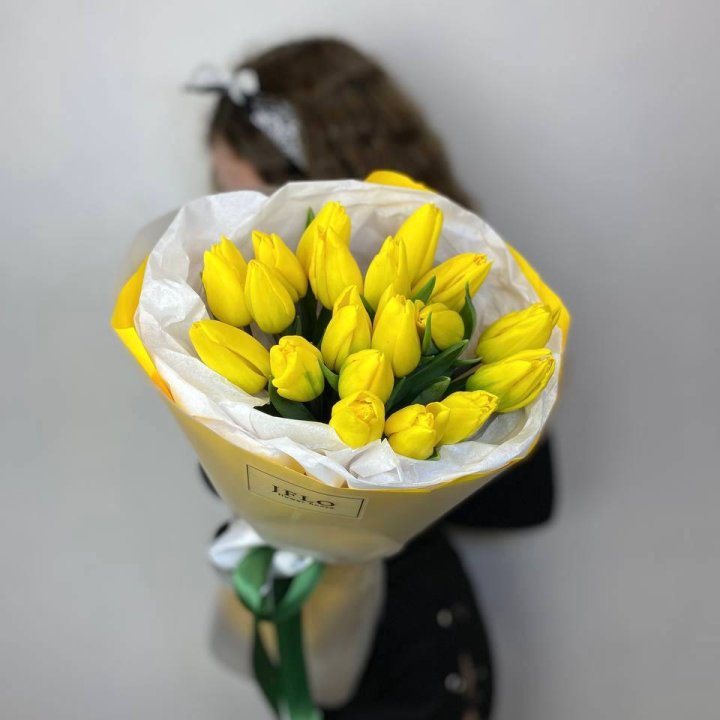
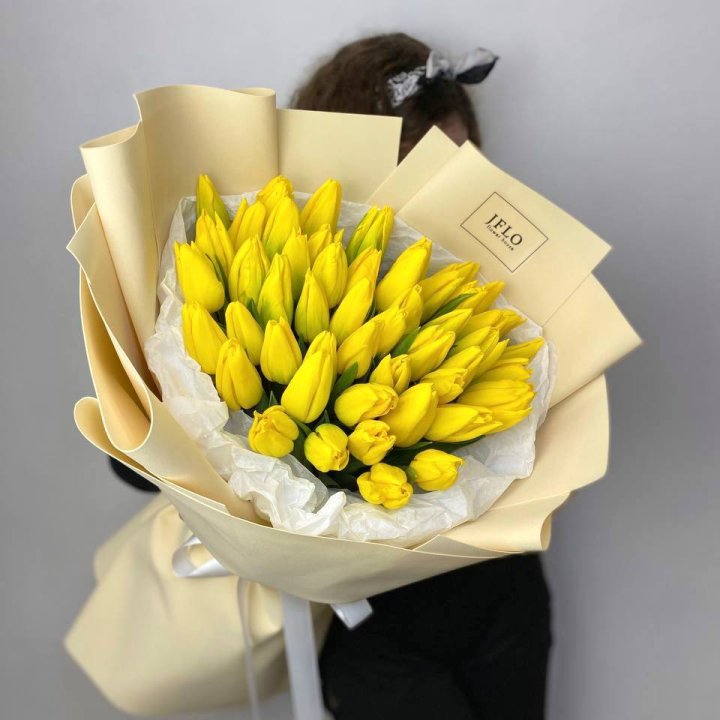
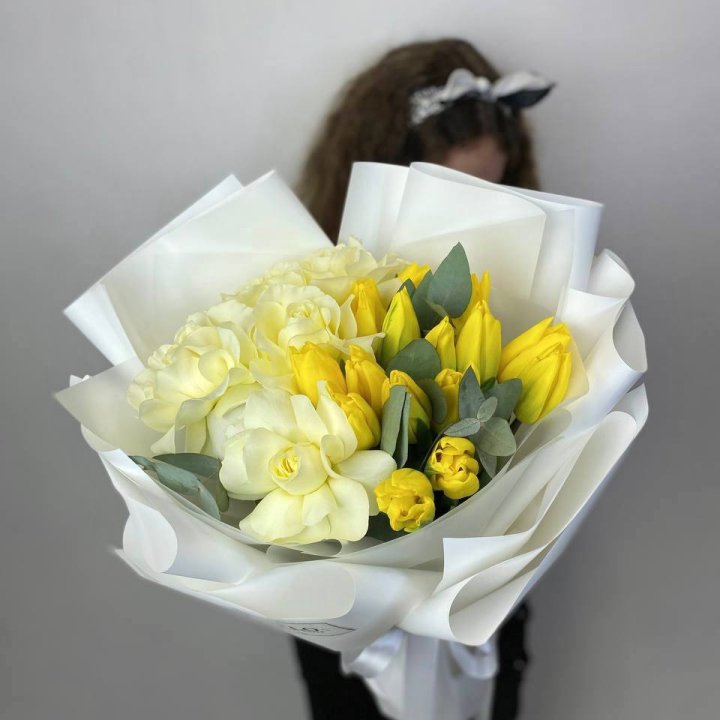
Tulips delivered to Bangkok: groups, Dutch breeding and spring bouquets
The tulip is floristry's most "spring-like" flower and the second most popular after roses in the winter–spring season. Its clean goblet shape, recognizable cool elegance and thousands of varieties bred over the last 400 years make it equally at home in a romantic gift, on a wedding arch or as an office bouquet.
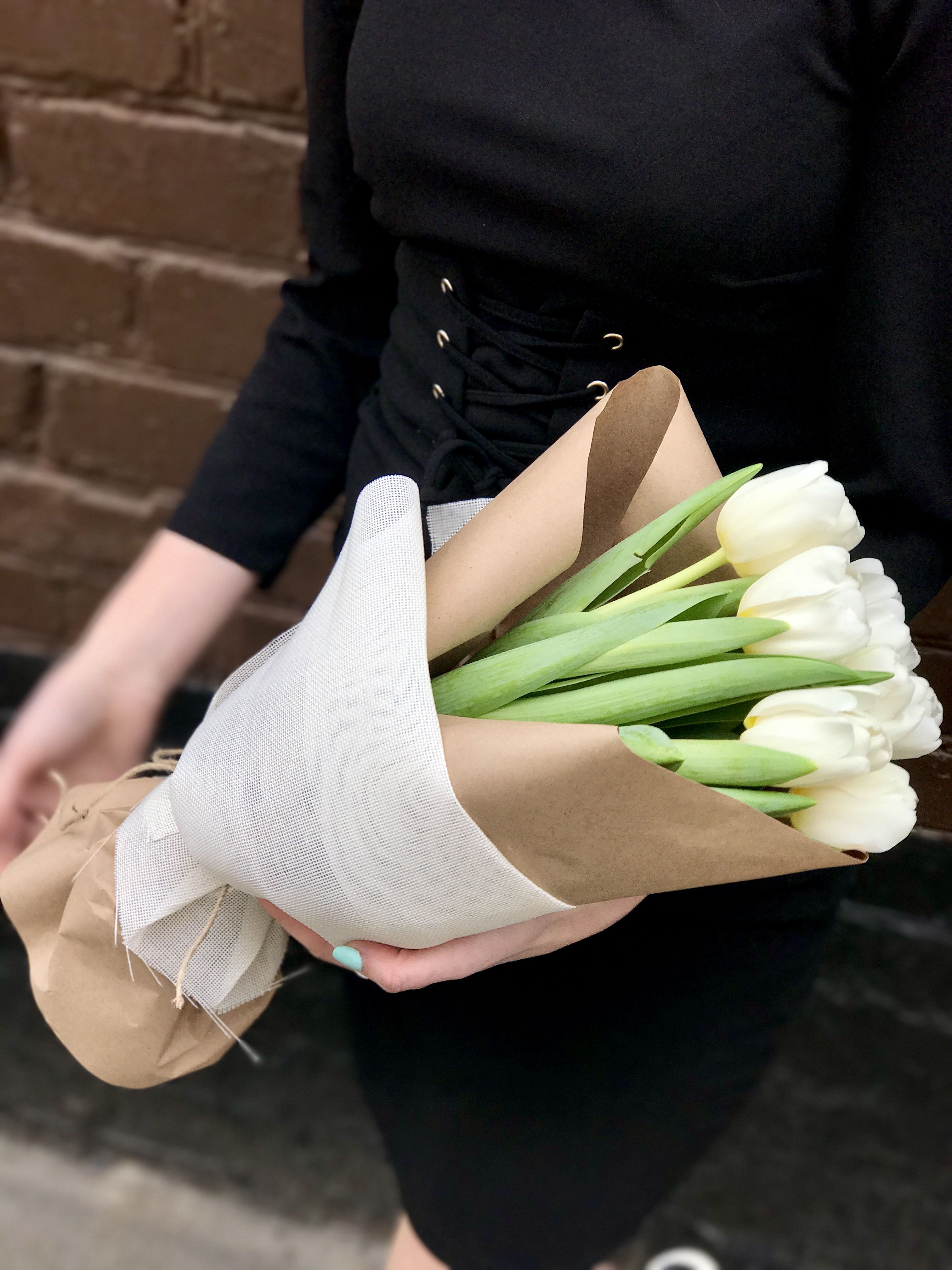
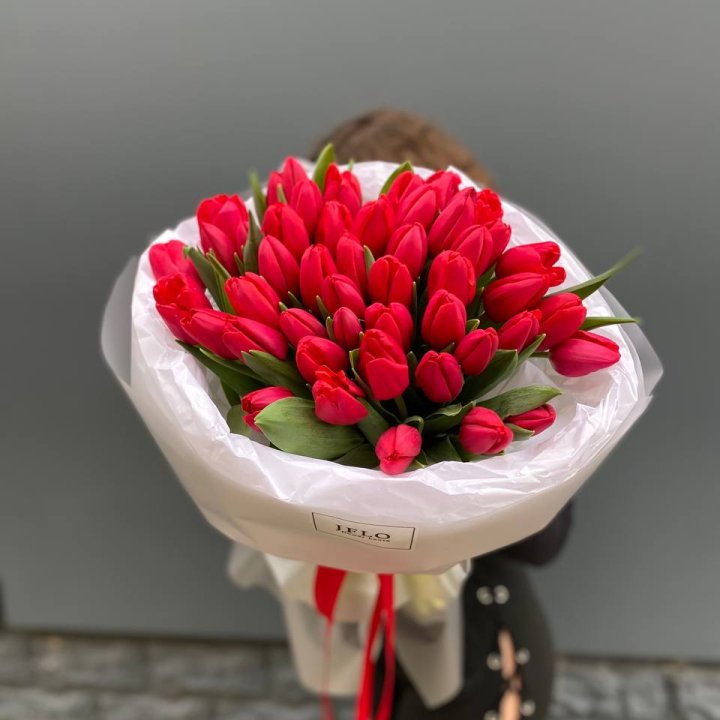
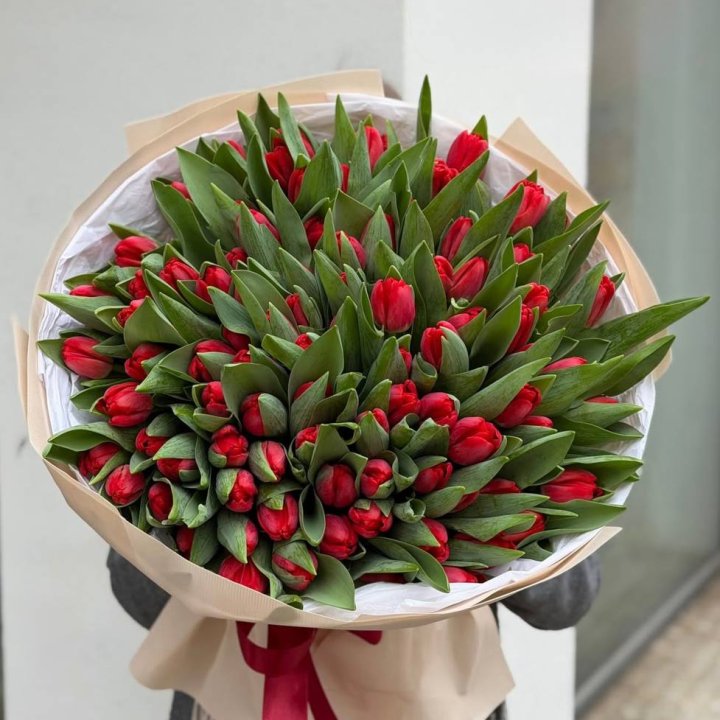
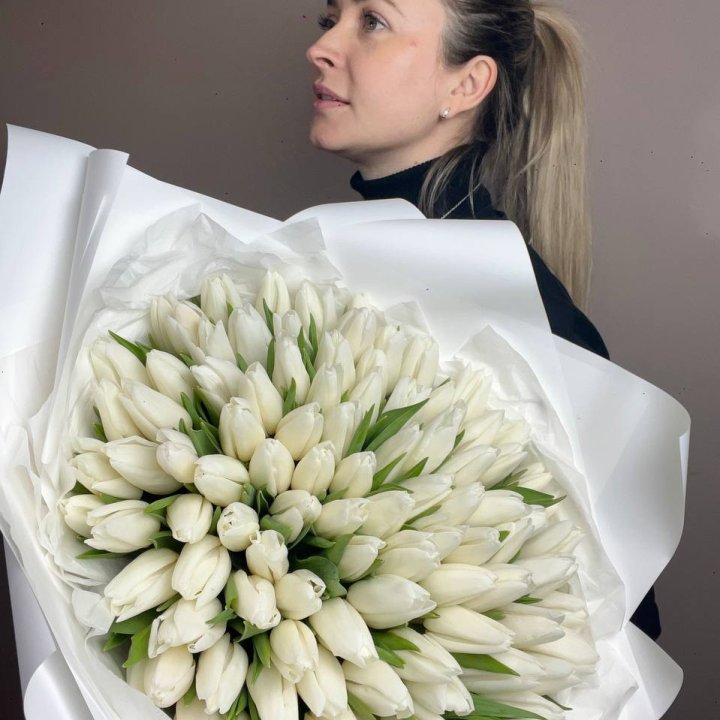
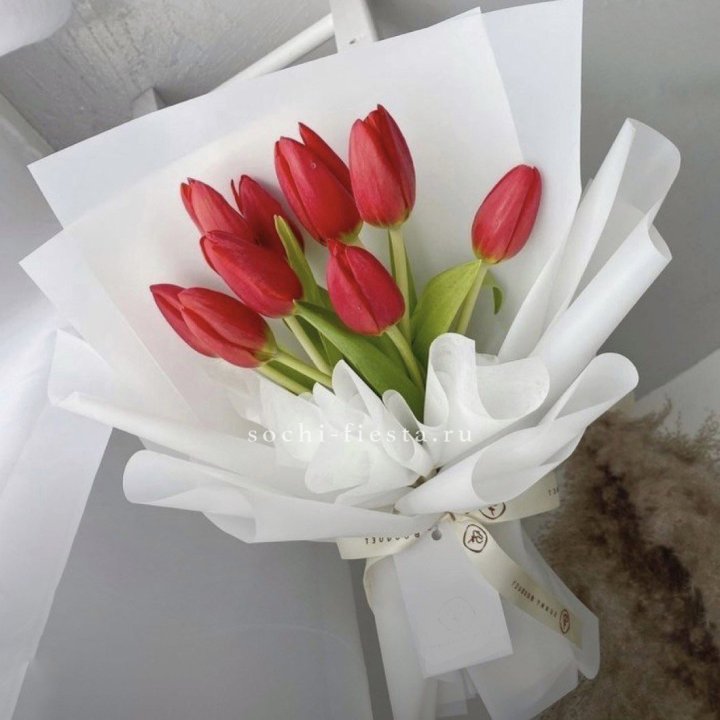
This category brings together mono bouquets, kraft-wrapped armfuls, box compositions and pairings with eucalyptus, hyacinths and ranunculus. Supplies come directly from Dutch greenhouses and the Alsmere wholesale auctions — Europe's largest flower market.
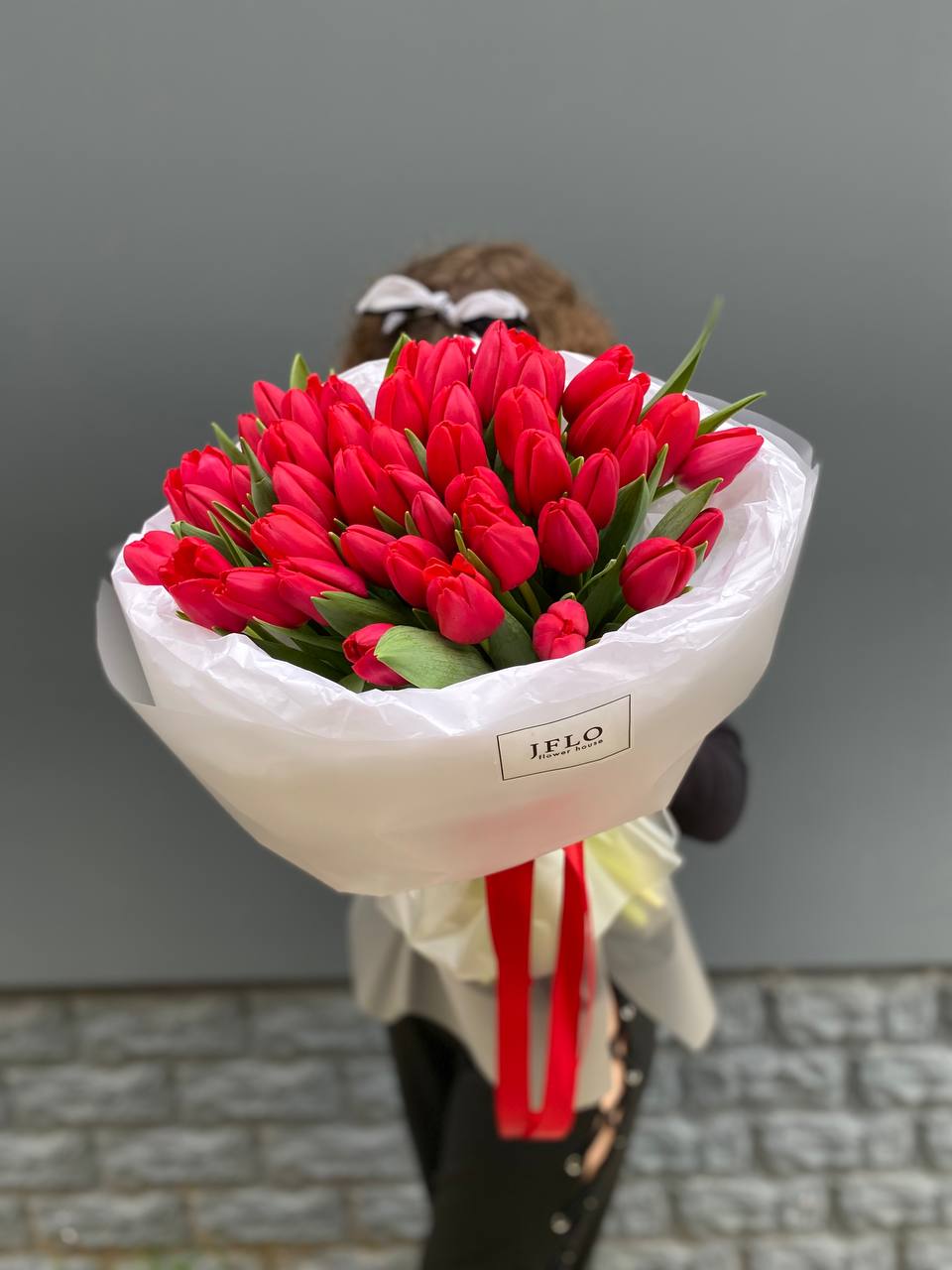
Groups and varieties in the catalogue
Over 3,000 tulip varieties are registered worldwide. Some 30–40 key cultivars make it to our shelves, grouped by bud shape, stem length and flowering season.
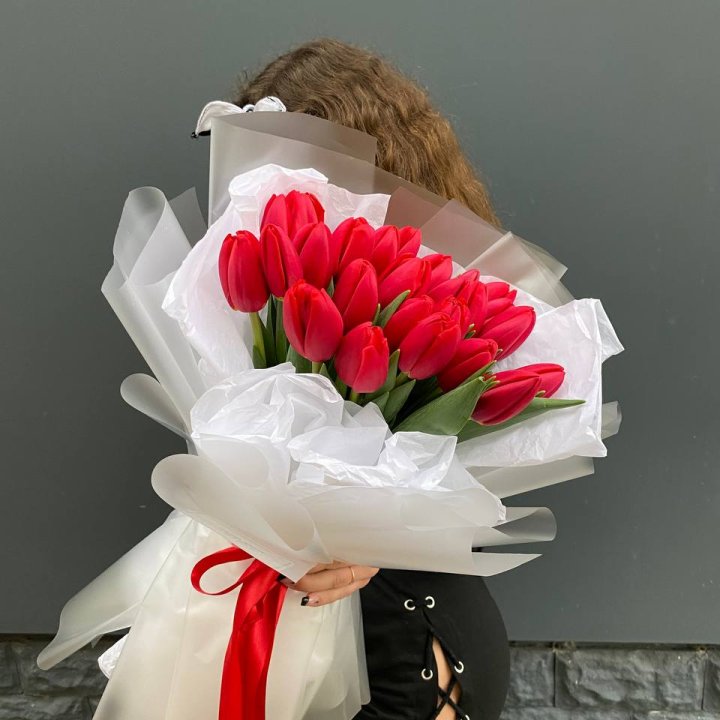
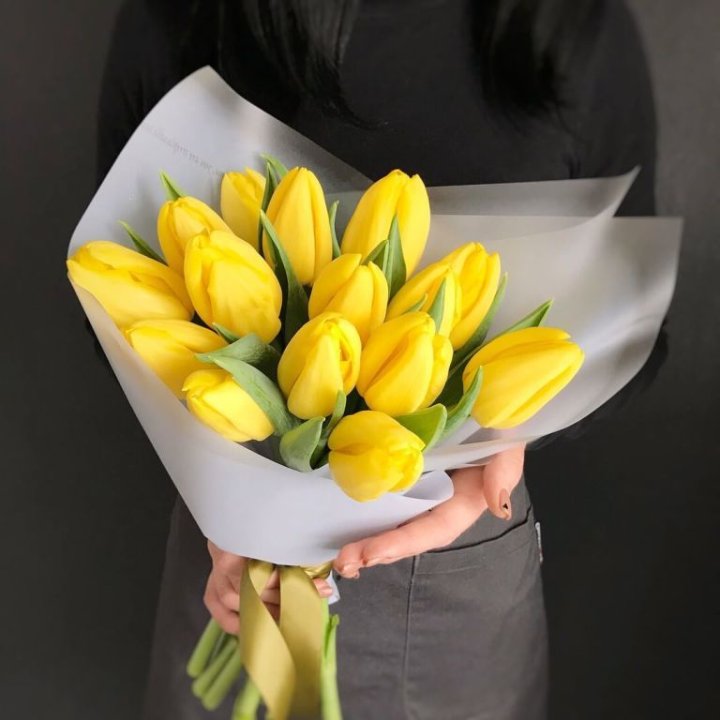
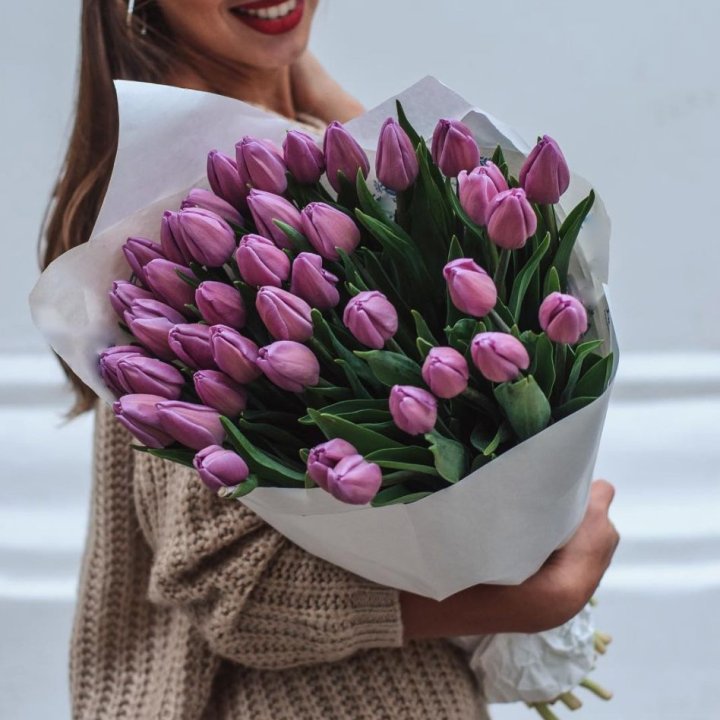
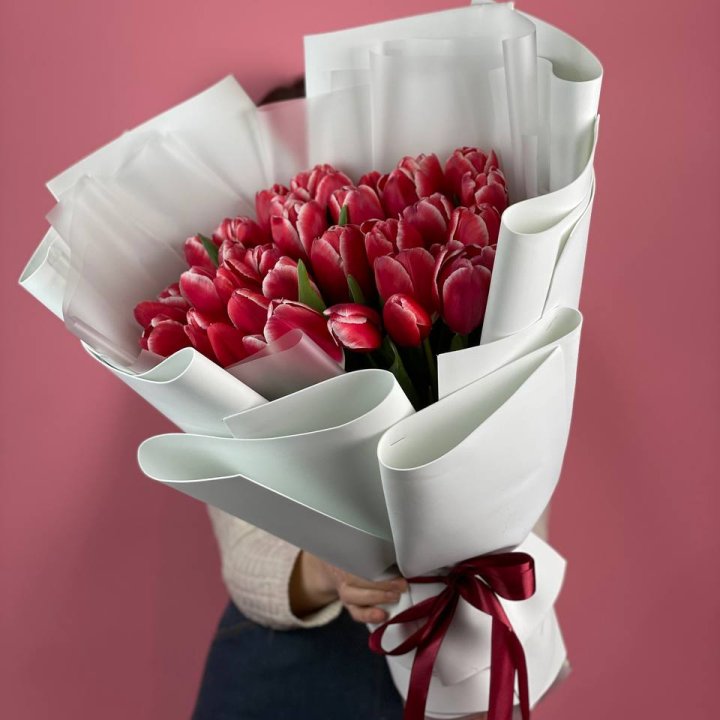
- Triumph — classic cup-shaped bud, stem length 40–50 cm. The most mass-market group. Varieties: Strong Gold (yellow), Negrita (purple), Ile de France (red).
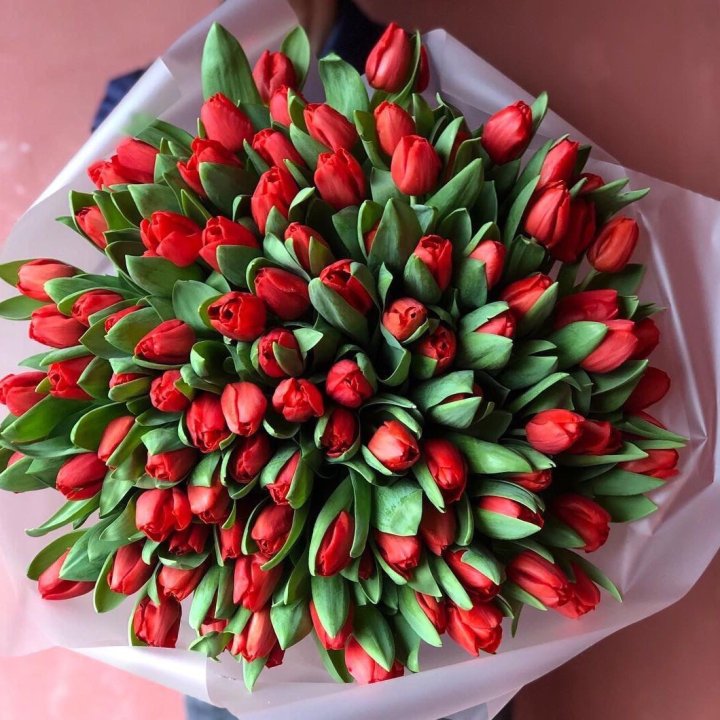
- Darwin Hybrids — large-headed, up to 12 cm in diameter. Apeldoorn (scarlet), Ivory Floradale (cream). For statement bouquets.
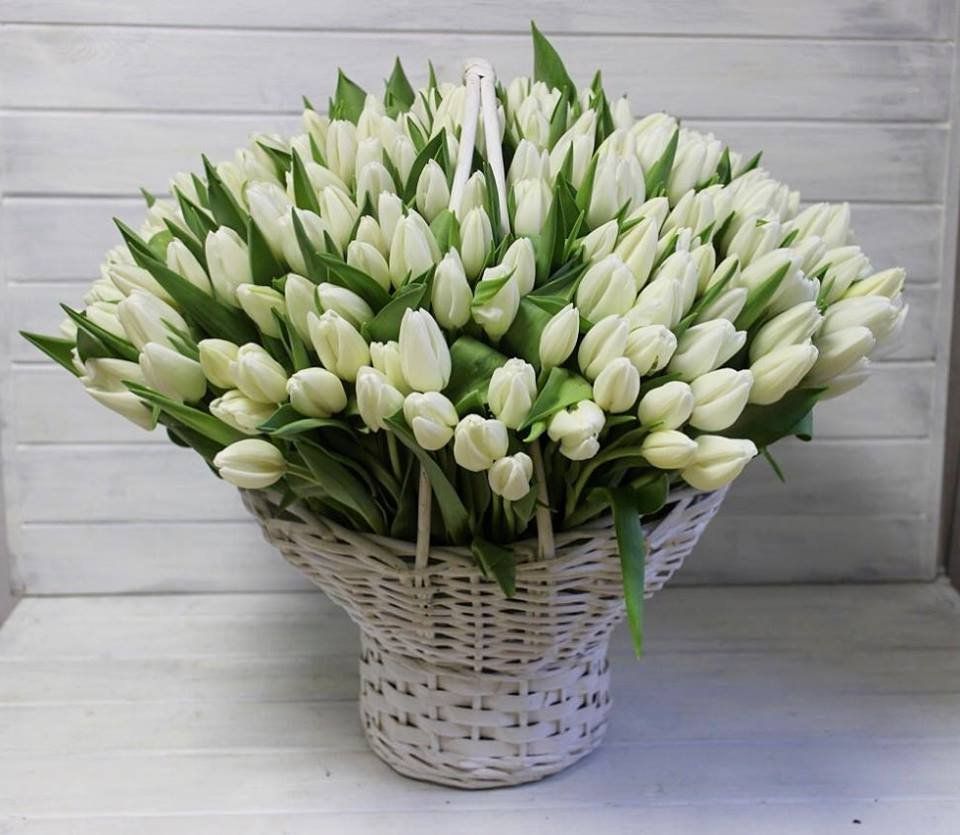
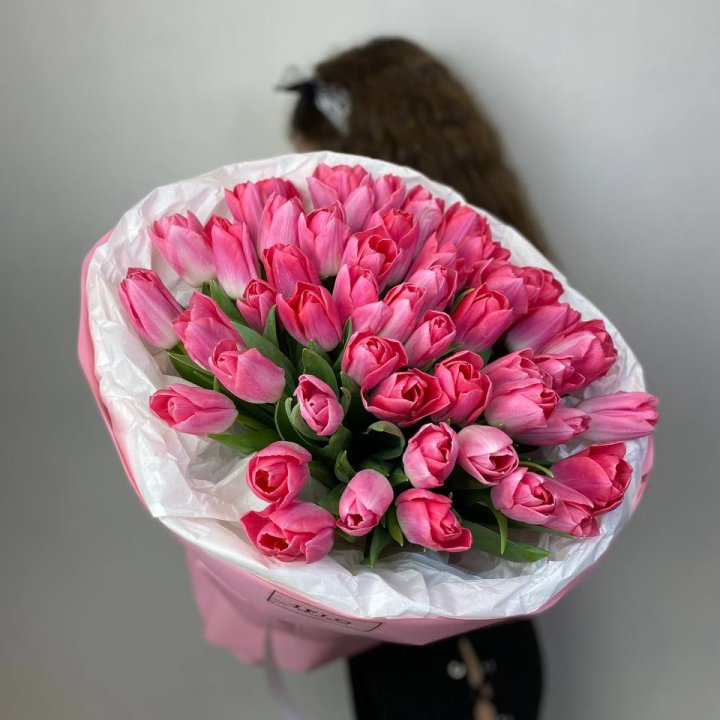
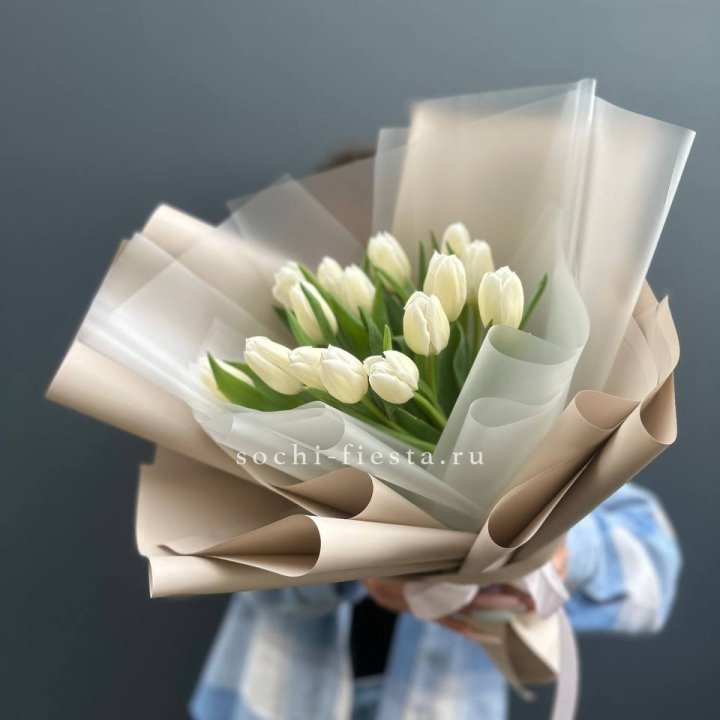
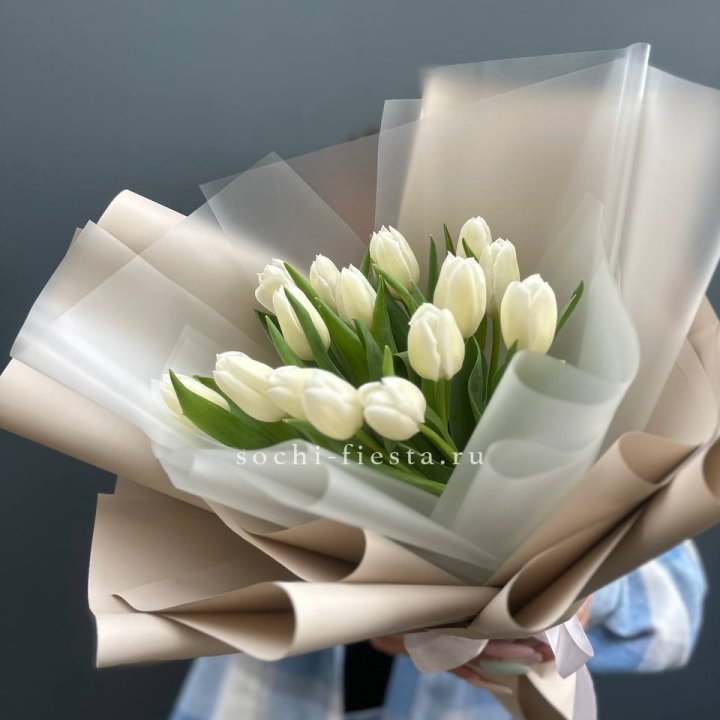
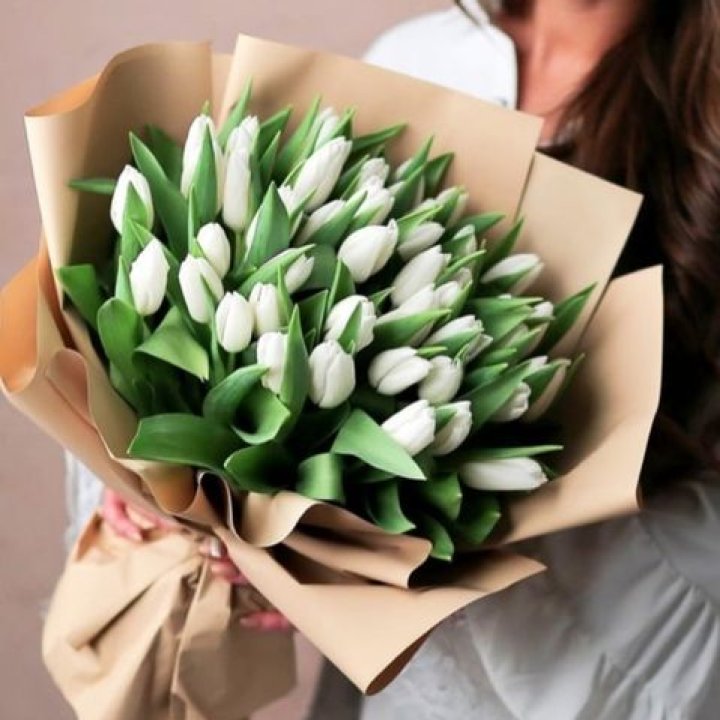
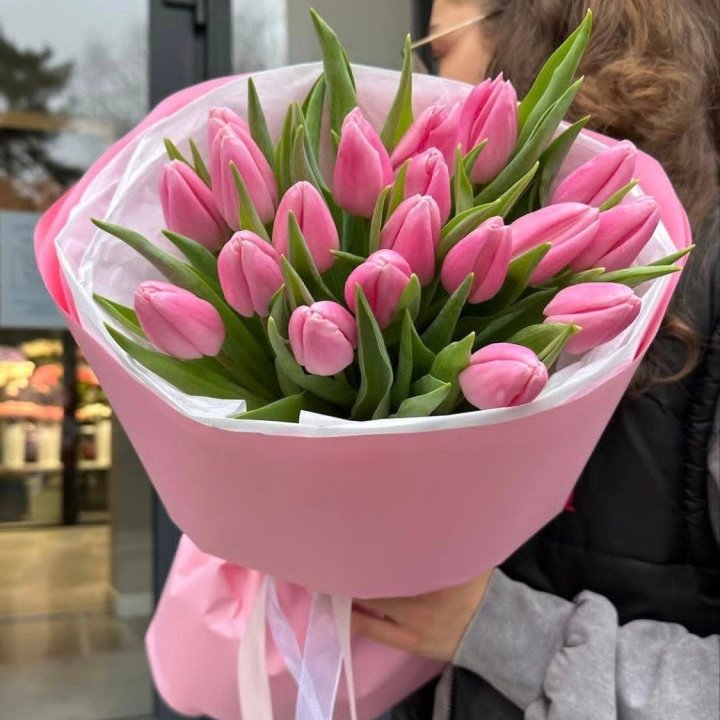
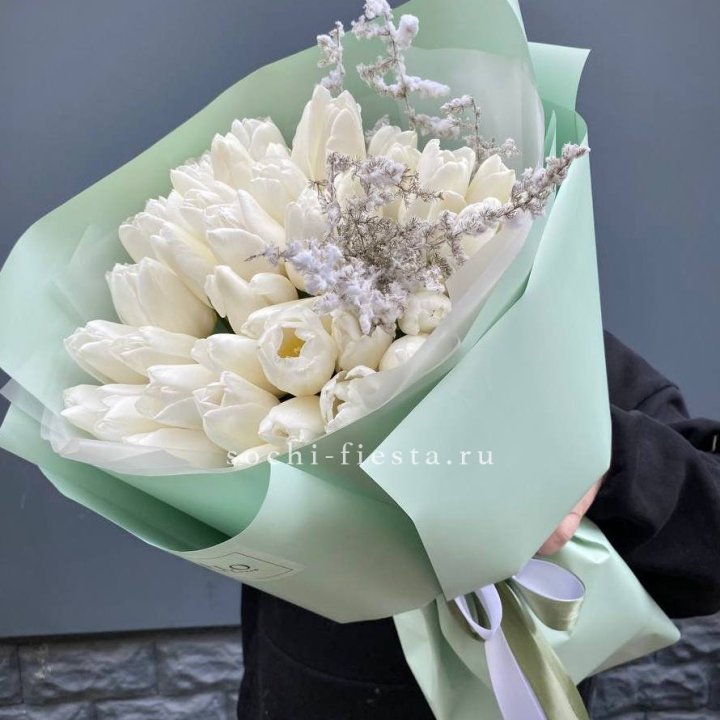
- French Tulips — premium long-stem tulips up to 70 cm. Maureen (white), Menton (soft pink). For wedding floristry.
- Parrot — fringed "ruffled" petals. Rococo (red), Blue Parrot (purple). For dramatic compositions.
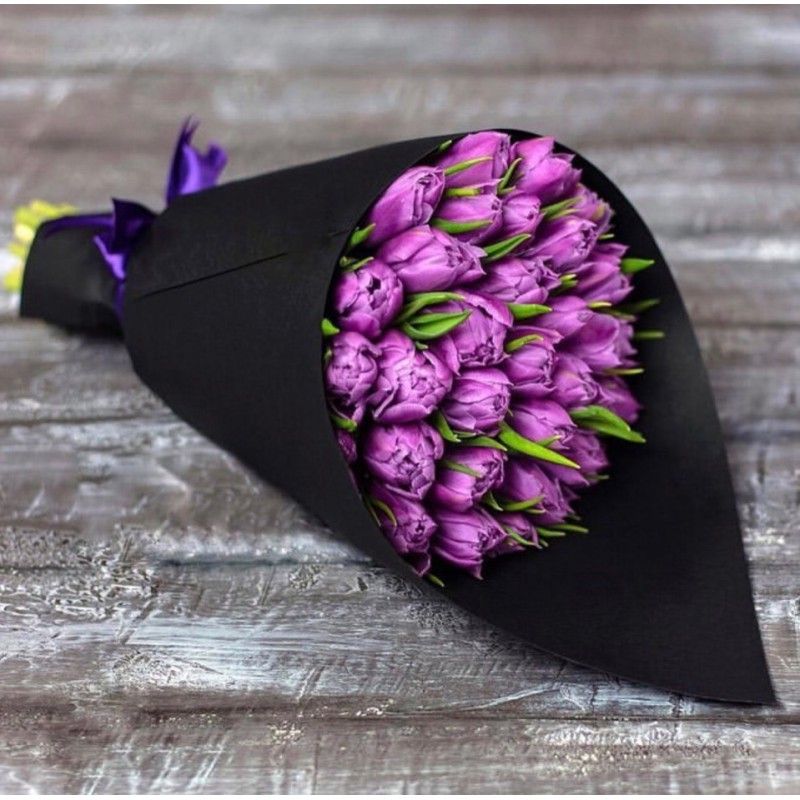
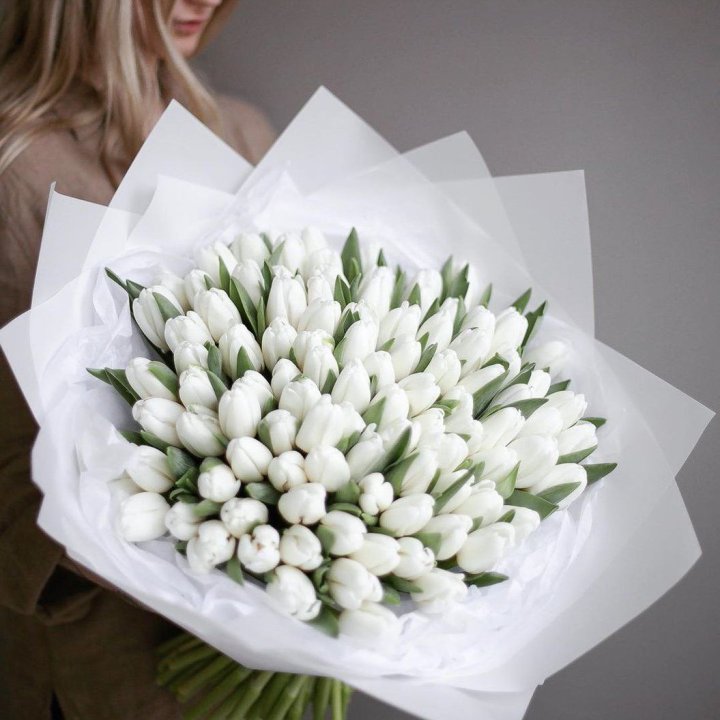
- Double / Peony — double "peony-style" tulips. Mount Tacoma (white), Foxtrot (pink). A winter-season peony alternative.
- Queen of Night — nearly black-purple, a variety legend in its own right. For gothic and vintage palettes.
Season and key occasions
The natural tulip flowering season is April–May. But through greenhouse forcing, Dutch growers bring blooms from October to June, peaking around February 14, March 8 and Easter. These are the most in-demand tulips of the year, so we coordinate orders well ahead of these dates.
In Bangkok tulips are relevant all winter long — from October to April, when the local climate allows bouquets to sit at home without wilting instantly. Summer tulips are also available but require constant water-temperature monitoring.
A tulip's unique trait: it keeps growing
A cut tulip remains a living plant — the stem continues to grow in the vase by 2–3 cm over the first 2–3 days. This is a unique trait among cut flowers and it needs to be factored into bouquet assembly.
Because of this, tulips change shape every day. By the end of the week they "bend" toward the light source — this is normal and beautiful, not a defect. If you want to keep them straight, place the bouquet in a tall narrow vase that holds stems vertically.
"The tulip is the most "honest" flower on sale. It does not pretend to be fresh when it is tired. Hold a stem in your hand — soft and warm? The bouquet is at its final stage. A fresh tulip feels firm, cool and "ringing" to the touch."
— Victoria Malysheva, florist with 15 years of experience
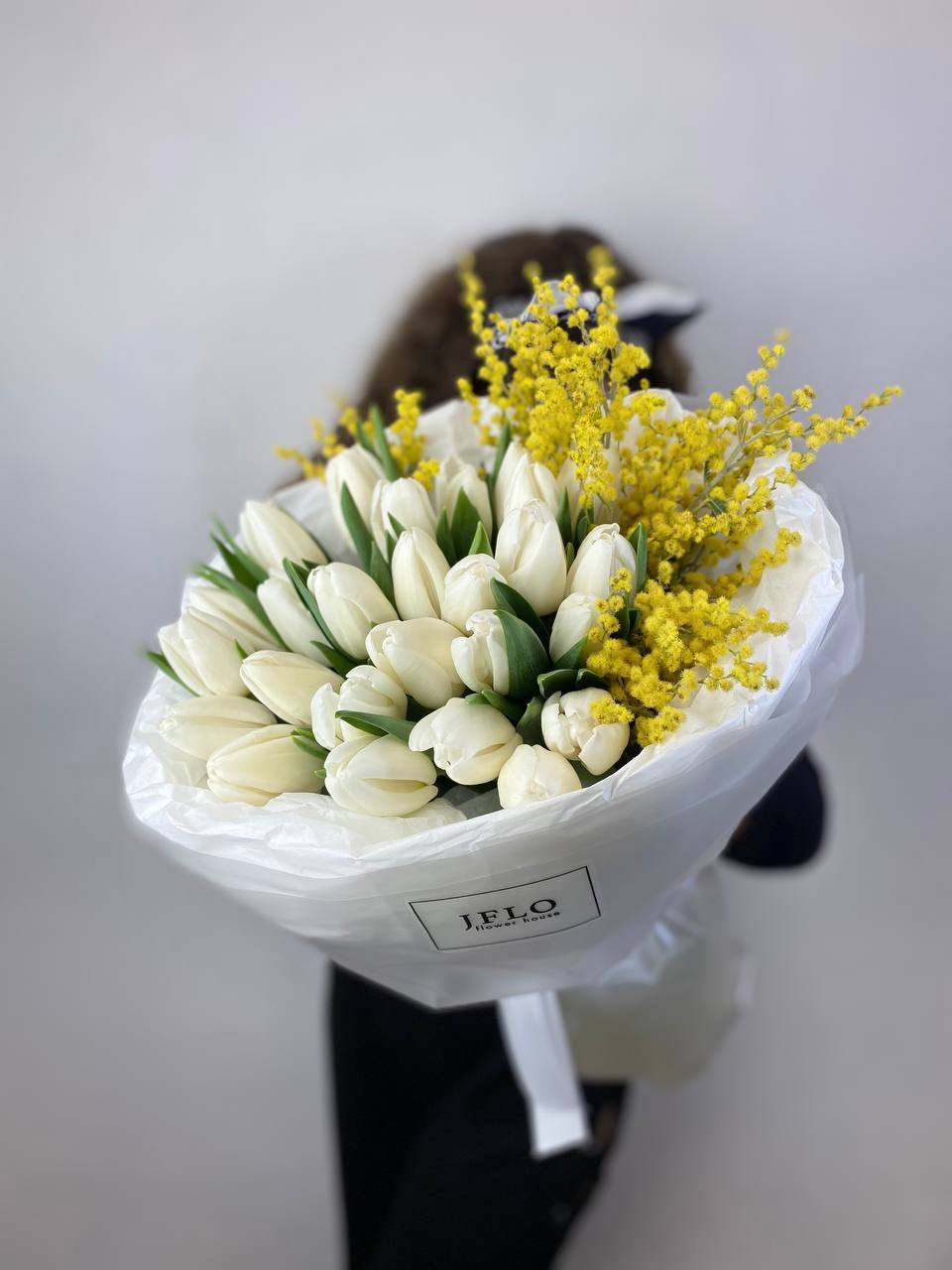
Freshness and presentation
A fresh tulip is identified by several signs: a firm stem, a tightly closed colored bud, leaves without yellow spots and no wilted edges. On our shelves we stock only tulips cut within the last 4 days — guaranteeing the recipient in Bangkok a full 5–7 day bloom cycle.
We transport tulips in chilled hydro boxes. Stems stay in +6…+8 °C water right up to delivery, preserving bud density. In hot weather in Bangkok this is critical — tulips handle a temperature shock from +35 °C down to +20 °C indoors very poorly.
Home care
Tulip care differs from roses and peonies. Key rules: only cold water at +6…+10 °C, recut with a straight (not diagonal) knife every 2 days, and minimal water in the vase (5–7 cm from the bottom). Tulips do not tolerate deep water — stems rot.
Do not place tulips next to daffodils or hyacinths — their sap accelerates tulip aging by 30–40%. If you want such a composition, keep daffodils separate for 24 hours, then rinse the stems and only then add them to the shared bouquet.
During heat waves in Bangkok, move the bouquet overnight to the coolest room or into the refrigerator. This extends the composition's life by 2–3 days with no chemical additives — simple plant metabolism physics.