
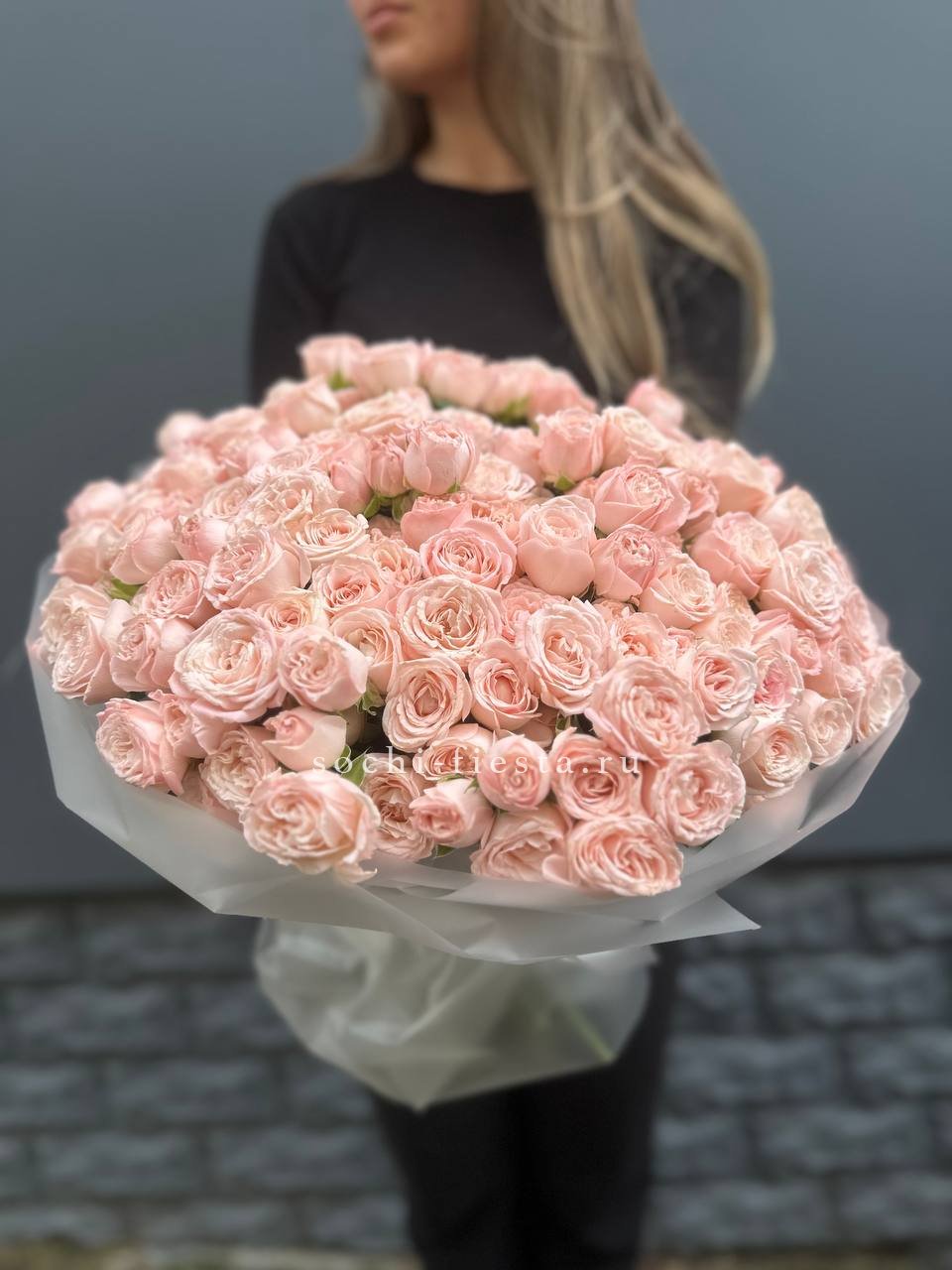
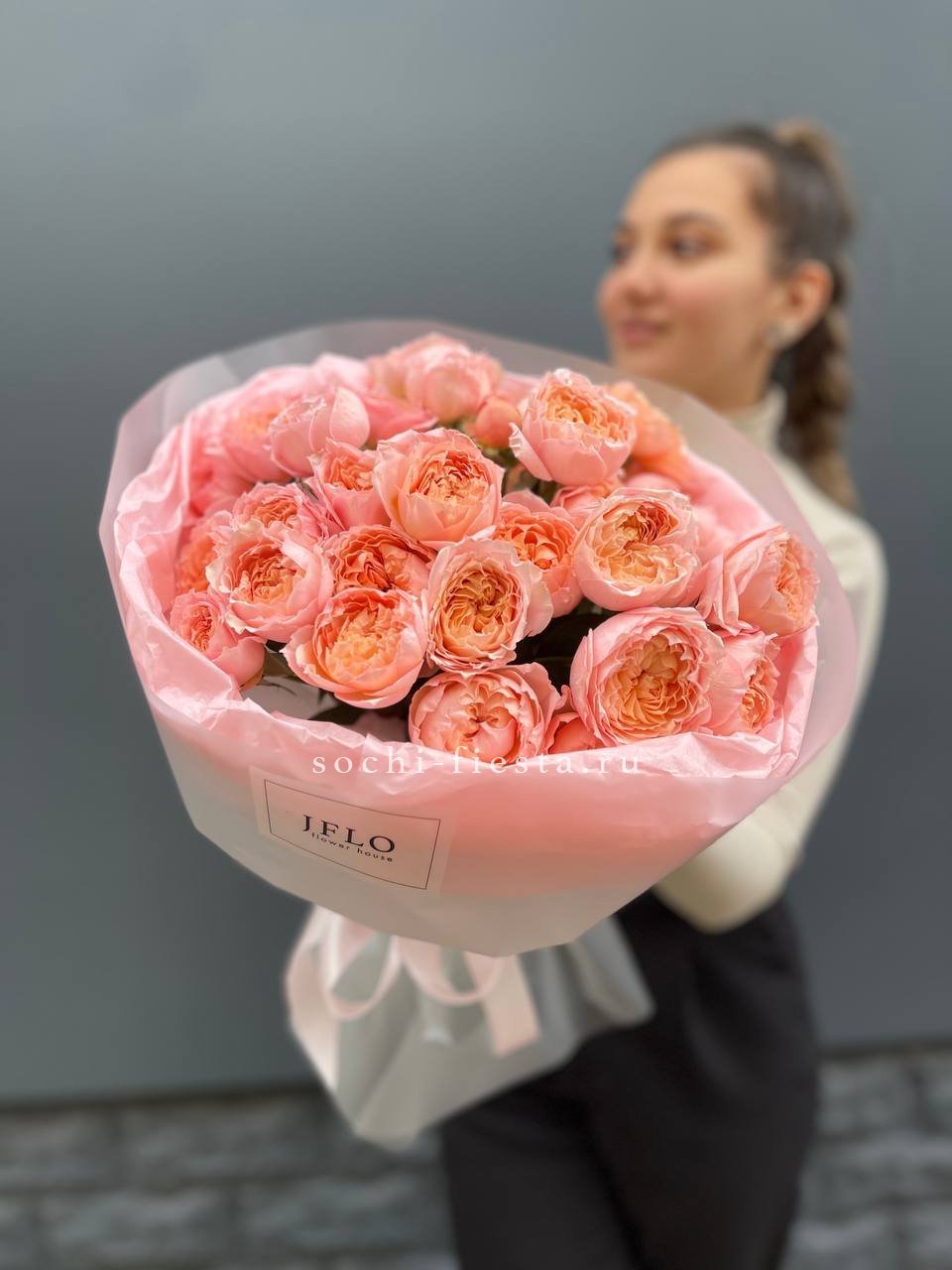
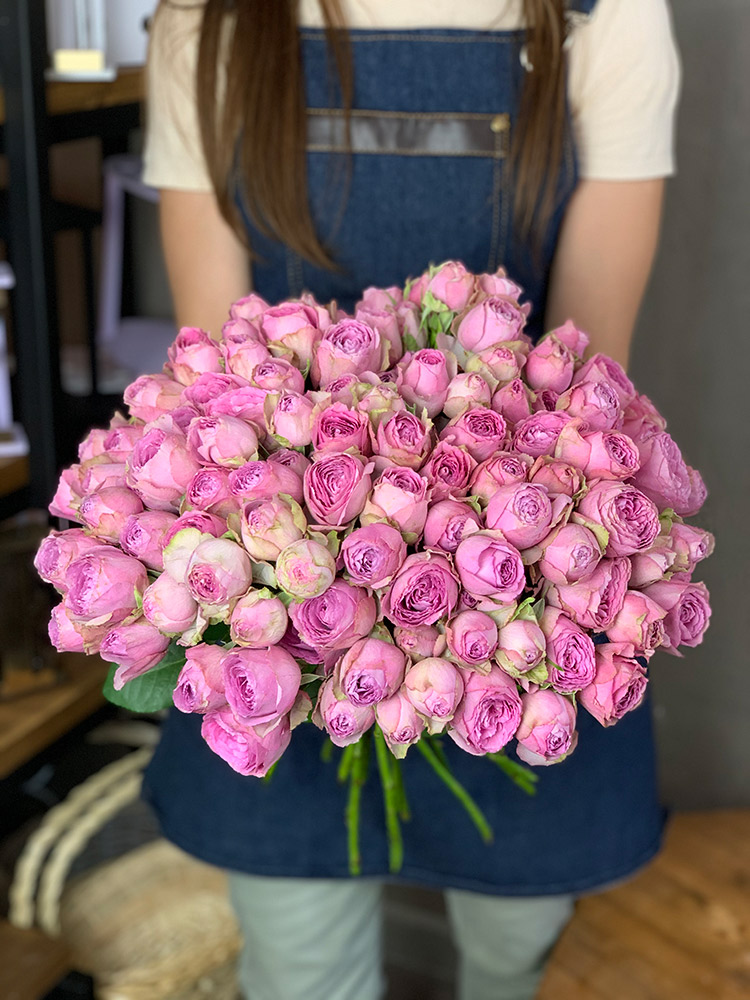

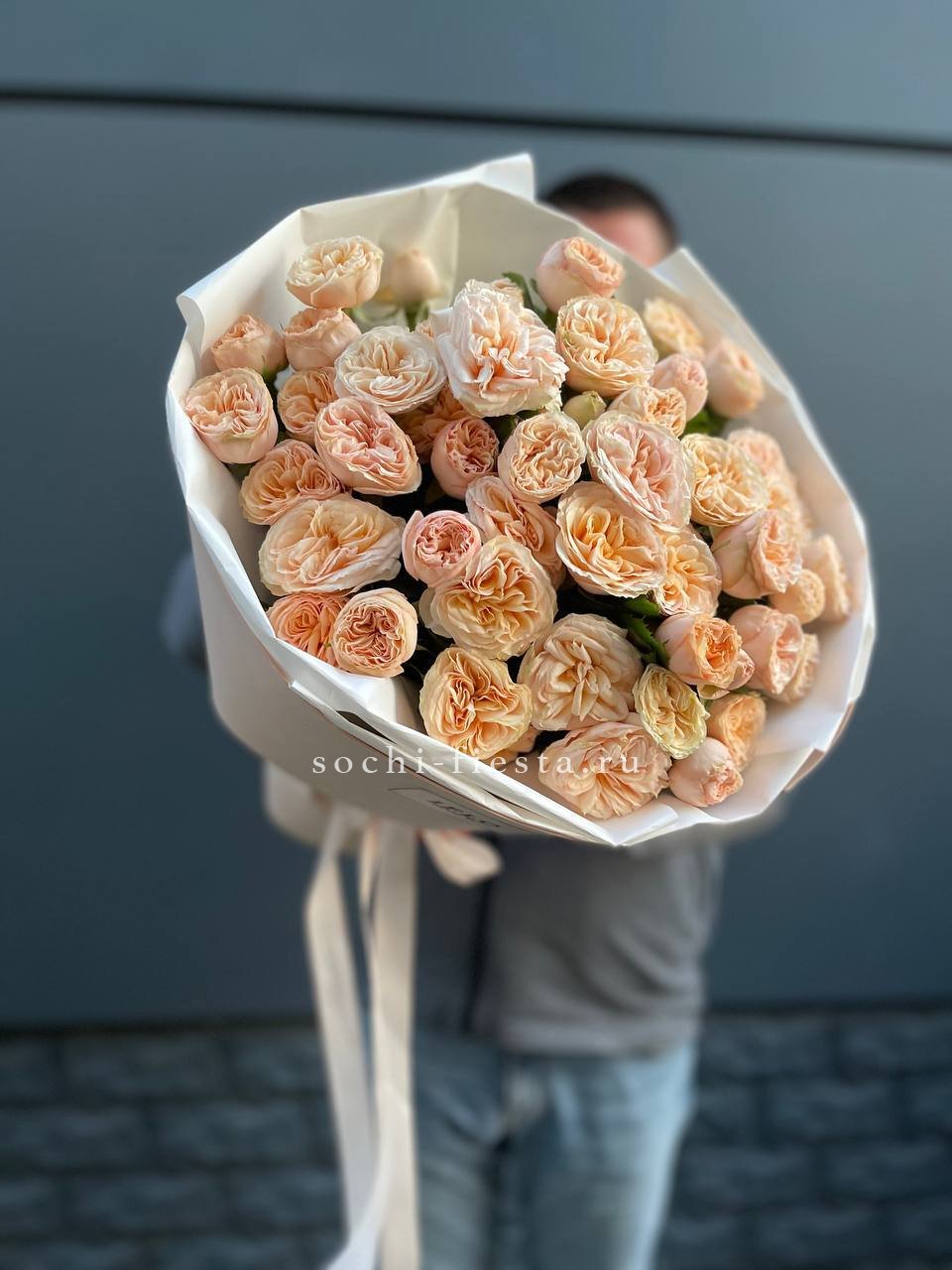


720x720_q85.jpg?v=1787130511)


720x720_q85.jpg?v=1787131951)


Spray roses: how the bunch behaves in a room

A single-stem rose is an object. You put it in a tall vase, it stands upright, and the room arranges itself around it. A cluster stem does the opposite: it spreads, fills the space between things already on the table, and stops being the centrepiece.
That is the practical difference, and it decides where the bunch should go.
Scale against the furniture
Measure the surface before you order. On a dining table a low, wide bunch works because nobody has to look over it, and conversation carries across without a wall of stems in the way. On a hall console the same bunch disappears, since it is seen from one side only and the depth is wasted.
Height matters more than stem count here. Cut the stems short and the cluster closes into a dense ball that reads well from above; leave them long and the buds scatter at several levels, which suits a floor vase or a deep windowsill.
Kitchen worktops are the honest test. A cluster of small heads survives being pushed aside twice a day, whereas one large open bloom on a long neck loses petals every time somebody moves it.
How the colour sits with the walls
Cream and white shades hold their outline against pale paint but vanish against gloss white, so they need a darker surface behind them or a coloured vase under them.
Peach and apricot varieties do the opposite. They warm up oak, rattan and beige, and they photograph without the pink cast that pure white takes on under a kitchen lamp.
Dusty lilac and lavender tones are the fussy ones. Under warm bulbs the pigment drifts towards grey and the bunch looks tired by evening even when the flowers are perfectly fresh, while daylight brings the colour straight back.
Ageing in view
Here is the part people underestimate. A cluster stem does not fade all at once: the central bloom goes over while the side buds are still tight, so on any given day the bunch holds flowers at three or four stages, and the eye reads that mixture as a garden bunch rather than as something past its best. Cut the spent central head off at the base and the neighbouring buds speed up within a day. Single-headed roses have no such reserve, and once the head drops the stem is finished.

The consequence is that the arrangement changes shape twice during its week.
Choosing between the varieties
The group splits by how tightly the head is packed. Dense, many-petalled sorts arrive closed and open slowly over several days. Looser cups show their centre on the first evening and give you everything at once.
Ask which stage the stems are at on the day of the order rather than which variety looks best in the photograph. A closed bunch bought for the same evening will look sparse when it is handed over, and a fully open one bought four days early will be dropping petals by the time it is needed.
Vases with a narrow neck do the sorting for you. The stems are thin and flexible, and a wide opening lets them splay until the clusters lean on one another and snap the small side shoots.
One more thing about the room. Spray roses tolerate a warm flat better than most cut flowers, but a radiator directly under the shelf still halves the life of the bunch, and a recipient in Al Fujairah who moves the vase away from the heat gets several extra days out of it.

