


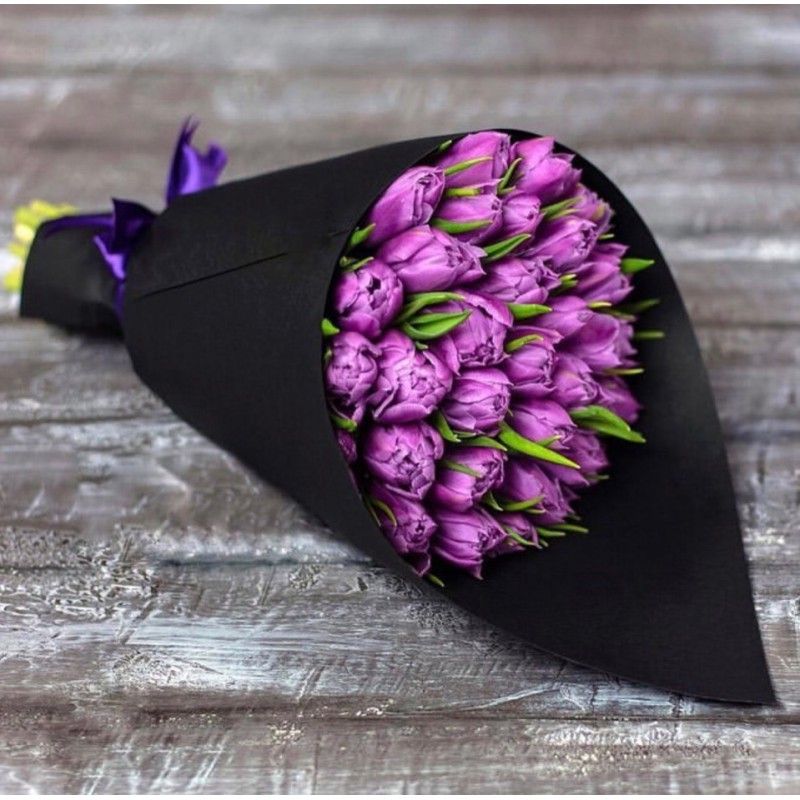


Tulip delivery in Berlin: Dutch groups, Tiergarten spring and fast logistics from Aalsmeer
Tulips and Berlin make a natural pairing. The Netherlands and Germany share not only a border but centuries of trade history: Dutch flowers have been moving to German markets since the seventeenth century. Today the distance from Aalsmeer auction to the Berlin Blumengroßmarkt is under 660 km along the A2 motorway — overnight delivery is routine. Every spring, Tiergarten and the parks around Charlottenburg Palace fill with thousands of bulb flowers, and that annual display sets the tone for the city's appetite for tulips from March through May.
This category covers single-variety bouquets, unwrapped market-style bunches, boxed compositions and mixed arrangements with hyacinths, ranunculus and eucalyptus. Tulips perform well at every price point: a tight bunch of nine to eleven stems holds its own against a fifty-one-stem statement piece — it all comes down to variety and presentation.

Groups and varieties in the catalogue
Over 3,000 tulip varieties are registered worldwide. The working selection carries 35–45 key varieties, grouped by bud form, stem length and flowering behaviour.
- Triumph — the classic cup bud, stems 40–50 cm. The most widely produced group. Varieties: Strong Gold (yellow), Negrita (purple), Ile de France (red), Purple Prince (deep purple).
- Darwin Hybrid — large-headed, bud diameter up to 12 cm. Apeldoorn (scarlet), Ivory Floradale (cream). For big bunches and focal-point arrangements.
- French Tulips — premium long-stemmed, up to 70 cm. Maureen (white), Menton (soft peach). For weddings, events and elevated floristry.
- Parrot — fringed, deeply cut petals with a dramatic feathered texture. Rococo (red), Blue Parrot (violet-blue). For expressive, artistic compositions.
- Double / Peony — fully double, peony-like blooms. Mount Tacoma (white), Foxtrot (pink), Angelique (pastel pink). A convincing off-season substitute for peonies.
- Queen of Night — near-black deep violet. A cult variety with a following among Berlin's interior designers and the independent florists of Kreuzberg.
Season and occasions
The natural tulip season runs April through May. Dutch forcing in glasshouses extends availability from October to June, covering Weihnachten, Valentinstag, Ostern and Muttertag — all four major German holidays when Berlin tulip demand spikes. For Muttertag (second Sunday in May) and Valentine's Day (14 February), confirm orders seven to ten days ahead; supplies are claimed early.
Berlin's climate suits tulips well. The cool continental spring and autumn are the flower's natural habitat. Tulips also handle the Berlin winter cold reasonably well in transit — inside a properly sealed hydro box, stems arrive unharmed even when outside temperatures drop to −5 °C.
The tulip keeps growing after cutting
A cut tulip is still a living plant. In the vase, the stem continues to grow two to three centimetres over the first two to three days. This is why the shape of the bouquet changes daily: by the end of the first week the tulips lean toward the light source. This is not a defect — it is how the flower behaves and it has its own beauty. To maintain an upright form, use a tall, narrow vase that holds the stems vertical.
A fresh tulip is easy to assess: a cool, firm stem; a tightly closed, fully coloured bud; leaves free of yellow patches. If the stem feels warm and soft, the bunch is at its final stage. Every delivery we send is cut no more than four days prior.
"Germany's proximity to the Netherlands gives Berlin buyers genuine tulip literacy. They know the difference between a Darwin Hybrid and a French Tulip. That makes conversations easy — you talk about what you are actually choosing, not whether tulips are all the same."
— Thomas Brandt, florist and workshop owner in Prenzlauer Berg, 14 years in the trade
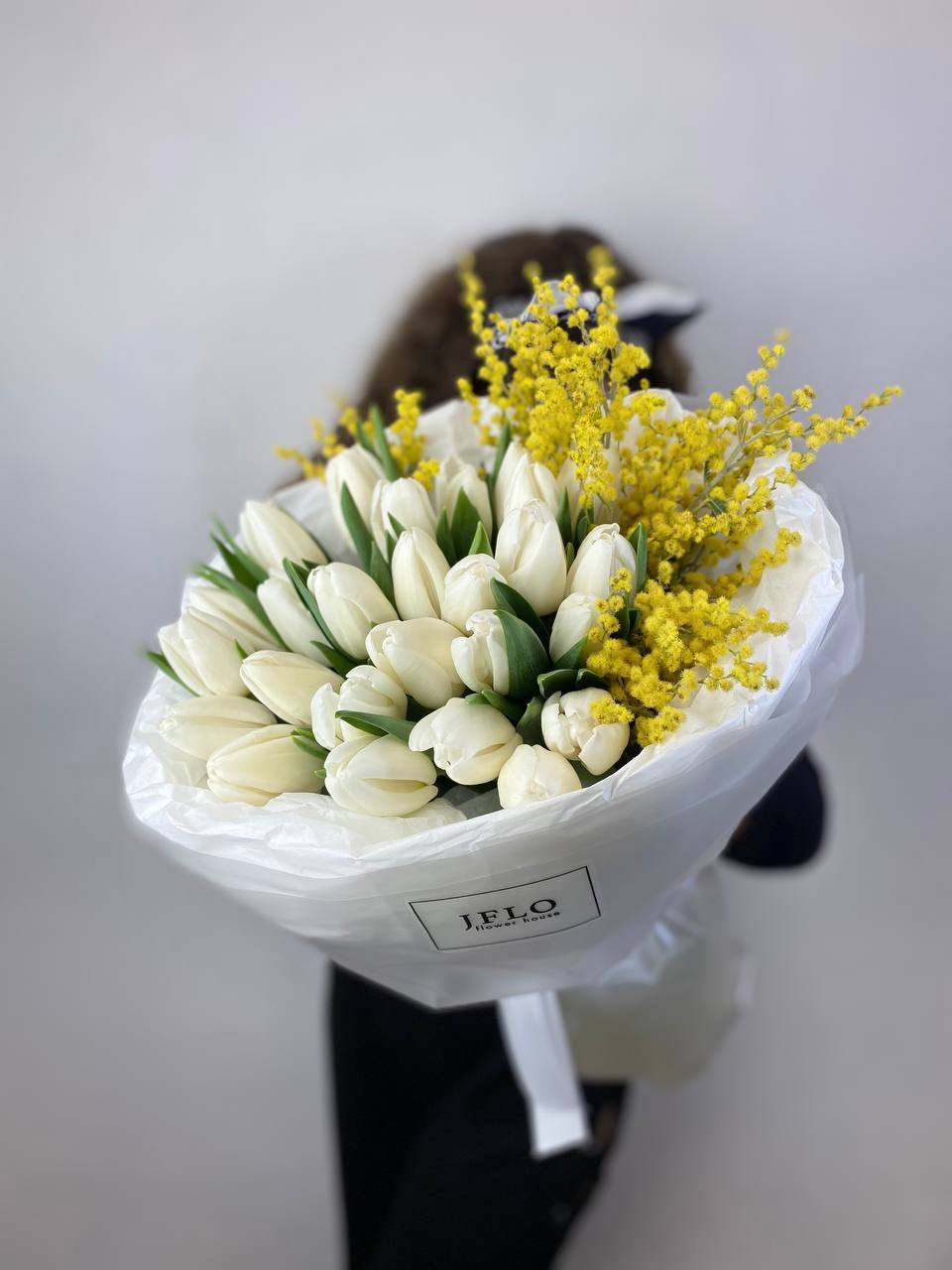
Freshness and logistics
Dutch tulips from Aalsmeer reach Berlin overnight in refrigerated lorries along the A2: 660 km, seven to nine hours. Morning auction lots can be at the Berlin Blumengroßmarkt by midday. We transport tulips in cold hydro boxes, stems in water at +6 to +8 °C until delivery. A recipient in Mitte or Friedrichshain gets a full five to seven days of bloom life with proper care.
Delivery specifics in Berlin
Berlin is a continental city. Winters bring −5 to −10 °C and weeks of snow; summers hit +28 to +32 °C with low humidity. Tulips are sensitive to both extremes, so in winter they travel in insulated thermal bags, in summer with cooling inserts. The most comfortable delivery season is March through May and September through October, when Berlin's spring and early autumn provide natural temperature comfort for the flowers.
We cover all main districts: Mitte, Prenzlauer Berg, Kreuzberg, Charlottenburg, Schöneberg, Friedrichshain, Neukölln, Tempelhof, Pankow and Treptow. Prices are in euros (€, EUR). Peak dates: Weihnachten (24–26 December), Ostern (Easter), Muttertag (second Sunday in May) and Valentinstag (14 February). Order three to seven days ahead; a full week ahead for Muttertag.
Home care
Tulips need different treatment from roses. The key rules: only cold water at +6 to +10 °C, re-cut stems straight (not at an angle) every two days, and keep the water level shallow — five to seven centimetres from the bottom. Tulips rot quickly in deep water.
Do not put tulips alongside daffodils without preparation: daffodil sap accelerates ageing by 30–40%. If you want a mixed arrangement, condition the daffodils separately for 24 hours, rinse the stems, then combine. In winter, Berlin flats can reach +22 to +24 °C — keep tulips near a cool window, away from radiators. Moving the vase to an unheated hallway overnight can add two to three days of vase life.

