





Flowers in Boston: the market that waited out Valentine's, and how to choose
Boston Flower Exchange spent 45 years trading in the South End, then asked for a month's delay so it would not have to move before Valentine's Day. It closed and reopened the next day in Chelsea, across the Tobin Bridge, as the New England Flower Exchange. Behind that move sits the long journey every stem takes before it reaches a buyer, and that journey shapes how fresh, expensive and suited to its address the flowers in Boston end up being.
Where the flowers sold in Boston come from
The wholesalers who moved to Chelsea now trade from a single building of about 65,000 square feet, home to ten sellers and to a cooperative that dates back to 1909. Nearly four-fifths of the cut flowers sold in the United States arrive from abroad, more than half of them from Colombia and roughly a quarter from Ecuador. About nine in ten of the flowers that travel by air pass through Miami first, and from there they move on through wholesalers like the one in Chelsea before they reach a florist.
Every hour a stem spends in the warmth after that flight takes time off its life in a vase, which is why growers and wholesalers keep the flowers close to two degrees Celsius all the way. At JFLOO the order is paid first, and the florist buys the flowers for it only afterwards, matching what is fresh that day rather than holding stock against a guess.
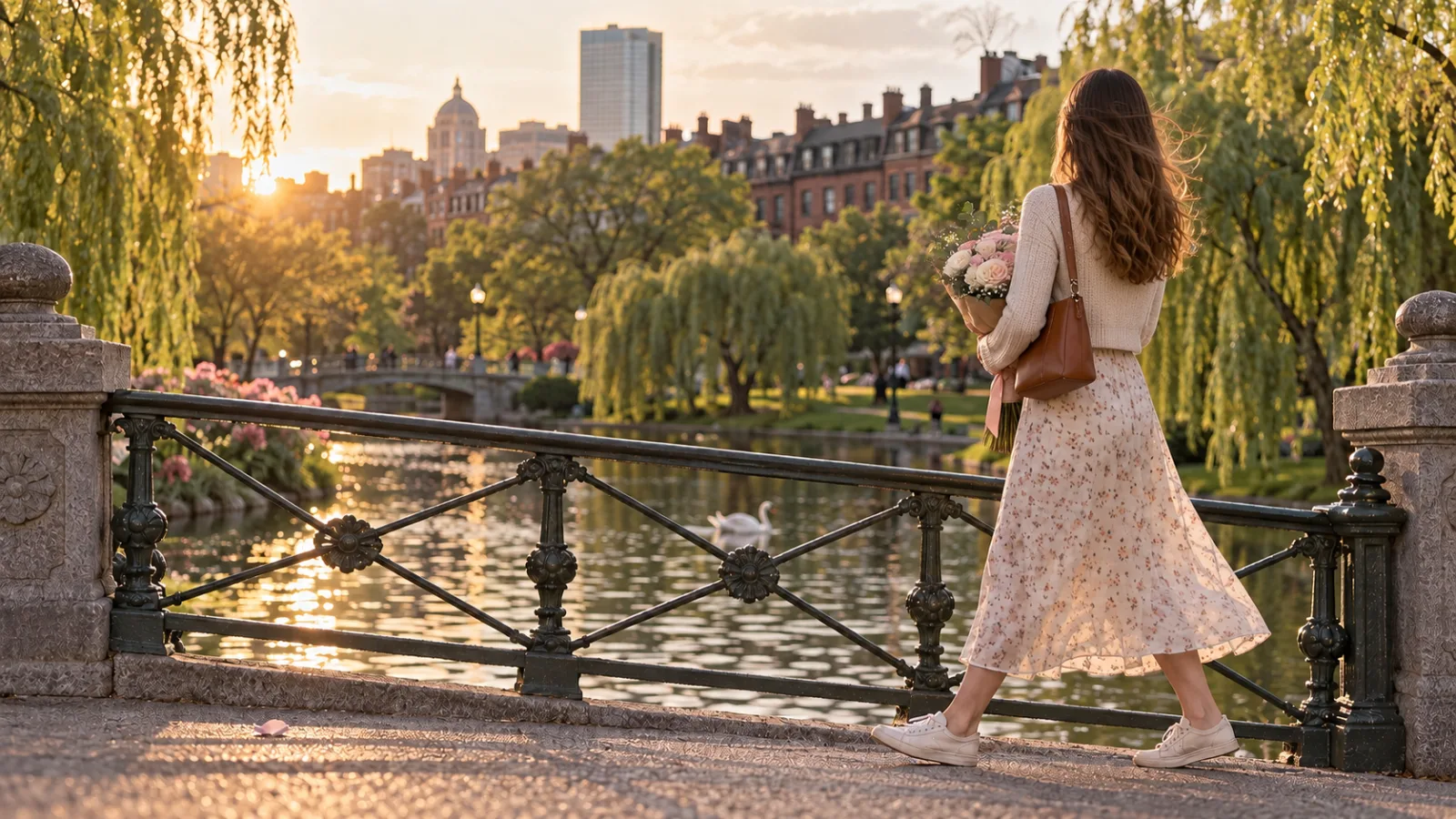
The roses section stays full every month, because roses here are grown under glass rather than cut to a season. A French rose is not a separate variety but a florist's trick: the outer petals of an ordinary rose are turned back by hand so the bloom opens fuller and looser. Nineteen white Ecuadorian roses read very differently from eleven French roses, though both start from the same stem.
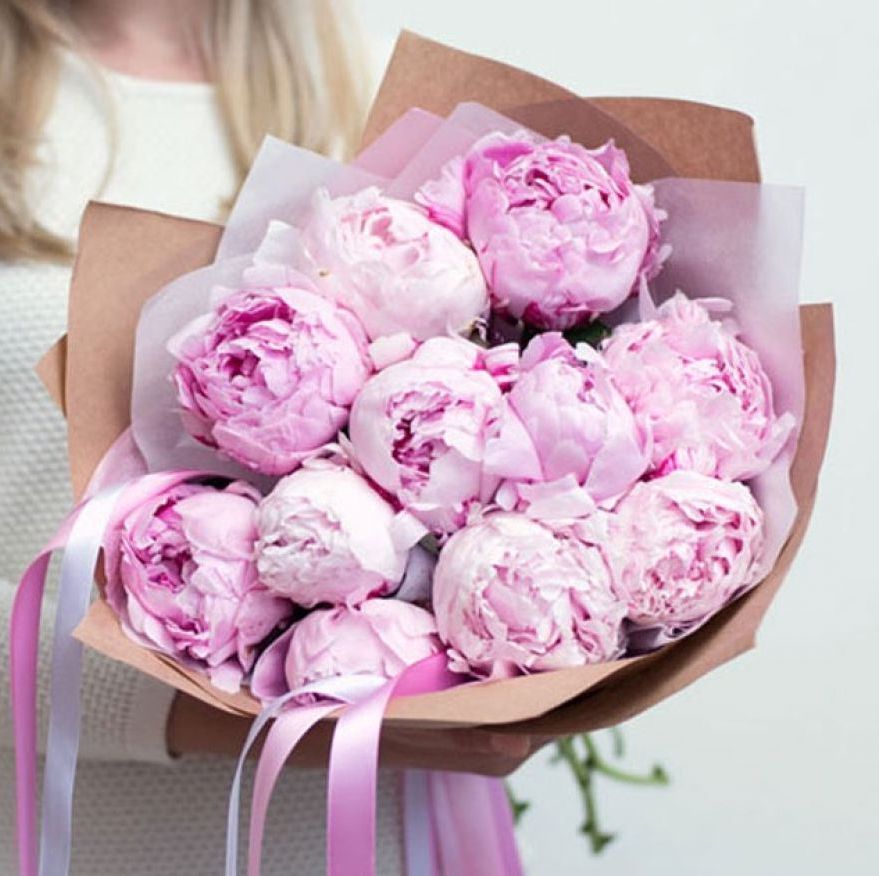
Peonies follow the opposite rule. Local farms cut them from late May into June, and through that stretch peonies run larger, fuller and better priced. Outside that window they are flown in from further away, and the price follows the distance. Boston's own tulips, the ones lining the Public Garden from late April into early May, only ever bloom in the beds, while the catalogue draws on greenhouse stock instead. That is why a mono bouquet of a single flower is the safest choice for a fixed date, whatever the calendar is doing outside.
Beyond roses and peonies, the same shelves run through lisianthus, hyacinths, lilies paired with gerberas and hydrangea next to Misty statice, though none of them follow a fixed Boston season the way peonies do.
Bouquet, box or basket for a Back Bay hotel, an office or a ward
Back Bay is Boston's hotel district, and a delivery there works best with the guest's surname and room number if you have them. Hotels vary: some send the bouquet straight to the room, others leave it at the front desk under their own house rules. Financial District and Seaport offices work differently: reception wants the company name and the floor, and where a security pass controls the lobby, the flowers in boxes simply stay at the desk until someone comes down for them.
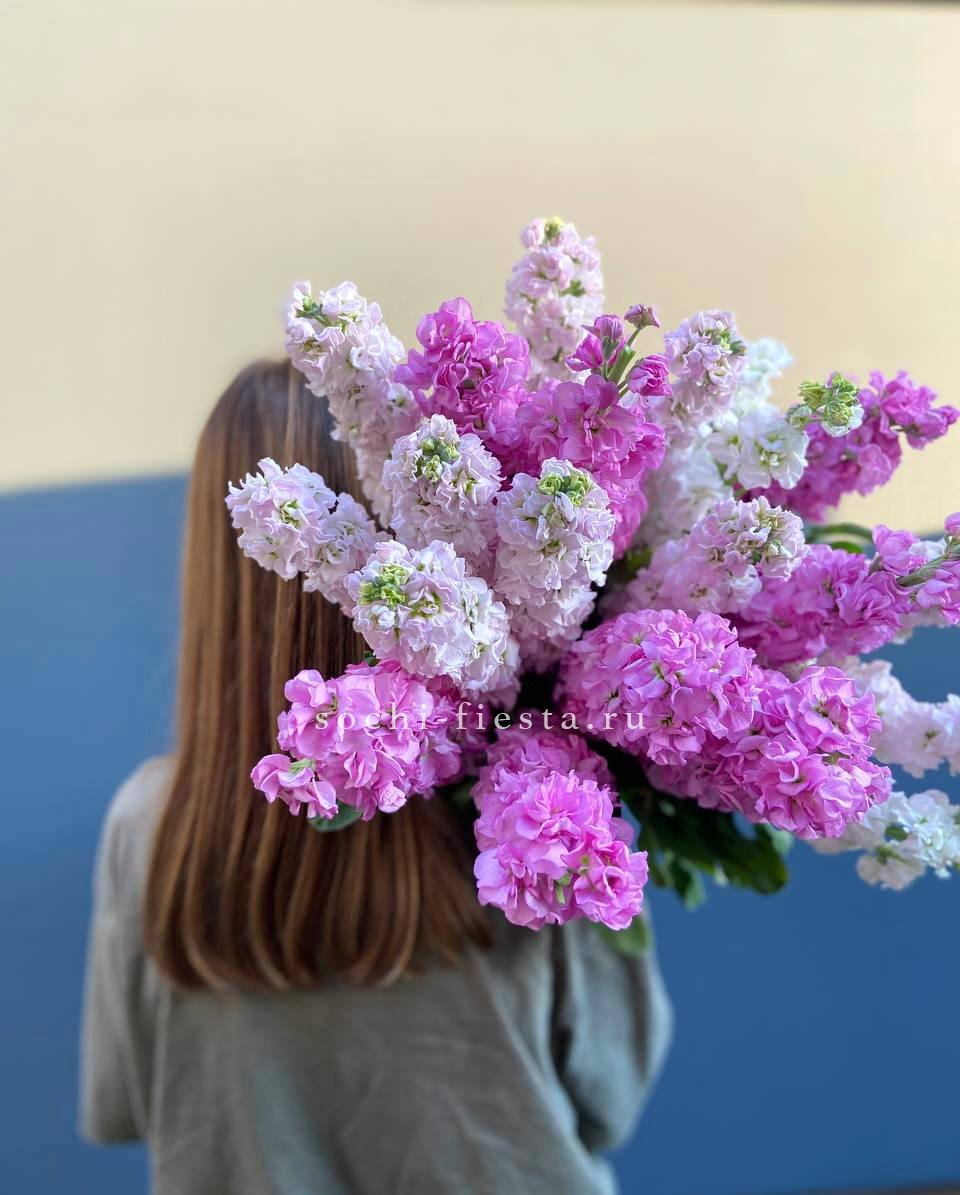
The Longwood Medical Area asks for a call ahead rather than an assumption. Boston Children's Hospital keeps live flowers out of its intensive care units, so the florist checks the ward's rules before the courier leaves, or hands the bouquet to the nurses' station instead of the room. A box or a flower basket is built for exactly this kind of uncertain reception: the stems sit in soaked floral foam and need no vase at either end, on a reception desk or a bedside table. Where the flowers are meant for a whole room rather than one recipient, an armful needs no container at all and is seen across the room the moment the door opens.
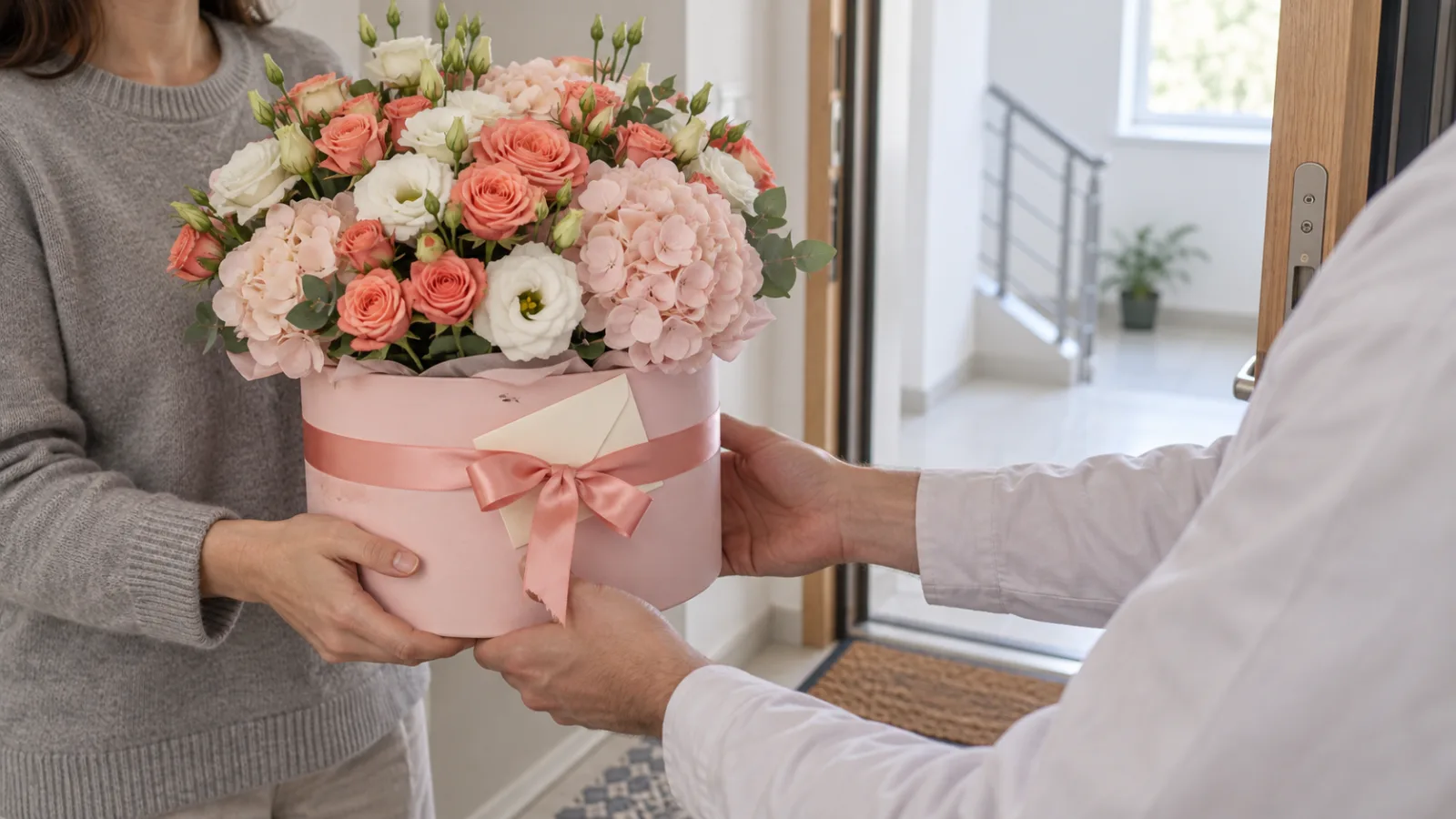
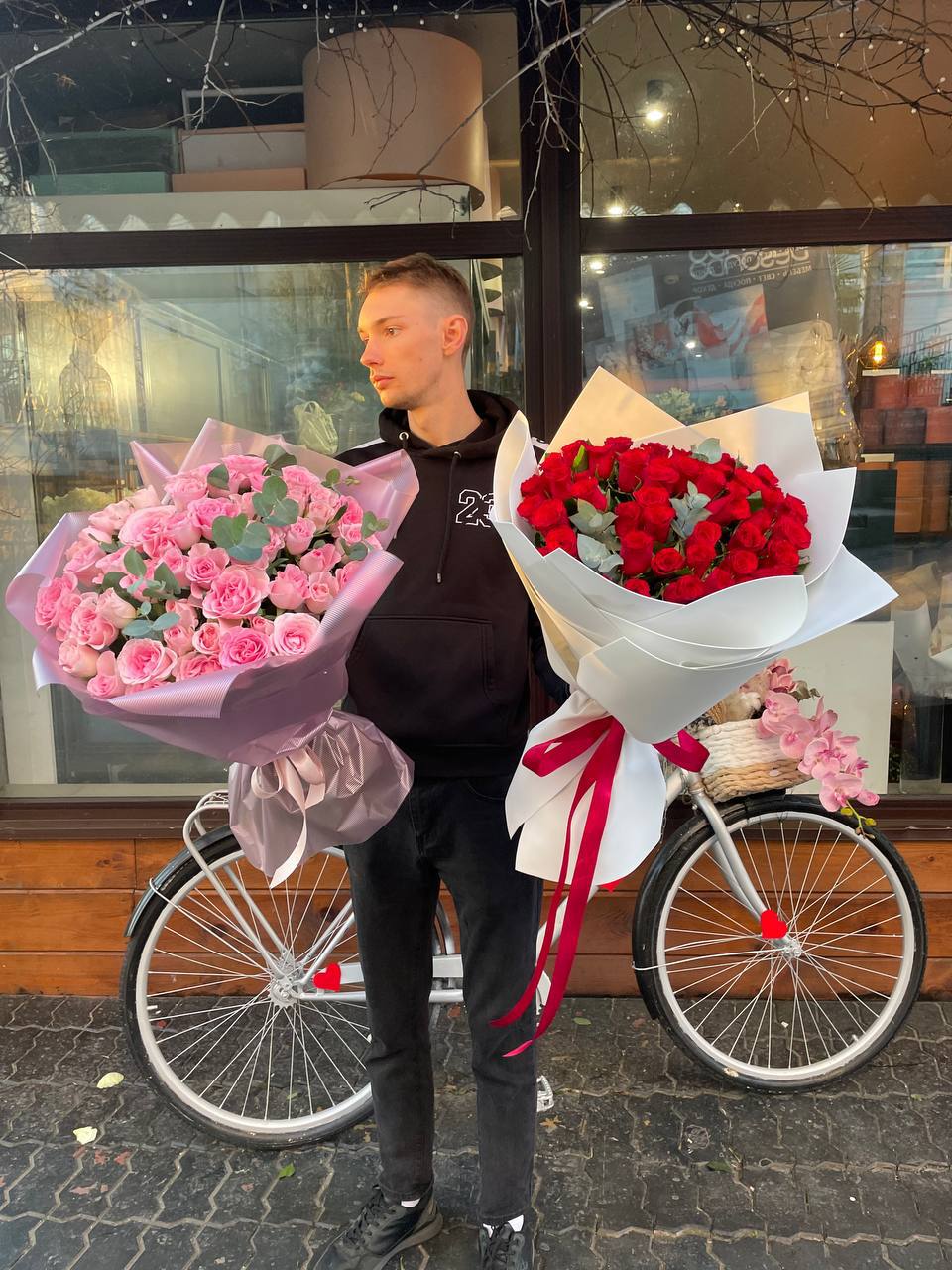
Prices in Boston climb with size and structure. Mono bouquets and single roses sit at the lower end, while flowers in boxes, mixed bouquets, peonies and TOP 36 arrangements sit in the middle. Armfuls, designer bouquets, designer giants, flower subscriptions and premium sets move up from there, and the total shown in the cart, delivery included, is what gets charged.
Mother's Day is the third-busiest day of the year for florists nationally, behind Valentine's Day, and accounts for roughly a quarter of a florist's transactions against nearly a third on 14 February, according to the Society of American Florists. The date moves every year, landing in the middle of a graduation season that runs from late April into late May, and both push the same delivery windows at once. On those weeks the standard slots book out first, and the remaining intervals run wider than usual.
Flower delivery in Boston: zones, timing and the photo
Boston flower delivery splits into three rings, each with its own price and speed; the bouquet card shows the delivery time for a given address. Delivery to the city centre costs nothing, and an express order can go out once the florist confirms that bouquet is already in stock.
- City centre: delivery is free
- South End: delivery is charged
- Jamaica Plain and Roxbury: delivery is charged
Overnight, delivery to any zone runs by prior arrangement rather than on the standard daytime schedule. A booking for a set date and time slot, rather than an express run, reaches every zone regardless of the hour. Logan Airport deliveries are handled by request, with the courier waiting at the exit holding a sign rather than searching a terminal for a name.
Before the courier leaves, the florist photographs the finished bouquet and sends the picture ahead, so whoever placed the order sees exactly what is on its way. At the door, the courier waits up to fifteen minutes for someone to answer before moving on. Zones and current rates are kept up to date on the delivery page.
Sending flowers to Boston from another city or country
Sending flowers to Boston from anywhere else works the same way as ordering from across town. Payment is taken by Visa or Mastercard before the florist buys anything, and no account or registration is needed to place the order. A recipient's phone number is enough to get a bouquet moving even without a full address. The card that goes with it can be left unsigned, so the recipient is left guessing who sent it.
Right up to six hours before delivery, the date, time slot, address and card message can still be changed, which matters for anyone ordering across time zones and adjusting plans late. Two commencement ceremonies worth building around are Northeastern University's, held at Fenway Park, and Harvard's, both landing late in the spring term, when Boston fills with family visiting for the day. Administrative Professionals Day in April is a quieter occasion, usually asking for something modest for a colleague rather than a romantic arrangement, though there is no strict rule against either. The same ordering process runs across all 113 cities the network delivers to, Boston among them.
Keeping a bouquet fresh through a Boston winter and summer
Winter and summer pull a Boston bouquet in opposite directions. January averages around -1°C, and the season drops close to 125 centimetres of snow, while July runs closer to 23.5°C and brings its own kind of stress from heat rather than cold. The sharpest shock is not either extreme alone but the jump between them: from the cold outside straight into a flat where the radiator has dried the air.
A few habits cover most of the year:
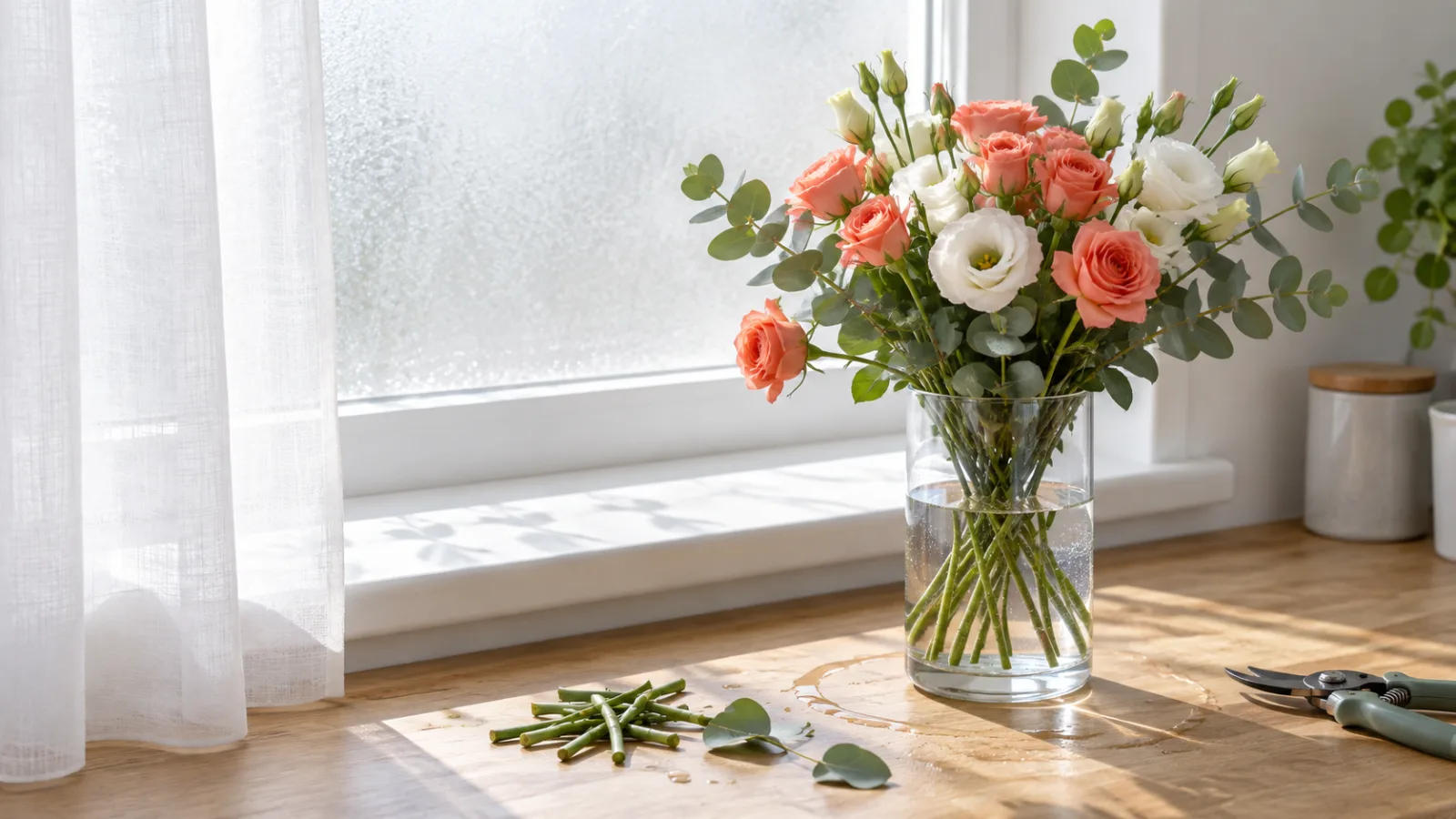
- Cut the stems at an angle as soon as the bouquet is unwrapped, a centimetre or two off the original end.
- Strip any leaves that would sit under the waterline, since they foul the water fastest.
- Change the water daily and keep the vase away from a radiator, a sunny windowsill or an air-conditioning vent.
- Top up a box or basket by watering the foam directly rather than tilting the container.
- Keep lilies out of a home with a cat: the pollen is dangerous to them.
Handled this way, a bouquet settles into the vase without much fuss, though how long it holds its shape depends on the flower.