

Plants in Brooklyn: an orchid that outlasts winter, succulents under glass
For plants in Brooklyn, January is the test: Central Park averages 0.9 °C that month, far below the 16 °C a moth orchid needs even at night. These are Central Park normals, used here as a Brooklyn guide, and they explain why a potted gift travels wrapped from door to door in winter and then spends months living on an indoor sill. Choosing one here comes down to the window it will sit in and who remembers to water it.
Plant delivery in Brooklyn: an orchid in a pot or cut orchid stems
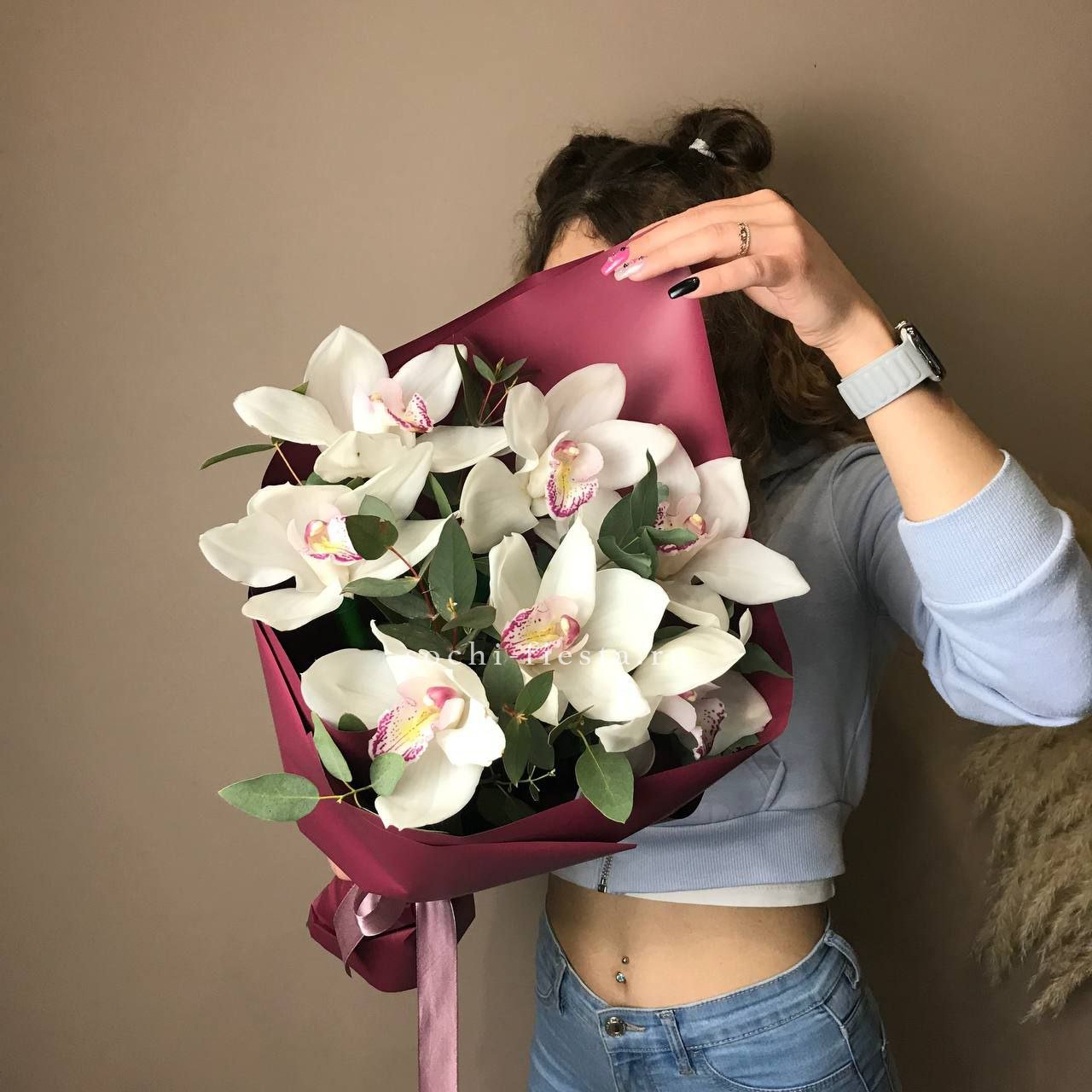
Plant delivery in Brooklyn covers two different gifts under one name: a living moth orchid in its pot, or a bouquet of cut orchid stems. A potted Phalaenopsis keeps its flowers open for two to three months on a sill, watered as it goes. Cut the same flower for a bouquet instead, and it lasts two to three weeks in a vase, closer to a rose's week than to the plant it came from.
A box, or a pot set beside roses or chocolate, is only the form the gift takes at the door. Once it is unwrapped, the orchid carries on living in the clear pot it already came in, with nothing to repot. Cut stems in a bouquet suit an evening or a week kept where everyone can see them; a potted orchid suits someone who wants flowers on the sill for a whole season. Flowering plants cover both the pot and the cut stem.

Indoors is where a moth orchid spends the whole of a Brooklyn winter, in a heated flat where the radiators keep the air dry. Water it about once a week, less often through winter, then tip away any water left in the saucer; the leaves and the crown at the centre of the plant should stay dry, or they rot.
July runs warmer and brighter: the month averages 25.3 °C, with afternoons reaching 29.4 °C on average, and direct summer sun through glass is strong enough to scorch the leaves. A bright window that misses the midday sun suits the plant through both seasons. A new flower spike forms once daytime temperatures drop below 27 °C, one reason fewer spikes start over a hot Brooklyn summer.
Once the last flower drops, cut the spent spike just above its second node rather than at the base; a side branch often grows on from there. The roots are part of the display rather than something hidden underground. A healthy Phalaenopsis has silvery-white roots visible through the clear pot, growing in bark rather than soil. The plant is an epiphyte from South-East Asia, built for clinging to branches, not sitting in compost.
Stone rose, sedum or a cactus for the driest weeks of winter
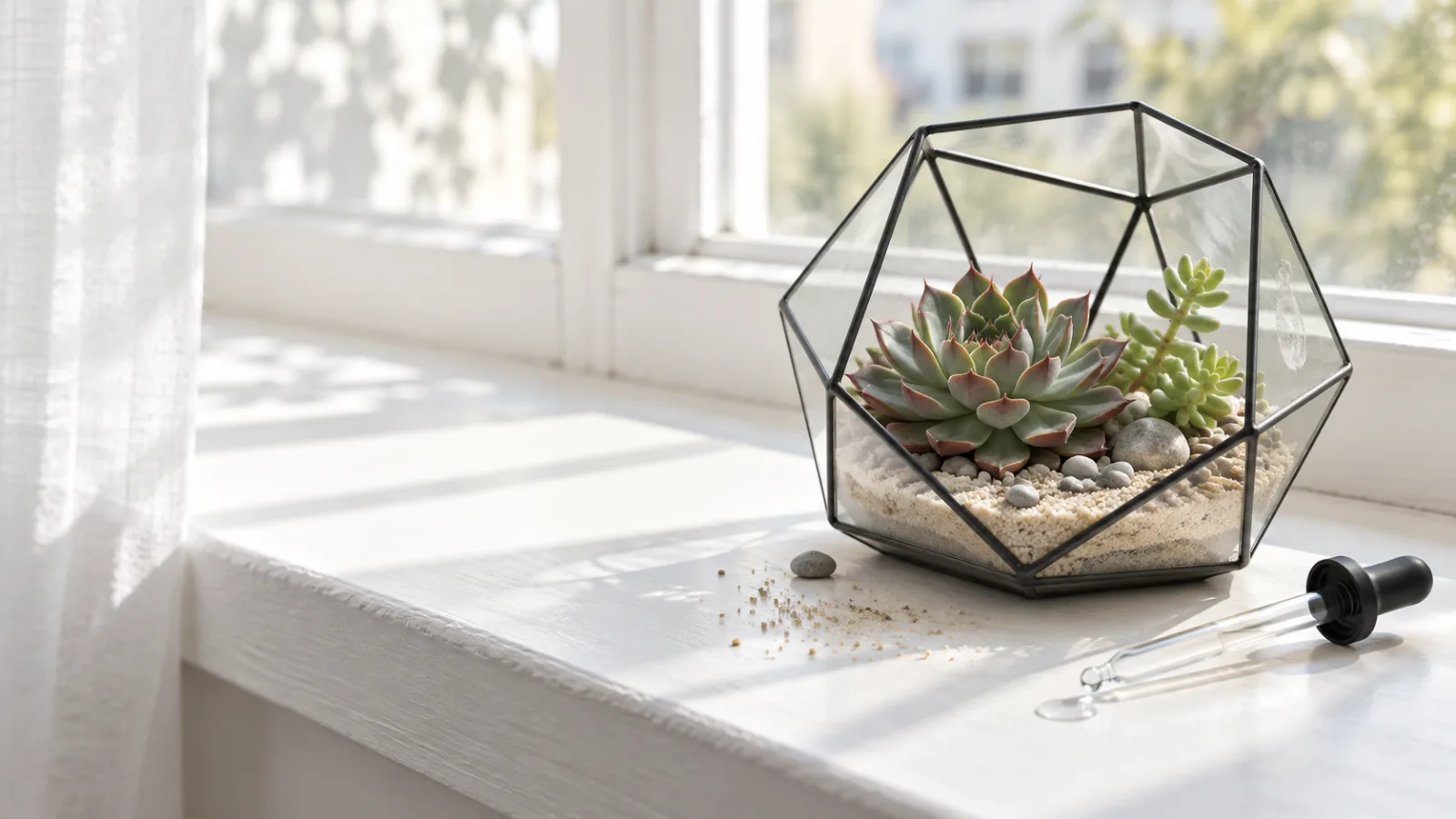
Outdoor air is driest in February, down to around 60 per cent humidity, and a heated flat runs drier still. That suits succulents rather than working against them: in some organs, water can make up to nine-tenths of the mass, stored for exactly this kind of stretch. An open florarium is built for the same dry-climate plants and takes a few sprays from a bottle rather than a watering can, and even then only now and again.
Stone rose and sedum are both succulents that want sun and dry soil, so the Cube Florarium with Stone Rose Succulent or the Cube Florarium with Sedum Succulent belong on the brightest sill in the flat, not a shaded one. A cactus asks for the same light and the same restraint with water, and the cacti section has its own range of them. Where shape or size matters more than species, potted plants by type is worth a look on its own terms.