


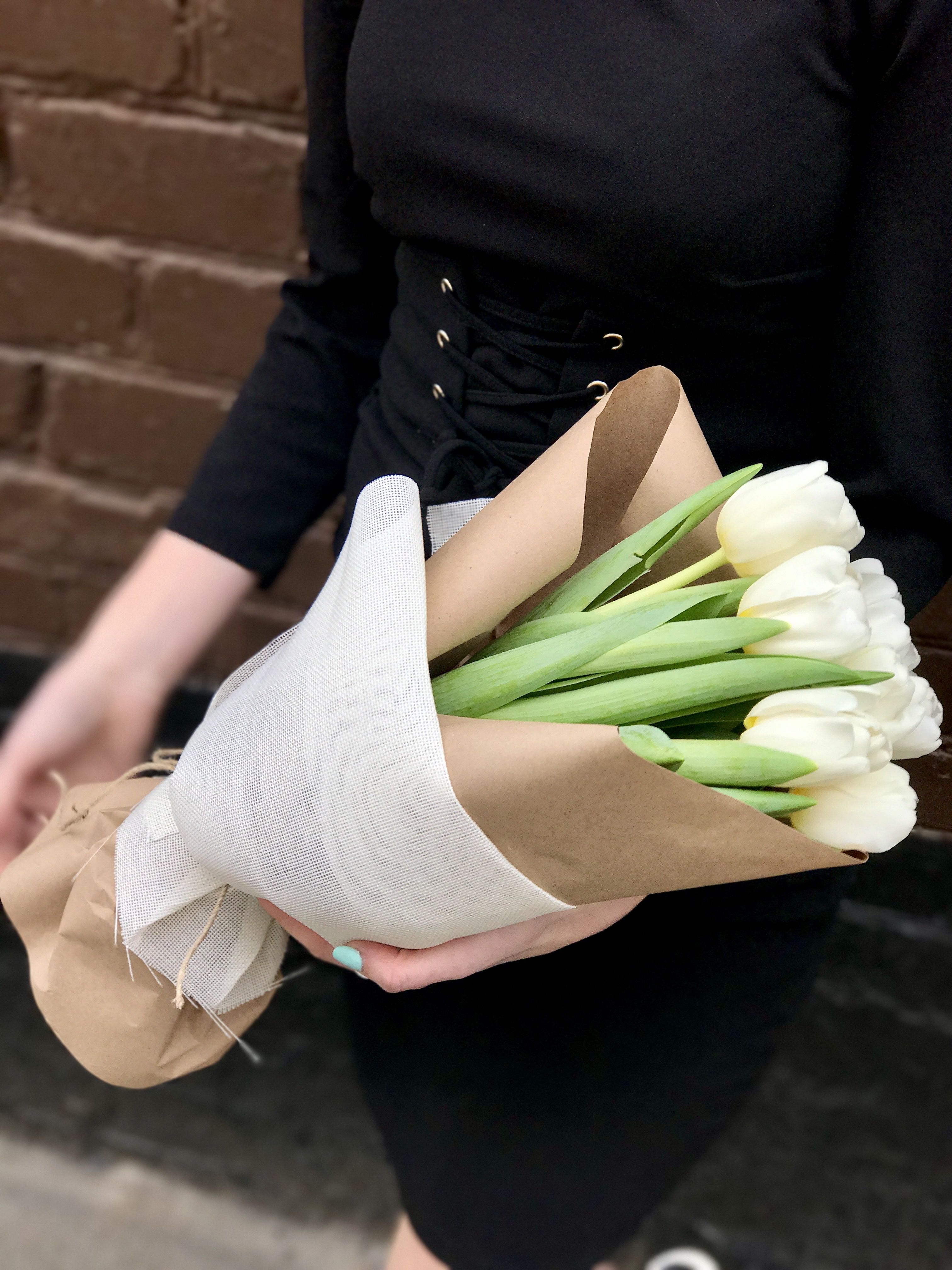

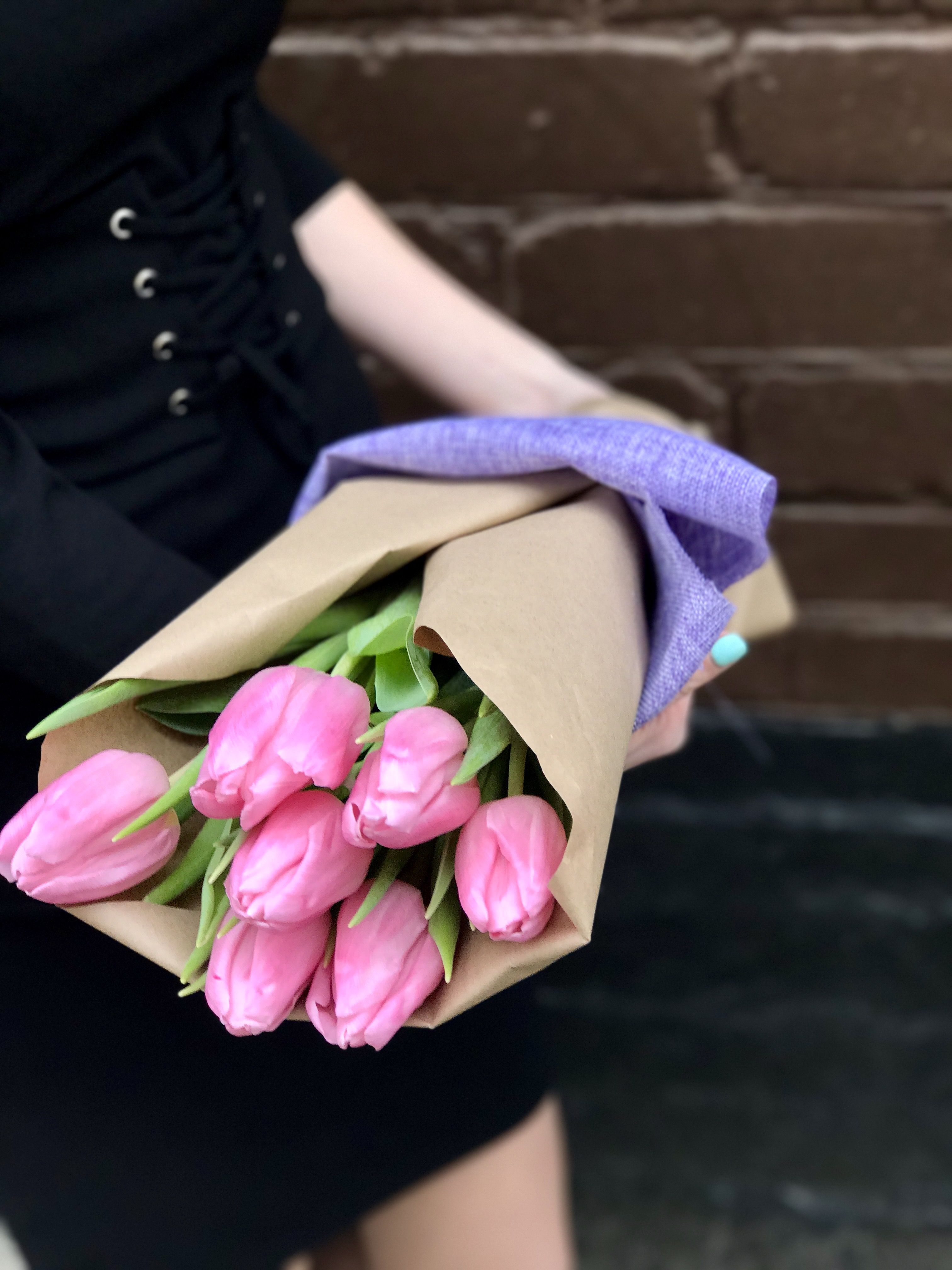


Tulips by color in Dushanbe: five colours and the shades in between
Tulips by color in Dushanbe splits into five subsections, yet among its bouquets sit "25 Lilac Tulips" and "39 Lavender Tulips", with no lilac subsection built to hold them. Names cut colour finer than the subsections do, so the exact shade is checked by title and photo, not by category. The choice runs colour first, shade second, then stem count and format, and the finished bunch is photographed before the courier leaves with it.
White, yellow, pink, red, purple: what each colour holds
White holds the largest shelf in the section. It opens with small hand-tied bunches and runs up to "101 White Tulips" and a "White Tulips Basket". Pink moves from a soft, almost blush tone in the "Soft Pink Tulip Bouquet" to the deeper, saturated pink of "51 Pink Tulip 'Rosi'", so one colour name covers two quite different shades. Red comes in two textures: a dense, tightly packed bunch such as "35 Red Tulips", and a looser, airier version like "25 Red Airy Tulips", where the stems sit further apart from one another. Yellow tulips are not always sold alone either, since a "Duo Yellow Tulips and Roses" pairs them with roses in the same bunch. Purple tulips cover more ground than the name suggests: the section's "25 Lilac Tulips" and "39 Lavender Tulips" carry a shade of their own in the title, with no separate lilac subsection to hold them.
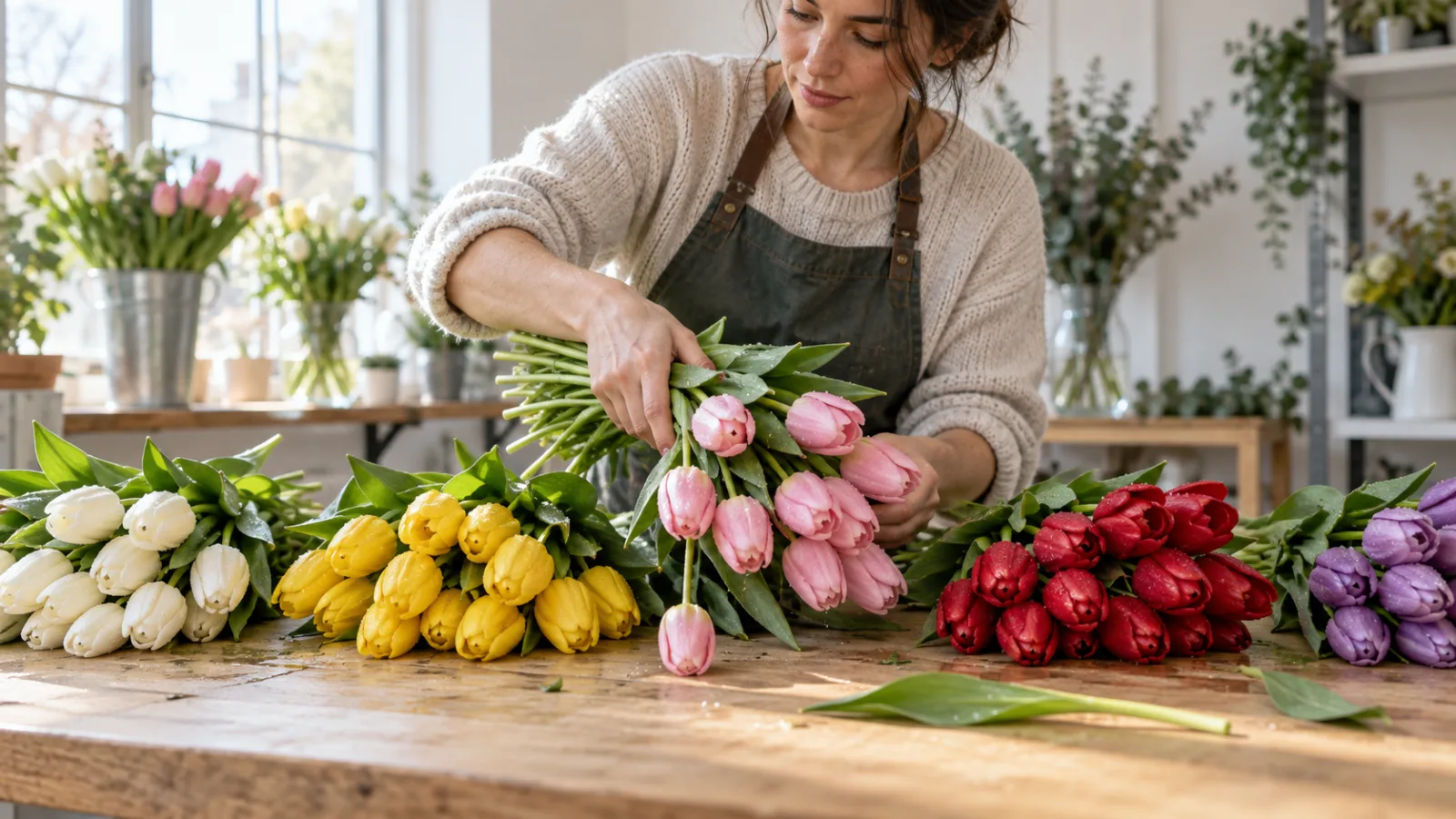
A colour scheme gives the choice some structure before it turns into a bunch. A monochrome bouquet stays inside one colour and simply moves between its lighter and darker shades, which is exactly how the ready-made bouquets here are built: pick the name, and the shade follows with it. An analogous scheme takes two or three neighbouring colours from the colour wheel and lets one of them lead, while a complementary scheme pairs colours from opposite sides of that wheel for the sharpest contrast between them. Every bouquet in this section is monochrome, so a mixed palette has to be described rather than clicked into a basket. A message to the florist with the occasion and the budget is enough, and a bouquet built to match comes back as a photo with a price before any payment is taken.
When tulips are in season and what if a shade runs out
Tulips are a spring bulb flower, and the Dutch cut that supplies most of the season runs from December to May. Before that, the bulbs spend weeks in artificial cold, a stand-in for winter, and are then moved into a heated greenhouse to force the flower open ahead of its natural time. Nothing in the section sits bought in advance: the stems for an order are chosen after payment, once a manager has confirmed what is actually in stock that day. When a particular shade has sold out, the florist substitutes a bouquet close to it in colour and price rather than cancelling the order. That substitution shows up on the photo sent before the courier sets off, so nothing arrives as a surprise.
Keeping coloured tulips upright in the vase
Cold water and a shallow fill keep a tulip from bending over. The vase should hold water to about a third of its height, since a deep, warm pool softens the stems and lets the heads flop over the rim within a day. Tulips also keep growing after they are cut, stretching towards the light by a centimetre or two a day, so turning the vase once a day keeps the stems growing straight instead of leaning hard towards the window. The rest of the care is the same as for any cut flower: a fresh angled cut, no leaves left sitting under water, the water changed every day or two, and the vase kept away from radiators, direct sun and a bowl of ripening fruit. Daffodils are the one flower worth keeping apart for the first day, since the slime from their stems shortens a tulip's life in shared water.

Every bouquet in the section is put together for that one order, not pulled ready-made off a shelf. A photo of the finished bouquet goes out before the courier leaves, and there is still time at that point to ask for a change to the colour or the wrapping. Delivery is free to the centre, most orders go out on the day they were placed, and the exact timing for a given bouquet is shown in its own card on the delivery page. The card that travels with the flowers costs nothing and can be left unsigned if the sender would rather stay anonymous. If the recipient's address is not known, a phone number is enough to get the bouquet there. Payment runs through Visa or Mastercard, and the courier arrives carrying tulips, not a card machine.
White tulips make a plain, understated choice, while pink tulips lean softer still. Red tulips are worth checking first for anything brighter, and where a single colour will not do, a message to the florist covers the rest. White tulips are a good place to start looking through the shades on offer.