



Flowers in Hua Hin: origin, season and how to pick a bouquet for delivery
The roses with the largest heads in the trade grow at around 3,000 metres in the Ecuadorian Andes, where the equator gives the plants twelve hours of daylight every day of the year. A bouquet handed over in Hua Hin has usually made a journey like that one: a cold room on the farm, an aircraft hold, a wholesaler, a florist's fridge. That journey is worth understanding before you choose flowers in Hua Hin, because it decides how fresh the stems are, what they cost this month and which format will cope with a wait at reception.
Where the flowers sold in Hua Hin are grown
Four countries export more cut flowers than anyone else: the Netherlands, Colombia, Ecuador and Kenya. Which of them supplies Hua Hin is a matter of geography and flight schedules rather than the florist's preference. Colombian roses and carnations go mostly to North America, Kenyan roses fly to Europe, and the Dutch auction at Aalsmeer, which sells around 43 million stems a day, redistributes tulips, hydrangeas and ranunculus to half the world.
A cut stem starts using up its reserves the moment it leaves the plant, and cold is the only thing that slows it down. On the farm the stems go straight into water and into a cooler, in the aircraft and the warehouse they travel at about two degrees, and every hour spent warm takes time off the bouquet's life in the vase. So the useful question is not which country a rose came from but whether it ever got warm on the way. At JFLOO the flowers for your bouquet are bought after you pay, specifically for that order, and the florist sends you a photo of the finished bouquet before the courier leaves.
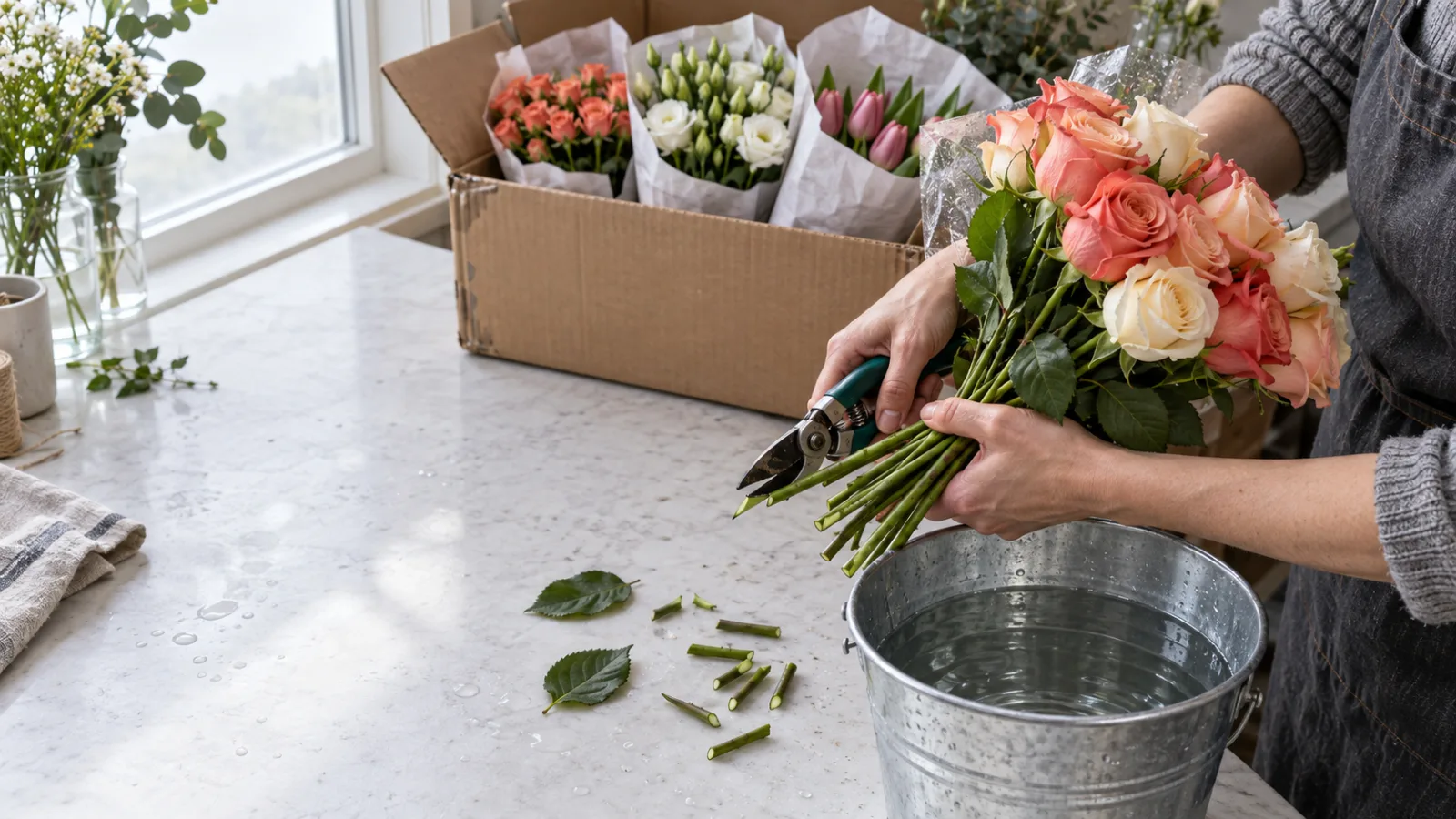
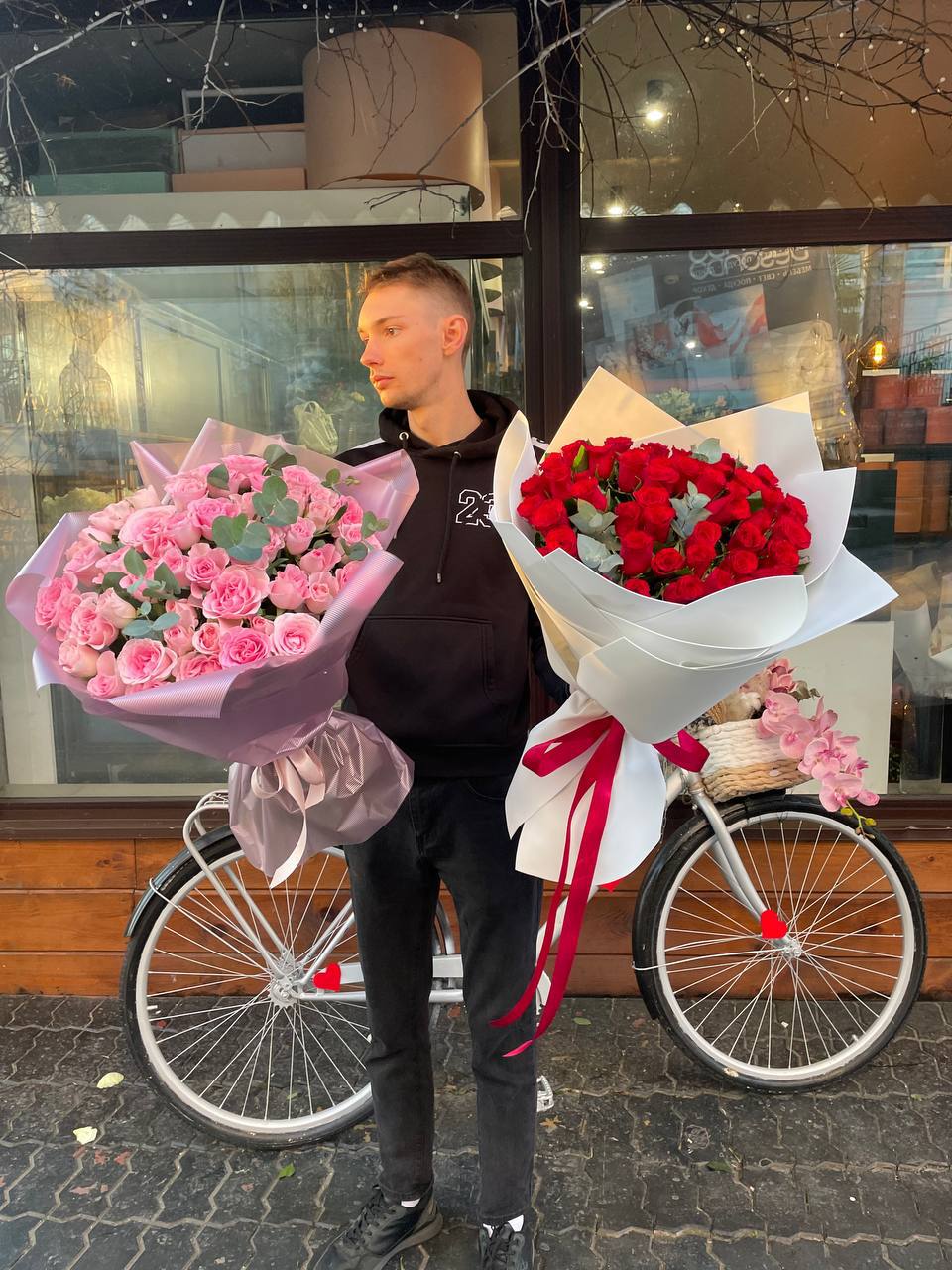
Roses carry the catalogue in every city, and the roses section sorts them by colour, by number of stems, by height and by type. Spray roses open several small heads on one stem, garden roses have a dense many-petalled cup, French roses have their outer petals turned back by hand, and Ecuadorian roses bring the big heads and long straight stems described above. Roses are grown under glass all year round, so a rose bouquet can be ordered for any date.
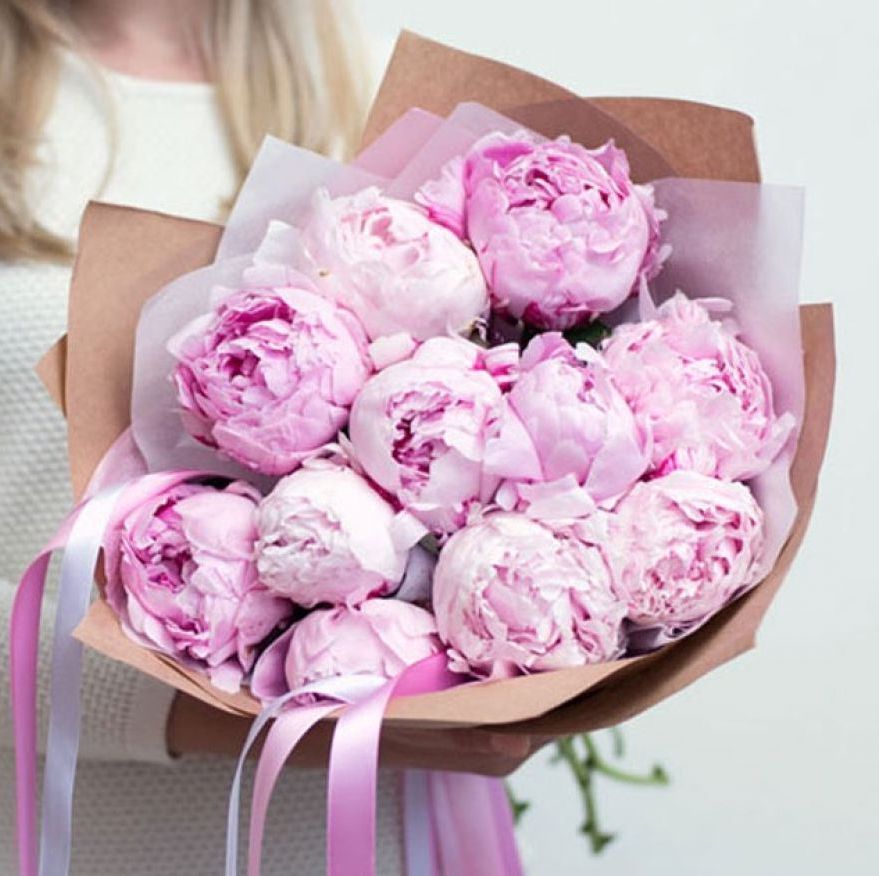
Peonies keep a different timetable. In the northern hemisphere the season runs from mid-May to late June, and in the southern hemisphere it falls in November and December. In the remaining months peonies are flown in from the other side of the world at a noticeably higher price. Dutch greenhouse tulips are cut from December to May, so their time is winter and early spring. Chrysanthemums, alstroemeria, gerberas, lilies and lisianthus are on sale all year, which makes mono bouquets of a single flower the safest choice when the date matters more than the variety. If the mood matters more than the name of the flower, designer bouquets combine three or four kinds in one palette with foliage.
Hand-tied bouquet, hat box or basket: choosing by address
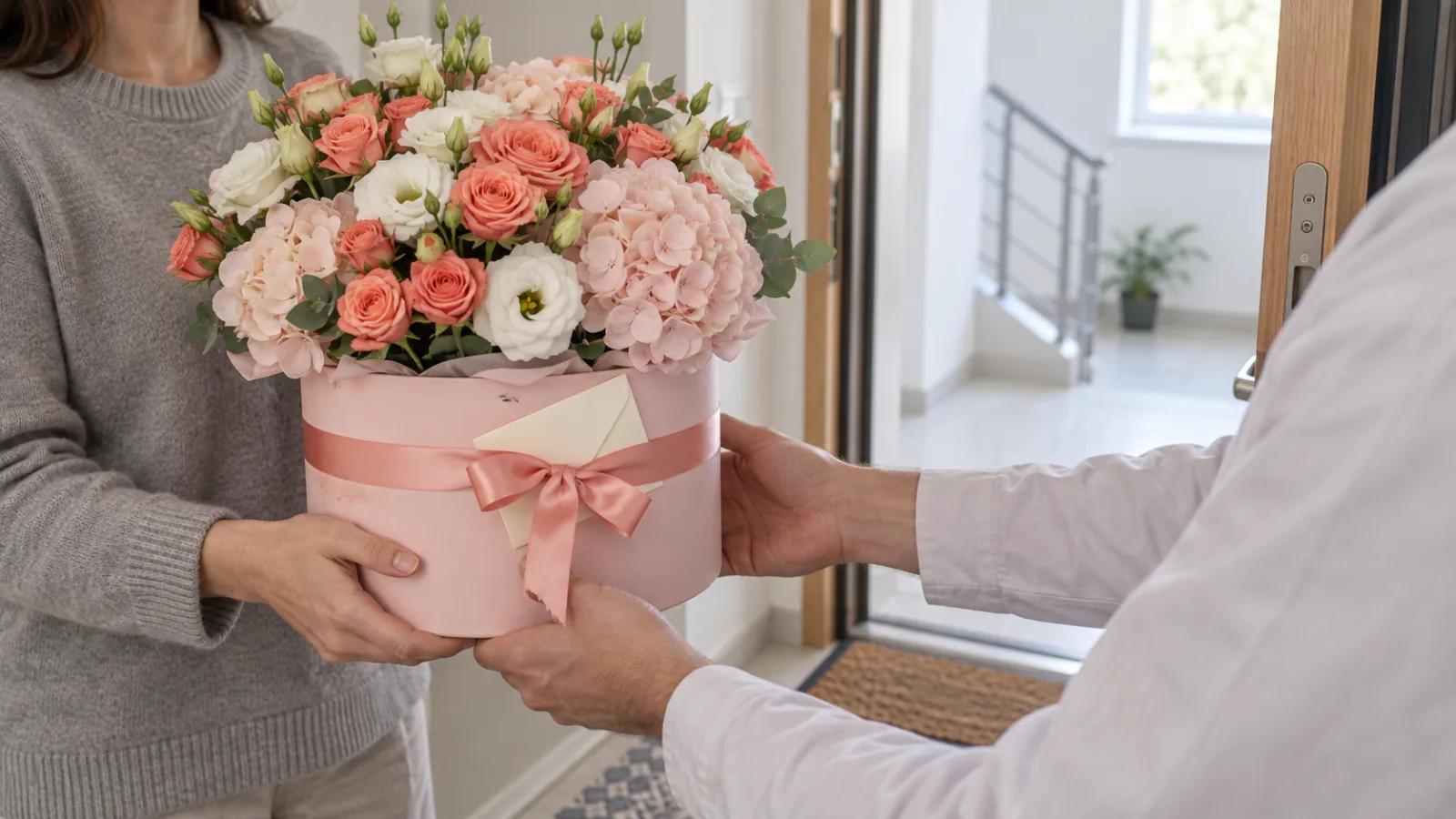
Think about where the flowers are going before you think about what you like. A hand-tied bouquet in paper suits a handover in person with a vase waiting at home: it has volume and it photographs well. A hotel room, an office reception desk or a hospital ward may have no vase at all, and the flowers can sit there for several hours before the recipient turns up. For those addresses there are flowers in boxes and flower baskets: the stems sit in floral foam soaked with water, so the arrangement needs no vase and tolerates the wait.
At a hotel the bouquet goes to the room or is left at reception, whichever the hotel allows, so the order needs the surname the guest is registered under and the room number if you know it. An office needs the company name and the floor; where there is access control, the bouquet goes through reception and you are told who took it. Hospitals need a call first, because many clinics do not allow fresh flowers on the wards; the manager checks in advance and, if necessary, arranges a handover at the nurses' station or on discharge. For a big room full of people, whether an anniversary, an opening night or an arrivals hall, armfuls do the job: they can be seen from the far end of the hall. Ready-made selections for holidays and life events are gathered under occasions.
Prices in Hua Hin are shown in the local currency. The switcher in the site header converts them to another currency for reference, but what is charged is the cart total, which already includes the bouquet, any extras and delivery, and nothing is added after payment. Within one category the spread can be wide, and it comes down to a few things. The first is variety and stem length: the catalogue sorts roses into 40, 50, 70 and 80 centimetre stems, and the longer the stem, the more each flower costs.
The second is the season. A peony in May costs less than a peony in November, and around Valentine's Day, 8 March and Mother's Day the order volume is several times the usual, so the convenient delivery slots in those weeks are taken days ahead. The third is the format: a box or basket adds the container and the foam, so with the same number of stems an arrangement usually costs more than a paper-wrapped bouquet. If you want to buy flowers in Hua Hin at a sensible price, go with the season. Take what is at its peak now and let the florist swap a scarce variety for a close one, rather than hunting for a particular flower in the wrong month.
Flower delivery in Hua Hin: timing, the photo and the handover
The bouquet is made on the day of the order and handed over in person. Delivery to the central districts is free: at checkout that is the zone marked "city centre", or "main area" on resorts and islands. Every other district has a flat rate that appears in the cart before you pay, and there is nothing to give the courier at the door. Most bouquets are delivered on the day they are ordered, and for an express order the bouquet card shows the delivery time. Delivery to a chosen date and time slot is available in every zone, night deliveries are by prior arrangement, and before the big holidays it pays to book a slot early.
Before the courier leaves, the florist photographs the finished bouquet and sends you the picture: if you would like a different ribbon or shade, it is changed before dispatch. The recipient is not called in advance unless you ask for it; the only exception is a building or gated area that cannot be entered without a call. If nobody is home, the courier waits up to fifteen minutes and calls the recipient, and with your consent the bouquet can be left with the concierge or delivered later the same day. Once it is handed over, a short report arrives in your messenger. Zones and rates for Hua Hin are on the delivery page.
Sending flowers in Hua Hin from another country
Many bouquets in Hua Hin are ordered from far away, by children congratulating parents who moved or by friends who remembered a birthday in another time zone. Orders are taken around the clock on the site, on Telegram and on WhatsApp, and no account is needed: a name and a phone number are enough, and that number receives the bouquet photo and the delivery report. If you do not know the exact address, the recipient's phone number will do: the manager finds out discreetly where to deliver, without revealing the sender or the occasion unless you want them to. The recipient learns who sent the flowers only if you sign the card.
Payment is by Visa or Mastercard issued in any country, on a secure payment page. If your card is in another currency, your bank converts the amount at its own rate and the shop adds no fees. The order can be changed until the bouquet has left for the recipient and no later than six hours before delivery: the date, the time slot, the address, the recipient and the card message. The network works in 113 cities across 59 countries, and if you need to send flowers to several of them, the city switches in the site header: the catalogue and the florists are local, the rules are the same.
Keeping the bouquet fresh for a week or more
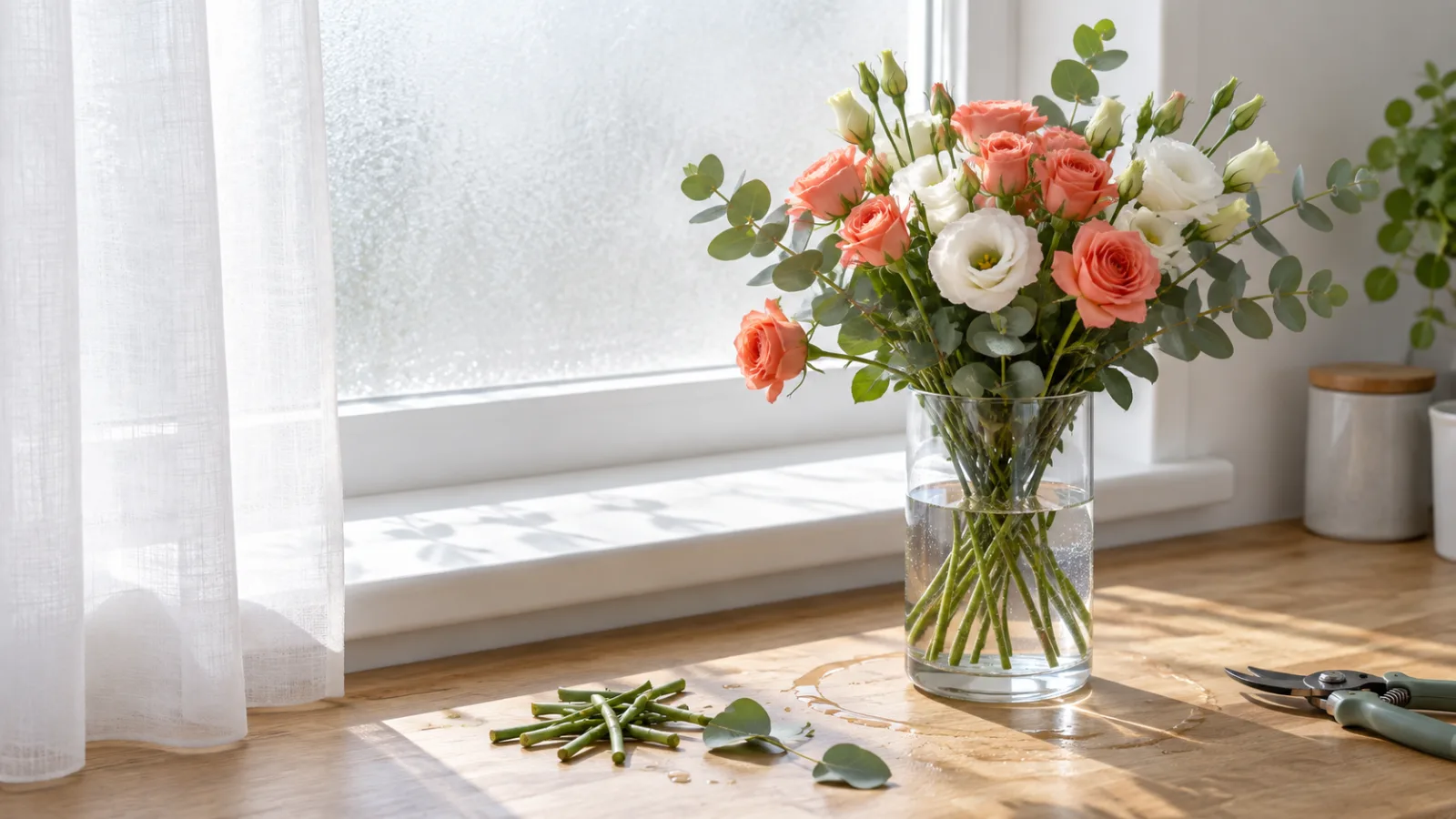
What wears a cut flower out at home is rarely the warmth itself; it is the swing from a cool workroom to a hot car and then to a room with a radiator or an air conditioner running. Keep the bouquet out of the car and off the sunny windowsill, get it into water as soon as it arrives, and then stick to a few habits:
- recut the stems with a sharp knife or secateurs at an angle, taking off 1–2 cm, and strip any leaves that would sit below the waterline;
- keep the vase in the shade, away from radiators, the air-conditioner draught and the fruit bowl;
- change the water every day, since warm water clouds faster than it looks;
- water a boxed or basket arrangement directly into the foam and never let it dry out;
- if a hydrangea droops, submerge the whole head in cool water for an hour or two: it drinks more than other flowers and recovers quickly.
With that routine roses, chrysanthemums and alstroemeria usually last more than a week; the florist can tell you before you order how long a particular variety holds.