






Occasions in Johannesburg: flowers to fit the date, the person and the address
In the United States a chrysanthemum is a cheerful flower, and in Japan it is the emblem of the imperial house. Across much of continental Europe, in France, Italy and Poland among others, the large-headed varieties belong on graves and nowhere else. The same stems carry three different messages, which is why occasions in Johannesburg are rarely a matter of picking a date from a list. The bouquet has to fit the recipient's calendar, the room it will stand in and the way flowers are read where they live.
Valentine's Day, Mother's Day and other dates that refuse to stay put
A calendar occasion is known in advance to everyone, including the growers. The JFLOO delivery page says plainly that Valentine's Day, 8 March and Mother's Day bring several times the usual number of orders: delivery slots on those days are wider than usual, and nobody promises an exact minute. The practical conclusion is to order a few days ahead, while the choice of flowers and times is still open, rather than on the morning itself.
Mother's Day has a second complication: the date. The modern holiday began in 1908, when Anna Jarvis held the first Mother's Day service in Grafton, West Virginia, and the United States, Germany and more than forty other countries now mark it on the second Sunday of May. Britain kept its own Mothering Sunday, the fourth Sunday of Lent, which lands weeks earlier.
The Arab world celebrates on 21 March, Poland on 26 May and France at the end of May or the start of June. Argentina marks it on the third Sunday of October, Indonesia on 22 December and Russia on the last Sunday of November. Anyone sending flowers to a mother in another country has to decide which of two dates counts, or simply send twice.
Easter behaves the same way. Western and Eastern churches calculate it on different calendars, and the two Easters fall on the same day in only about three years out of ten. The date worth checking is therefore the one in the recipient's country, not the sender's.

The chrysanthemum is the best-known case, but not the only one. In Russia, Ukraine, Belarus and most of the former Soviet Union, an odd number of stems is for the living and an even number is for the grave. A dozen roses, an ordinary gift in Britain or the United States, reads there as a farewell. In Australia, meanwhile, a white chrysanthemum is what people pin to their clothes on Mother's Day, and in China the same flower stands for long life.
None of this makes a bouquet in an unfamiliar country a gamble. A line in the order comment saying who the flowers are for and why is enough. A florist in Johannesburg works with local customers every day and knows what is given here for a new baby and what is kept for condolences. If the recipient grew up in a different tradition from the city they now live in, that is worth mentioning too, for instance by asking for an odd number of stems.
Birthdays, anniversaries and milestones: flowers for personal dates
Personal dates bring no holiday peak, so the choice of flowers and delivery times is usually wider than in the run-up to Valentine's Day. The largest section of the catalogue is birthday, and the choice there depends on the person more than on the date; what suits a colleague, a parent or a child is covered in that section itself. When the same date comes round every year, the format is easier to change than the shade: a box after a hand-tied bouquet, an arrangement with a vase after the box.
A wedding anniversary comes with the oldest set of hints. Calling the twenty-fifth anniversary silver and the fiftieth golden has been documented in Germanic countries since the sixteenth century. The nineteenth century added paper for the first, wood for the fifth and tin for the tenth in English-speaking countries. In 1937 an American jewellers' association published a gift for every year up to the twentieth and every fifth year after that. For a florist the useful part is different: a golden wedding or a milestone birthday calls for a large arrangement, ideally in varieties that last. Chrysanthemums and carnations hold for two to three weeks in a vase, while roses manage about a week.
New baby, hospital and get-well flowers: what the ward will let in
A new baby is the occasion where the address matters most. Many clinics do not allow fresh flowers, so a JFLOO manager checks in advance whether the ward accepts them. If it does not, the bouquet is handed over at the nurses' station or on discharge, which is how the maternity hospital section is built. Where flowers are allowed, a box or basket arrangement is the better choice: the stems sit in water-soaked floral foam, nobody has to find a vase, and a low shape fits on a bedside table.
Get-well flowers follow the same rules plus one more. A strong scent in a small room is a nuisance rather than a compliment, so lilies and hyacinths are better saved for home. A new baby and a christening are happy occasions where pale pastels work well.
A separate group of occasions arrives without warning: a thank-you for a favour, an apology after an argument, a date night, a message to someone far away. Here timing outranks composition, because a bouquet that turns up two days later is answering a different situation. Most JFLOO orders are delivered on the day they are placed, and the bouquet card shows the delivery time when the bouquet is already in stock with the florist.
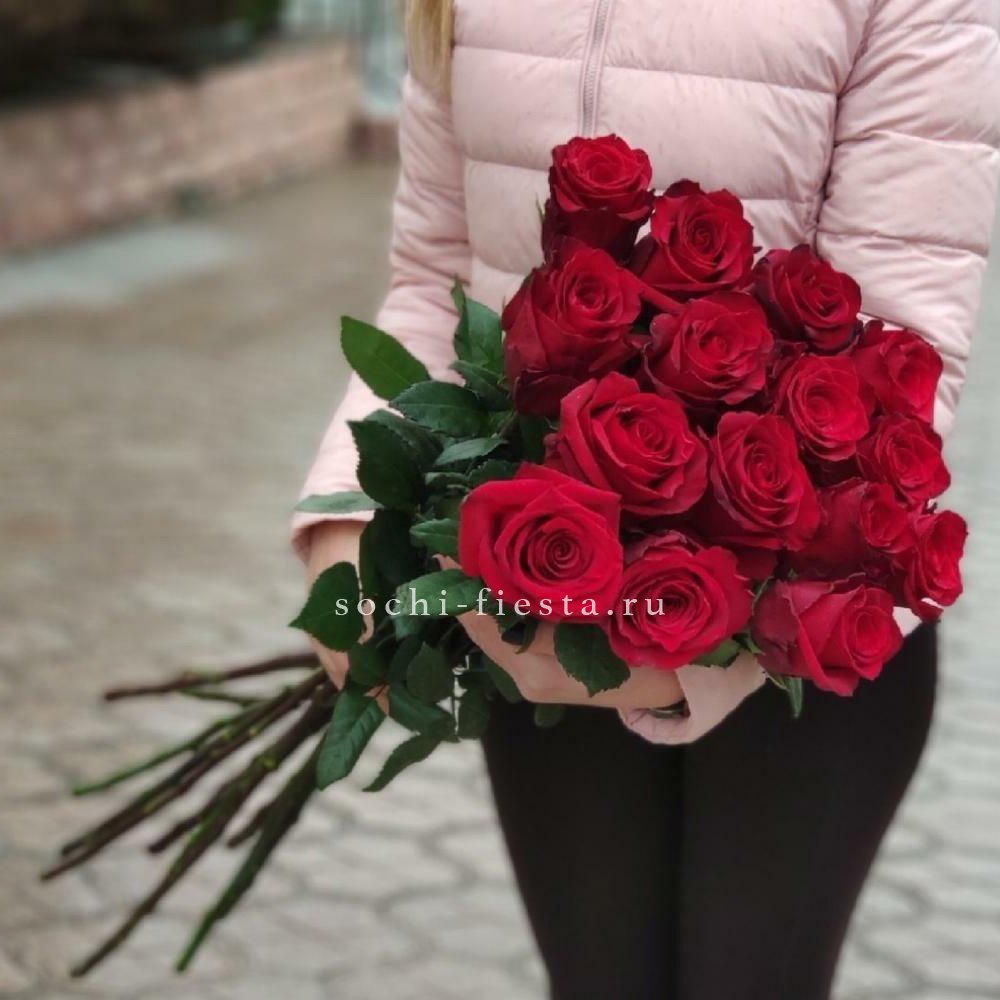
The flowers themselves say as much as the card. Red is usually read as a direct statement and suits a declaration, while an apology tends to get a quieter palette, white and cream, the same one that goes with gratitude. Yellow and orange read as warmth without romance, which is why they are chosen for colleagues and friends. These are habits of reading rather than rules, and they shift from country to country, which is exactly what the order comment is for.
Flower delivery for any occasion in Johannesburg: surprise and anonymous
Nearly every occasion on this list is meant as a surprise, and delivery works on that assumption. Nobody warns the recipient by phone unless the sender has asked for a call; the one exception is a house or gated area that cannot be entered otherwise, and then the courier calls from the doorstep. All the courier carries is the recipient's name and the address, the sender's details stay with the service, and the card can be signed or left blank. For orders where that matters most, the catalogue has a separate anonymous delivery section.
Knowing only a phone number is fine as well: the manager finds out the address discreetly, without naming the sender or the occasion. The finished bouquet is photographed in the workshop and the picture goes to the sender before the courier sets off, so a ribbon or a shade can still be swapped. A message follows once the flowers are in the recipient's hands. Orders are taken round the clock, checkout on the site takes about two minutes and delivery in the city centre is free. Payment goes through Visa or Mastercard: the cart total is final and there is nothing to pay the courier.
At a hotel the bouquet goes to the room or stays at reception, whichever the hotel allows; at an office with access control it goes through reception, and the sender is told who took it. At a restaurant the courier arrives at a moment agreed with the venue, for dessert or for the toast.
Add-ons and aftercare: cards, cakes and how long the flowers last
A card with a message is included free, and balloons, sweets, a soft toy or a vase are added in the cart. Balloons suit graduations and children's parties, a vase suits a milestone birthday, so nobody has to hunt for one mid-celebration. When the flowers are supposed to outlast the occasion, forever roses do the job: preserved stems need neither water nor a vase.
Once the party is over, fresh flowers follow the usual routine. That means an angled cut with a sharp knife as soon as they arrive, no leaves below the waterline, fresh water every day or two, and a spot away from radiators, direct sun and ripe fruit. Roses looked after this way last about a week; chrysanthemums and carnations manage two to three weeks. A box arrangement gets a thin stream of water over the whole surface of the foam every day and is never tilted, because foam that has dried out barely takes water back.
