





Flowers in Miami: where America's cut flowers land and how to choose a bouquet
Flowers are Miami International Airport's largest import cargo: 394,181 short tons of them moved through it in 2025, and the airport handles 91% of all cut flower imports into the United States. That means flowers in Miami have often travelled the shortest distance from farm to florist of anywhere in the country. What still decides the right bouquet here is the heat, the address and the date.
Where Miami's flowers come from: the airport, Doral and the cold chain
Ninety-one per cent of the country's flower imports by air clear customs at MIA, and Colombia and Ecuador together supply around 86% of that volume. The two countries sit close enough to Florida that a rose cut in the Andes reaches Miami by one of the shortest routes flowers take into the country.
After landing, the stems move straight into cold cargo terminals by the runway, held at around 1°C (33°F), before going on to importers and wholesale warehouses in Doral, where the temperature runs between 2 and 8°C. From there they leave for florists right across the country, and Miami keeps only part of what arrives. Each hour a flower spends warm on the way is an hour it will not have later in the vase.
At JFLOO the flowers for an order are bought only after payment goes through, not kept waiting on a shelf beforehand. The finished bouquet is photographed and sent to the sender before the courier sets off, so the sender sees exactly what will be delivered.

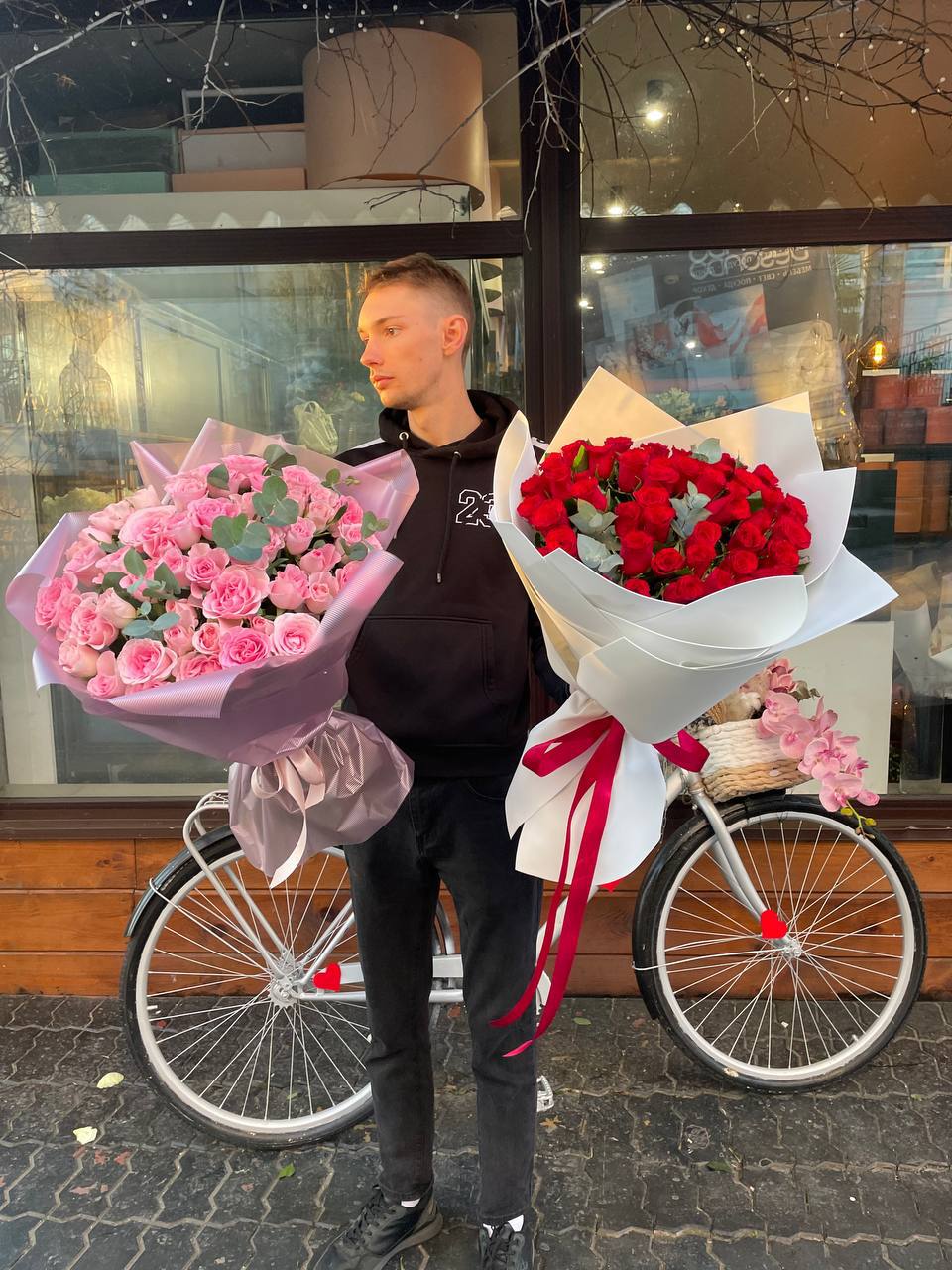
In the weeks before 14 February, the cargo landing at MIA leans towards roses, carnations, pompon chrysanthemums, hydrangea and gypsophila, the flowers that make up most Valentine's bouquets. The catalogue in Miami includes Ecuadorian roses, grown at altitude for a large head and a long stem, and reflexed, or French, roses. That second name describes a technique rather than a variety: a florist takes an ordinary rose and turns its outer petals back by hand to open the bloom.
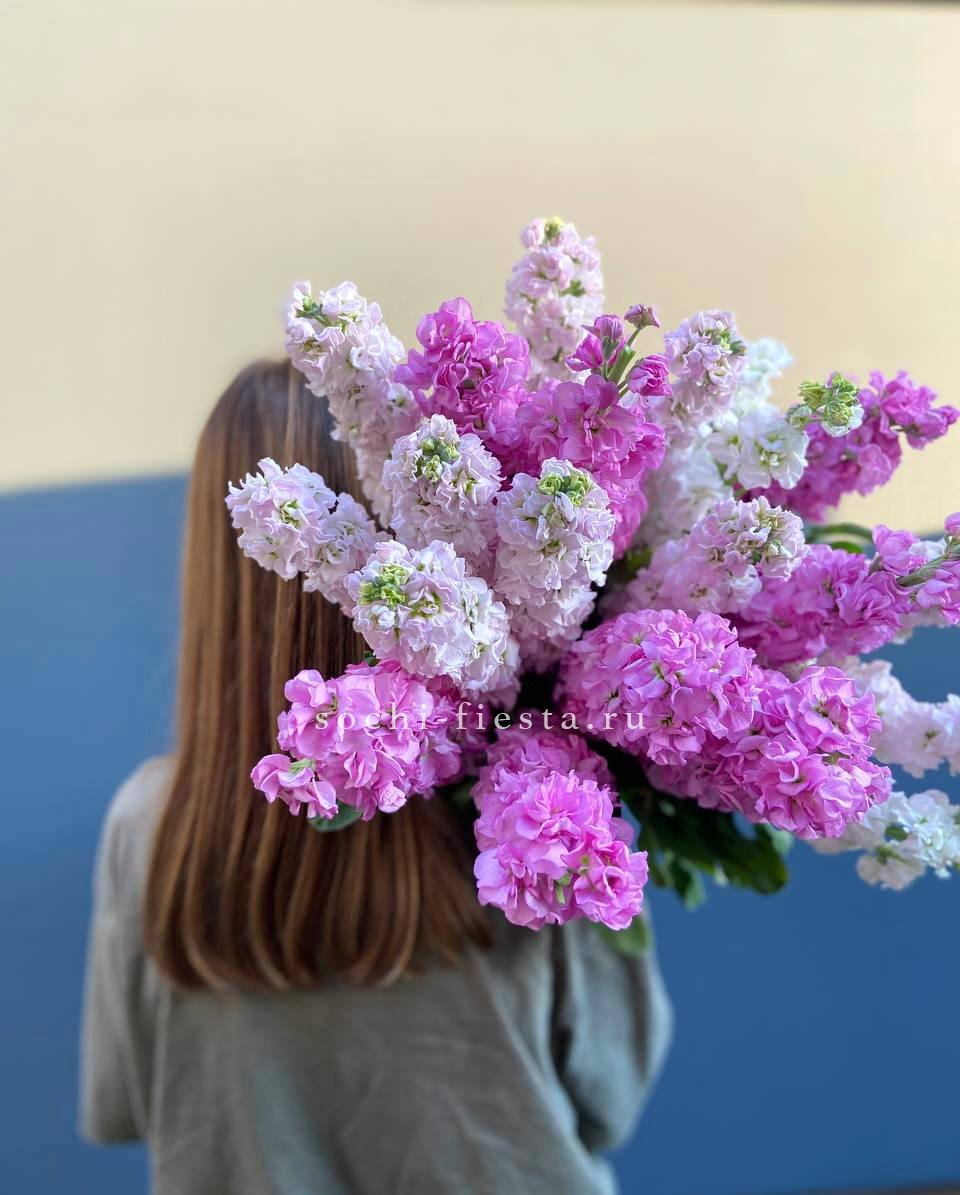
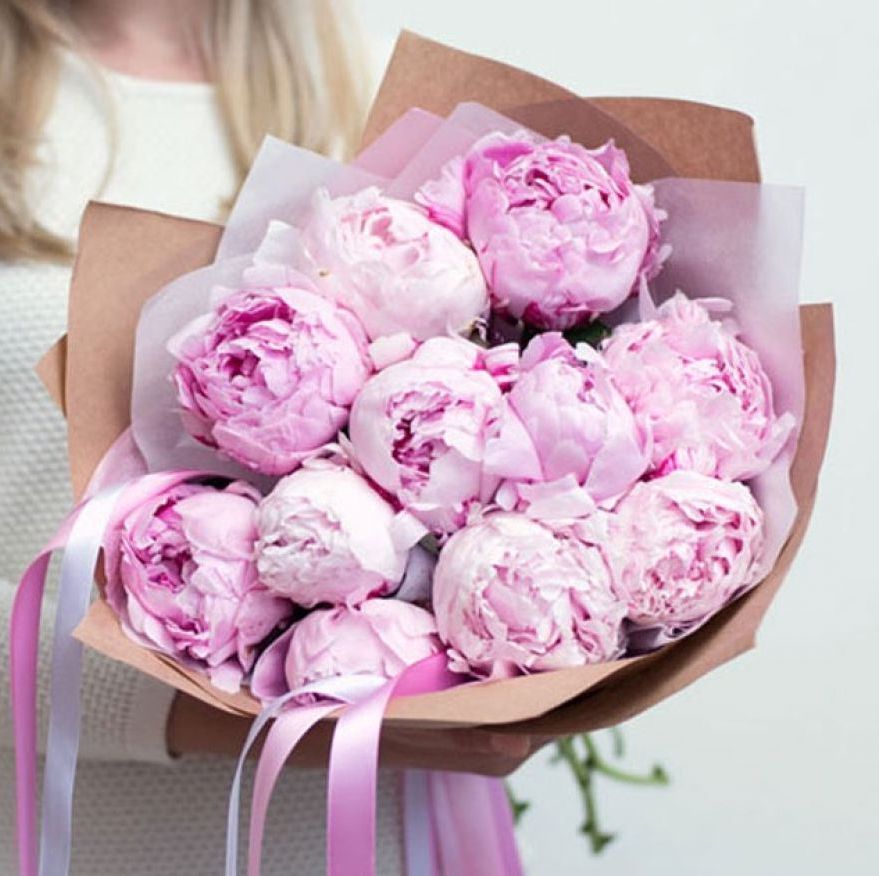
Peonies follow a calendar of their own. In the southern United States they flower from late March into May, and outside that window the ones on sale have flown in from further afield, mainly Chile between October and December, which pushes the price up. Lilies, gerberas and lisianthus have no season at all and sit in the catalogue every month, which is why a single-flower mono bouquet is the safer choice when a date matters more than the flower itself. Where colour matters more than botany, a designer bouquet mixes several kinds within one palette instead of one flower on its own.
Miami's own contribution to the calendar is the orchid. Fairchild Tropical Botanic Garden holds its Orchids in October fair every year. Its Million Orchid Project has put more than half a million native orchids back into South Florida's trees and parks over the years. Peonies sit at the other end of that scale, flown in rather than local, but no less popular for it.
Bouquet, box or basket: choosing for a Miami address
Summer in Miami runs to daytime highs near 33°C with humidity above 70%, which pushes the felt temperature past 38°C, and most buildings answer with air conditioning running non-stop. A cut flower does not need a vase to survive that if it travels in a container instead: a box or a basket set in soaked floral foam can sit waiting at a desk or a reception counter without wilting.
What the courier needs depends on where the flowers are going. For a hotel, the guest's surname as given at check-in and, where known, the room number; the hotel itself decides whether the arrangement goes up to the room or stays at the front desk. For an office in Brickell, the financial district south of Downtown, the company name and floor are usually enough, and where a building runs a pass system, reception takes delivery and passes it on. A hospital is different again: many intensive care units in Miami do not allow fresh flowers on the ward, so it is worth checking with the recipient or the ward beforehand rather than after the courier arrives. For a party or a gathering where the flowers are for the room rather than one person, armfuls fill a table without needing a container at all.
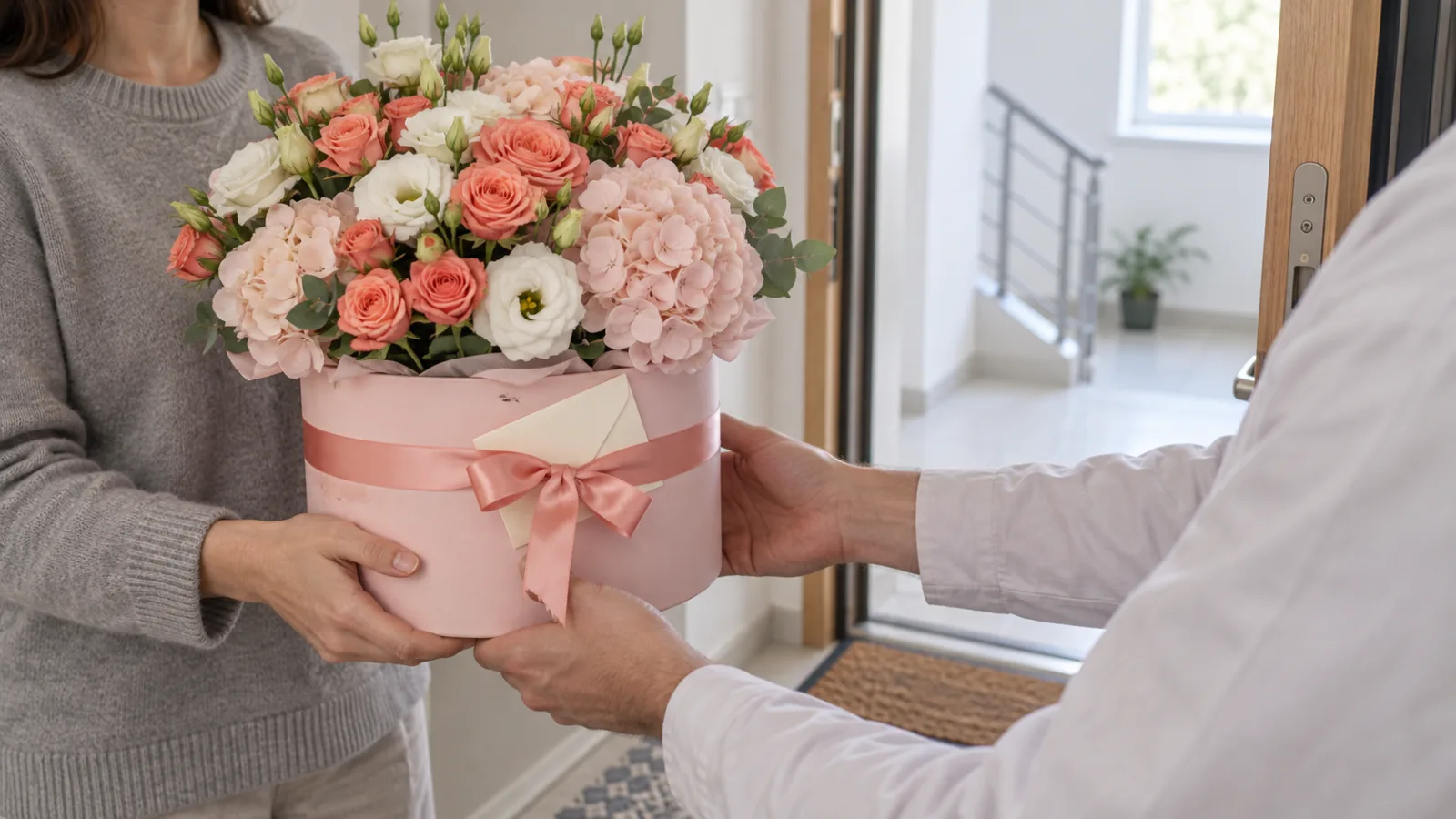
Miami's bouquets span a wide range, from simple mono bouquets and single roses to premium designer giants, subscriptions and gift sets. The exact starting price for each format changes with the catalogue, so it is shown in the grid rather than fixed here.
Stem count alone does not set the price. A long, straight stem costs more than a short one of the same flower. A box or a basket adds the cost of the foam and the container on top of the flowers themselves, and a peony bought in season costs less than one flown in from Chile in December.
The month before Mother's Day is the busiest stretch of the whole cargo year for Miami's flower trade, busier even than the run-up to Valentine's Day, moving more than 45,000 tons through the airport, over 1,500 tons on some days. Wholesale prices tend to rise with that demand. A currency switcher on the site can show the total in euros or roubles as well as dollars, but that is only for reading; the card is charged in dollars, the currency the cart is priced in.
Flower delivery in Miami: zones, timing and the handover
Delivery in Miami is priced by zone:
- city centre — delivery is free;
- inner districts — delivery is paid;
- outer districts — delivery costs more than the inner districts;
- overnight — arranged in advance, with its own price.
The bouquet card shows the delivery time, and that applies only when the florist already has the bouquet in stock; anything made to order takes longer. A chosen date and time slot, rather than an express order, is available to every zone. Miami Beach, the airport and gated communities are handled by request, and the manager confirms the price before payment rather than after.
The recipient is not called ahead of time unless the sender asks for it. If nobody answers the door, the courier waits up to fifteen minutes and tries calling the recipient directly. Where that fails too, the manager contacts the sender, and any next step is agreed with the sender before it happens. The two busiest days on the calendar are Valentine's Day and Mother's Day, whose date shifts every year, and both are worth booking ahead of.
Sending flowers to Miami from another country
Orders are taken at any hour and need no account to place. Where the sender does not have the recipient's address, a phone number is enough for the manager to arrange the rest directly with the recipient. Payment is by Visa or Mastercard, taken before the florist buys anything for the order. The order can still be changed, including the date, the address or the card message, as long as the bouquet has not yet left for the recipient and no later than six hours before delivery.
Miami's calendar reflects its residents: 71.2% of the city identifies as Hispanic or Latino, and Mother's Day is not a single date here. Mexican, Salvadoran and Guatemalan families mark Día de las Madres on 10 May, Nicaraguan families on 30 May, and many households keep the US date as well, so a sender abroad is wise to ask which one applies.
Condolence flowers need the same care. Jewish funerals traditionally do not accept flowers, and where a family asks for donations "in lieu of flowers," that request is respected rather than worked around.
Keeping a bouquet fresh in Miami heat and air conditioning
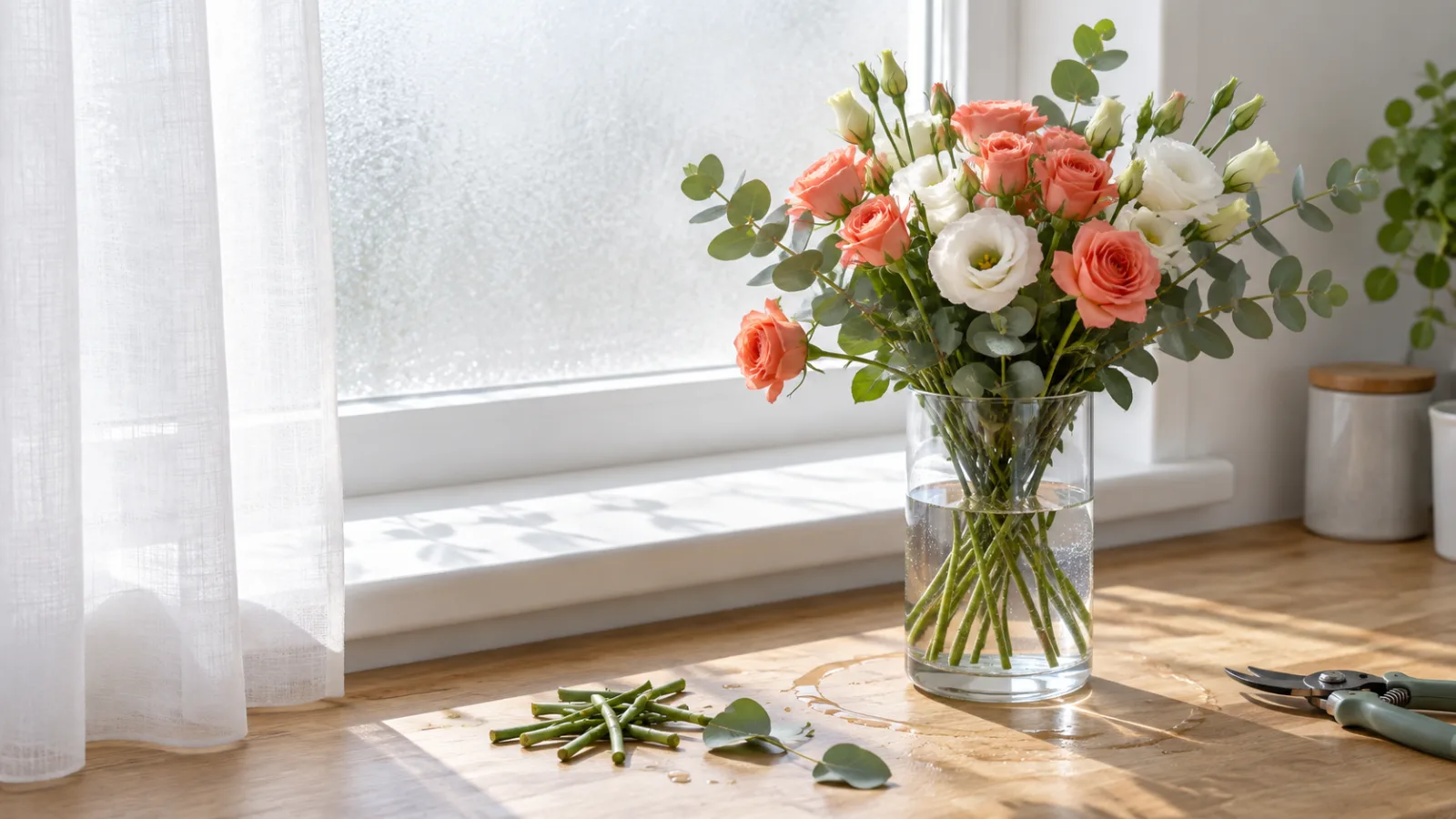
The stress on a bouquet in Miami is rarely the heat by itself; it is the swing between the heat outside and the air conditioning indoors, which dries the air and the stems along with it. A few habits make the difference between a bouquet lasting days or barely surviving the afternoon:
- recut each stem at an angle, a centimetre or two off, with a clean, sharp blade;
- strip any leaf that would sit below the waterline;
- keep the vase out of direct sun and away from the air-conditioning vent;
- change the water daily, since it clouds quickly in the heat;
- water a boxed or basket arrangement into the foam rather than tipping it.
Lilies are toxic to cats, so a household with one is better off with an arrangement that leaves them out. A hydrangea that has wilted is the exception to cutting the stem alone: submerge the whole head in cool water for an hour or two and it usually recovers.