




Plants in Miami: the orchid, from Fairchild's fair to a pot at home
The Plants in Miami section opens with orchids, the flower behind Fairchild garden's Million Orchid Project, which has reintroduced more than 500,000 native orchids to South Florida's trees. Each October the garden runs Orchids in October, a fair of local orchid sellers, and a spring show called Orchids in Bloom follows later in the year. The moth orchids in this section aren't the native species Fairchild replants, though the same enthusiasm for orchids runs through it. The section also holds open glass florariums with succulents and a handful of cacti, and where the plant will stand at home should guide the choice.
A boxed orchid or one in a pot: what lasts on a Miami desk
Among the plants in Miami, a phalaenopsis orchid keeps its flowers for two to three months, so it settles in rather than fading within a week the way a cut bouquet does. Whoever receives it gets weeks of blooms, not days.
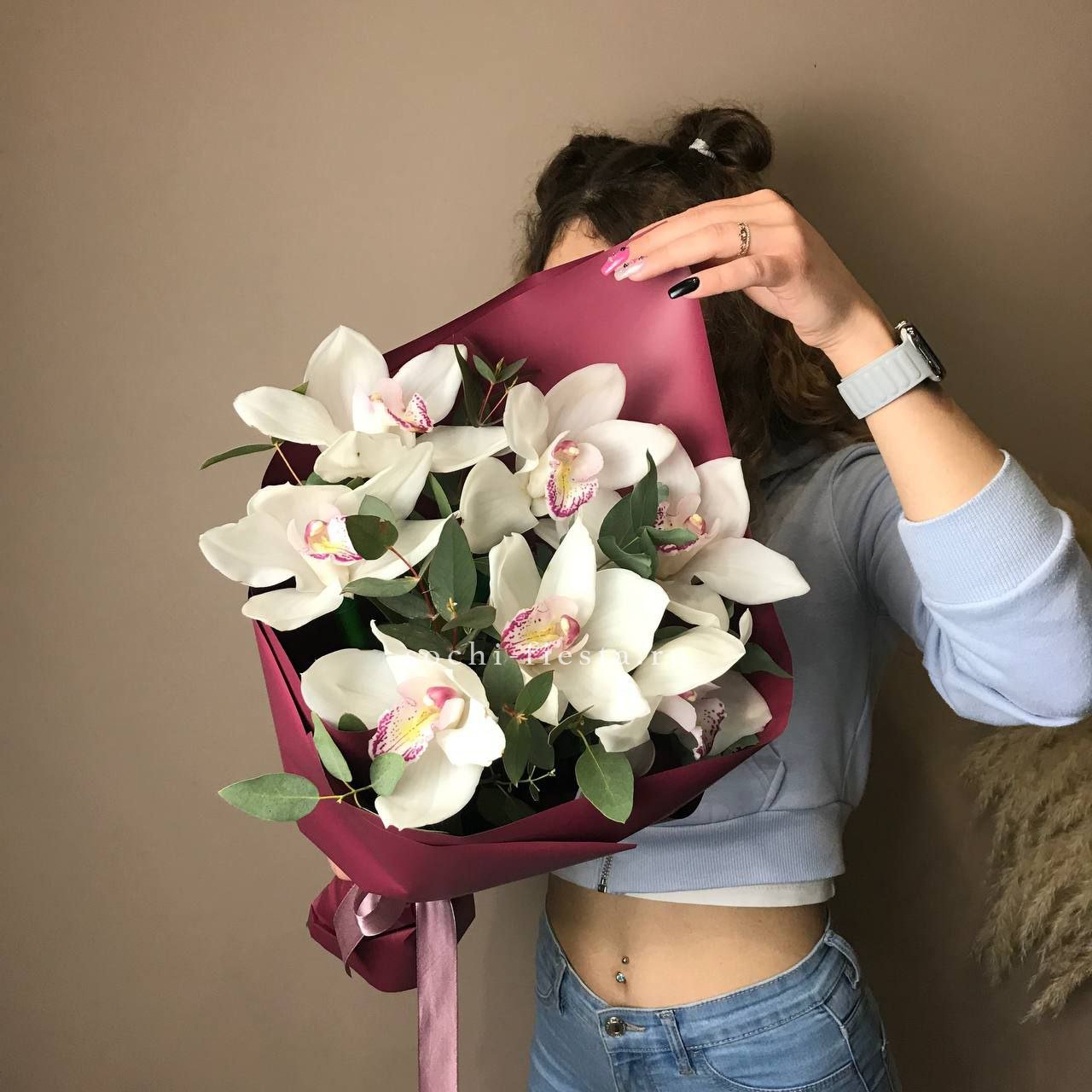
The format matters as much as the variety here. An orchid can arrive boxed on its own, paired with roses in the same box, set beside a bar of chocolate, or already potted in jute, among them 7 Orchids in a Box and Roses and Orchids in a Box.
A boxed or potted orchid suits a desk in a Brickell office tower, where the air-con runs all day and nothing needs topping up with water on arrival. Name the company and the floor when ordering; where the building runs a pass system, the plant is handed in at reception. A courier photographs the finished order before leaving, most deliveries go out the day they're placed, and the centre is free. The zone is picked at checkout, and the delivery details page covers all of it. Anyone after cut stems instead will find them among the cut flowers.

A phalaenopsis sets a new flower spike once daytime temperatures drop below 27°C, and Miami's dry season, November to April, holds a daily high around 25°C, close enough that the plant reads it as a cue to bloom again. Summer runs closer to 33°C, well past that point.
The orchid does best between 19°C and 30°C by day and 16°C to 19°C at night, and direct summer sun burns its leaves, so a windowsill that catches midday light in July isn't the spot for it, air-con or not. Bright, indirect light suits it through both seasons.
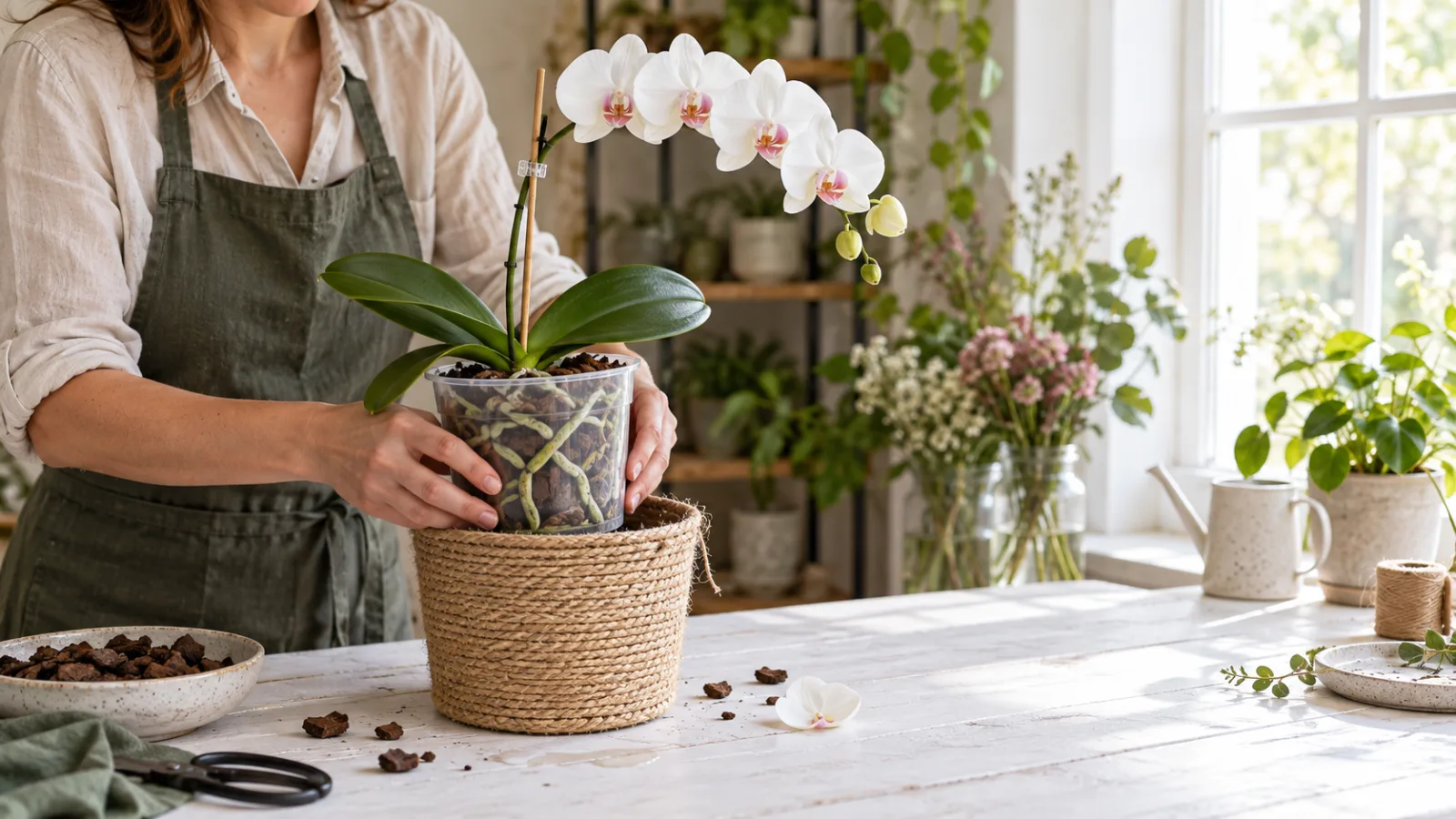
The clear plastic pot is part of the plant, not just packaging: left in place, it shows the roots and how damp the bark inside still is. Water it about once a week, tip out whatever collects in the saucer, and keep the leaves and the central crown dry. Once the flowers drop, cut the spike above the second node from the base, and the plant often sends out a new one from there.
From May to October Miami's wet season pushes humidity past 70 percent on many days, the kind of air succulents don't meet in the wild. These plants come from hot places with little rain and store water in thick leaves that can run up to nine-tenths water by weight.
An open glass bowl, like the Cube Florarium with Haworthia Succulent, suits that background: no lid, no trapped moisture, just a spray of water across the leaves and stone from a bottle when the surface dries out. Succulents are the other plants in Miami that need little looking after once they're kept this way; cacti have their own cacti section just below.
Looking for where to start: orchids on their own or paired with roses sit under flowering plants, the glass terrariums with succulents are filed under florariums, and a cactus or another potted type on its own sits under potted plants by type.