



Tulip delivery in Mumbai: Dutch groups, the cool season and fast logistics
The tulip is a guest of the cool months in Mumbai and a pointedly "non-local" gesture. Against the marigold, mogra jasmine and roses the city knows so well, it reads as a European note — and that is part of why it is prized. It is bought for a birthday, an anniversary, a gift for a colleague at an office in the Bandra Kurla Complex, or simply to add light to a bright flat by the sea.
The tulip is not grown commercially in India — it is entirely Dutch, imported. And the climate of this seaside city is not its home: real cold never comes here, and humidity stays high all year. So in Mumbai the tulip is a flower of a narrow window: it best survives the journey and stands in the vase in the dry winter, from December to February.
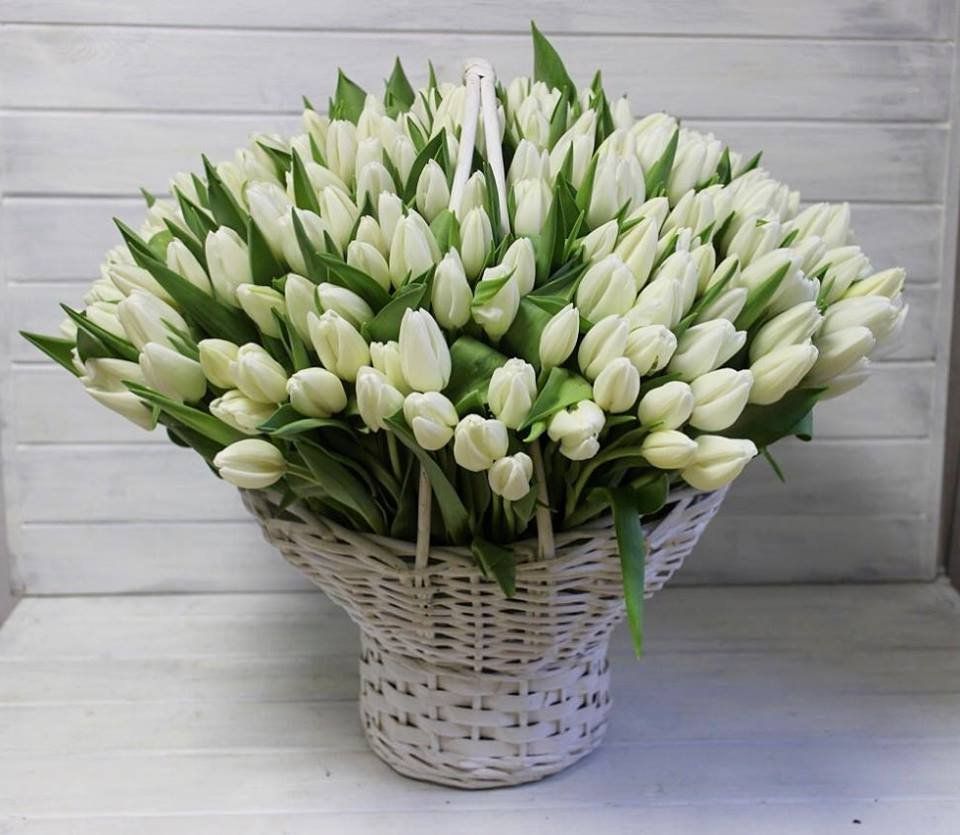
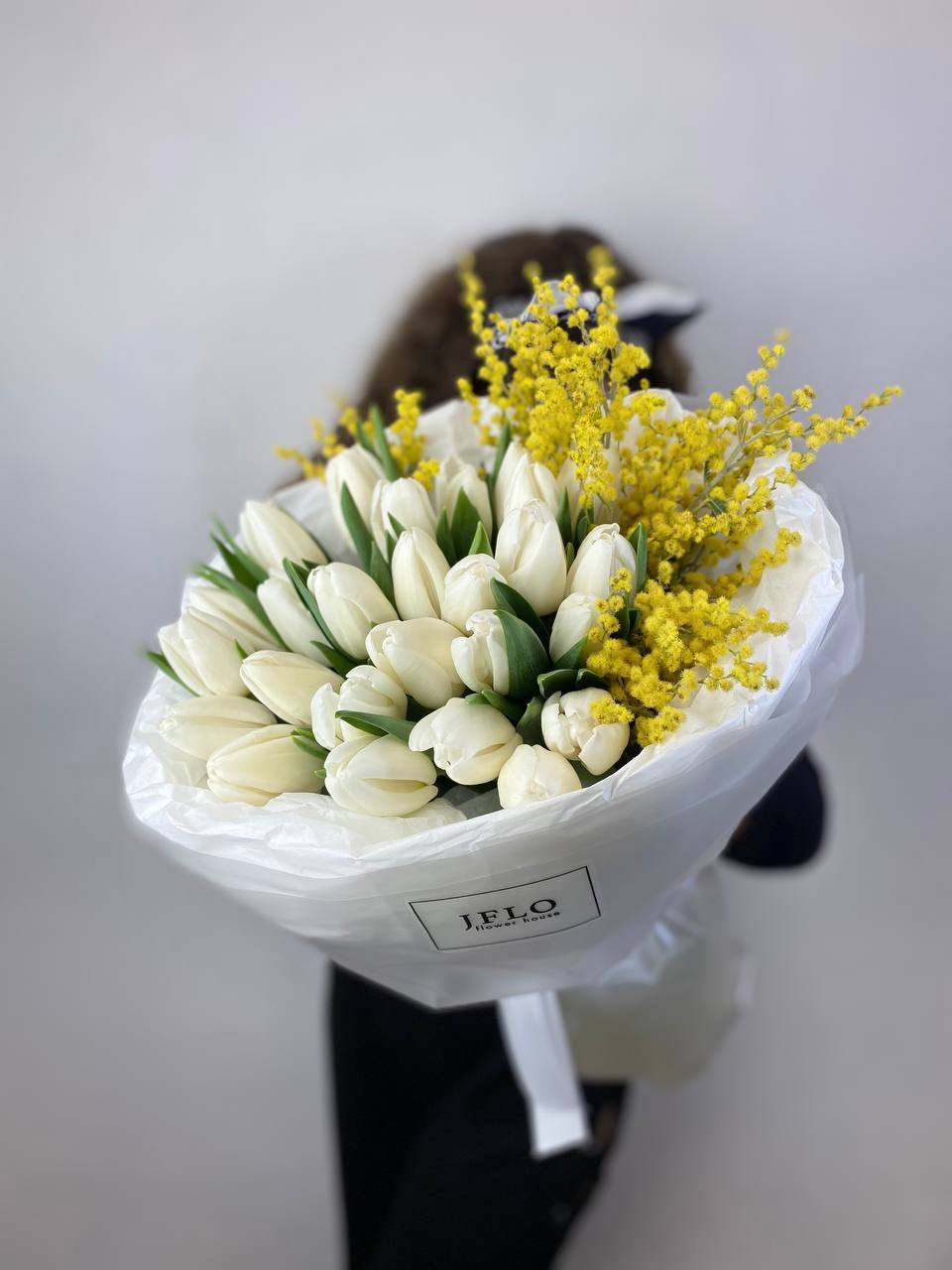
This category covers single-variety bouquets, market-style bunches in kraft, boxed arrangements and mixes with ranunculus, roses and eucalyptus. Tulips work at any budget: a modest bunch of 9–11 stems looks no worse than a monumental armful of 51 — the variety and the presentation decide everything.

Groups and varieties in the catalogue
More than 3,000 tulip varieties are registered worldwide. Around 35–45 key ones make it to the working shelf, divided by bud shape, stem length and flowering character.
- Triumph — the classic cup-shaped bud, 40–50 cm stems. The largest group. Varieties: Strong Gold (yellow), Negrita (purple), Ile de France (red), Purple Prince (magenta).
- Darwin Hybrid — large-headed, with buds up to 12 cm across. Apeldoorn (scarlet), Ivory Floradale (cream). For large bunches and accent bouquets.
- French Tulips — long-stemmed premium tulips up to 70 cm. Maureen (white), Menton (soft peach). For weddings and high-end floristry.
- Parrot — parrot tulips with fringed petals and a "torn" texture. Rococo (red), Blue Parrot (blue-violet). For designer and dramatic compositions.
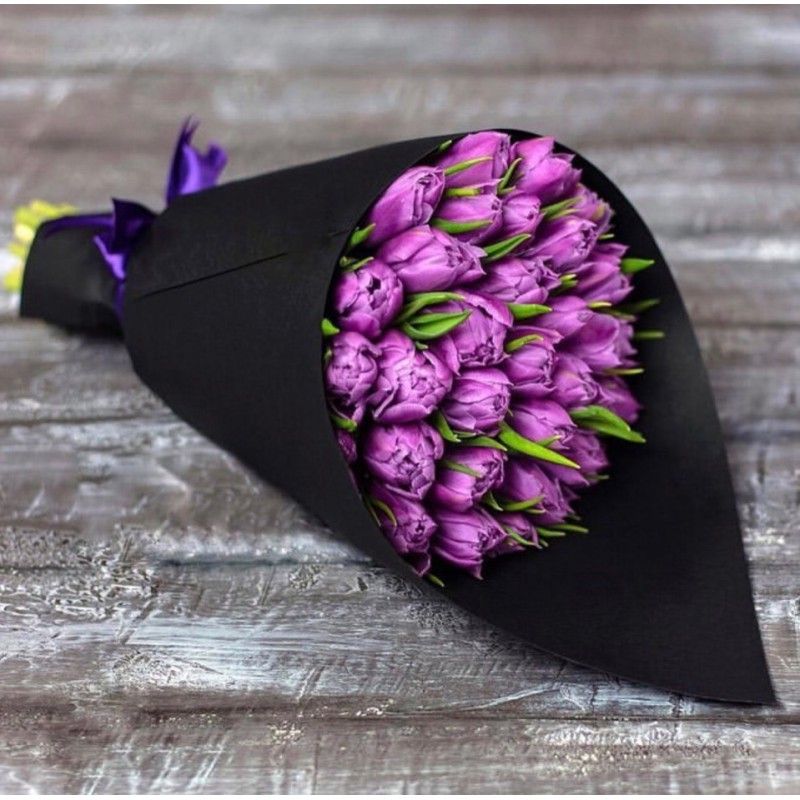
- Double / Peony — double "peony-type" tulips. Mount Tacoma (white), Foxtrot (pink), Angelique (pastel pink). An alternative to peonies out of season.
- Queen of Night — an almost-black deep purple. A favourite of interior designers and signature floristry.
Season and main occasions
The tulip's natural season is April–May, but through glasshouse forcing the Dutch run flowering from October to June. For Mumbai the working window is narrow: the tulip is at its best in the cool, dry months (December–February), when it best survives the journey and stands in the vase. That window also holds the local wedding season and 14 February. For the big dates, agree orders five to seven days ahead — demand for tulips in season is high.
In the heat (March–May) and especially during the monsoon (June–September) the tulip rarely appears in the catalogue: mugginess above +30 °C and humidity near 90 % do not suit it, and quality drops fast on the way. In that period it is more honest to offer roses, ranunculus or other heat-tolerant flowers.
A tulip's quirk: it keeps growing
A cut tulip is a living plant. In the vase the stem grows another 2–3 cm in the first days, and the bouquet changes shape from day to day: by the end of the first week the tulips lean toward the light — that is normal and lovely, not a fault. To keep an even shape, use a tall, narrow vase that holds the stems upright.
A fresh tulip is easy to spot: a firm, cool stem, a tightly closed coloured bud, leaves without yellow patches. If the stem is warm and soft, the lot is already at its final stage. Every delivery of ours is no more than four days from the cut.
"In Mumbai the tulip is a flower of December and January. In the dry cool it holds beautifully, and people order it gladly. But in the April mugginess and the monsoon I honestly talk people out of it: in our humidity even a fresh lot will last half as long. Better to wait for the season or take something suited to our climate."
— Kunal Desai, florist, Mumbai, 11 years in the trade
Freshness and logistics
Dutch tulips fly into Chhatrapati Shivaji Maharaj International Airport (BOM) — the flight from Amsterdam is about nine to ten hours — and after customs the lot reaches the florists the same day. We carry tulips in cold hydro-boxes, the stems in water at +6 to +8 °C right up to delivery. A recipient in Bandra or Powai gets a full flowering cycle of 5–7 days with proper care and a cool spot at home.
Delivery specifics in Mumbai
The tulip loves cold, and Mumbai knows no cold — so its season here is the shortest of any flower: the cool, dry December–February (+18 to +33 °C). The heat (March–May) and the monsoon (June–September), with rain and humidity near 90 %, are all but hopeless for the tulip: it fades fast in transit. Frost simply never happens in the city. Year-round we carry bouquets in refrigerated transport, and in the rainy season we build in extra time for traffic and waterlogged stretches.
We deliver tulips across all districts of Mumbai: Bandra, Juhu, Andheri, Powai, Worli, Colaba, Lower Parel, Malabar Hill, Marine Drive, Dadar and Borivali, as well as Thane and Navi Mumbai. Payment is in Indian rupees (₹, INR). Order ahead — three to seven days, and earlier for the major holidays.
Home care
The tulip needs a different approach from roses. The key rules: only cold water at +6 to +10 °C, a fresh straight cut (not angled) every two days, and a minimal water level in the vase — 5–7 cm from the bottom. The tulip does not tolerate deep water: the stems rot, and in Mumbai's humid air that happens faster.
Do not place tulips next to daffodils without preparation: daffodil sap speeds ageing by 30–40%. If you want a mixed bouquet, keep the daffodils apart for 24 hours, rinse the stems and only then add them to the shared vase. In a Mumbai flat, keep tulips away from the direct draught of the air conditioning and from a window in full sun, in the coolest part of the home. Moving the bouquet to a cool spot overnight adds two to three days of life.

