


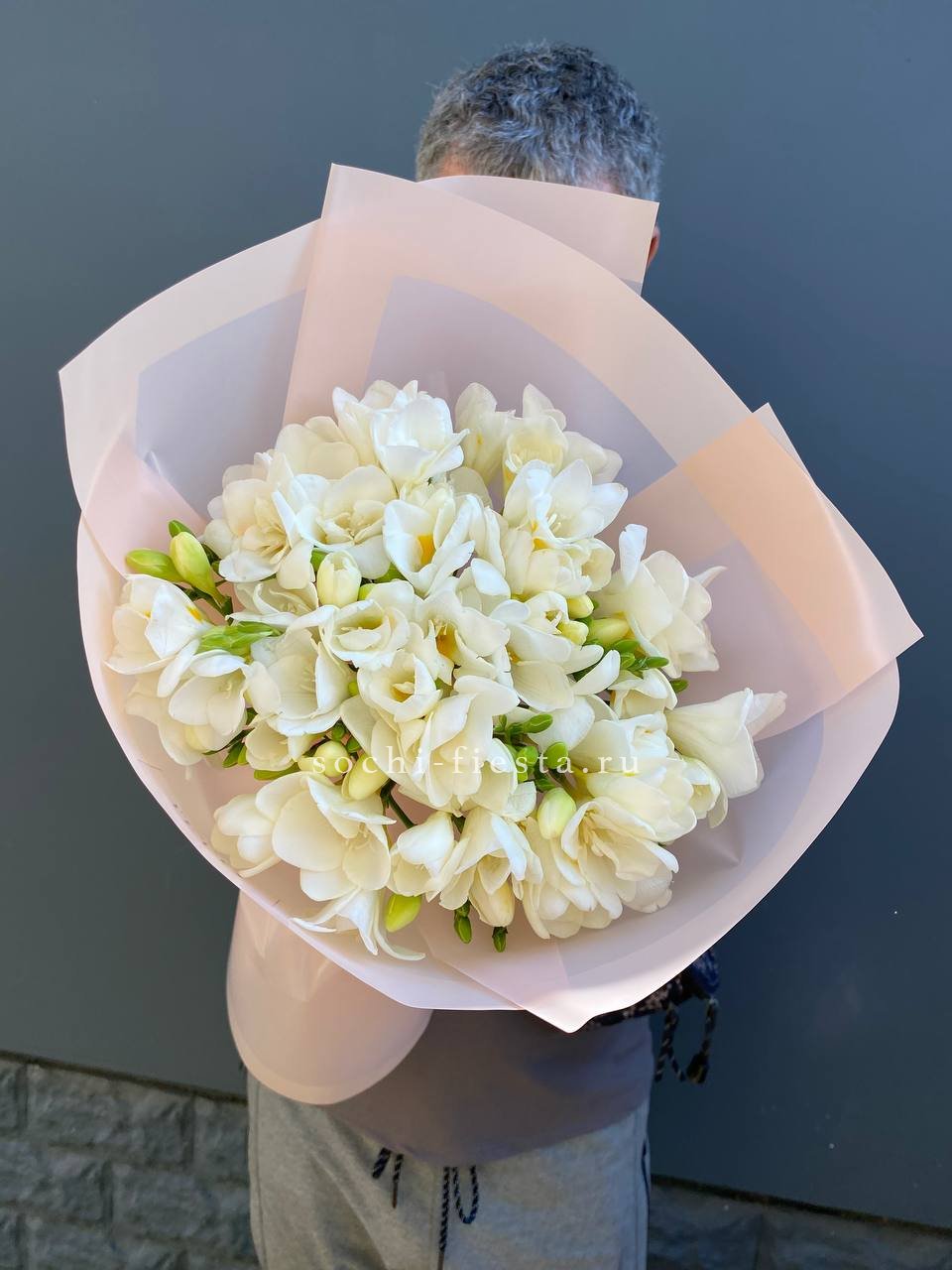


Choosing bouquets in New York: Colombian roses, June peonies and colour
Almost four fifths of the cut flowers sold on the US market are imported, more than half of that import from Colombia and about a quarter from Ecuador, so bouquets in New York are built mostly from imported stems, mainly from Colombia and Ecuador. Where those stems come from, when a flower is local rather than flown in, and what colour says to the person receiving it all feed into the same decision: which shape suits the address the courier is heading to.
What New York bouquets are made of, from Colombian roses to June peonies
Flowers grown within the United States make up a small share of what is sold here, and California alone accounts for roughly seventy per cent of that home-grown crop. Most bouquets in New York are therefore built from flowers that flew in from much further away, and where New York's flowers come from is worth a line rather than a full story: the route runs through South America before it reaches a florist's counter.
Peonies are the exception with a real local season. In the Northeast they open from late May to early June, and outside those few weeks the peonies on offer have travelled in from somewhere with an opposite calendar. Lilies, gerberas, alstroemeria, chrysanthemums, carnations and lisianthus, by contrast, grow in heated greenhouses, which is why they sit on the list in January just as they do in July. The Lily and Gerbera Bouquet is one example of that year-round reliability, built from two flowers that never go out of season.

Red, pink, white or a chrysanthemum: what a bouquet's colour says
Colour has carried conventional meanings in flower dictionaries since Victorian times. A red rose meant passionate love, a pink one a gentler affection, white stood for purity and yellow for friendship, though the various books never fully agreed and no single list has come down intact. Eleven Red French Roses leans on the oldest and least disputed of those meanings.
A chrysanthemum reads differently depending on where someone grew up. In the United States it is usually treated as a cheerful, everyday flower, but in France, Italy and Poland large chrysanthemums are what people lay on graves, so the choice is worth a second thought when the recipient comes from one of those countries. Buyers choosing by colour rather than by variety tend to describe what they want in plain terms: bright for a celebration, delicate for a first meeting, romantic for a date.
A business bouquet for Midtown, a wrapped one for a prewar flat
Midtown is the largest business district in the world, and Lower Manhattan ranks as the city's second financial centre, which makes an office a common and practical bouquet address in New York. Business bouquets, kept compact or mini in scale, sit on a reception desk without taking it over. The order needs the company name and the floor, and where a building runs a pass system the courier simply leaves the bouquet at reception for someone to carry up.
A prewar apartment calls for a softer shape. Bouquets in kraft paper, or one left loosely wrapped, travel more easily up a narrow stairwell than anything built around a box. Once the heating season starts on the first of October, steam radiators common in older buildings dry the air quickly, which is one more reason a wrapped bouquet gets a fresh cut and water as soon as it arrives.
A giant bouquet earns its place at a restaurant table instead. The time is agreed with the venue beforehand, and the flowers are timed to arrive with dessert or a toast rather than at the start of the meal. Giant bouquets are the format built for that kind of entrance.
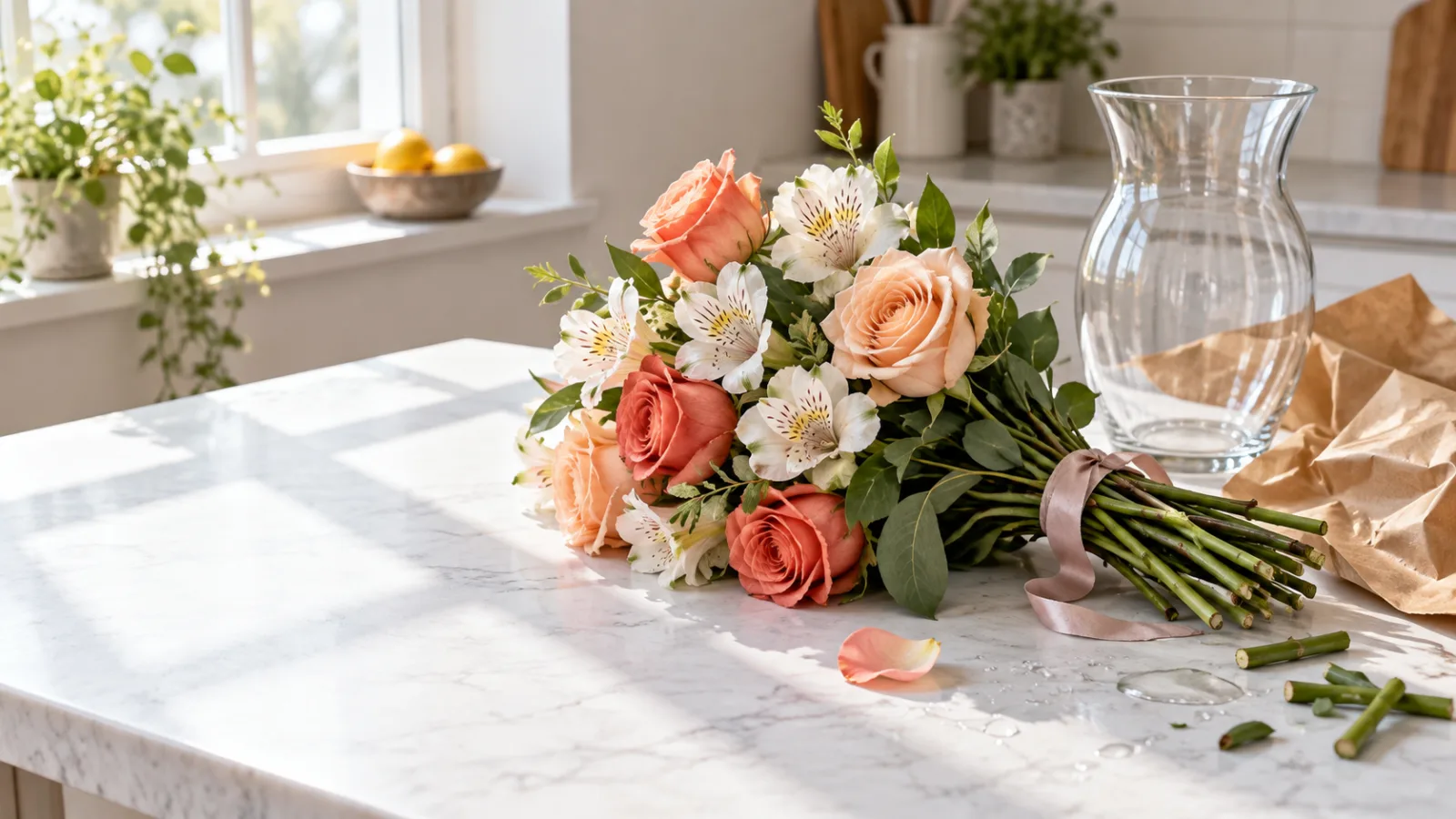
Bouquet delivery in New York is free within the centre, and every other zone carries a fixed fee shown before payment. The timing for any bouquet appears on its own page rather than being promised in advance, most orders are handed over the same day they are placed, and a photo goes out before the courier leaves. Full terms are on the delivery page, useful reading before you buy a bouquet in New York for an address you don't know well. A good place to start choosing is by mood, through bouquets by colour, or by the calendar, through seasonal bouquets.