


Mixed bouquets in New York: which flower leads, and in which month
Some mixed bouquets in New York take their shape from hydrangea, a flower named for the Greek words for "water vessel". Linnaeus gave it that name in 1753 for the shape of its seed capsules, not for how much it drinks, though it is thirstier than almost anything else in the bunch, even through its petals. A mixed bouquet stands or falls on one flower with the biggest head, so the real choice is which stem leads it, and in which month.
Hydrangea, lily or rose: choosing the flower that leads the mix
Hydrangea carries the biggest head of the three and is thirsty to match. If a head droops, the fix is to submerge the whole flower, not just the stem, in cool water for an hour or two, and never longer than four or five hours; the petals drink as readily as the stem does.
Lily brings weight of a different kind: a few open blooms fill out a bouquet on their own. The pollen stains fabric, so florists lift the anthers out once a flower has opened, and a stain already on cloth comes off with sticky tape rather than a rub. Lilies aren't the gift for a home with a cat, since every part of the plant, down to the water in the vase, is toxic to them.
Rose holds its place for about a week in the vase, the shortest of the three. A rose sold in New York is almost certainly grown a long way off: close to four-fifths of the cut flowers sold in the US are imported, more than half of that from Colombia and roughly a quarter from Ecuador.
Pick by what suits the day rather than the flower alone. Hydrangea suits someone willing to change the vase water every day or two; a lily-led mix should skip any home with a cat; a rose-led bunch is the safer, more familiar choice.

Gerberas, lisianthus and alstroemeria: the stems around the lead
Gerbera, lisianthus, alstroemeria, chrysanthemum and carnation are all greenhouse-grown, so they're in the mix every month of the year regardless of what the lead flower is doing. That keeps the supporting stems predictable even when hydrangea or lilac is seasonal.
They don't age at the same pace, either. Alstroemeria, chrysanthemum and carnation last two to three weeks, roughly double a rose's week in the vase, so a mixed bouquet ages unevenly: the lead flower can be spent while the stems around it are still fresh. Pull the wilted ones out one at a time and leave the rest standing.
In the US, chrysanthemum usually reads as a cheerful flower rather than a mournful one, which is why it sits easily in a mix built for a happy occasion.
Where one flower on its own says more than a mix, single-flower bouquets make the same point with a single kind.
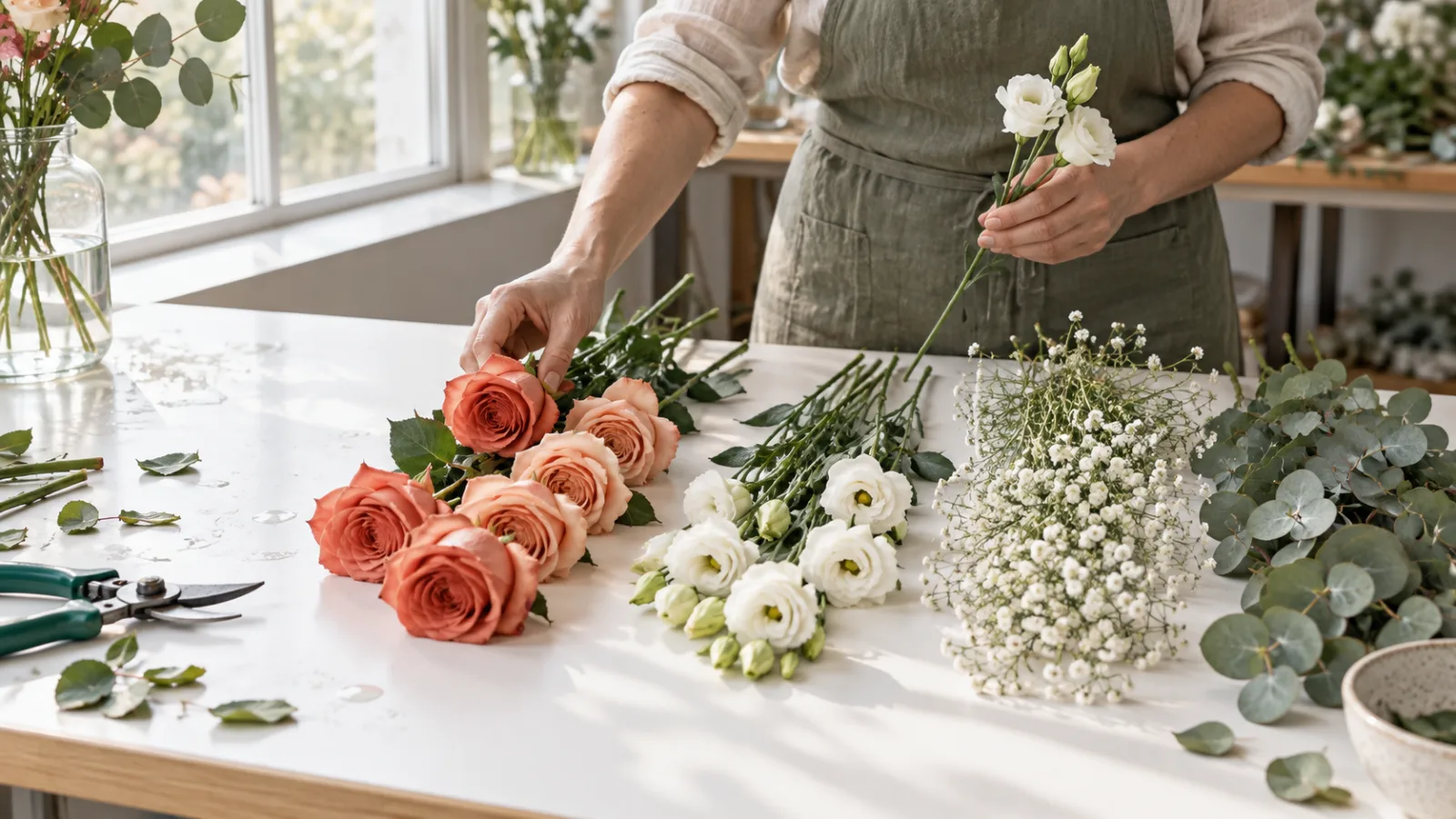
Lilac in May, peonies in early June: when a New York mix turns seasonal
Lilac flowers in May across the northern hemisphere, and that's the month it shows up fresh in a New York mix rather than flown in from somewhere already past its own spring. Peonies follow a similar window in the Northeast, blooming from late May into early June; outside those weeks the peonies on offer have travelled from a place still in its own season. Hydrangea and sunflower are the summer cut flowers, and by late summer and into autumn the mix turns to dahlia and chrysanthemum.
When a seasonal flower isn't available, the florist swaps it for something close in colour and price, and that swap shows up in the photo sent before the courier leaves. If the substitute doesn't suit, there's time to ask for a change before the bouquet goes out.
Most mixed bouquet orders in New York are handed over on the day they are placed, and delivery terms by district are listed separately. Steam heat dries out an apartment fast, which is one more reason to keep an eye on the vase; steam-heated flats and the rest of the city's seasons are covered on the main flowers page. For a single confident stem, start with roses; for several kinds built around a colour, look at designer bouquets.