



720x720_q85.jpg?v=1787130511)


_e58557720x720_q85.jpg?v=1787130512)


720x720_q85.jpg?v=1787130516)
720x720_q85.jpg?v=1787130516)
_0406c4720x720_q85.jpg?v=1787130516)
Roses with delivery in Santiago: Central Valley farms, Ecuadorian cut, and freshness to the door
Santiago sits in Chile's Central Valley, between the Andes and the Coastal Range. The Mediterranean climate — dry warm summers and cool winters — works in floristry's favour: flower growers in the valley around the capital cut a strong rose with a dense head. This is a rare case for the region where part of the rose is genuinely local rather than imported.
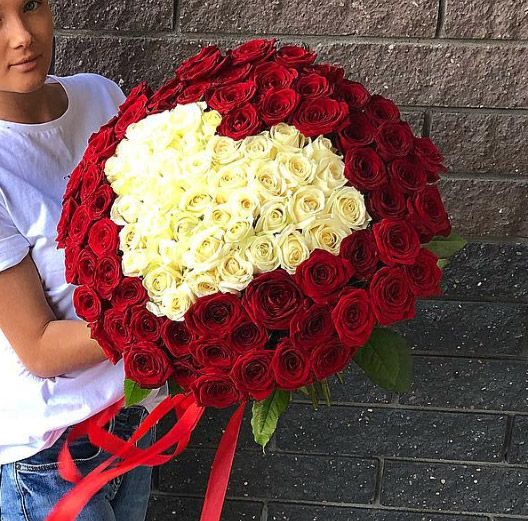
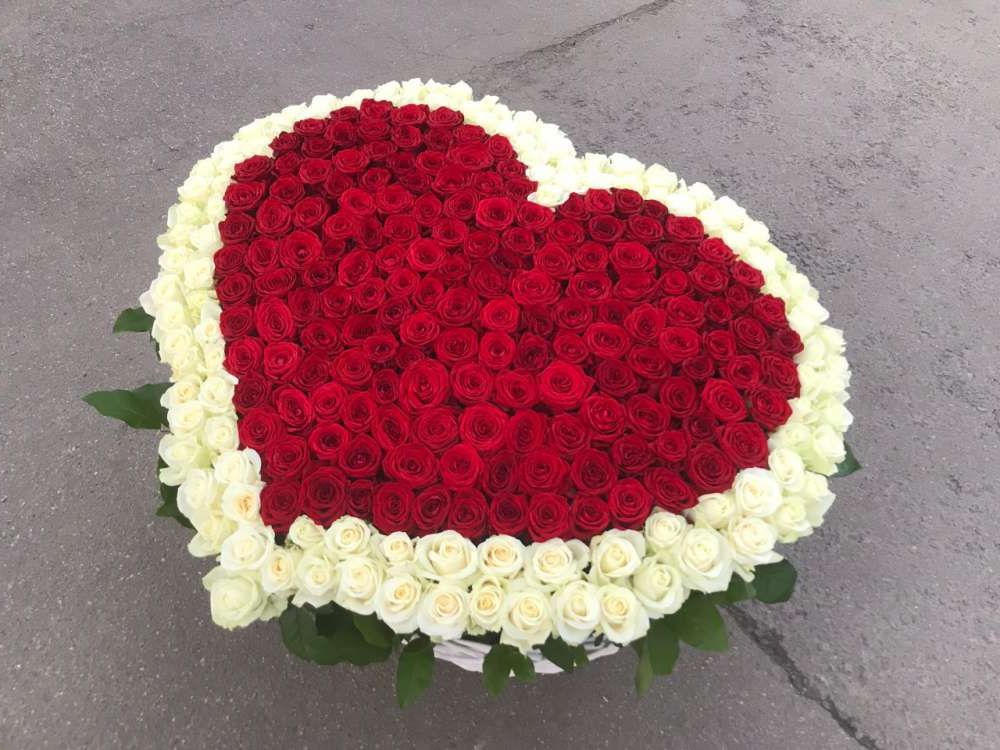
The second half of the range arrives from the north. Ecuador is the world's benchmark for roses — its equatorial farms at 2,800–3,000 metres produce the longest stem and the largest head on the planet. The category covers single-variety bouquets, mixed arrangements, single stems for no occasion at all, plus boxes and large armfuls. Here they count by the dozen (docena) and in sets of 24, 50, and 100 — a gift format that often matters as much as the variety.
Which varieties to choose
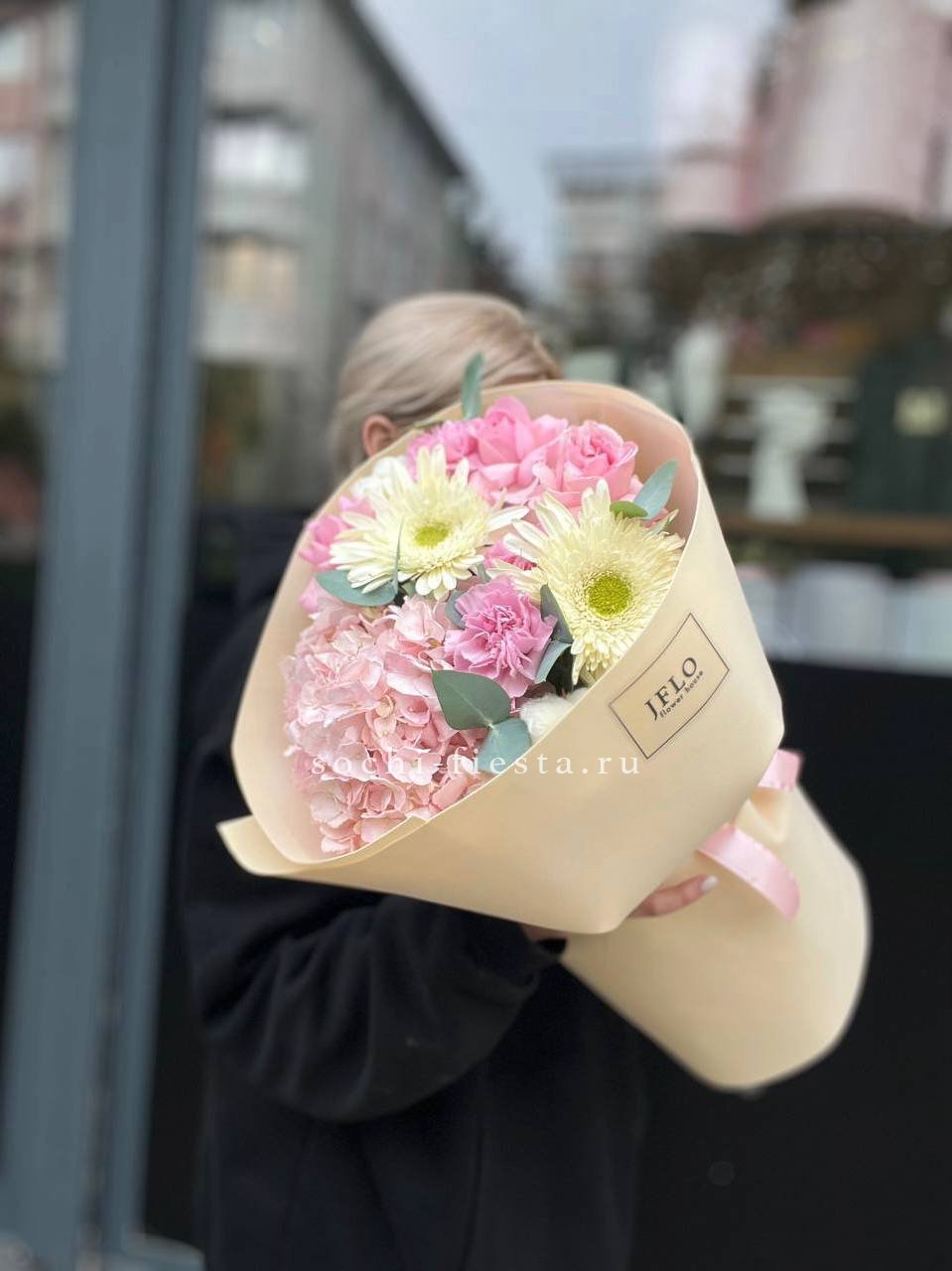
We keep three working groups on the shelf: large-headed varieties from local and Ecuadorian farms, a soft pastel palette, and English garden roses by David Austin. Each solves its own task — from an anniversary statement to an intimate date-night bouquet.
- Freedom, Explorer, Mondial — the region's flagships. Stem 70–90 cm, dense bud, a vase life of 10–14 days with proper care. Freedom is the best-selling red.
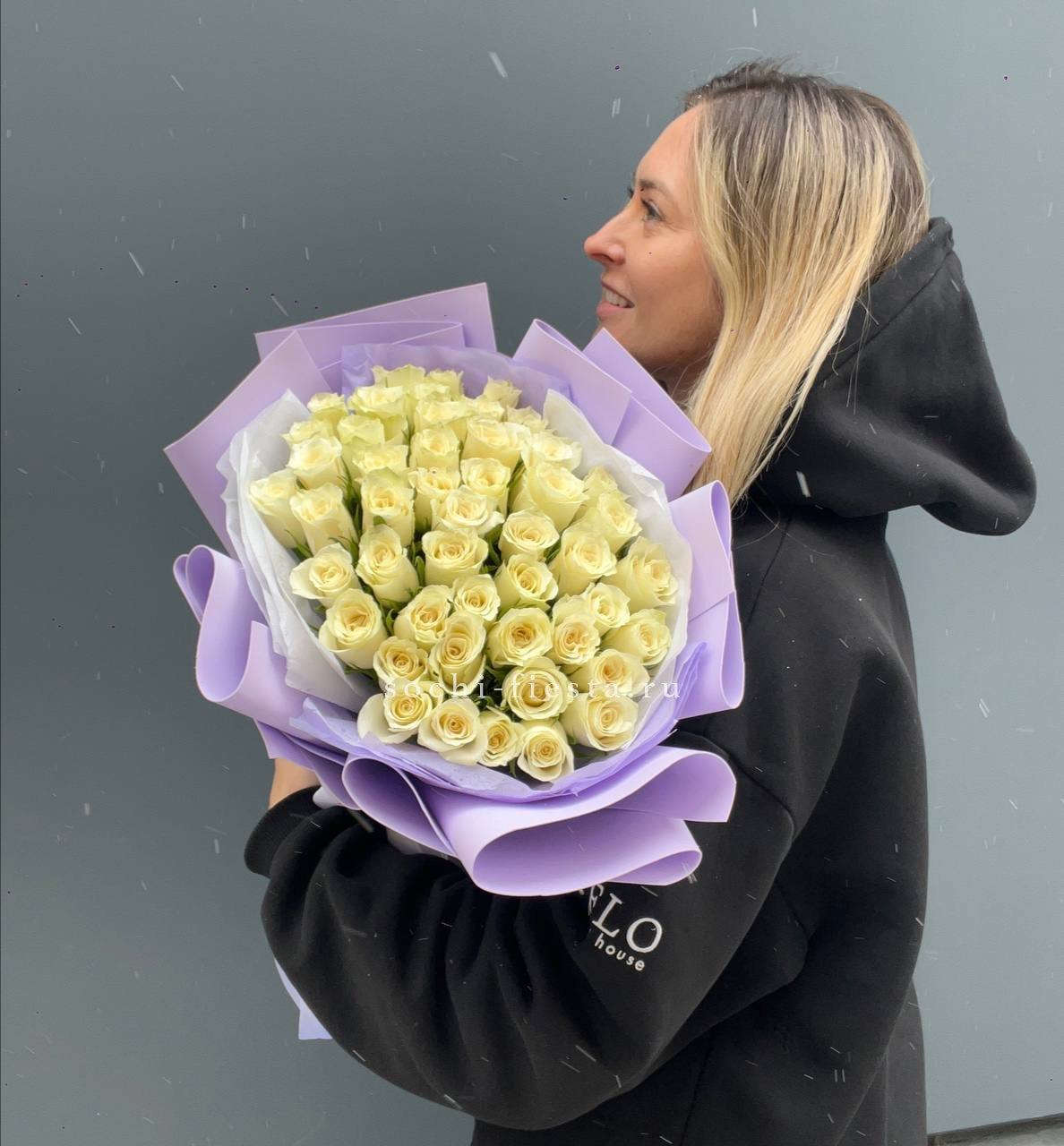
- Vendela, Playa Blanca, Mondial — cream-white classics, the backbone of wedding bouquets. Mid-sized bud, a reliable choice for any task.
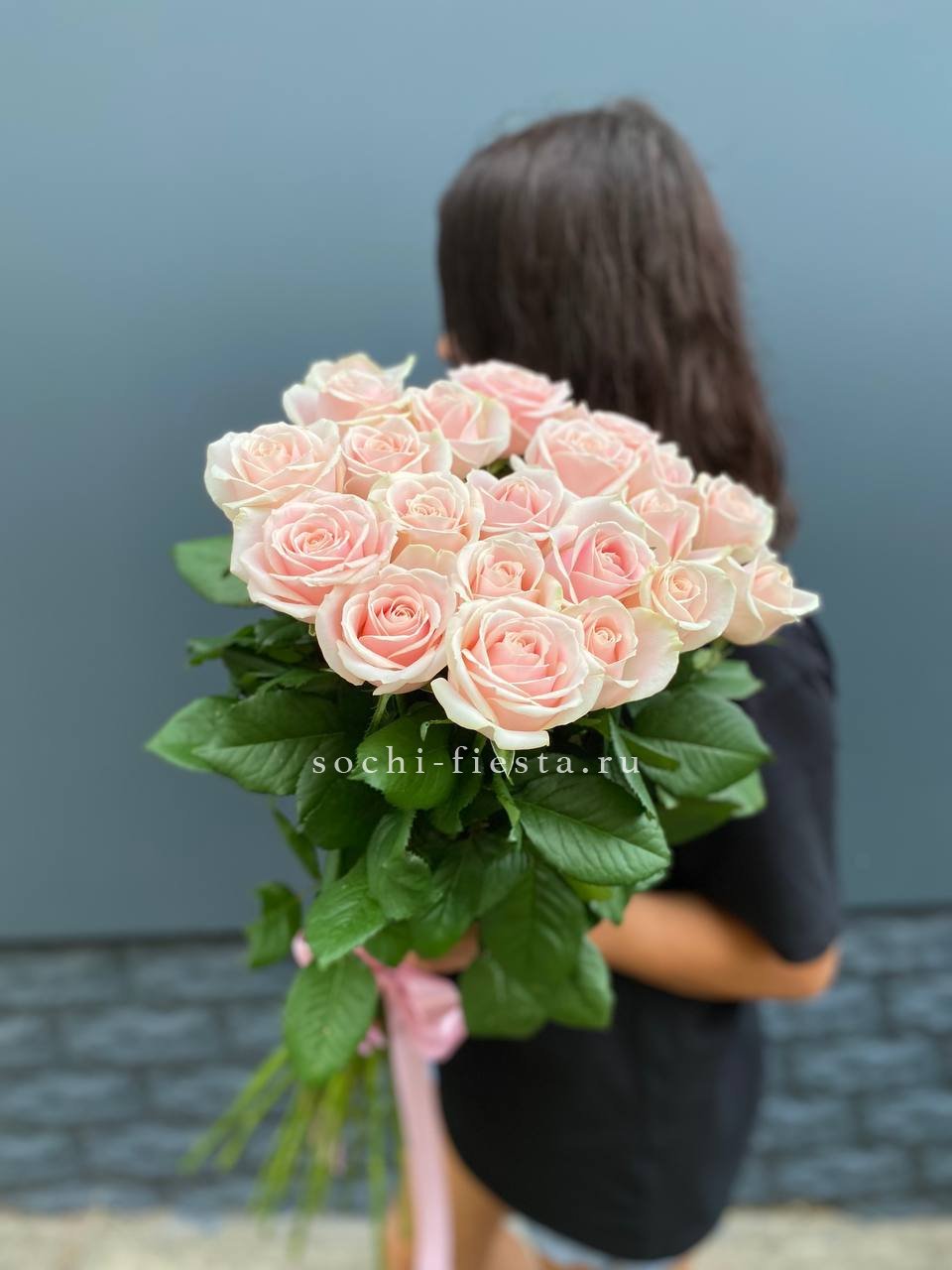
- Quicksand, Mother of Pearl — dusty-pink and powdery tones, the fashionable nude palette.
- Juliet, Patience — David Austin English garden roses. Cup-shaped, densely petalled, with a myrrh and apricot fragrance. Ideal for the bridal bouquet.
- Spray roses — several buds on a single stem. Suited to airy arrangements and smaller gifts.
Occasions and stem count
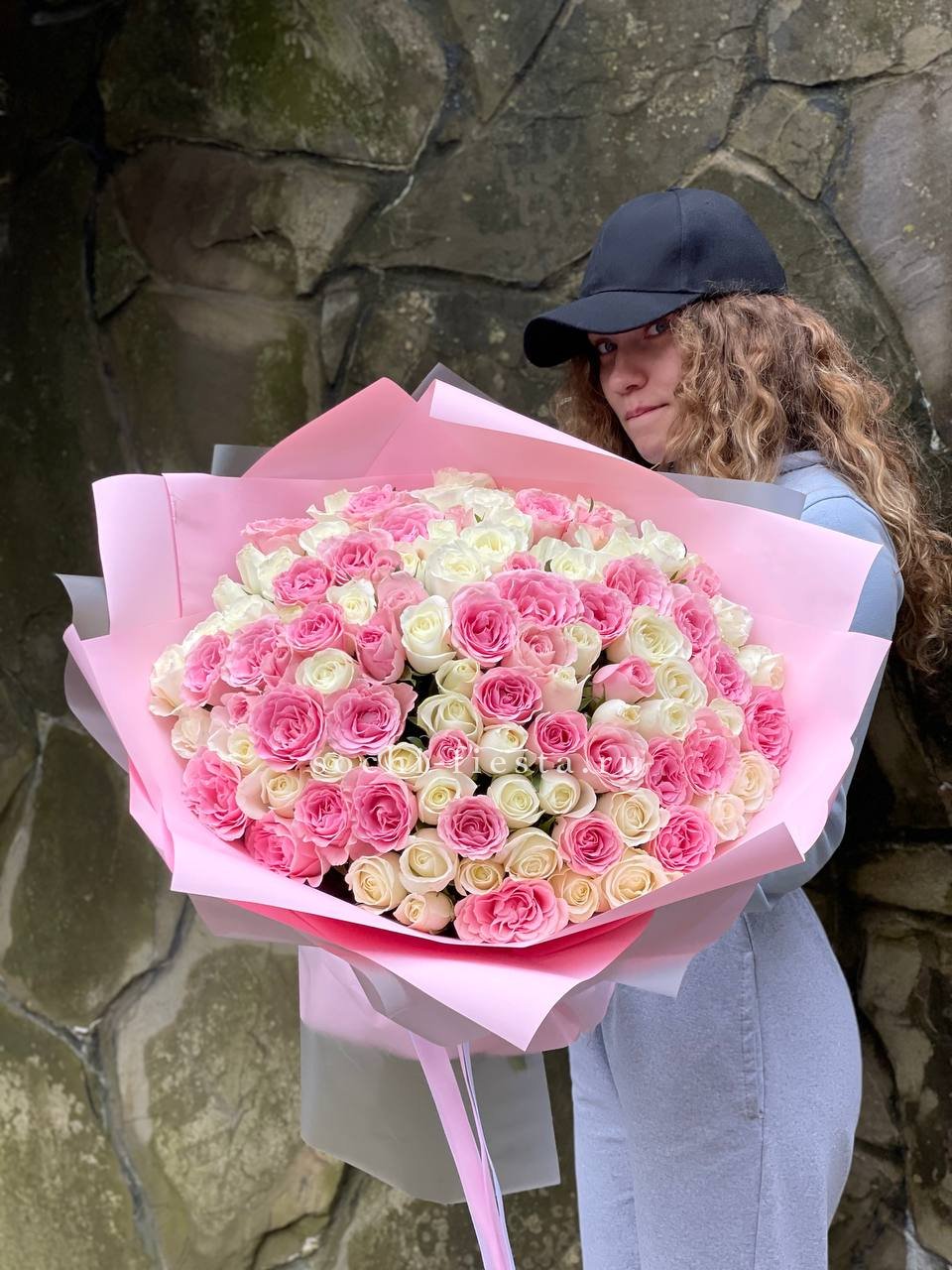
One flower is a gentle gesture of attention. Three: a friendly thank-you. Seven and nine: a romantic gift. A dozen and 24 read as a classic declaration; 50 and 100 are serious gestures for an anniversary, an engagement, or a milestone.
Chile's main floral peak is Día de la Madre, the second Sunday of May, when roses are the first to sell out. Add San Valentín on 14 February, Día de la Mujer on 8 March, and Día del Padre on the third Sunday of June. For dates like these, place the order ahead — the peak batches go in a few days.
Freshness and logistics
The local cut from the valley goes into work on the day it's harvested: from a farm outside Santiago to a recipient in Las Condes or Providencia takes a few hours. The Ecuadorian rose arrives by air and goes into work just as quickly. We hold the cold chain from warehouse to door: bouquets are kept in cold storage at +4…+6°C until assembly.
We import selectively — mainly garden-rose varieties and a rare palette the local farms don't grow. Freshness is checked by hand on every batch. That is exactly why a rose in the capital holds a confident 10–14 days in the vase.
"The Santiaguino is used to a good rose — part of it is cut right here in the valley nearby. Freshness here is tested by hand: a firm bud, a hard neck below the head, a cool stem. And one more thing — watch the water. In summer the valley air is dry and the rose drinks greedily: top the vase up more often than usual."
— Camila Fuentes, florist with 12 years of experience
Delivery specifics
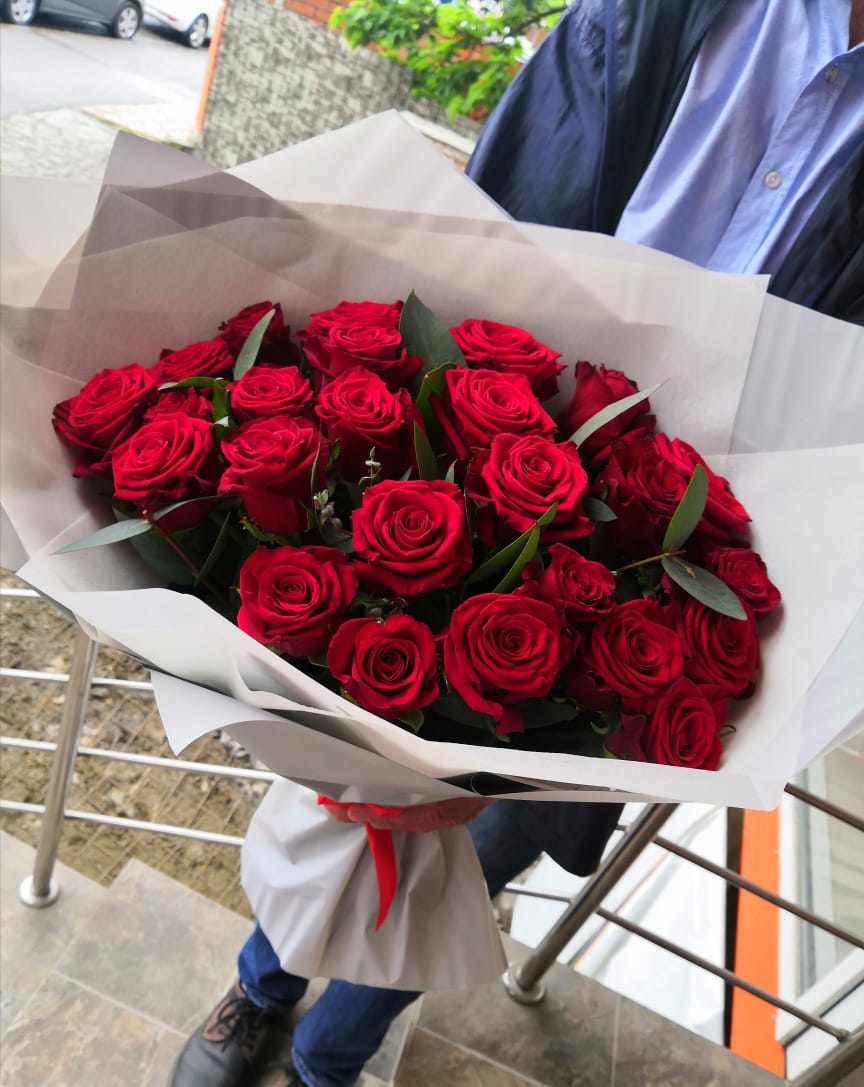
Santiago has a Mediterranean climate with two distinct seasons. Summer (December–March) is dry and sunny, +28…+33°C, with very dry air in the valley. Winter (June–August) is cool, +3…+15°C, with occasional rain and the smog typical of the basin under a thermal inversion. The main concern for delivery is not a downpour but the summer heat and dry air, which pull moisture from the cut flower fast.
We cover the key districts: Las Condes, Vitacura, Providencia, Lo Barnechea, Ñuñoa, La Reina, Santiago Centro, Macul, Maipú, La Florida, Peñalolén, and San Miguel. Prices in the catalogue are in Chilean pesos (CLP, $), paid by card online. For Día de la Madre and San Valentín we work at full stretch — order 3–5 days ahead.
Care at home
After delivery, refresh the cut at a 45° angle, remove the leaves below the waterline, and place the roses in a clean vase with cool water. Change the water every two days and add a Chrysal sachet or a pinch of sugar. Keep them away from direct sun and ripening fruit — ethylene shortens vase life by a third.
In Santiago the main local quirk is the dry summer heat. In the hot months keep the bouquet in the coolest room, away from direct sun through the window, and top up the water more often: in the valley's dry air the rose loses moisture faster. Winter is easier — the cool works in the capital's favour, and the flower lasts longer.
Roses are a flexible category: they suit a colleague's birthday, a wedding anniversary, a bridal bouquet, or a gift for a hospital discharge. We match variety, colour, and format to the specific occasion — message our manager and we'll help build an arrangement that hits the mark.

