










720x720_q85.jpg)

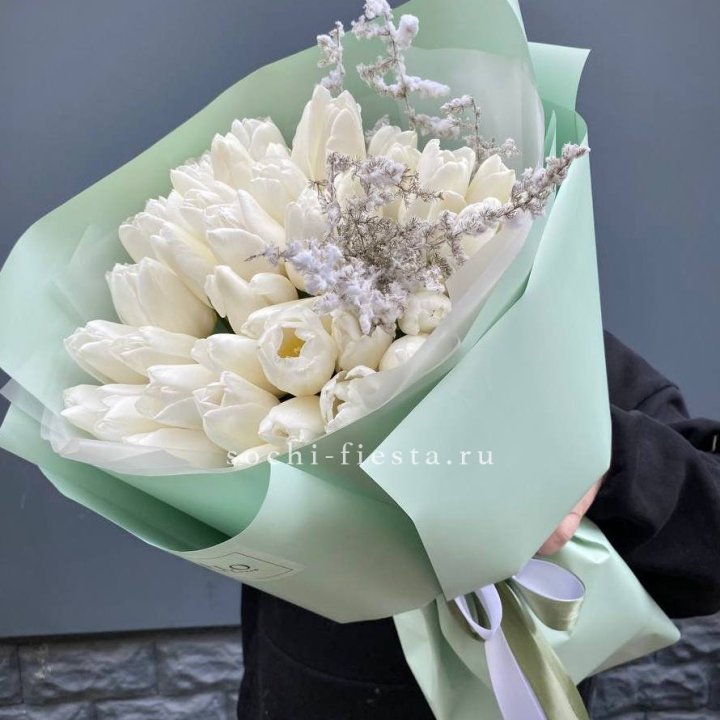
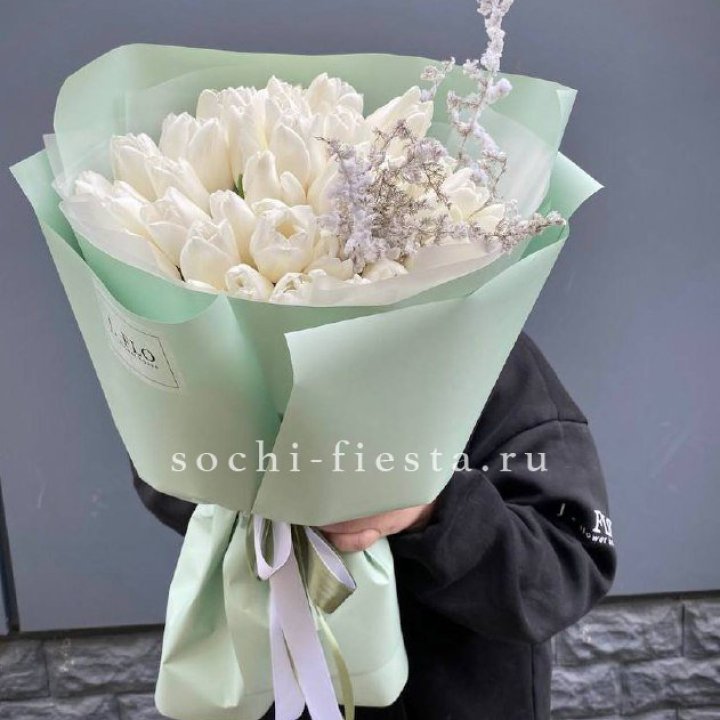
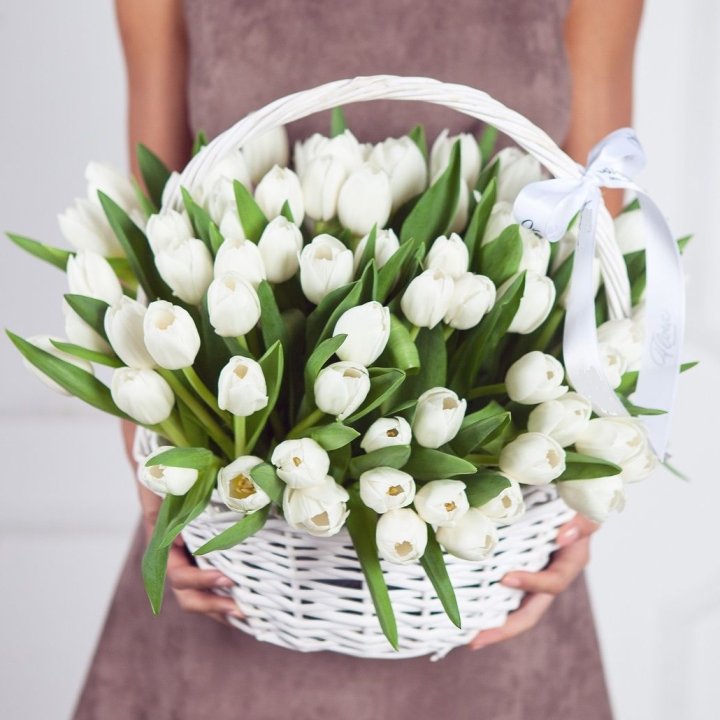
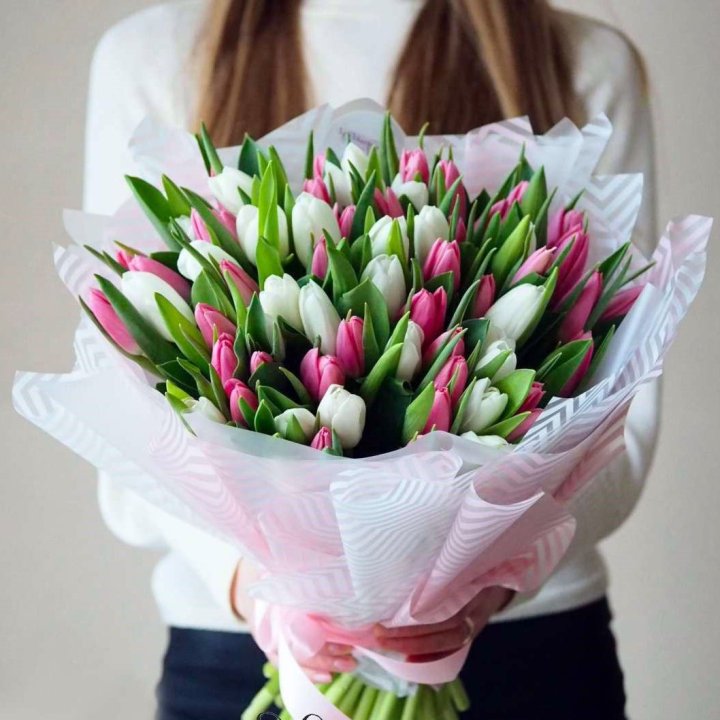

Tulips: the leading spring flower of the Russian market
The tulip is the symbol of spring and the leading seasonal flower of Russian floristry. From late January to mid-April its share of overall mass-market turnover reaches 35–40 %, and in the first week of March — up to 60–70 %. This is down to two factors: March 8 is traditionally regarded as the «tulip» holiday, and during this period Dutch and Russian greenhouses ship record volumes to meet Russian demand. The Moscow-region greenhouse season alone yields 80–100 million stems in February and March, plus 150–200 million from Holland.
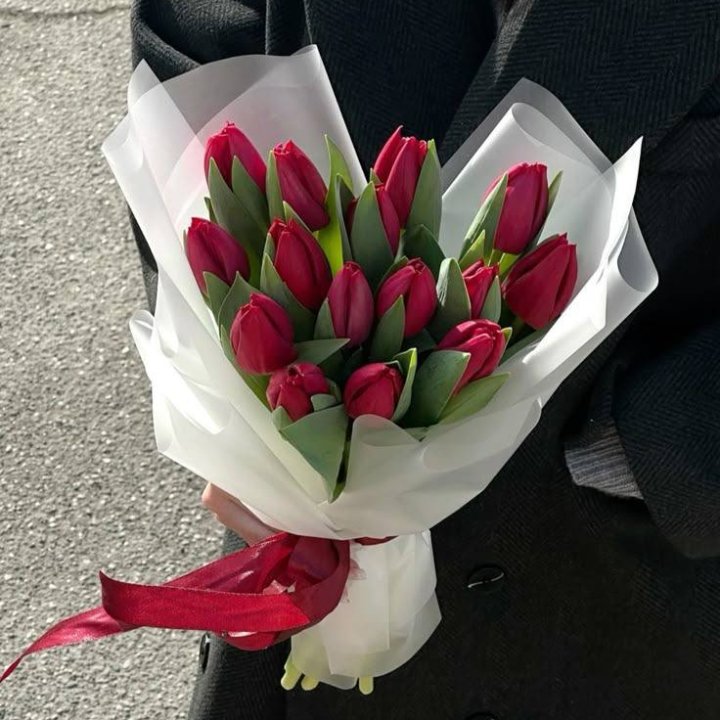
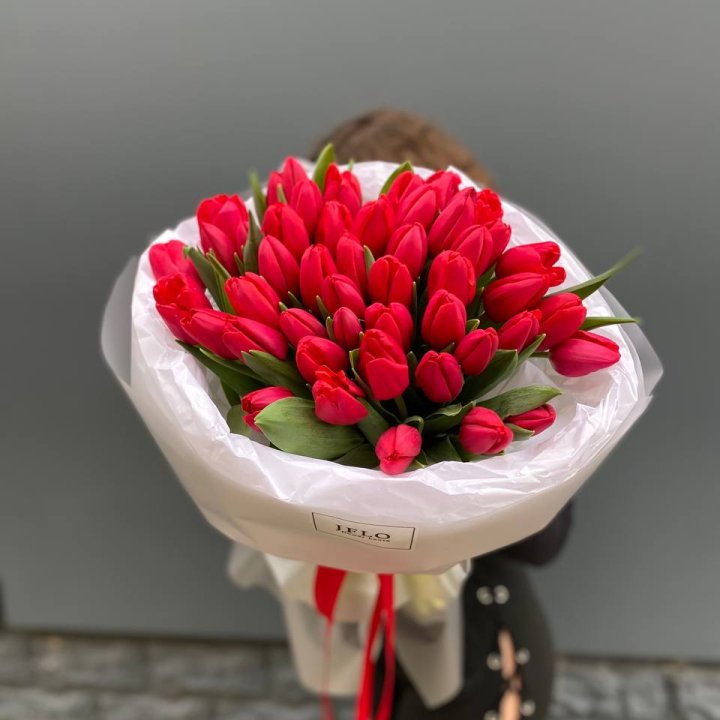
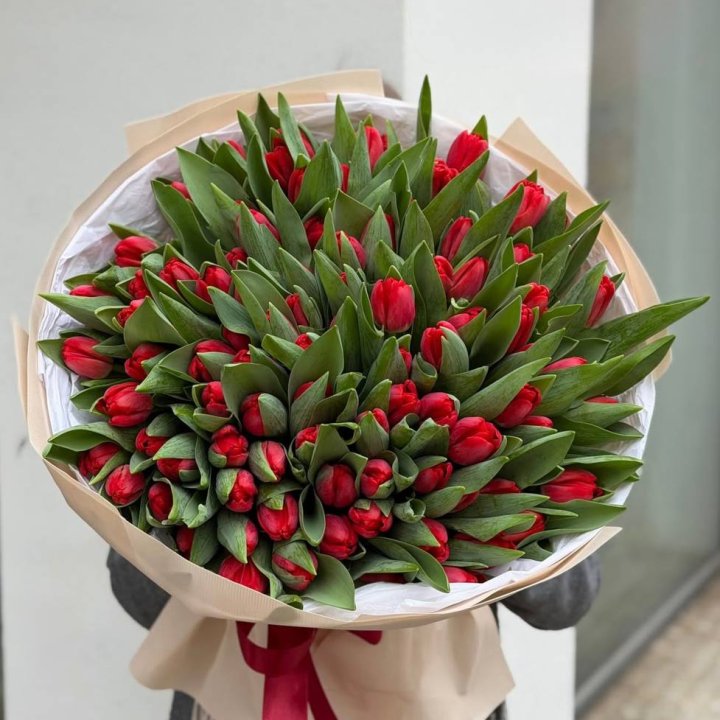
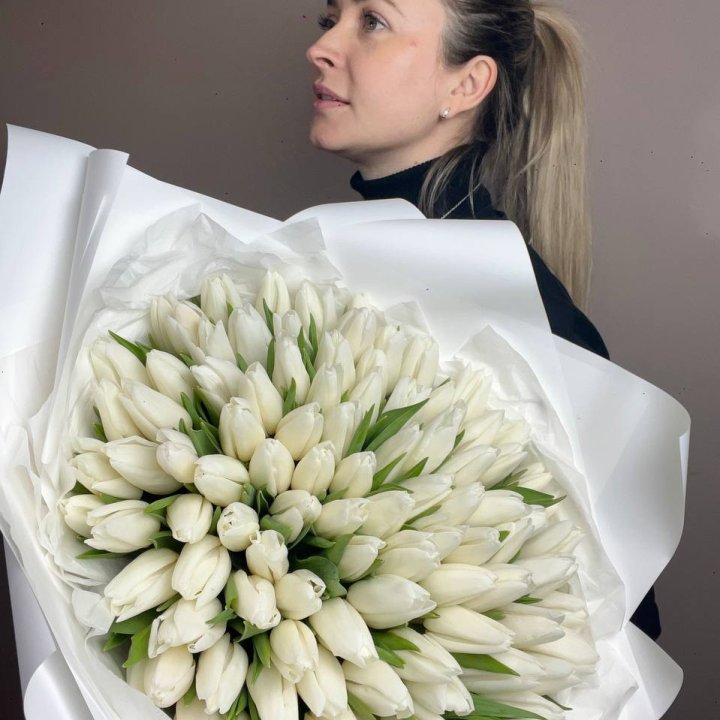
This parent category brings together all the working classifications of the tulip: by stem count, by palette, by type (classic Triumph, Darwin hybrid, double peony-form, fringed, parrot), by presentation format (bouquet, box, basket, armful). Each subcategory is a separate page with scenarios and varieties.
The axes the category is divided by
The tulip has several independent classifications, and all of them matter when choosing.
- By count — 11, 15, 25, 35, 51, 101 stems. The scale starts at 11 (the intimate segment), not at 5 as with the peony.
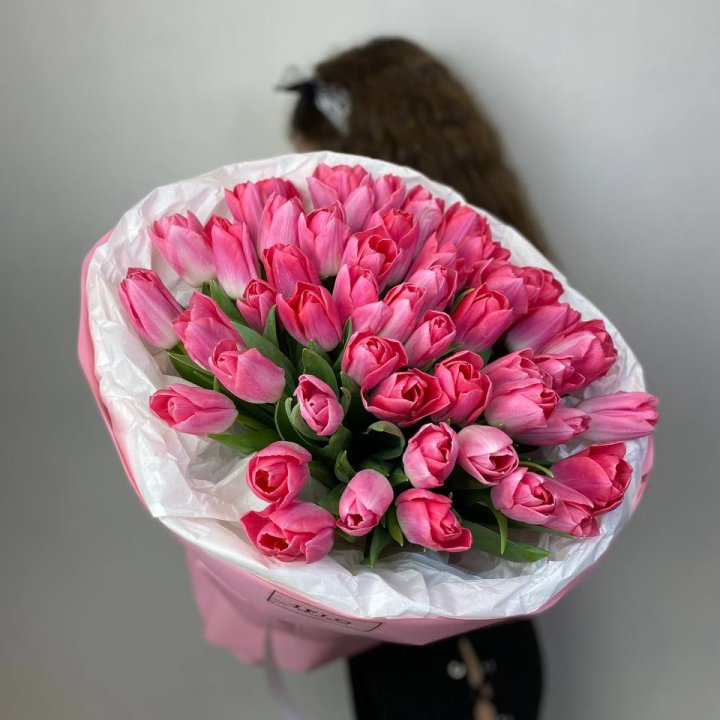
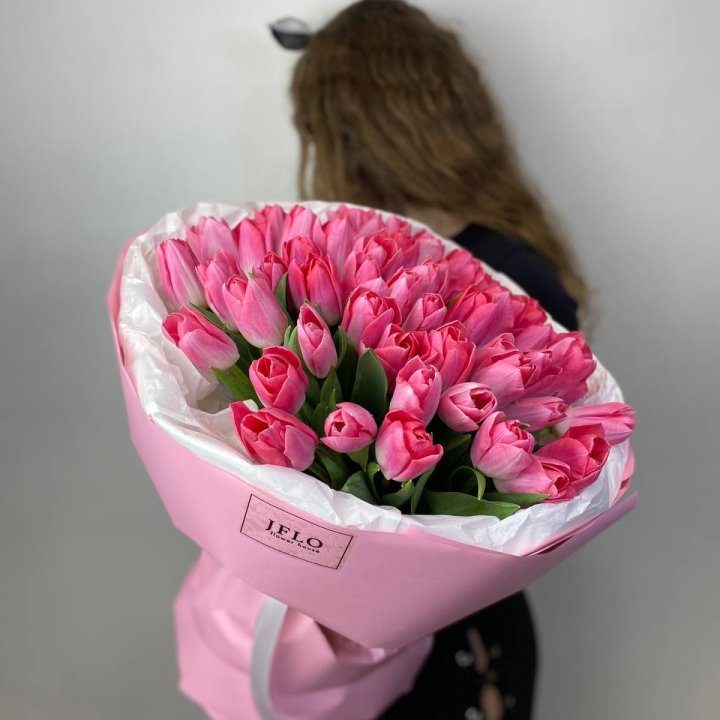
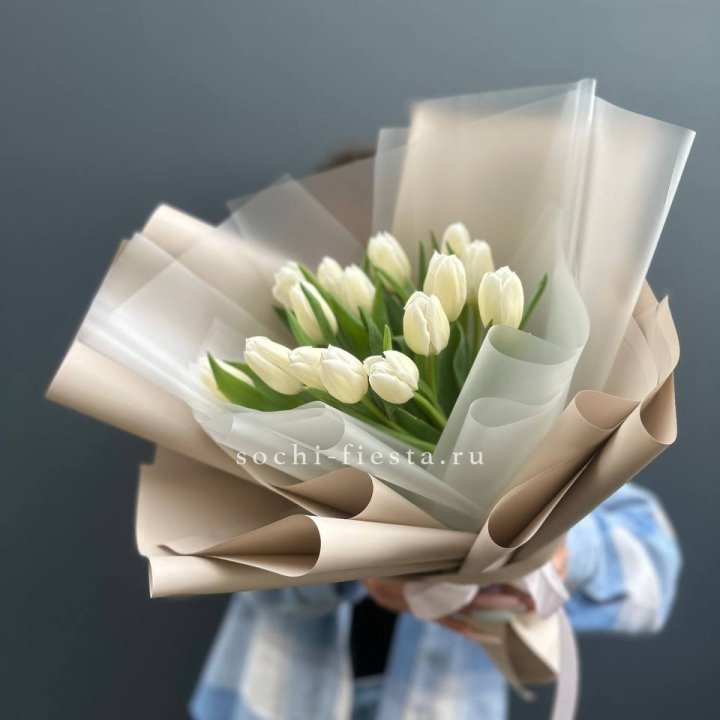
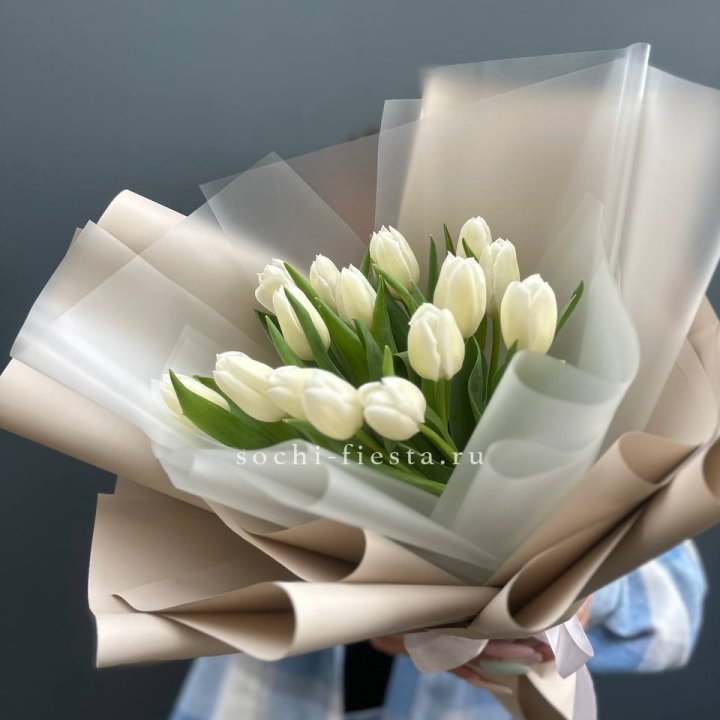
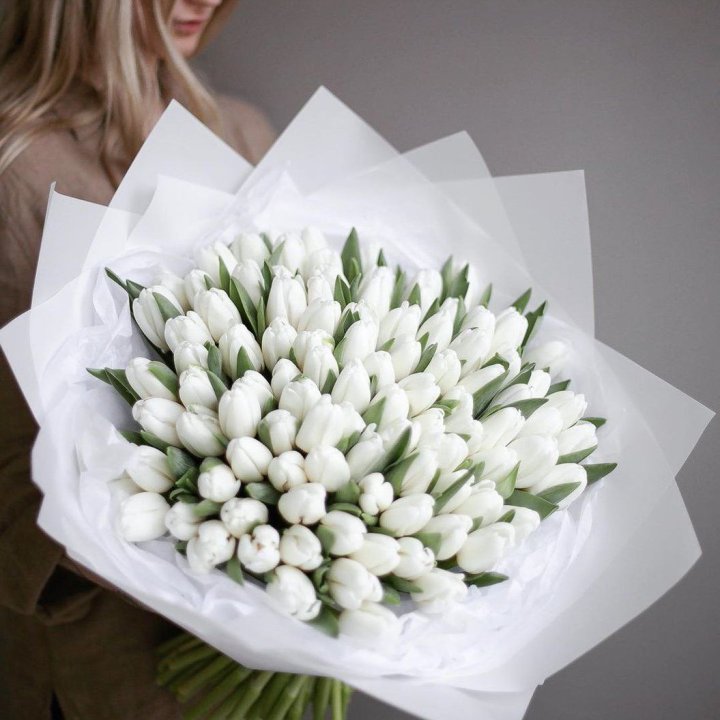
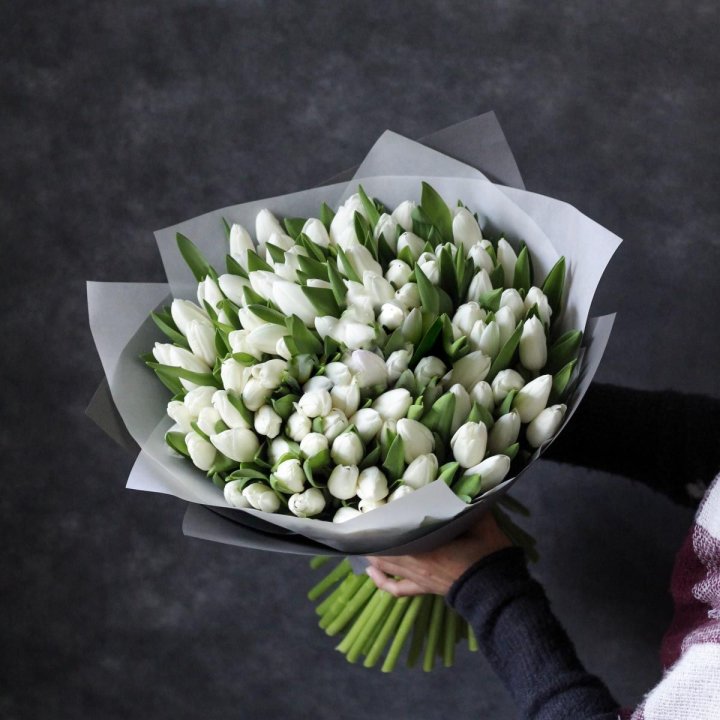
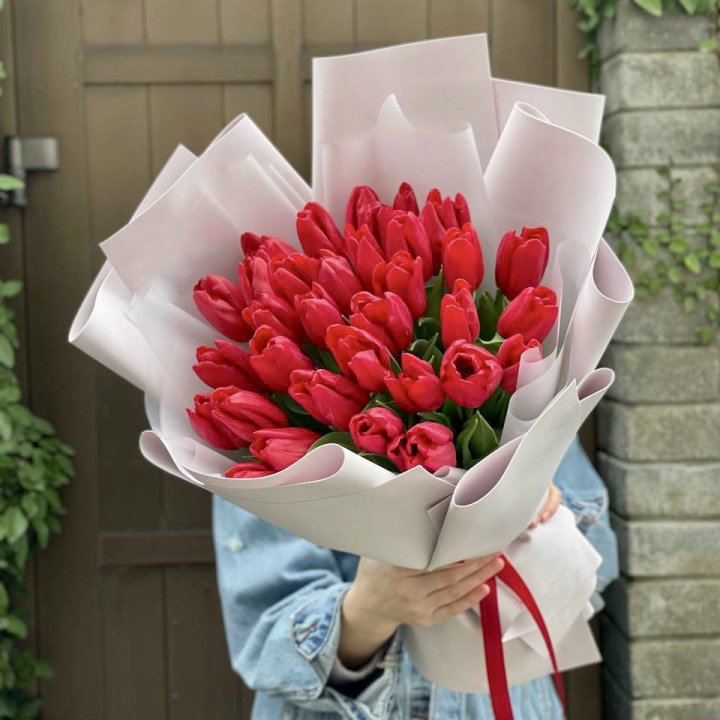
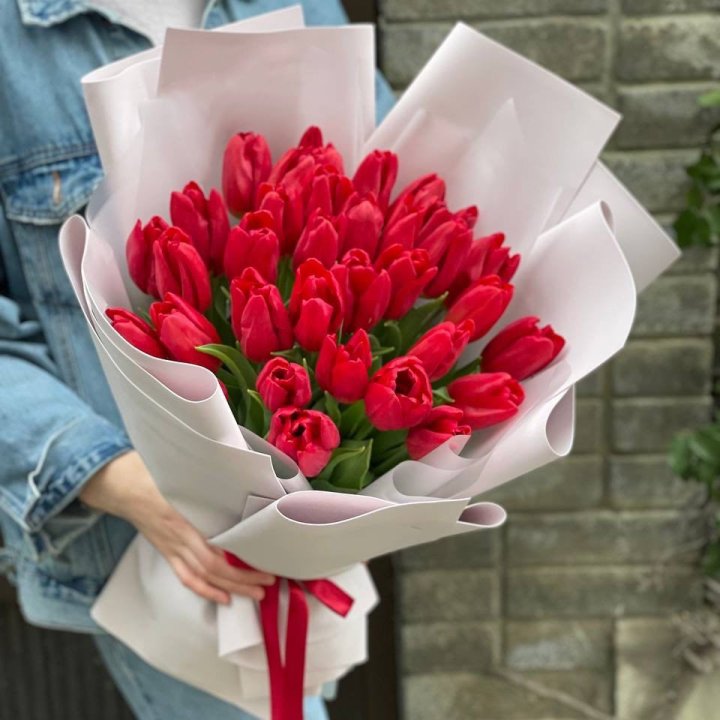
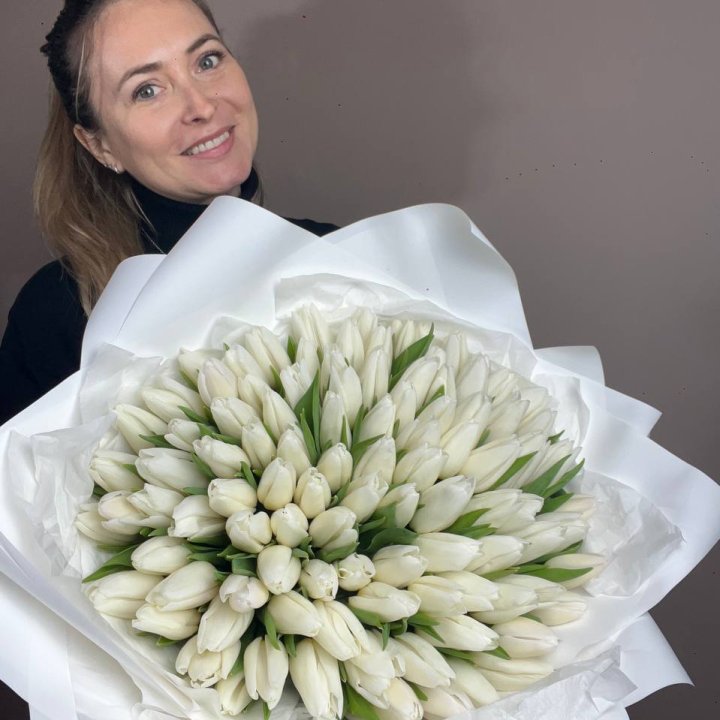
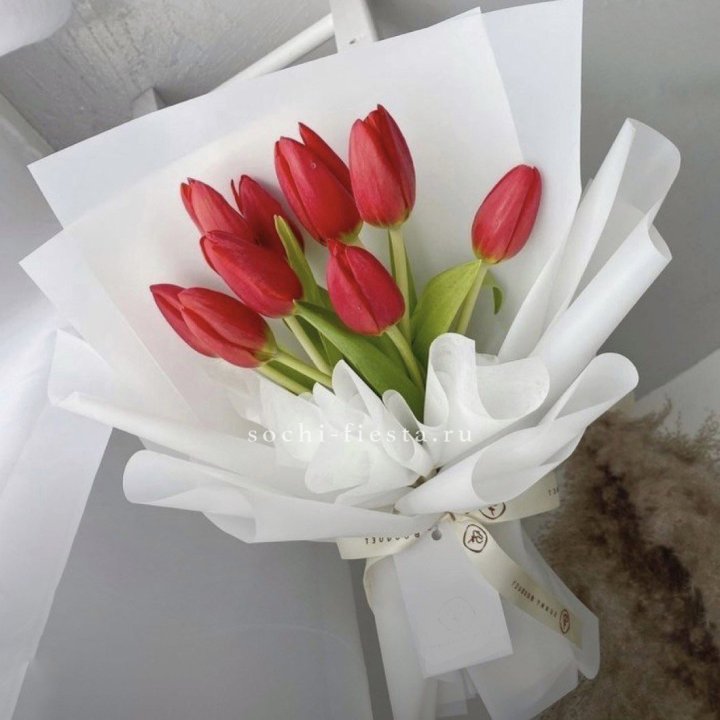
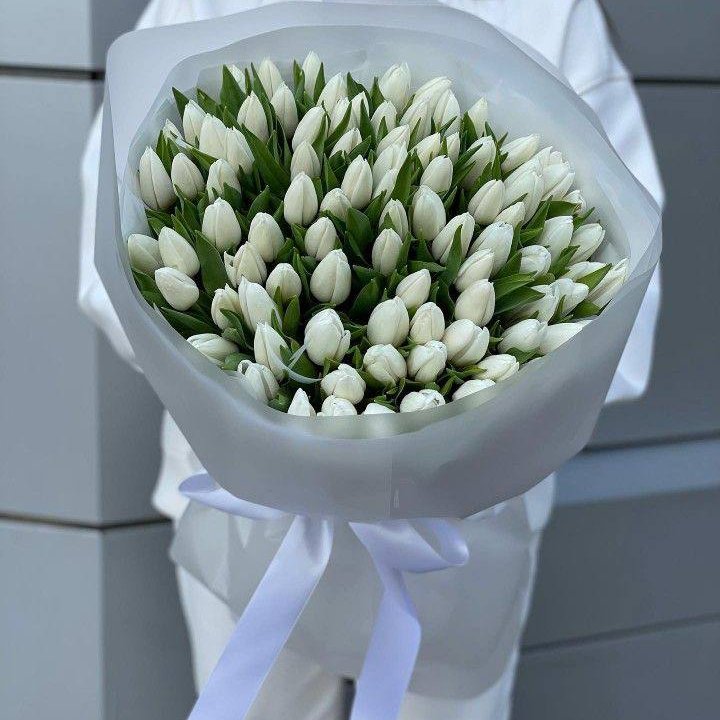
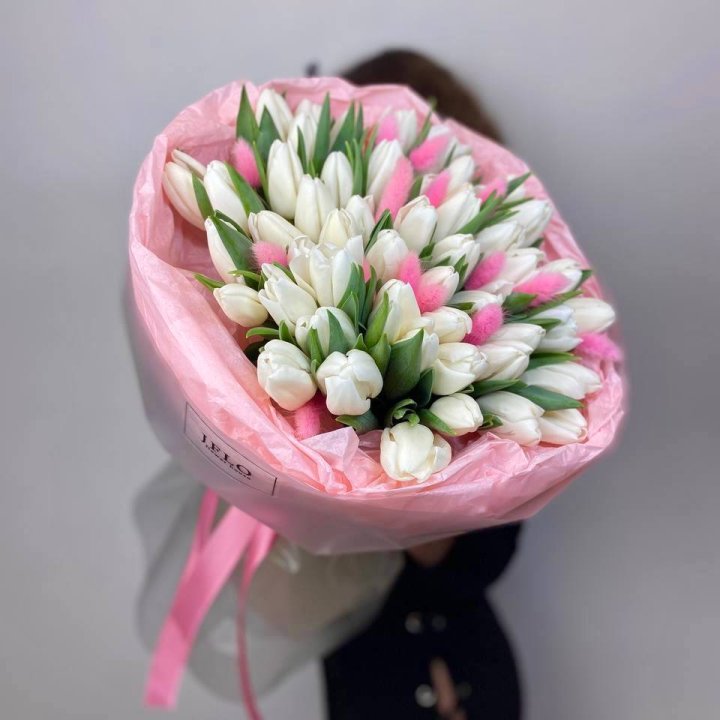
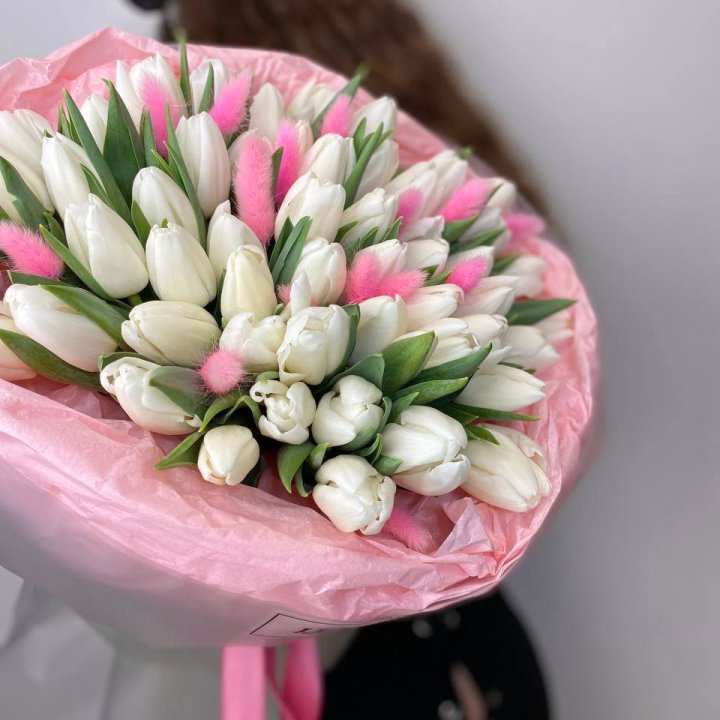
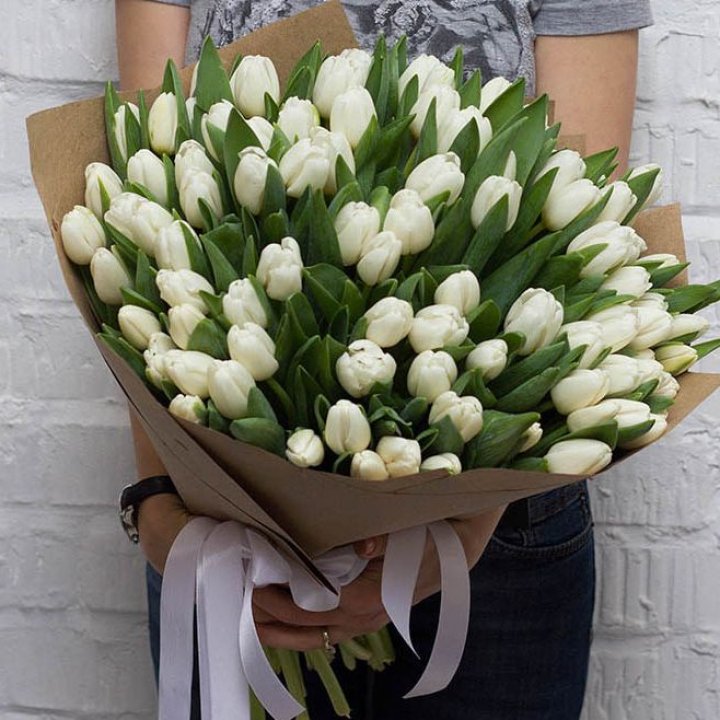
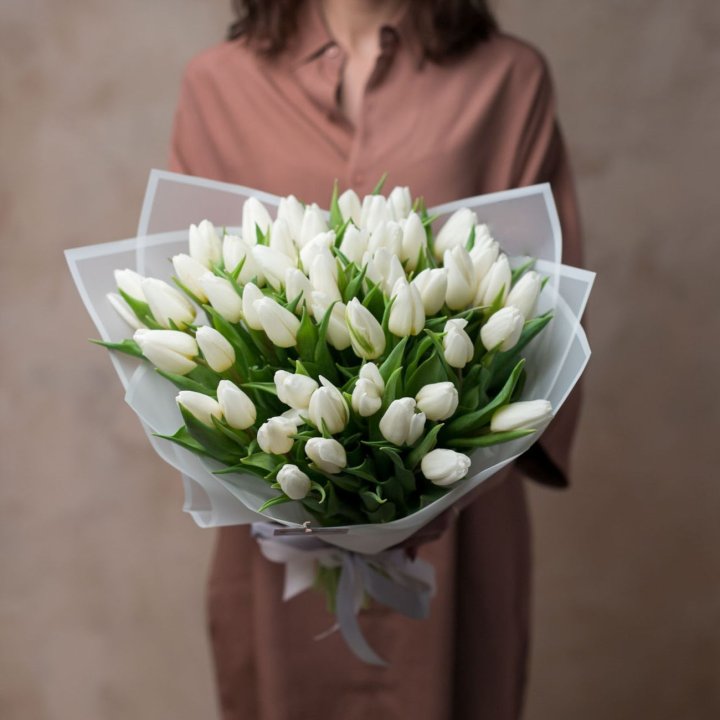
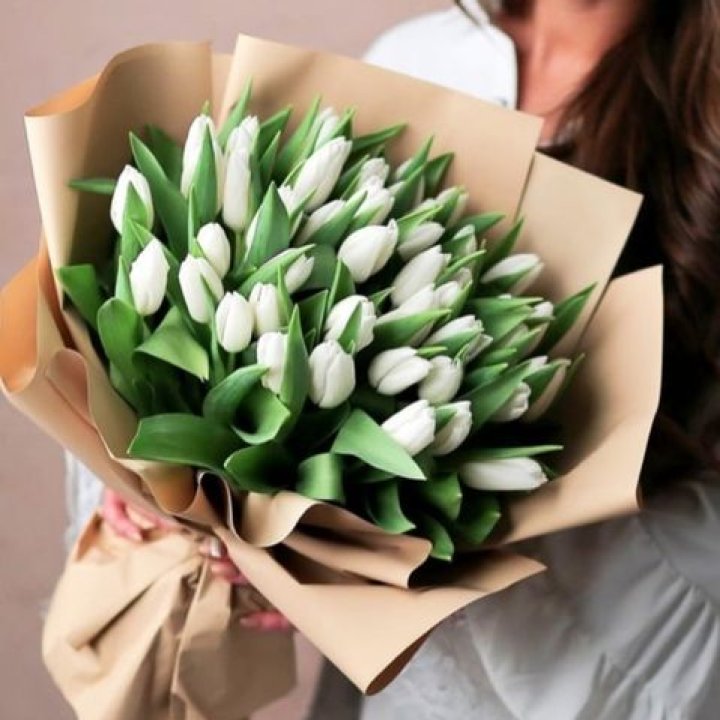
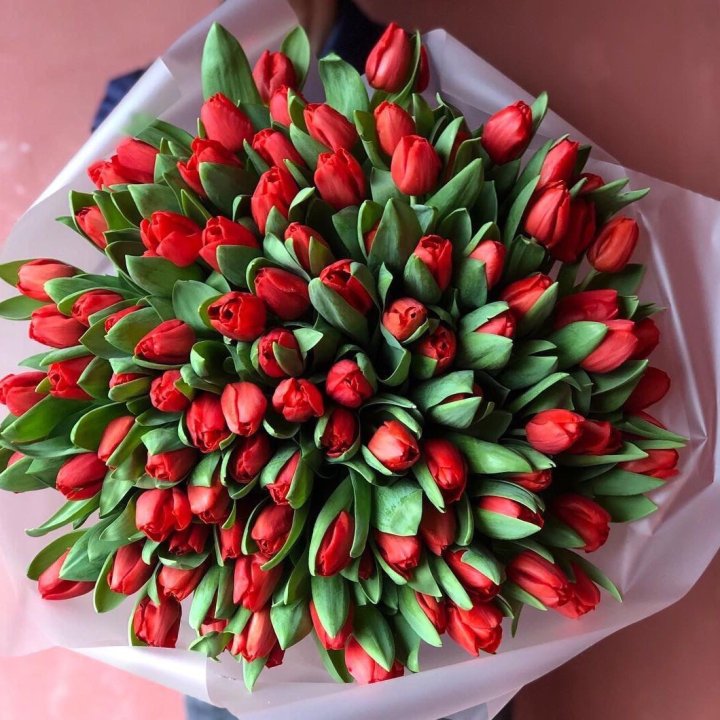
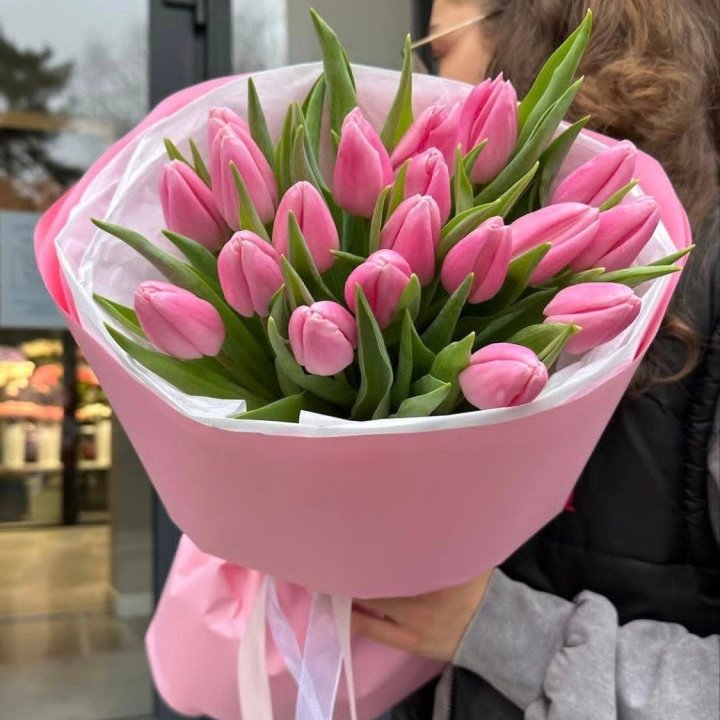
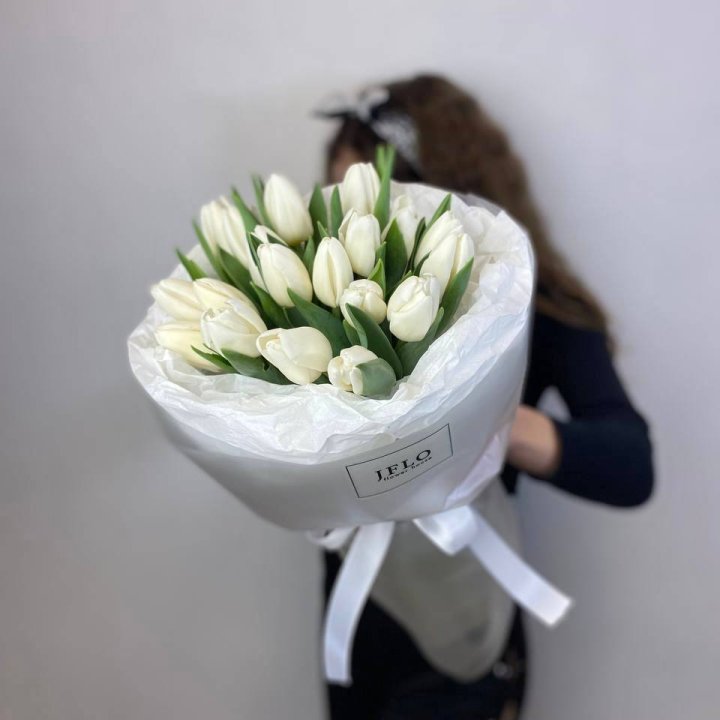
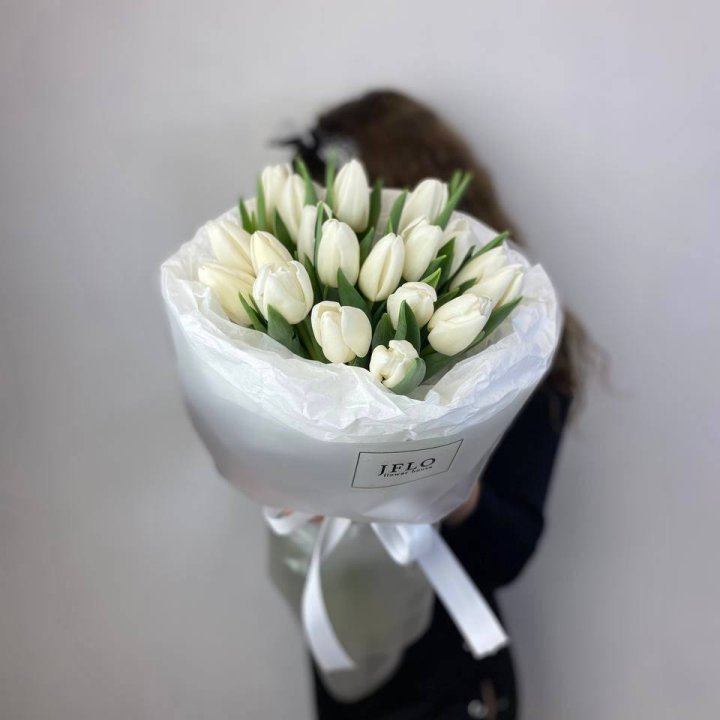
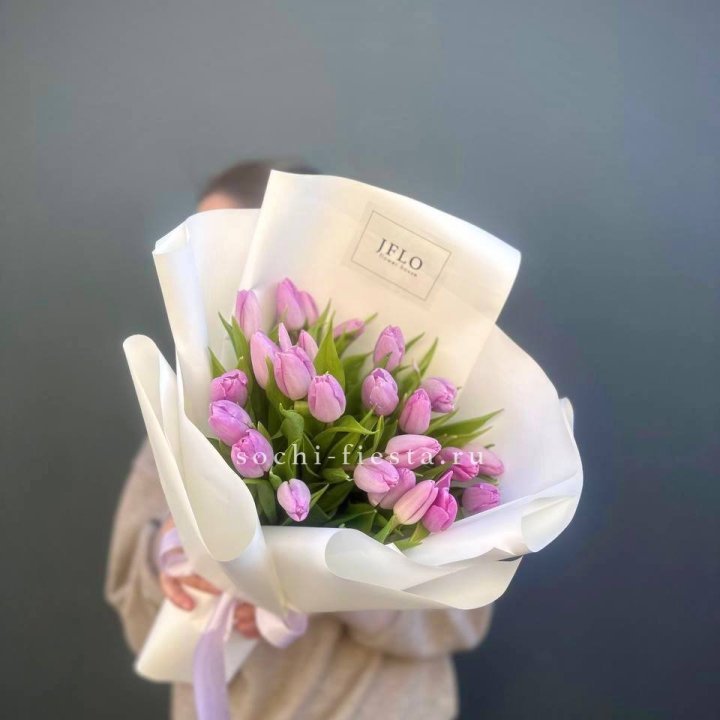
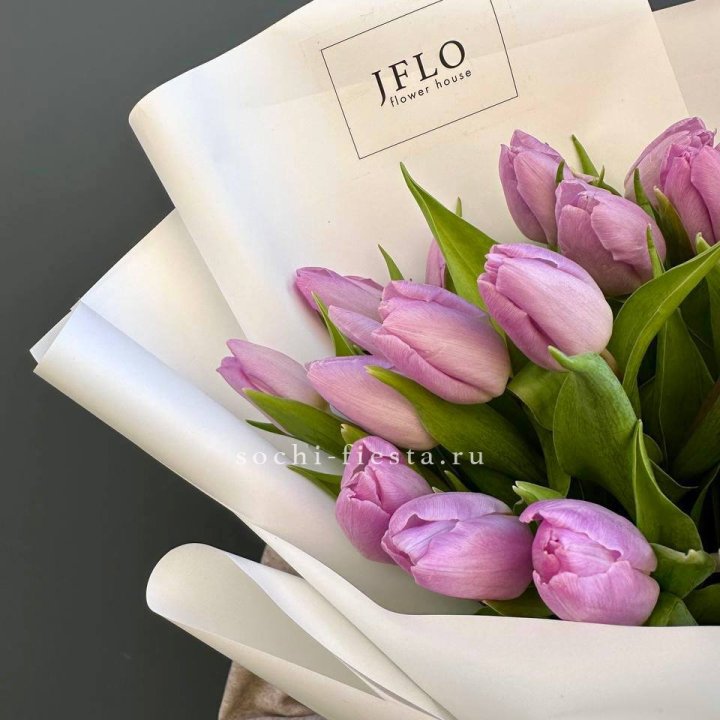
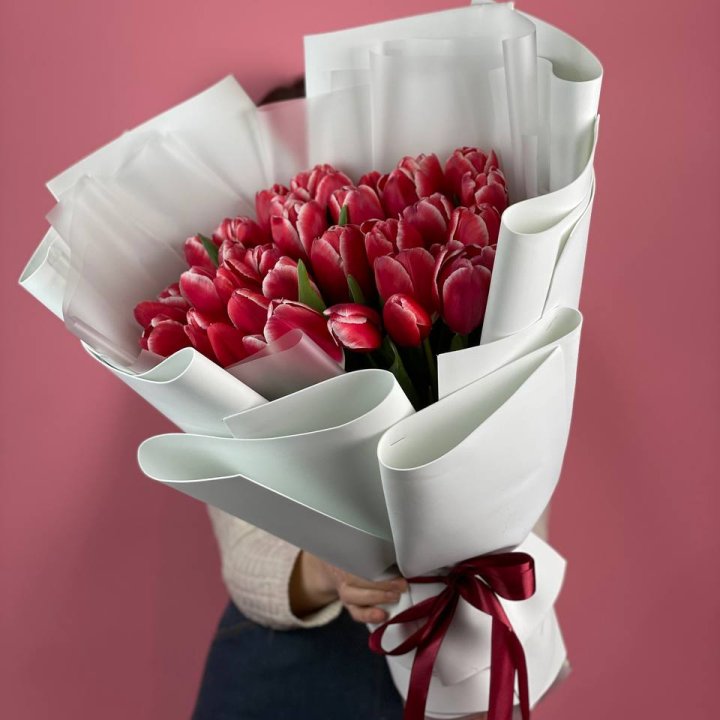
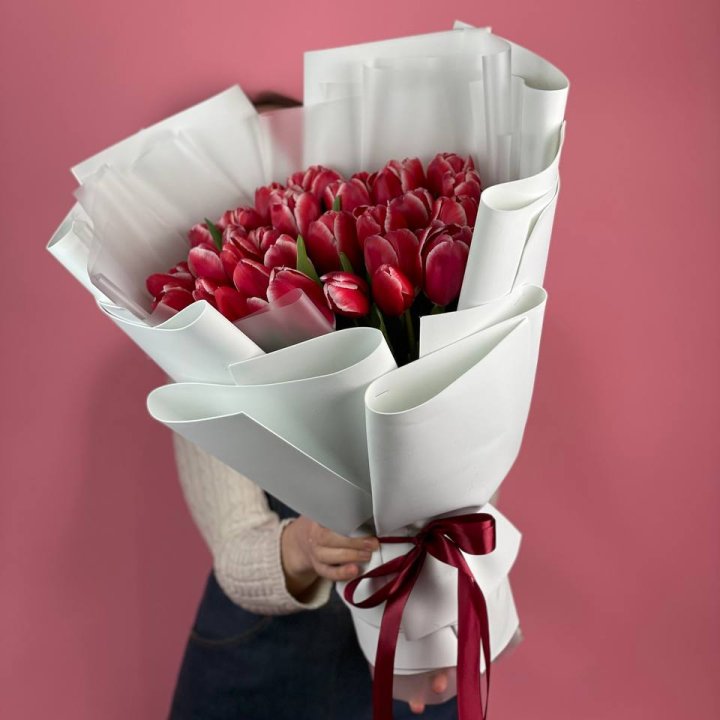
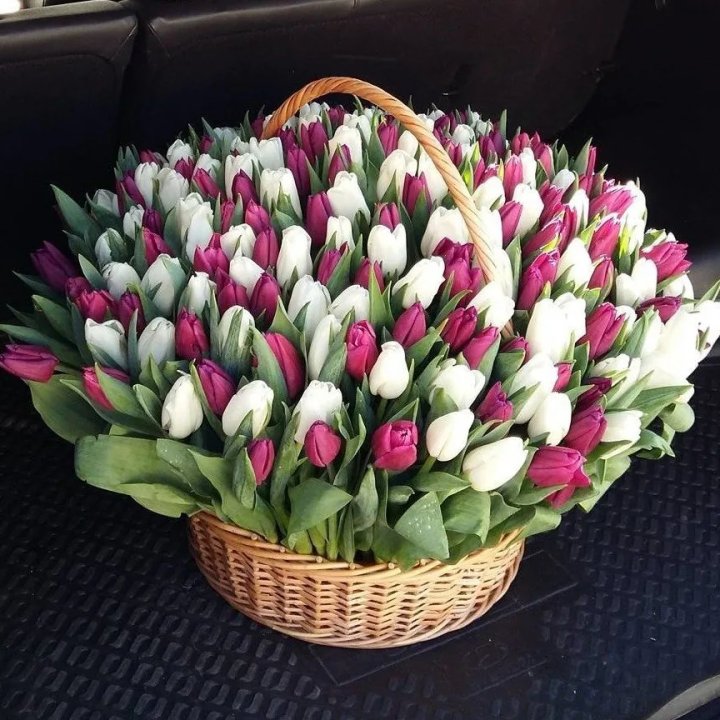
- By palette — white, yellow, pink, red, purple, red-and-white two-tone.
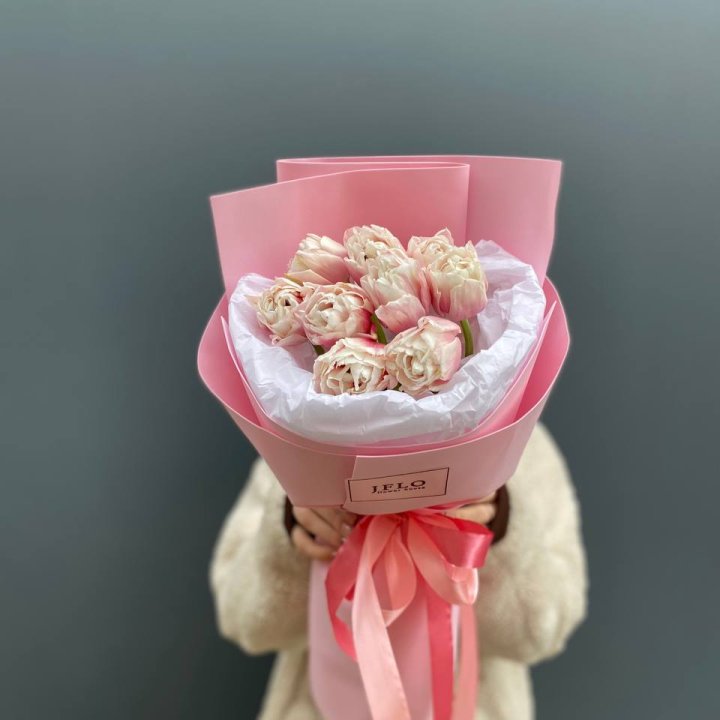
- By type — classic Triumph (medium bud, stem 35–45 cm), Darwin hybrid (long stem 45–55 cm, large bud), double peony-form (spherical «peony» bud), fringed (with a serrated edge), parrot (with wavy petals).
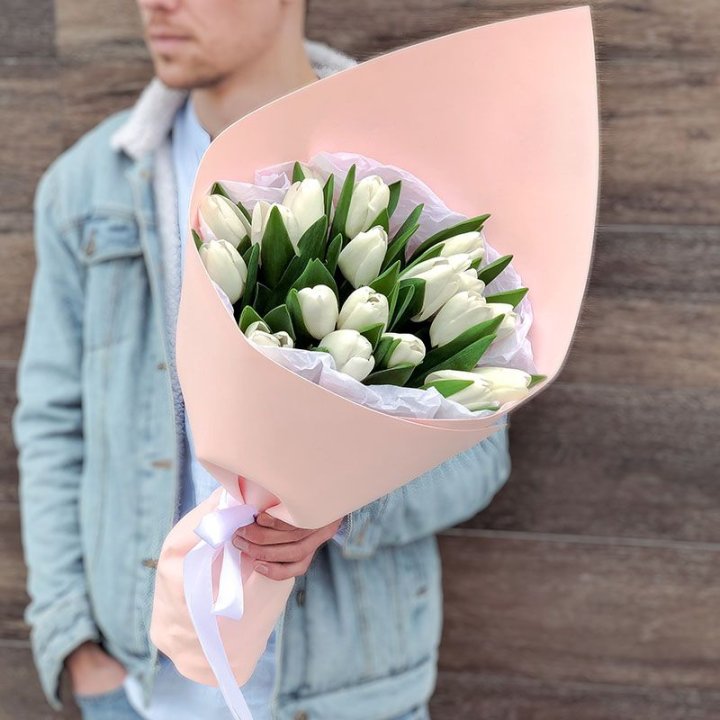
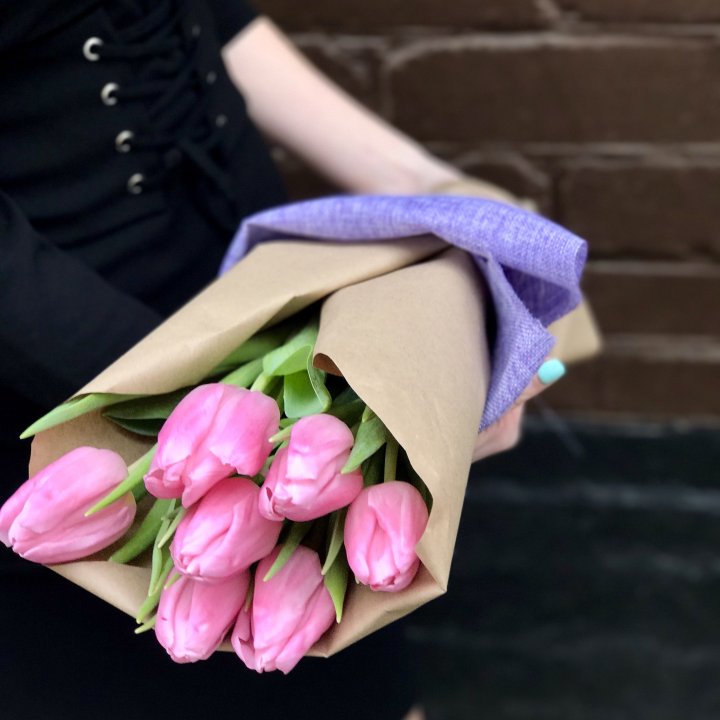
- By presentation format — a bouquet in paper, a hat box, a woven basket, a large armful of 51 stems or more.
- By country of origin — Holland (the world's main producer), Russia (greenhouse cut flowers from the Moscow region and Krasnodar), rarely — Turkey and Iran.
The main varieties in mass-market cut flowers
Strong Gold — the flagship of the yellow palette among classic Triumphs. Wholesale price 80–130 ₽ per stem.
Yokohama — a lemon-yellow Triumph of mid-season bloom. Price 90–140 ₽.
Pink Impression — a pink Darwin hybrid with a long stem. Price 100–180 ₽.
Ile de France — a scarlet classic Triumph, the leading «red» variety of the Russian market. Price 80–130 ₽.
Red Power — a scarlet Darwin hybrid with a large bud. Price 100–180 ₽.
White Dream — a white classic Triumph. Price 90–140 ₽.
Negrita — a rich purple Triumph, the leading «purple» variety of the mass market. Price 130–180 ₽.
Foxtrot — a soft-pink double peony-form, the benchmark of the «premium» category. Price 200–320 ₽.

Mount Tacoma — a white double peony-form, the flagship of wedding floristry. Price 220–350 ₽.
Leen van der Mark — a two-tone red-and-white «flame», the leading variety of the two-tone palette. Price 150–220 ₽.
When this flower is a good fit
Key scenarios: March 8 — Russia's main tulip holiday (especially for gifts to mothers, grandmothers, mothers-in-law, colleagues and teachers), spring holidays and birthdays in February–April, a discharge from the maternity hospital at the birth of a girl, thanks to a teacher in a mass presentation, a corporate mailing for March 8 in large companies, budget-friendly home gifts in season (one of the most affordable seasonal flowers), wedding floristry in February–April as an alternative to expensive out-of-season peonies (especially double peony-form varieties).
When another flower is a better choice: an engagement or a silver wedding anniversary (the rose is more precise in symbolism), grand public gestures, formal business gifts in conservative premium-segment teams, the autumn–winter period (out-of-season tulips are 40–60 % more expensive and the variety choice narrows), February 14 and romantic dates (the rose is more expressive), any events with a large volume of flowers in the autumn–winter months.
«The tulip is the seasonal king of floristry. From late January to mid-April it dominates every counter. I often tell clients: if you want a beautiful bouquet in season at an affordable price — take this flower. The quality, stem length and bud density are at their peak, and yet the price is 2–3 times lower than an equivalent rose arrangement. It is the best value for money on the spring market.»
— Yulia Gavrilenko, florist at the Tsvetochka chain, 12 years of experience
Combinations and arrangements
The tulip is a gentle «partner» in arrangements. The main rule — do not overload the bouquet with competing bright elements, especially in a mono presentation.
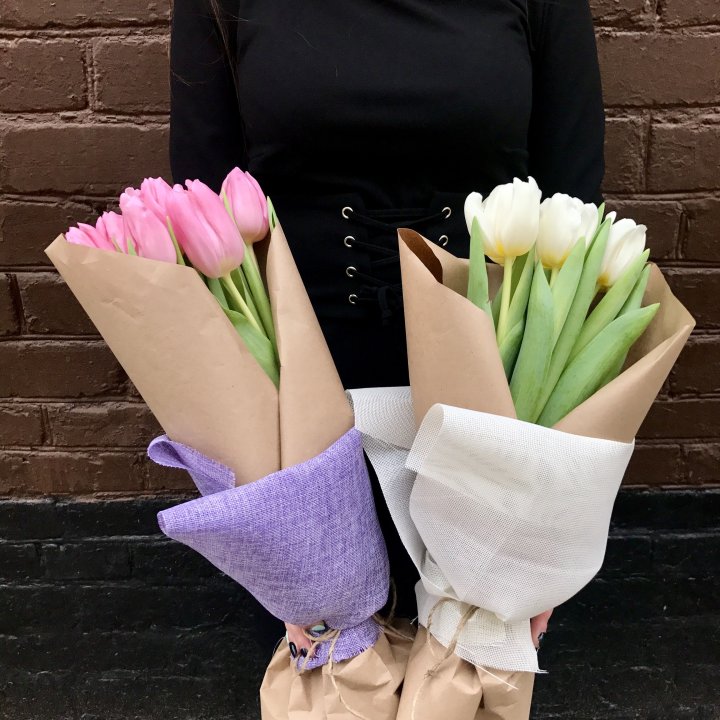
Mono presentation — the canon. 11, 15, 25, 51 stems of a single palette in kraft paper, linen felt or clear film. A neutral or matching ribbon.
With irises — the canon of the spring bouquet. 9 yellow tulips + 9 blue irises = a classic of spring floristry for March 8.
With roses — a modern designer presentation. 11 Foxtrot tulips + 11 Quicksand roses + eucalyptus. A premium wedding arrangement for February–April.
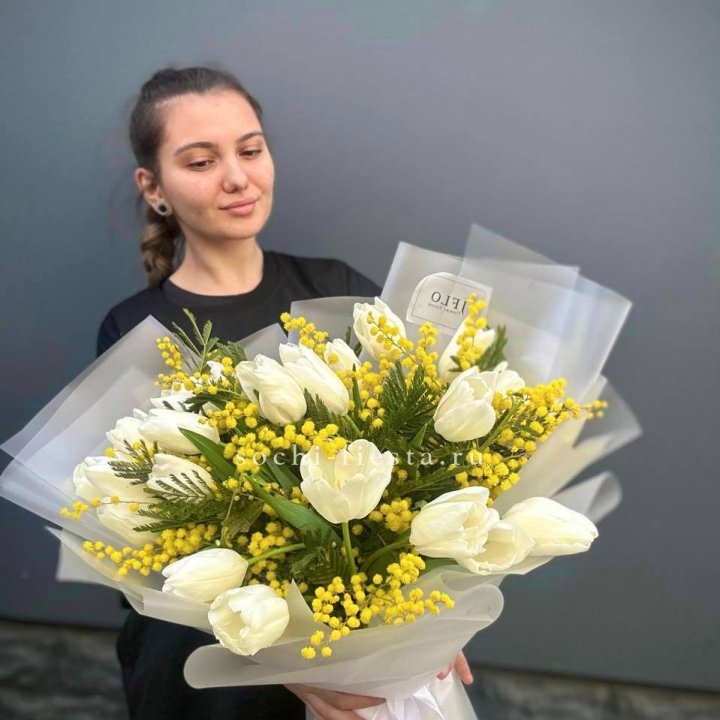
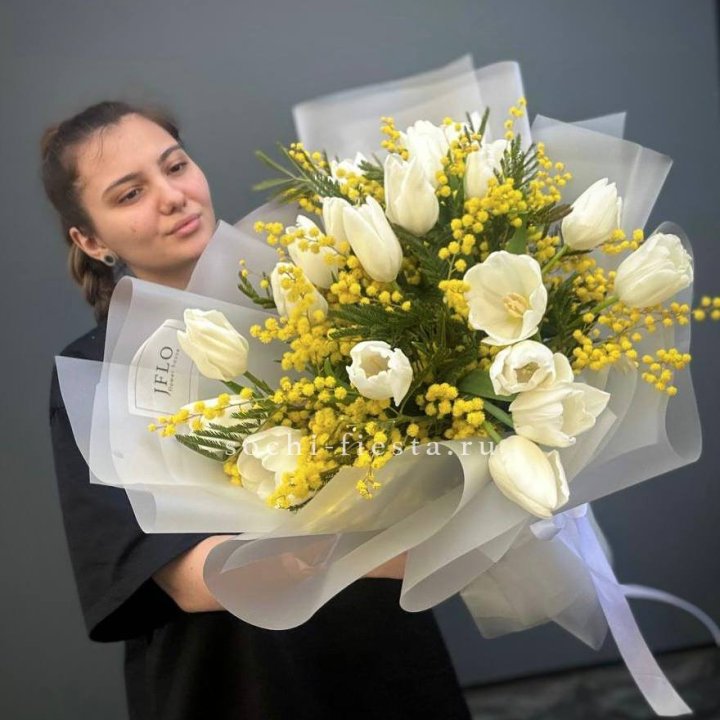
With mimosa and eucalyptus — the canon of the Russian March 8. 15 yellow tulips + mimosa branches + eucalyptus.
With greenery — the standard. Eucalyptus cinerea, pistachio, pittosporum. Dark dense greenery highlights the brightness of the tulip.

Combinations that don't work: tulip + large tropical flowers (anthurium, heliconia) — the scales clash, tulip + cymbidium orchid (the premium aesthetic is lost), tulip + 5 different varieties in one bouquet (a visual «jumble»).
Season and availability
The Russian tulip season runs from late January to mid-April, peaking in the first half of March. During this period all varieties are available in maximum volumes. Prices are optimal: 80–150 ₽ for a standard variety versus 150–280 ₽ out of season.
Dutch greenhouse cut flowers supplement the Russian supply year-round, but in the summer–autumn months (May–October) the choice narrows to a basic five (Strong Gold, Yokohama, Ile de France, Pink Impression, White Dream). Double peony-form varieties (Foxtrot, Mount Tacoma, Black Hero) and purple ones are rare out of season and are available only by pre-order 7–14 days in advance.
For March 8, in the peak week prices rise by 50–80 %, especially in the last 2–3 days before the holiday. The best varieties (Foxtrot, Mount Tacoma, Leen van der Mark) sell out 5–10 days before the date.
What unites all the subcategories
Care is standard for any variety. Renew the cut at 45° with a sharp knife (remove 1 cm), strip the leaves below the water line, place in clean cold water at 4–8 °C. Change the water every 1–2 days, renewing the cut by 0.5 cm at each change. Vase life 5–8 days — shorter than for the rose and chrysanthemum, but within the norm for a seasonal flower.
The main feature is that the tulip keeps growing in the vase, lengthening by 2–4 cm over the first 3–5 days. The buds open and close on a day/night cycle — this is not a «defect» but the living biology of the flower. To keep the stems from stretching excessively, add a drop of bleach or an aspirin tablet to the water. This slightly slows the growth and extends the bouquet's life by 1–2 days.
Cold water is essential — 4–8 °C. Warm water temperature speeds up bud opening and halves the bouquet's lifespan. Unlike other flowers: the tulip «works» best in cold water, unlike the rose, which needs water at 8–12 °C.
You can order tulips in Dubai year-round through chain flower shops and studio florists. In season (February–April) chains keep basic varieties ready-made; studios work with the full spectrum, including premium double peony-form and rare two-tone selections. For March 8, plan your order 5–10 days ahead.
The tulip is the «spring all-rounder» of Russian floristry. Not for grand gestures and not for premium presentations year-round, but for those moments in February–April when the season itself supports the choice and the flower works for any gift — from the everyday to a serious anniversary — without having to select complex seasonal selections.