



Flowers in Amsterdam: from the Aalsmeer auction to a canal-side door
Around 43 million flowers pass daily through Royal FloraHolland's auction clocks at Aalsmeer, southwest of the city, making it the world's largest flower auction. Flowers in Amsterdam are bought to order rather than kept waiting on a shelf, so the right bouquet depends on the address, the date and the weather more than on anything else.
Flower delivery in Amsterdam: the centre, De Pijp and Zuidoost
Delivery in the centre is free and runs between 7 am and 11 pm. A rush order can reach the door quickly if the florist already holds that bouquet ready, and the bouquet card shows the delivery time; anything made to a special request simply takes longer to put together. De Pijp and the other inner districts are a paid zone, while Zuidoost and the Bijlmer, further out, cost more and take longer to reach. Between 11 pm and 7 am delivery runs only by prior arrangement, and the courier quotes that slot's price separately.
Around 14 February, 8 March and Moederdag the delivery window widens, and the courier stops promising an exact minute in favour of a longer slot.
Ordering from abroad asks for one thing only: the recipient's phone number. The sender gets a photo of the finished bouquet before the courier sets off, the card stays unsigned unless asked otherwise, and the order desk runs day and night.
Zuidas holds around 2,000 companies and more than 50,000 people at work on an ordinary weekday, so an order there needs the company name and the floor rather than a street address. Where a building runs a pass system, the bouquet stays at reception and goes up with whoever comes down for it; a flowers in boxes arrangement suits that kind of handover, since the stems sit in soaked foam and need no vase on arrival.
A hospital ward is worth checking before the flowers are chosen. Amsterdam UMC keeps flowers out of intensive care, haematology, oncology and the kidney transplant unit, and OLVG does the same for its intensive care and haemato-oncology wards. Where a ward says no, the manager arranges a handover at the nurses' station instead, or waits for the day of discharge.
Schiphol, about 11 kilometres from the centre, takes deliveries by request, with the courier waiting at the arrivals gate holding a name card. A hotel delivery asks for the guest's surname, plus the room number where that's known; what a particular hotel allows past the desk varies too much to promise in general.

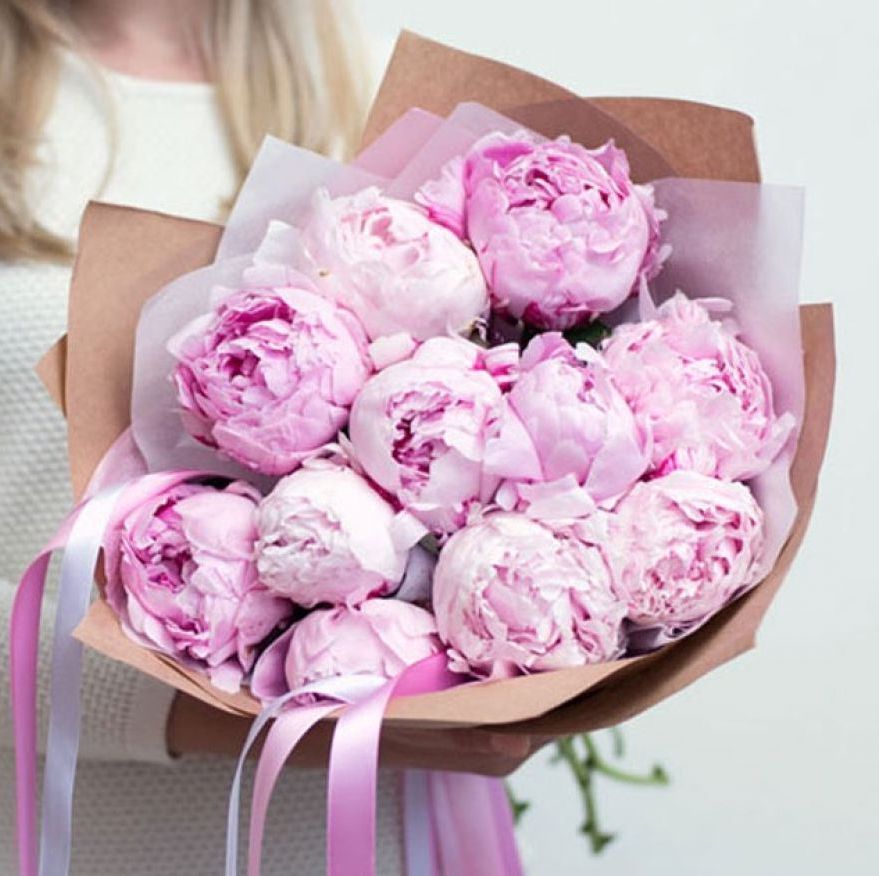
Kenyan roses land at Schiphol and go straight to the auction floor at Aalsmeer; Kenya and Ethiopia between them supply more roses to the Dutch market than any other origin, and Ecuadorian and French roses sit in the same catalogue alongside them. Dutch-grown peonies join the auction from late April into June, the short window when a peonies bouquet is at its most local.
The Albert Cuypmarkt in De Pijp has traded since 1905 and runs Monday to Saturday. The Bloemenmarkt on the Singel is older in name than in stock: today it sells mostly bulbs rather than cut flowers.
Amsterdam's flower calendar: Tulip Day, Moederdag, pakjesavond
Tulip Day fills Museumplein with roughly 200,000 tulips for one free pick-your-own morning; the Tulp Festival follows in April with tulips planted right across the city. Koningsdag falls on 27 April each year, and Moederdag, marked on the second Sunday of May since 1925, moves its date from year to year.
June is the month most couples in the Netherlands choose for a wedding, at around 15 per cent of the year's total, ahead of September and May. Pakjesavond, on 5 December, brings its own small rush of gift-giving before the year settles into its usual December bouquets.
Chrysanthemums and white lilies carry a funeral association in Dutch etiquette, so they sit oddly in a bouquet meant to mark something happy. Where lily suits the occasion better than that message, the lily-and-gerbera bouquet in the catalogue keeps the colour without the association, and a mixed or designer arrangement works just as well for a birthday or an anniversary.
Wet Octobers and cool Julys: a bouquet on the move
October is Amsterdam's wettest month, with around 90 millimetres of rain, while April stays the driest; the year adds up to roughly 850 millimetres, much of it on a fair amount of wind. A box or a firmly wrapped bouquet keeps the stems from bruising on that kind of walk from van to door.
July sits at around 19°C on average, nowhere near the heat that stresses cut flowers further south, which gives a bouquet an easier ride once it is indoors. At home, keeping the vase away from radiators and direct sun is the simplest way to look after it.