


Mixed bouquets in Amsterdam: Andean, African and Dutch stems in one wrap
Cut flowers reach Amsterdam from Kenya, Ethiopia, Ecuador, Colombia, Israel and other European countries, and mixed bouquets in Amsterdam often bring several of these origins together in one wrap. Each bunch is put together after payment, from stems bought for that order, so the sensible way to choose one is by its lead flower, the month and the occasion.
Andean roses, Dutch glass and Kenyan stems: what meets in the wrap
Most of what goes into a wrap here passes through Royal FloraHolland's auction at Aalsmeer, south-west of the city, where about forty million flowers change hands every day.
A rose in an Amsterdam mix may be Ecuadorian, grown on Andean farms at 2,800–3,000 metres, which gives the longest stems in the trade. It may be Kenyan, cut near Lake Naivasha on stems that usually come shorter. Or it may be Dutch, one of the classic varieties raised in local glasshouses.
Lily, gerbera and lisianthus are greenhouse flowers too, grown under glass all year, so the base of a mixed bunch doesn't really depend on the season. Where one flower alone is the point, roses on their own or a single-flower bouquet of another kind makes more sense than a mix.

Lilac is cut in May, and hydrangea in summer, so a mix built around either flower carries a date even when the greenhouse flowers around it don't. A gentle bunch gathered around lilac, or hydrangea paired with spray roses, draws on this seasonal edge rather than on anything flown in year-round.
Hydrangea drinks more than most cut flowers and takes in water through its petals as well as its stem; a head that has gone limp recovers after an hour or two face-down in cool water.
A few large hydrangea heads already read as a full bunch on their own. Small flowers like lisianthus or gypsophila need more stems to fill the same space, so a mix usually leans on one kind or the other to set its size. The city's flower calendar and weather decide more about when lilac or hydrangea turns up than any fixed date does.
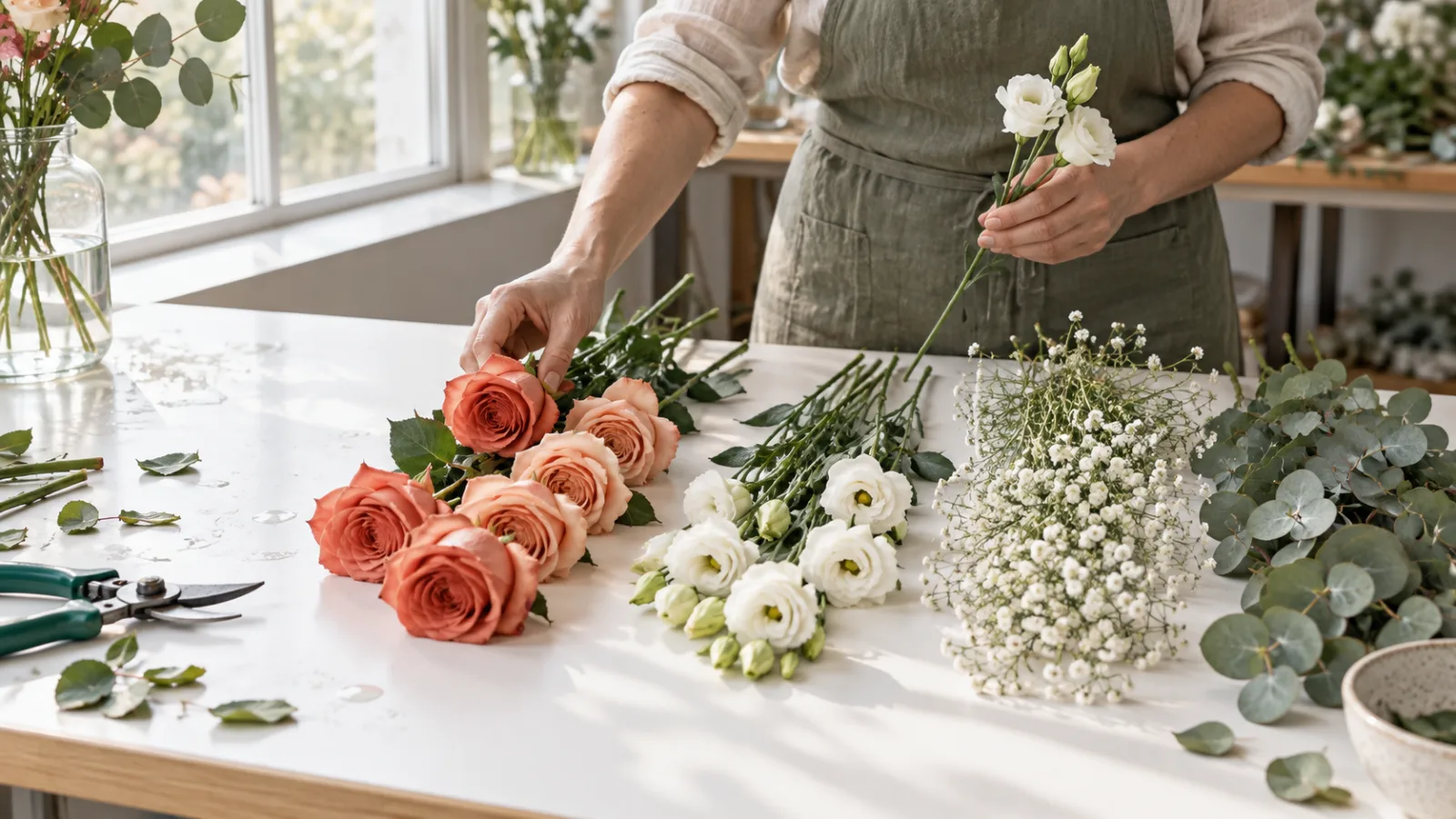
In the Netherlands, white lilies and white chrysanthemums are read as flowers for mourning, and florists tend to steer them away from birthdays and other good news. A mixed bouquet gets round this easily, because its colour comes from several flowers rather than one: for a celebration, a lily is usually chosen in a coloured variety, set next to a gerbera or a rose rather than left white and alone.
If you describe the occasion and budget in chat, the manager sends back a few options with photos and prices, before any payment is taken. If a particular flower isn't in that day, the florist swaps it for one close in colour and price, and the swap is visible on the photo sent before the courier sets off.
Mixed bouquet delivery in Amsterdam is free inside the centre and charged at a fixed rate everywhere else, shown before payment. How soon a particular bunch can go out is shown on its own page, and delivery terms cover the rest. Anyone who wants to order mixed flowers in Amsterdam for an office or a birthday can start with designer bouquets for a built colour scheme, or flowers in boxes for something that travels well and needs no vase.