


Tulips delivered in Antwerp: groups, Dutch breeding, and season
The tulip is the most "spring" flower in floristry and the second most wanted after the rose through Antwerp's winter-spring season. The clean cup shape, the cool elegance, the thousands of cultivars from 400 years of breeding — it fits a romantic Valentine's gift, a wedding arch, and an office bouquet in the Diamond District alike.
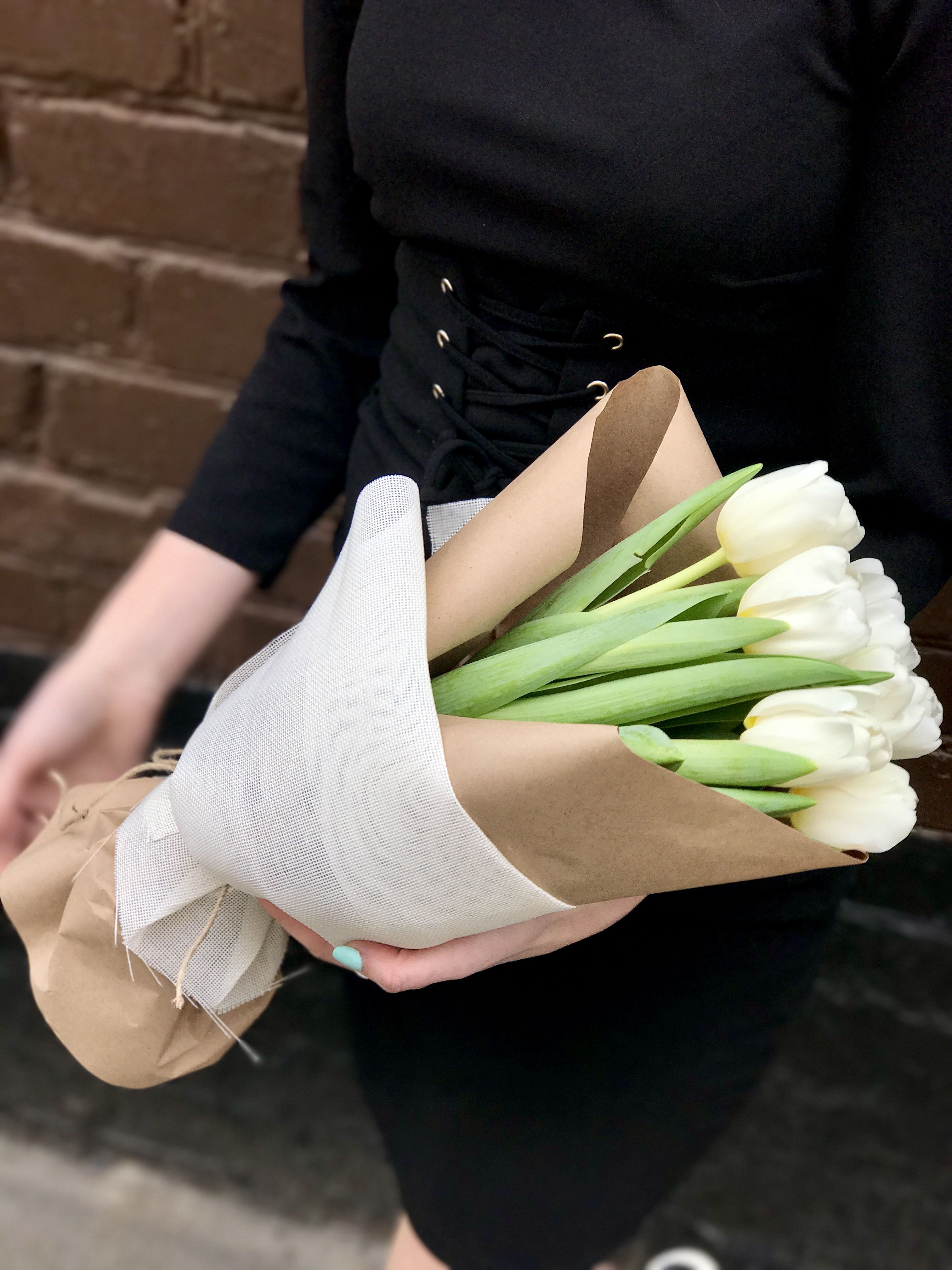
This category covers single-variety bouquets, kraft-wrapped bunches, box arrangements, and pairings with eucalyptus, hyacinths, and ranunculus. Supply comes straight from Dutch greenhouses through Aalsmeer — a neighbouring country and a short hop deliver the tulip almost off the cutting bench.
Groups and varieties in the catalogue
More than 3,000 tulip cultivars are registered worldwide. Around 30–40 key ones make it onto the shelves, split into groups by bud shape, stem length, and flowering season.
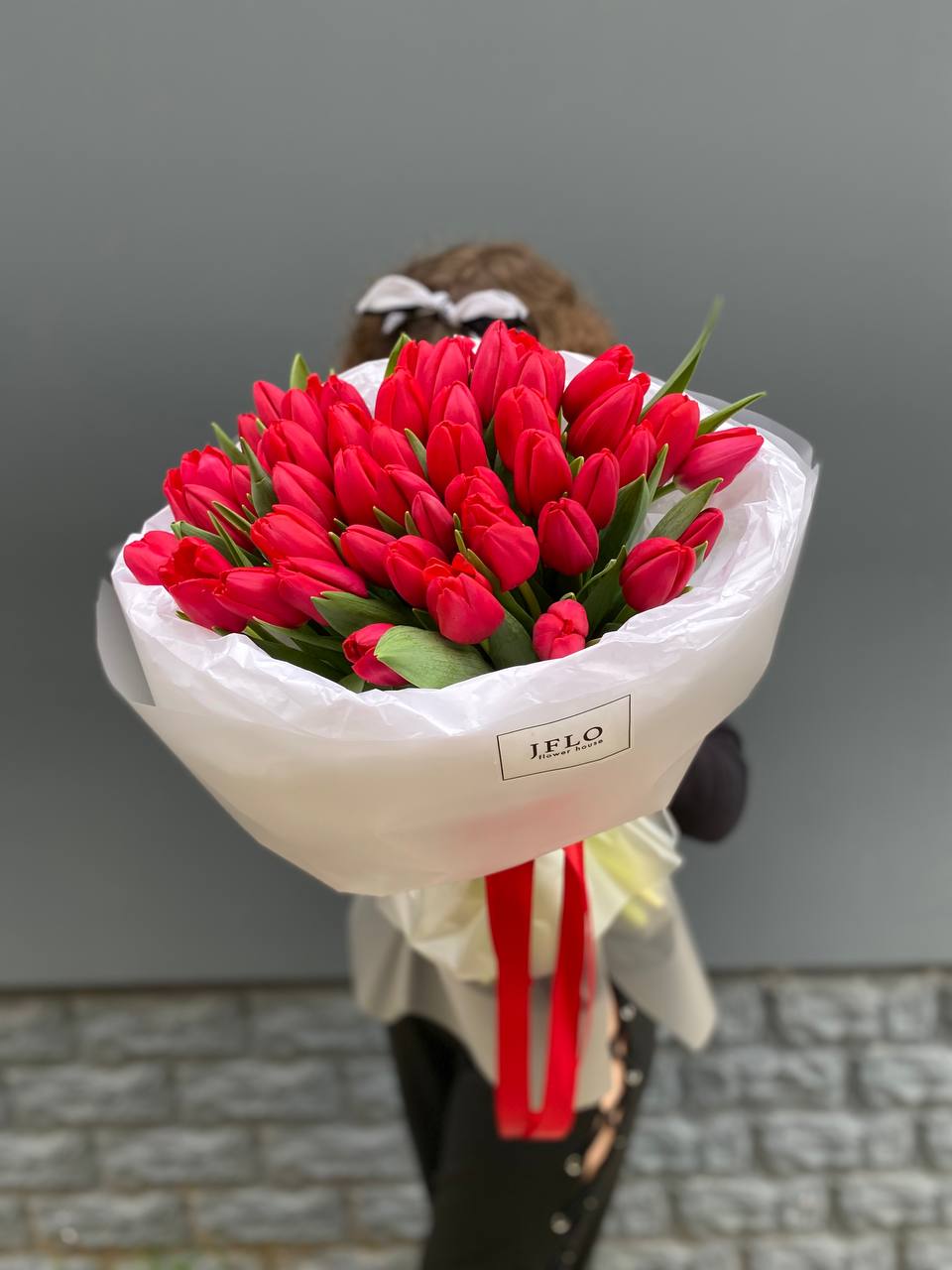
- Triumph — the classic cup-shaped bud, 40–50 cm stems. The largest group. Varieties: Strong Gold (yellow), Negrita (purple), Ile de France (red).
- Darwin Hybrids — large-headed, up to 12 cm across. Apeldoorn (scarlet), Ivory Floradale (cream). For larger bouquets.
- French Tulips — long-stemmed premium tulips up to 70 cm. Maureen (white), Menton (soft pink). A wedding choice.
- Parrot — parrot tulips with ruffled, fringed petals. Rococo (red), Blue Parrot (purple). For dramatic compositions.
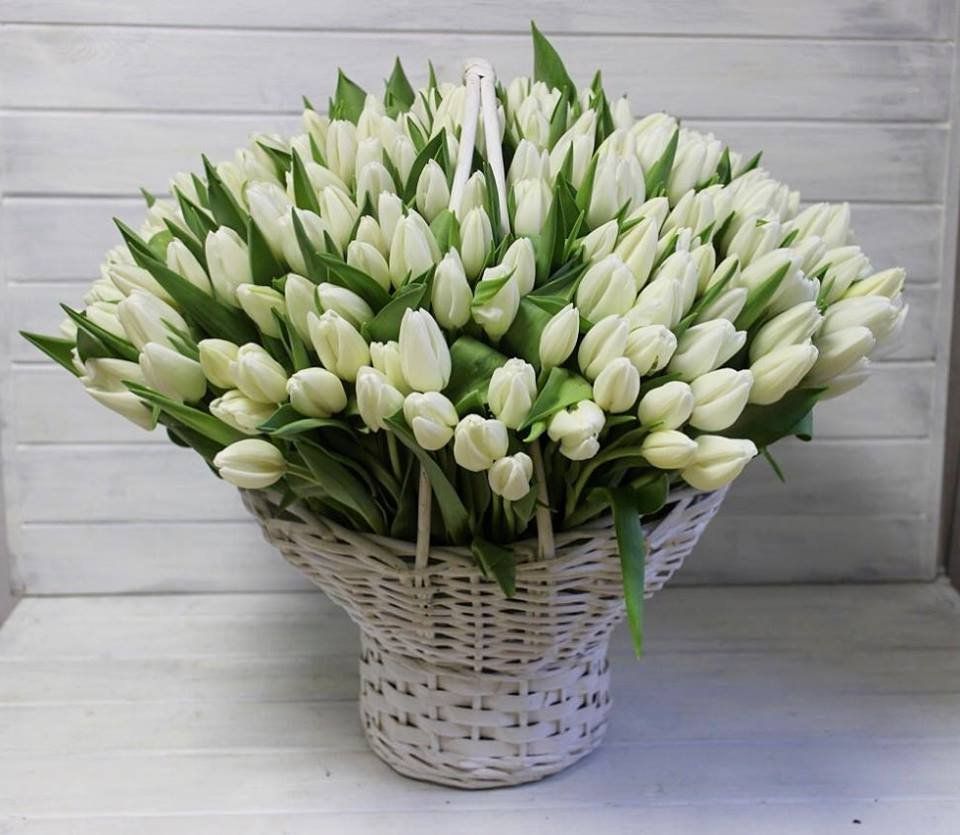
- Double / Peony — double "peony-flowered" tulips. Mount Tacoma (white), Foxtrot (pink). A winter alternative to peonies.
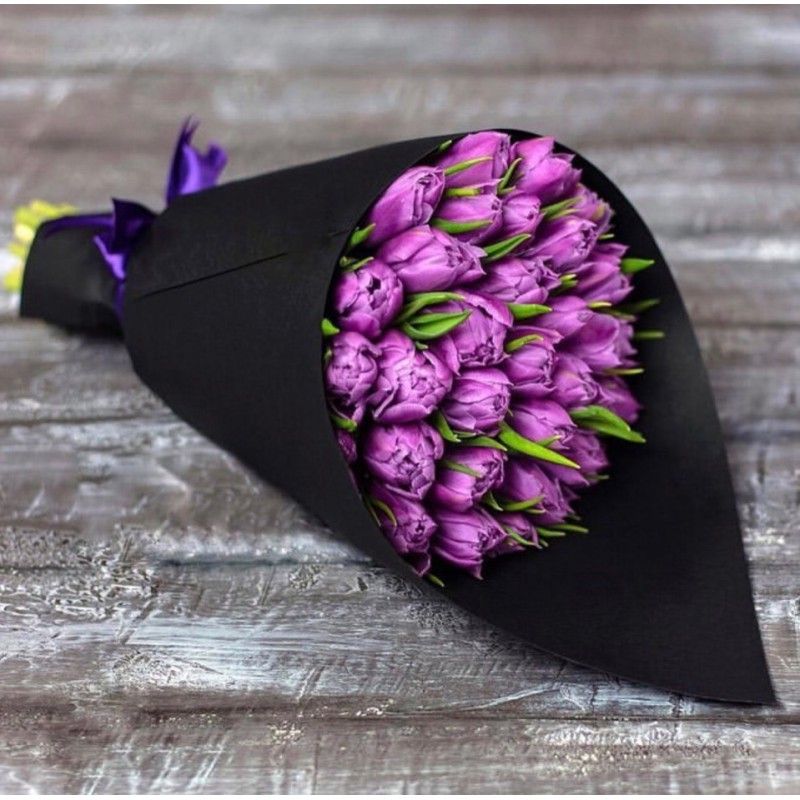
- Queen of Night — an almost-black deep purple, a cultivar legend of its own. For gothic and vintage palettes.
Season and the main occasions
The natural tulip flowering season is April–May. But through greenhouse forcing the Dutch run blooming from October to June, with peak volume around 14 February, Mother's Day, and Easter. These are the most-wanted tulips of the year, so we confirm orders 3–4 days ahead for those dates.
In Antwerp tulips work through the whole winter and spring — October to May — when the mild temperature lets the bouquet sit at home without wilting on the spot. They're available in summer too, but then they need constant control of the water temperature.
A tulip's quirk: it keeps growing
A cut tulip is still a living plant — the stem keeps growing in the vase by 2–3 cm over the first 2–3 days. That's unique among cut flowers and worth allowing for when building an arrangement.
Because of it, tulips reshape the bouquet daily. By the end of the week they bend toward the light — that's normal and pretty, not a flaw. To hold a tidier shape, use a tall narrow vase.
"The tulip is the most honest flower on sale. It won't pretend to be fresh when it's tired. Hold the stem — soft and warm? The bouquet is at its final stage. A fresh tulip feels firm, cool, almost ringing to the touch."
— Lena Vermeulen, florist with 13 years of experience
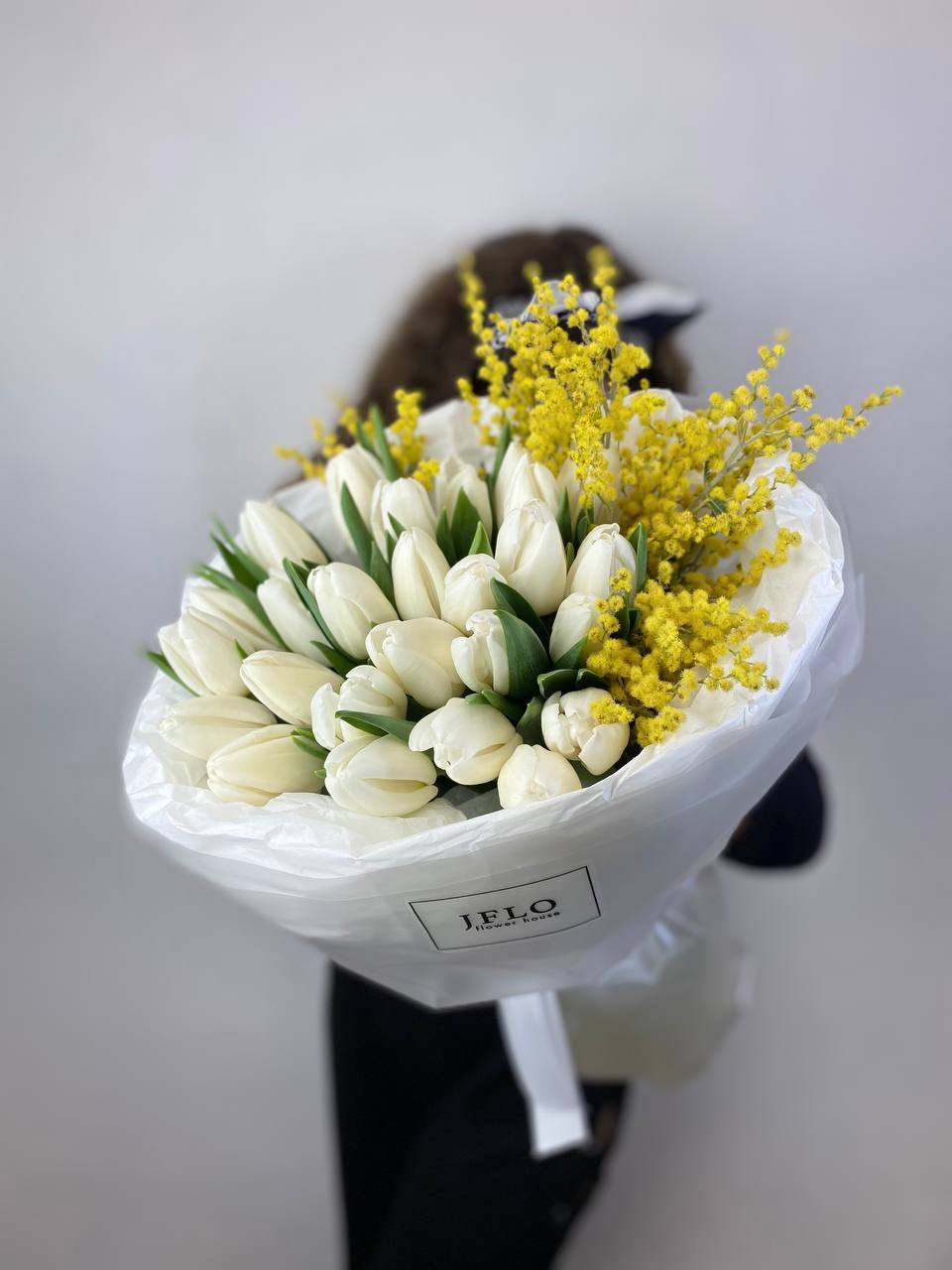
Freshness and presentation
A fresh tulip shows in a few signs: a firm stem, a tightly closed coloured bud, leaves without yellow spots, no wilted edges. On the shelf we keep tulips cut no more than 4 days ago — that gives the recipient the full 5–7 day bloom cycle.
We carry tulips in cold hydro-boxes. The stems stay in +6…+8 °C water until delivery and the bud holds its firmness. On the short run from Aalsmeer to Antwerp the cold chain isn't broken.
Delivery specifics
Antwerp has a temperate maritime climate, almost ideal for the tulip. Winters run +2…+7 °C, spring +9…+17 °C with frequent rain, summers +17…+23 °C. That gives the tulip a vase life of 6–8 days indoors for most of the year, with no need to move the bouquet to the fridge.
We cover the whole city: Centrum and the old town, Het Zuid, Het Eilandje, Borgerhout, Berchem, Deurne, Wilrijk, Merksem, Ekeren, Hoboken. Delivery windows are 2 hours. For Valentine's, Mother's Day, and Easter, order 3–4 days ahead. Prices are in euros (€), payment by card or on delivery.
Care at home
Tulips are handled differently from roses and peonies. The key rules: cold water only, +6…+10 °C; recut with a straight (not angled) knife every 2 days; little water in the vase — 5–7 cm from the bottom. The tulip dislikes deep water, the stems rot.
Don't place them next to daffodils or hyacinths — their sap speeds tulip ageing by 30–40%. If you want such a mix, hold the daffodils on their own for a day, rinse the stems, and only then add them to the bouquet.
On a rare hot summer day in Antwerp, move the bouquet to the coolest spot in the house overnight. That extends its life by 2–3 days with no additives — simple plant metabolism.

