
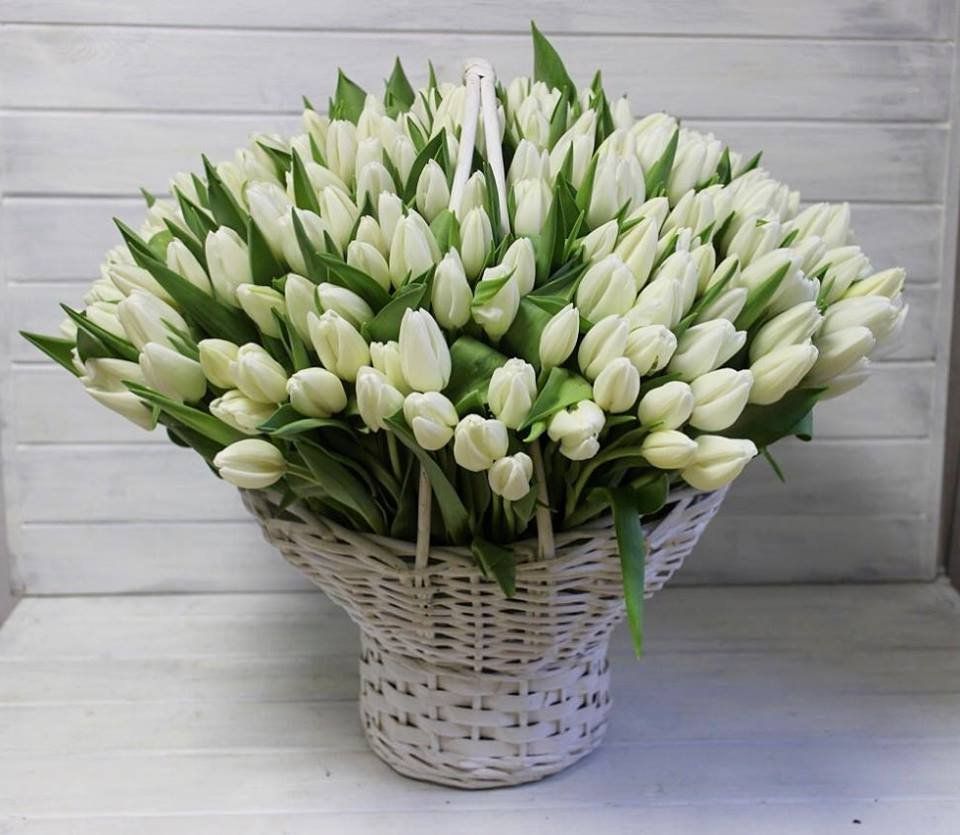

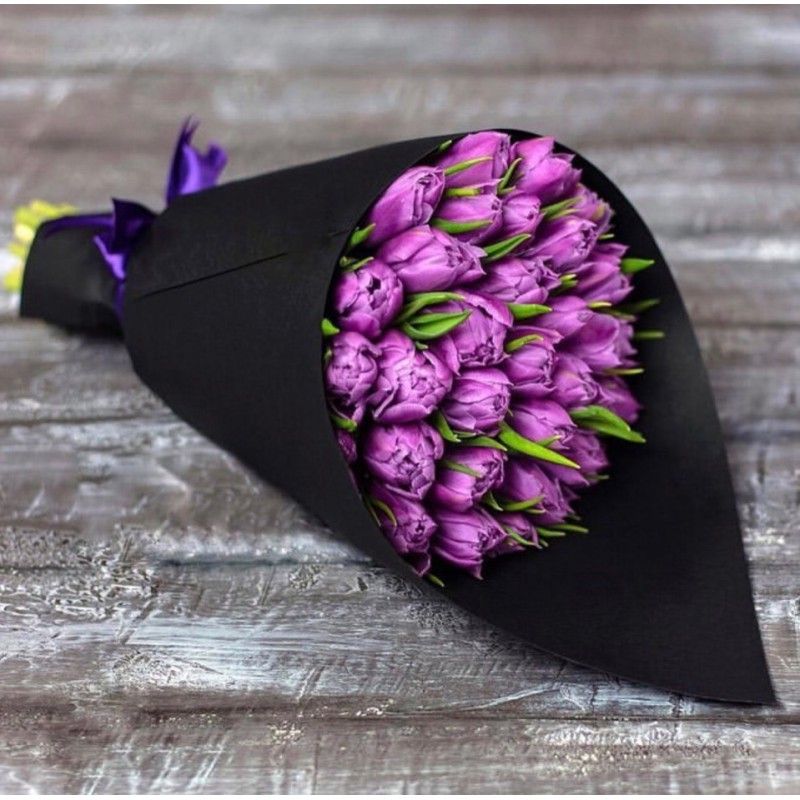


Tulips delivered in Auckland: groups, Dutch breeding, and spring bouquets
The tulip is the most "spring" flower in the trade and the second most sought-after after the rose in the cool season. A clean goblet shape, cool elegance, thousands of varieties bred over the last 400 years. In New Zealand it is an honest spring category: the peak falls in September and October. The country not only grows tulips for cutting but also supplies bulbs to the Northern Hemisphere in its off-season — the horticultural tradition here is strong.
This category brings together single-variety bouquets, kraft-wrapped bunches, box arrangements, and pairings with eucalyptus, hyacinths, and ranunculus. In season the cut comes from the cool farms of the lower North Island and the South Island, in Dutch-bred varieties, and arrives at the wholesale United Flower Growers auction. From there we build bouquets on the day of supply.

Groups and varieties in the catalogue
More than 3,000 tulip varieties are registered worldwide. Some 30–40 key ones reach the shelves, split into groups by bud shape, stem length, and flowering time.
- Triumph — the classic cup-shaped bud, 40–50 cm stem. The largest group. Varieties: Strong Gold (yellow), Negrita (purple), Ile de France (red).
- Darwin Hybrids — large-headed, up to 12 cm across. Apeldoorn (scarlet), Ivory Floradale (cream). For full, voluminous bouquets.
- French Tulips — long-stemmed tulips up to 70 cm. Maureen (white), Menton (soft pink). For wedding work.
- Parrot — parrot tulips with fringed, "torn" petals. Rococo (red), Blue Parrot (purple). For dramatic arrangements.
- Double / Peony — double "peony-flowered" tulips. Mount Tacoma (white), Foxtrot (pink). An alternative to peonies.
- Queen of Night — an almost-black purple, a legend of its own. For a gothic or vintage palette.
Season and occasions
The natural tulip season in New Zealand is spring, roughly September to November. In those weeks the market is full of local cut: it's the freshest and most affordable tulip of the year, and it lands neatly on Father's Day in early September and spring weddings. Out of season tulips are forced in glasshouses and topped up by imports under MPI control — they're available, but pricier, and summer humidity is their hardest period.
The tulip needs cool nights. In warm, humid Auckland it struggles most when the daytime temperature climbs toward +25 °C and high humidity adds load on the bud. It's no accident that the tulip fields sit further south and cooler — in the lower North Island and on the South Island.
A tulip's quirk: it keeps growing
A cut tulip stays a living plant — the stem keeps growing in the vase by 2–3 cm over the first 2–3 days. That's a unique trait among cut flowers and worth allowing for when building an arrangement.
Because of it, tulips reshape the bouquet every day. By the end of the week they curve toward the light source — that's normal and lovely, not a defect. To hold an even shape, use a tall, narrow vase that keeps the stems upright.
"The tulip is the most honest flower on sale. It doesn't pretend to be fresh. Held the stem and it's soft and warm? Then the bunch is at its final stage. A fresh tulip feels firm, cool, almost 'ringing' in the hand."
— Daria Kotova, florist, 12 years in the trade
Freshness and logistics
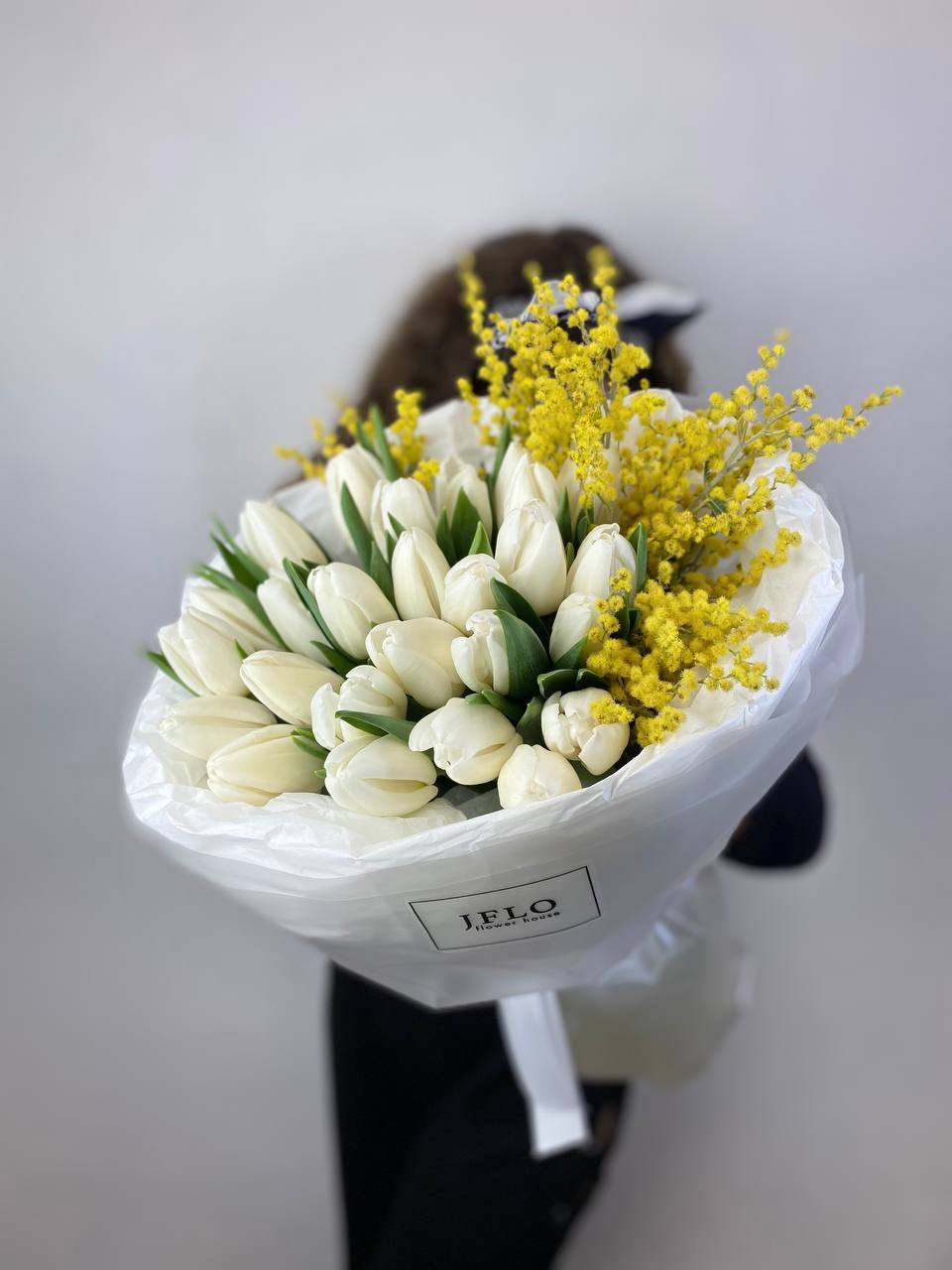
A fresh tulip shows in several signs: a firm stem, a tightly closed coloured bud, leaves without yellow spots, no withered edges. We keep only tulips cut no more than 4 days ago on the shelf. In season the path is short: a cool South Island farm, the morning United Flower Growers auction, and the same day — a bouquet to the recipient. From cut to vase the bunch then lasts 5–7 days.
We carry tulips in cold hydration boxes: the stems stay in water at +6…+8 °C until delivery, and the bud keeps its firmness. On warm, muggy days we add an insulated box so the flower doesn't wilt in transit.
Delivery specifics
Auckland's climate is mild and oceanic. Winter (June to August) sits at +8…+15 °C, wet, with no snow. Spring weather is changeable, and toward summer come warm, humid days up to +25 °C — a stress for the delicate bud, as grey mould appears on the petals fast in stale air. The city is open to the wind, and the weather can turn in a couple of hours. On those days we match the packaging to the day's weather and carry the flower in an insulated box.
We cover every key district: Auckland CBD, Ponsonby, Parnell, Newmarket, Mount Eden, Remuera, Devonport, Takapuna, Mission Bay, Manukau. Catalogue prices are in New Zealand dollars (NZD, $), payment by card online. The season is short, so for spring weddings and Father's Day place orders in Auckland 3–4 days ahead — peak dates sell out fast.
Care at home
A tulip is handled differently from roses and peonies. The key rules: cold water only at +6…+10 °C, recut the stem with a straight (not angled) cut every 2 days, and minimal water in the vase (5–7 cm from the bottom). The tulip can't take deep water — the stems rot.
Don't set it near daffodils and hyacinths — their sap speeds tulip ageing by 30–40%. If you want such an arrangement, keep the daffodils apart for 24 hours, rinse the stems, and only then add them to the bunch.
Humidity and stale air are the tulip's main enemies in Auckland: the split system dries out the air and the bud fast, while close air triggers rot on the petals. Keep the bouquet in the coolest room with some air movement, away from the direct flow of the air conditioner and the heater. On warm days move the bouquet to the fridge overnight — it adds 2–3 days of life.

