


Flowers in boxes in Berlin: a lid to open where etiquette drops the paper
Flowers in boxes in Berlin arrive under a lid rather than under paper. German etiquette calls for the giver to strip the wrapping and film off a hand-tied bouquet before it changes hands, leaving only the decorative cuff. A boxed arrangement skips that ritual: the recipient simply lifts the lid. The choice that matters here is less about which flower sits inside than about how the gift will be opened, carried on, or left standing on a shelf afterwards.
A lid instead of wrapping paper: hat box or flower handbag
That etiquette rule belongs to the giver, not the courier. A hat box works on different logic: the recipient sets it down, lifts the lid, and finds the arrangement already standing inside, with nothing left to peel away. A flower handbag works differently again: it has handles rather than a lid, so it travels the way an ordinary handbag would, carried at the side or over the forearm rather than held out flat in both hands.
Hat boxes make up the widest line among Berlin's boxed arrangements, with more choice gathered into that one shape than into any other on offer here. The shape itself predates the flower trade: it borrows from the cardboard boxes milliners once used to carry hats, a shape florists later adopted for carrying flowers instead.
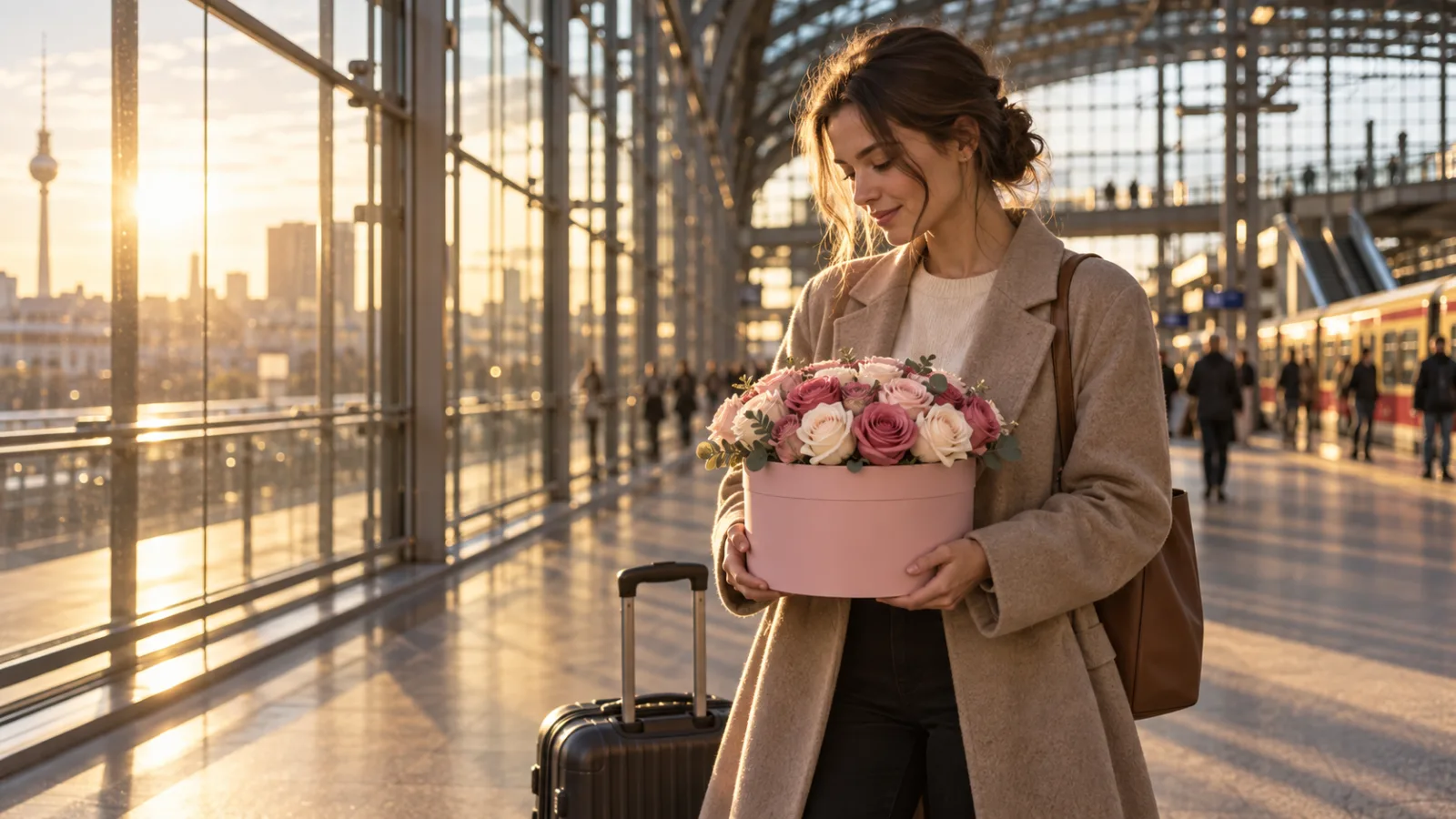
Roses through the year, a peony box for a Berlin May
Germany doesn't grow enough cut flowers of its own to meet demand. More than eighty per cent of what reaches German florists has passed through the Dutch flower trade on the way, with a good share of the roses themselves grown in Kenya before that. Among the rose boxes here, Jumilia stands out for a white base that shades into a pink edge. A French rose isn't a separate variety at all, just an ordinary rose whose outer petals the florist has reflexed, turned back by hand, into a fuller shape.
Peonies follow a narrower window. German-grown peonies are cut from late April into June, which makes a peony box a late-spring and early-summer choice rather than a year-round one.
Colour is worth a thought too. A bouquet made entirely of white flowers can read as a funeral arrangement to some people in Germany, and white chrysanthemums in particular are associated with cemeteries rather than gifts. For that reason a boxed arrangement here is usually given a second colour alongside the white, rather than left as one shade throughout.
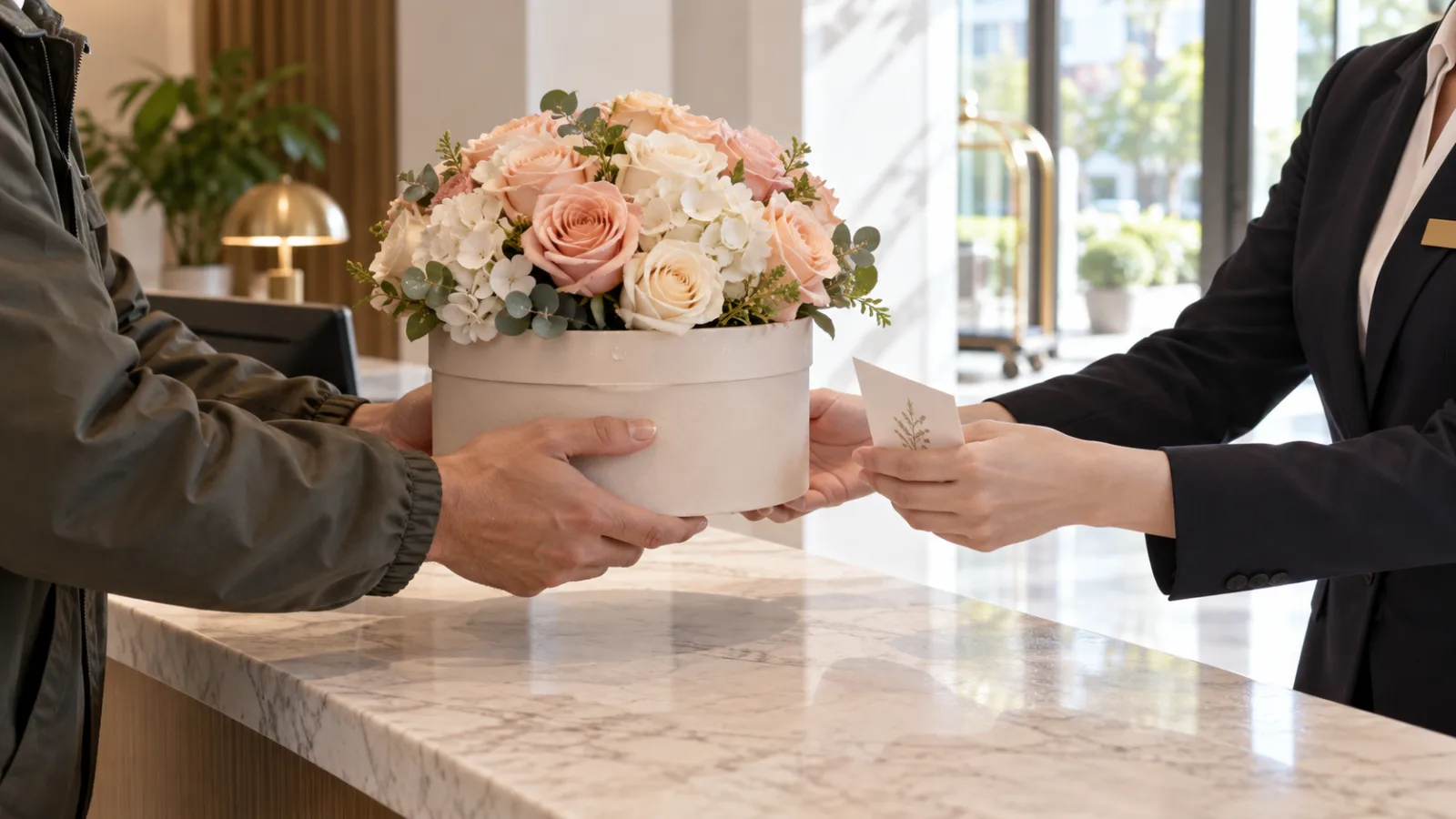
Jute, wood or a basket on a hook, and macarons beside the flowers
A few of these shapes are meant to stay rather than travel on. Flowers set in jute pots get put down wherever they land and left there. Crates and hanging baskets work the same way: a crate stands on a surface, and a hanging basket goes on the nearest hook or bracket, rather than being carried from room to room.
Macarons in boxes turn the same delivery into two gifts at once, flowers and something sweet arriving together rather than as separate errands. In Berlin offices a box like this often ends up as one gift from an entire team rather than from a single sender, since colleagues frequently split the cost between a whole department.
Berlin's summers and heated winter flats both ask something different of a cut flower than a box photo shows, and that's worth a look on its own rather than guessed at here.
Flower box delivery in Berlin follows the same pattern as any other order:
- Photographed first — most arrangements are photographed before the courier leaves.
- Same-day handover — most are handed over the same day they're placed.
- Free in the centre — delivery to the centre costs nothing extra, with the rest covered on delivery across Berlin.
For a first choice, hat boxes cover the broadest range of flowers in this format, and flower handbags suit anyone who'd rather carry the gift on than set it down. Jute pots or crates and hanging baskets work best for something meant to stay put.