


Roses with delivery in Budapest: varieties, Budapest occasions, and freshness from Bosnyák tér
Budapest splits its flowers across two banks of the Danube. On the pragmatic Pest side, a rose goes to a business dinner or an anniversary; up in the Buda hills, to a family table and a quiet celebration. A city of bridges, thermal baths, and grand boulevards treats a bouquet calmly but attentively — buyers study the bud shape, test stem firmness, choose a shade to match the occasion. We built the catalogue with that taste in mind.
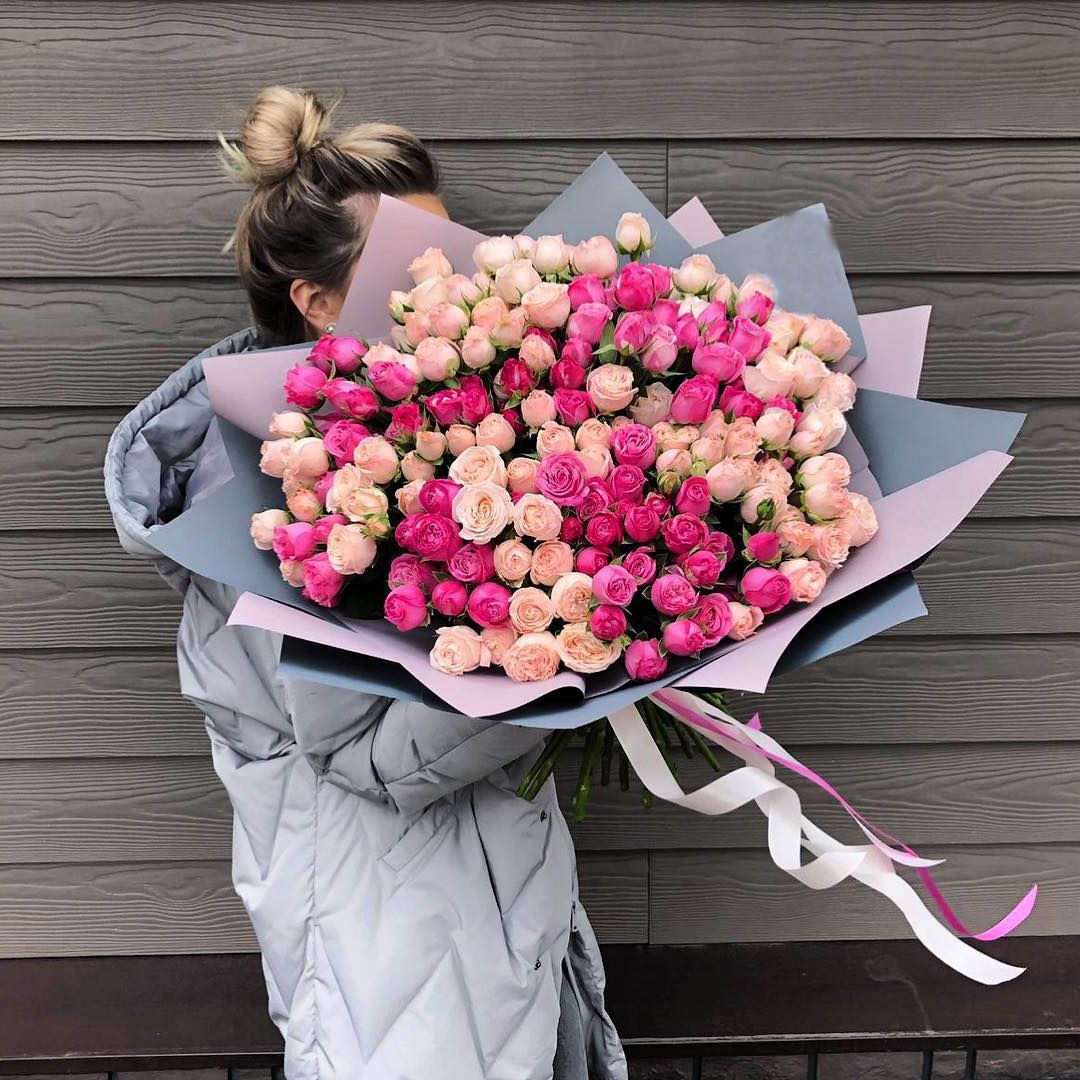
The category covers single-variety bouquets, mixed arrangements, and single stems. Sizes range from a 7-rose bundle to a formal 51 or 101-stem presentation. For hotels, restaurants, and corporate orders, we supply box and hatbox formats — frequently ordered for receptions along Andrássy Avenue and the Danube embankment.
Which varieties to choose
Our rose catalogue is built around three sourcing groups: Ecuadorian large-headed roses, Dutch classics, and English garden roses by David Austin. Each group has its natural occasion — from a bold statement bouquet to a quiet romantic gesture.
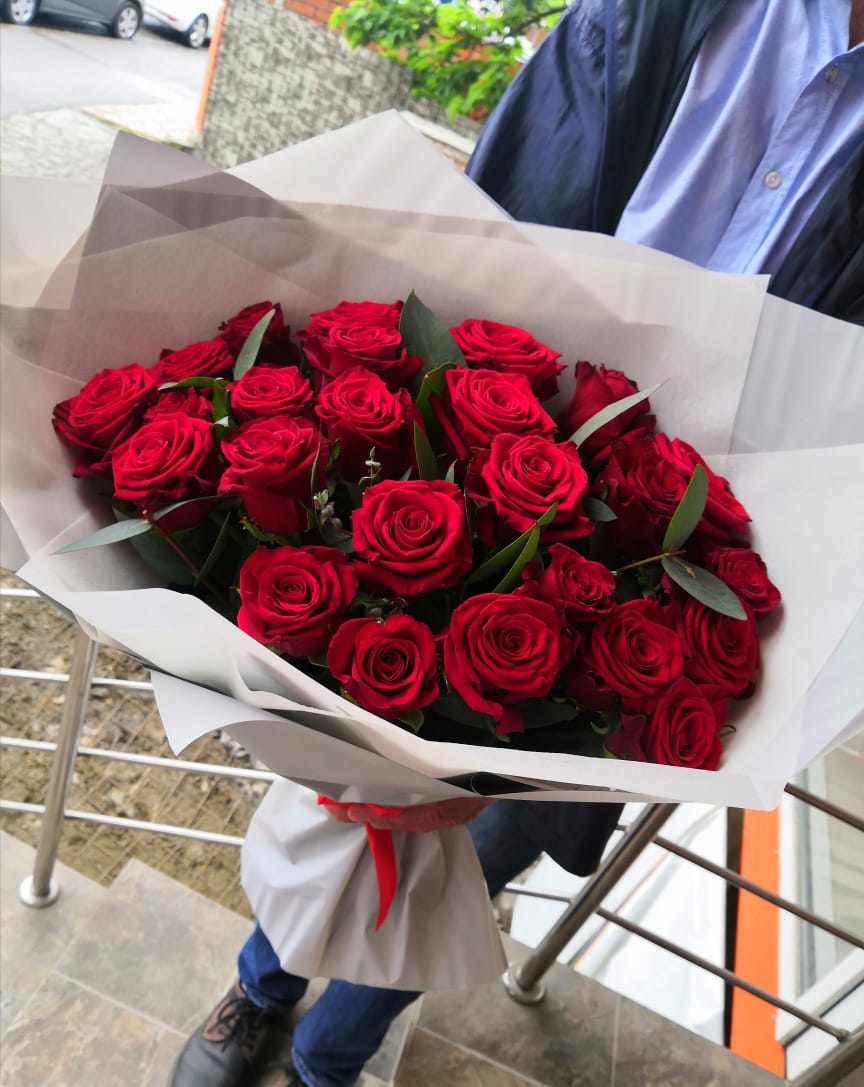
- Freedom — deep red, bud diameter 6–7 cm, stem 70–80 cm. A vase life of up to 14 days. The benchmark red rose for anniversaries and Valentine's orders.
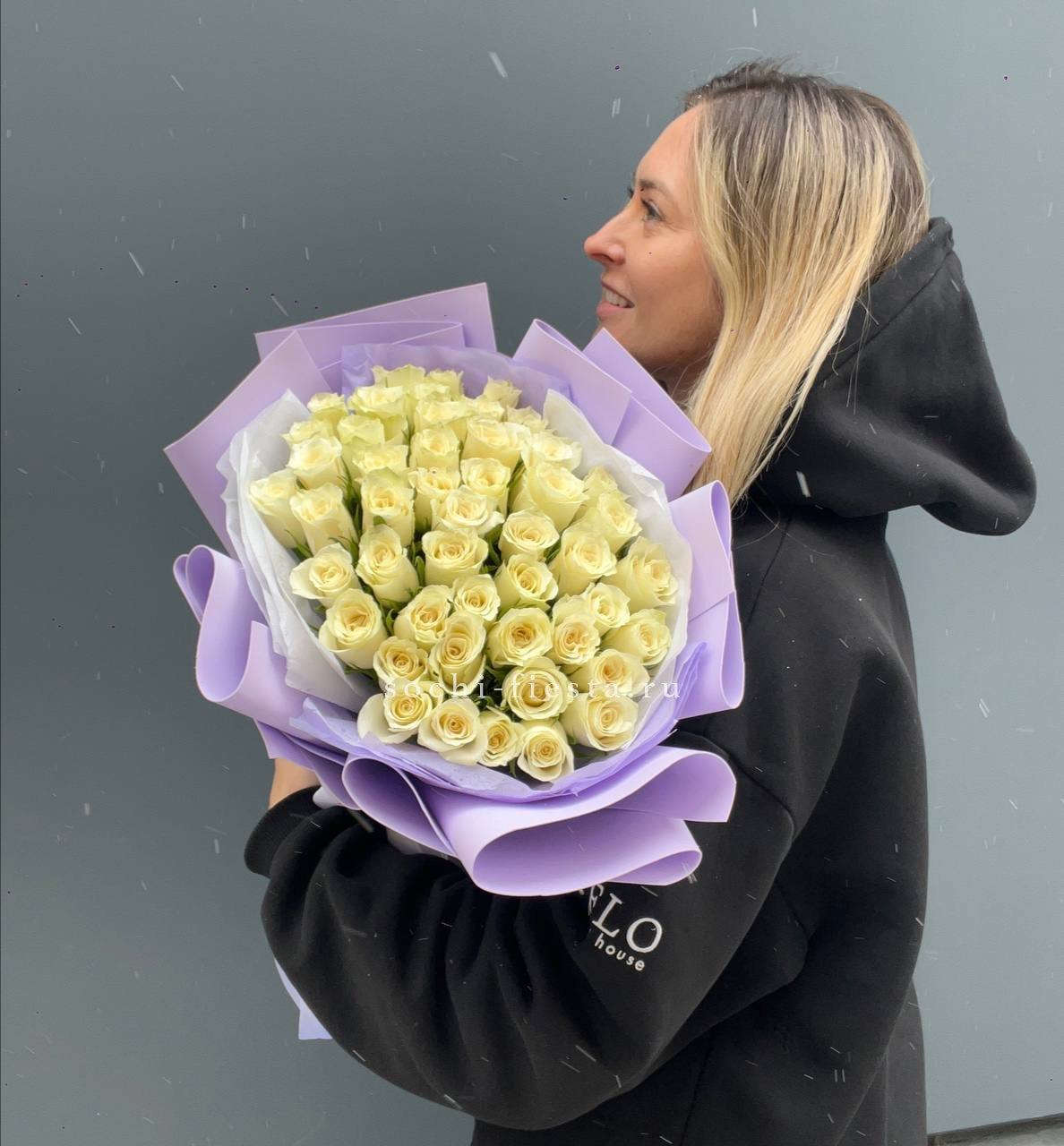
- Avalanche+ — pure white, large dense bud, no scent. A neutral anchor for any mixed arrangement and for wedding work.
- Red Naomi — dark burgundy-red with velvet-textured petals. Photogenic and dramatic — often requested for receptions and hotel lobbies.
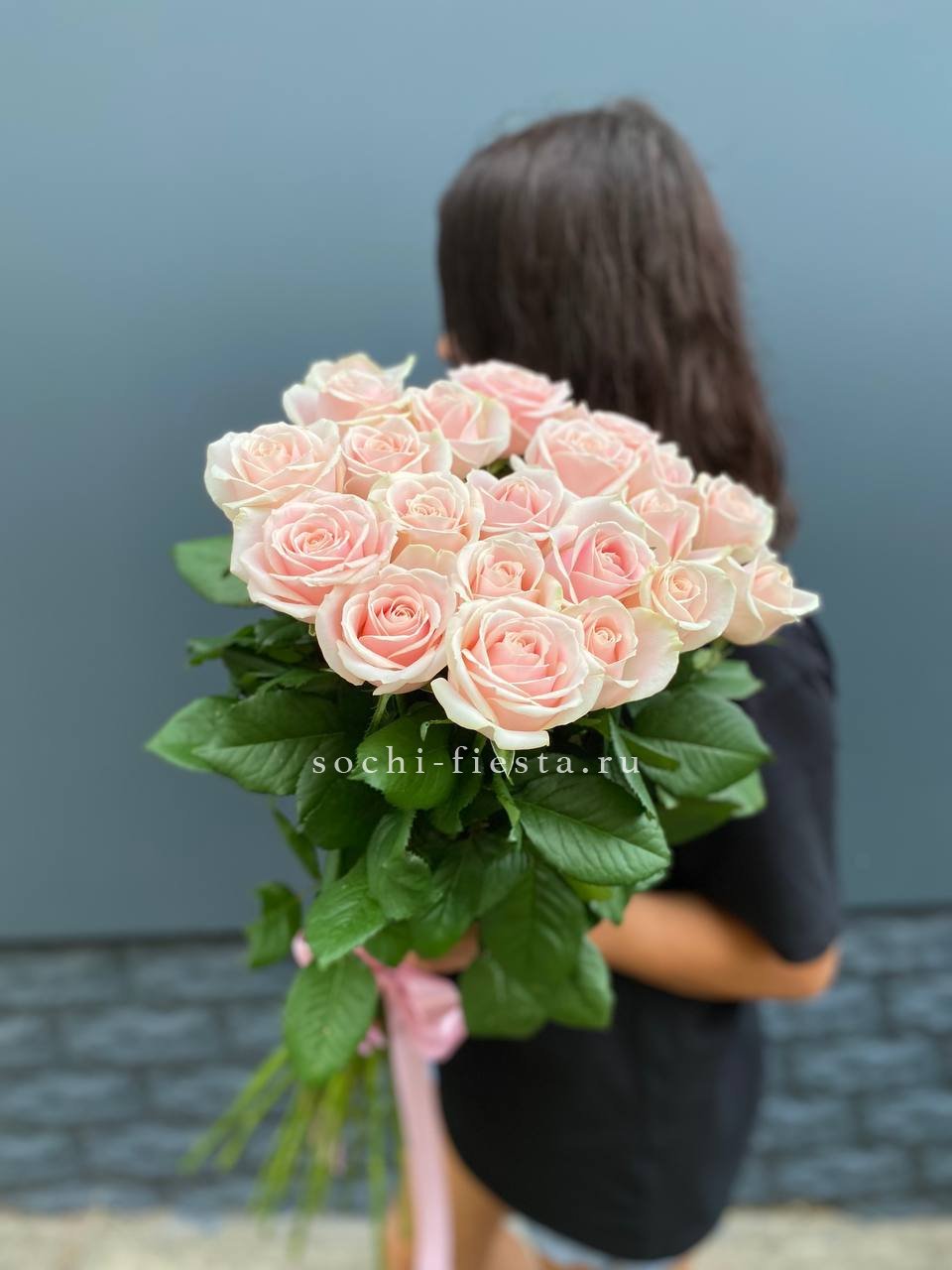
- Juliet, Patience — David Austin garden roses. Cup-shaped, densely petalled, with a myrrh and apricot fragrance. A natural choice for bridal bouquets and gifts meant to please.
- Tropical Amazona — coral-to-orange gradient. Works well for summer and autumn compositions.
- Sweet Unique — lilac-pink tones, mid-sized bud. An unexpected choice for those who want to move beyond the predictable red-and-pink palette.
Occasions and stem count
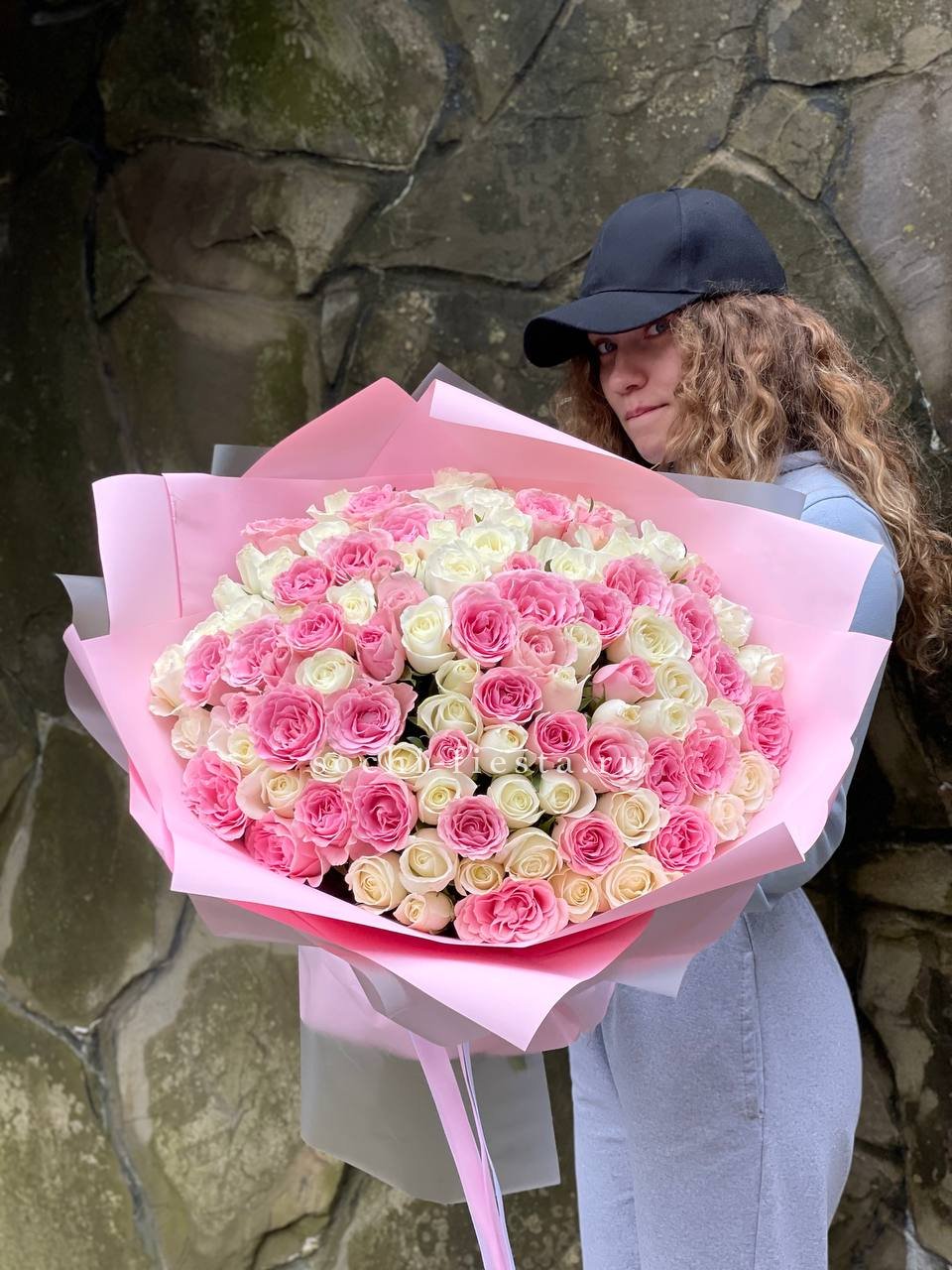
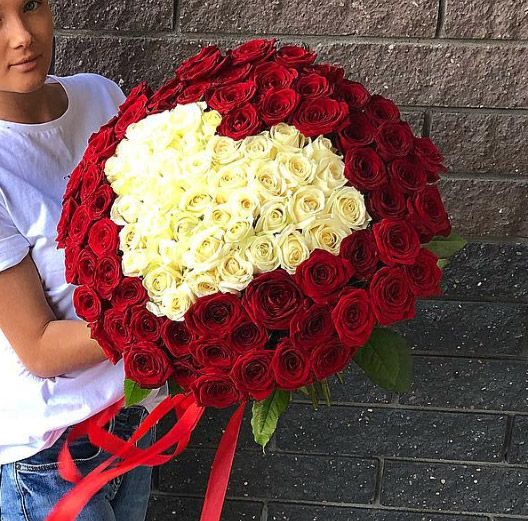
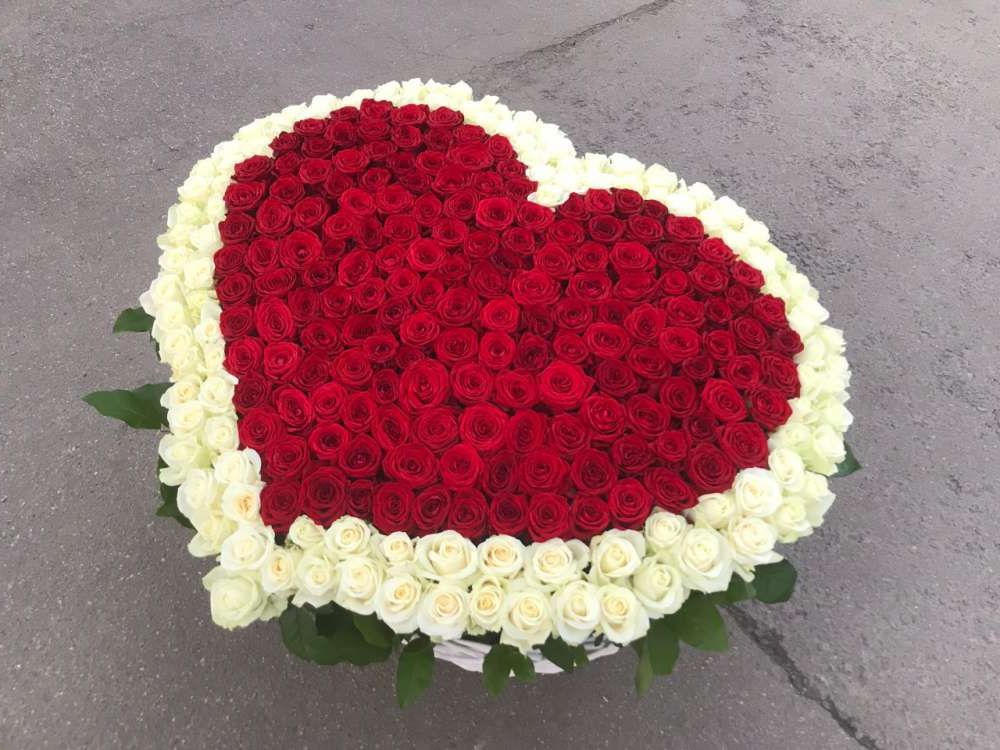
One stem is a quiet, considered gesture. Three: a friendly thanks. Seven or nine: romantic without being theatrical. Twenty-five reads as a serious declaration. Fifty-one and 101 are reserved for anniversaries, engagements, and milestone dates.
The Hungarian calendar has several sharp floral peaks. Nőnap (Women's Day, 8 March) is one of the biggest days of the year: men bring flowers to colleagues, partners, and mothers, and demand spikes. Anyák napja (Mother's Day) falls on the first Sunday of May in Hungary — not the dates used by neighbouring countries. Bálint-nap (14 February) adds roses, and Névnap (name day) is often marked more warmly here than a birthday. For Mindenszentek (All Saints' Day, 1 November), families bring flowers to the cemeteries and demand for cut stems rises sharply.
Freshness and logistics
Dutch roses reach Budapest from the Aalsmeer auction by overnight refrigerated truck — roughly 1,400 km and a 15–17 hour run. A morning auction lot is distributed to the city's florists the next day through the Bosnyák téri virágpiac flower market in Zugló. Ecuadorian varieties arrive by air freight through European flower hubs and Budapest's Ferenc Liszt Airport (BUD).
From unloading to your door, the window is 24 hours or less. Flowers are held in cold storage at +4…+6°C until assembly. From cut to the recipient's vase takes 2–3 days, and with proper care Dutch varieties last 10–14 days, David Austin garden roses 7–10.
"The Budapest buyer is calm but exacting. They'll ask about the variety, the cut date, smell the bud at the counter. If you bring a rose here across half of Europe, the cold chain isn't optional — it's a commitment. Especially around 8 March, when the city clears the shelves in a couple of days."
— Eszter Varga, florist, Budapest, 14 years in the trade
Delivery specifics in Budapest
Budapest sits in a temperate continental climate, in the Pannonian Basin. Winters are cold, from −1 to +4°C and down to −10°C in frosty spells, with snow that doesn't settle every year. Summers are hot and dry, +26–30°C and above +35°C in heatwaves. In winter we move bouquets in insulated bags; in summer we add cooling packs and moisture-retention gel at the stems. Spring and autumn are the easiest seasons for delivery without extra protection.
We deliver roses across all districts of Budapest: Belváros and Lipótváros (V), Várkerület and Buda (I, II), Terézváros (VI), Erzsébetváros (VII), Józsefváros (VIII), Ferencváros (IX), Újlipótváros (XIII), Újbuda (XI), Hegyvidék (XII), Óbuda (III). Payment is in forints (Ft, HUF), by card online. For Mindenszentek, Húsvét, and Anyák napja we recommend ordering 3–5 days ahead; for Nőnap and Bálint-nap, a week in advance.
Care at home
On arrival, cut the stems at a 45° angle with a clean knife, remove any leaves below the waterline, and place them in a clean vase with cool water. Change the water every two days; add a Chrysal sachet or a pinch of sugar. Keep the bouquet away from radiators, direct sunlight, and ripening fruit — ethylene from apples and bananas shortens vase life by roughly a third.
Budapest apartments often warm to +22–24°C in winter, which is at the limit for roses — keep the vase in the coolest room, ideally by a bedroom window. On hot summer days, when the room exceeds +26°C, move the roses to the refrigerator overnight to add 2–3 days of life. Roses suit almost any occasion: message our manager and we'll help match the variety, colour, and stem count to the task and budget.

