
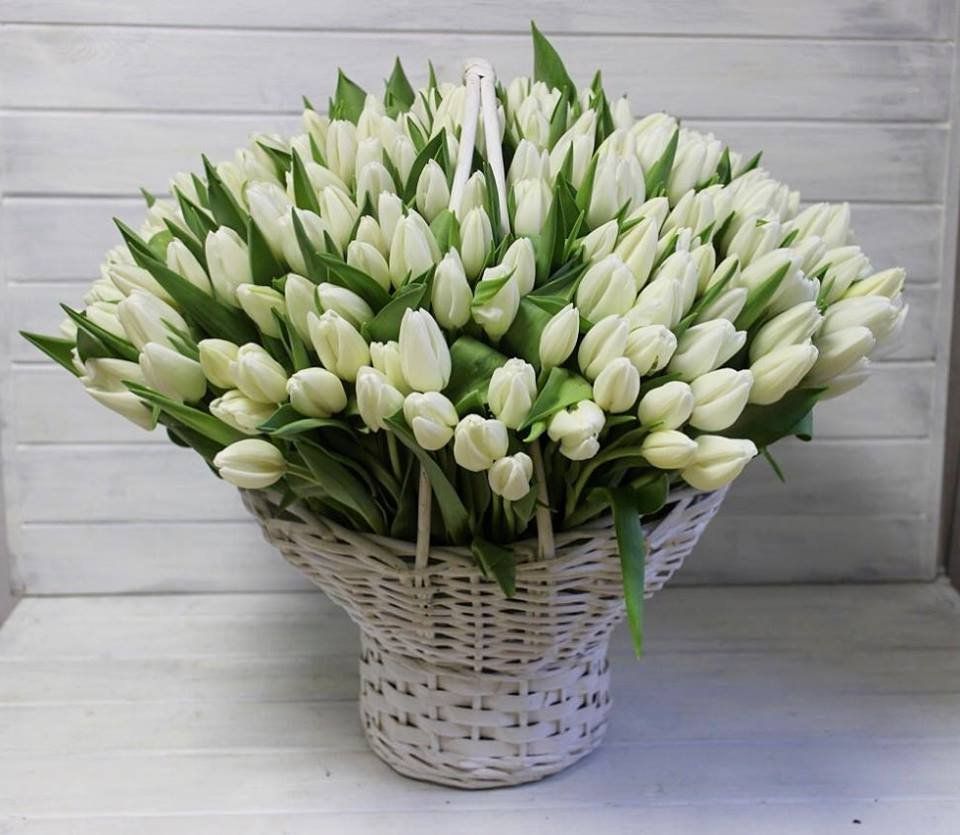
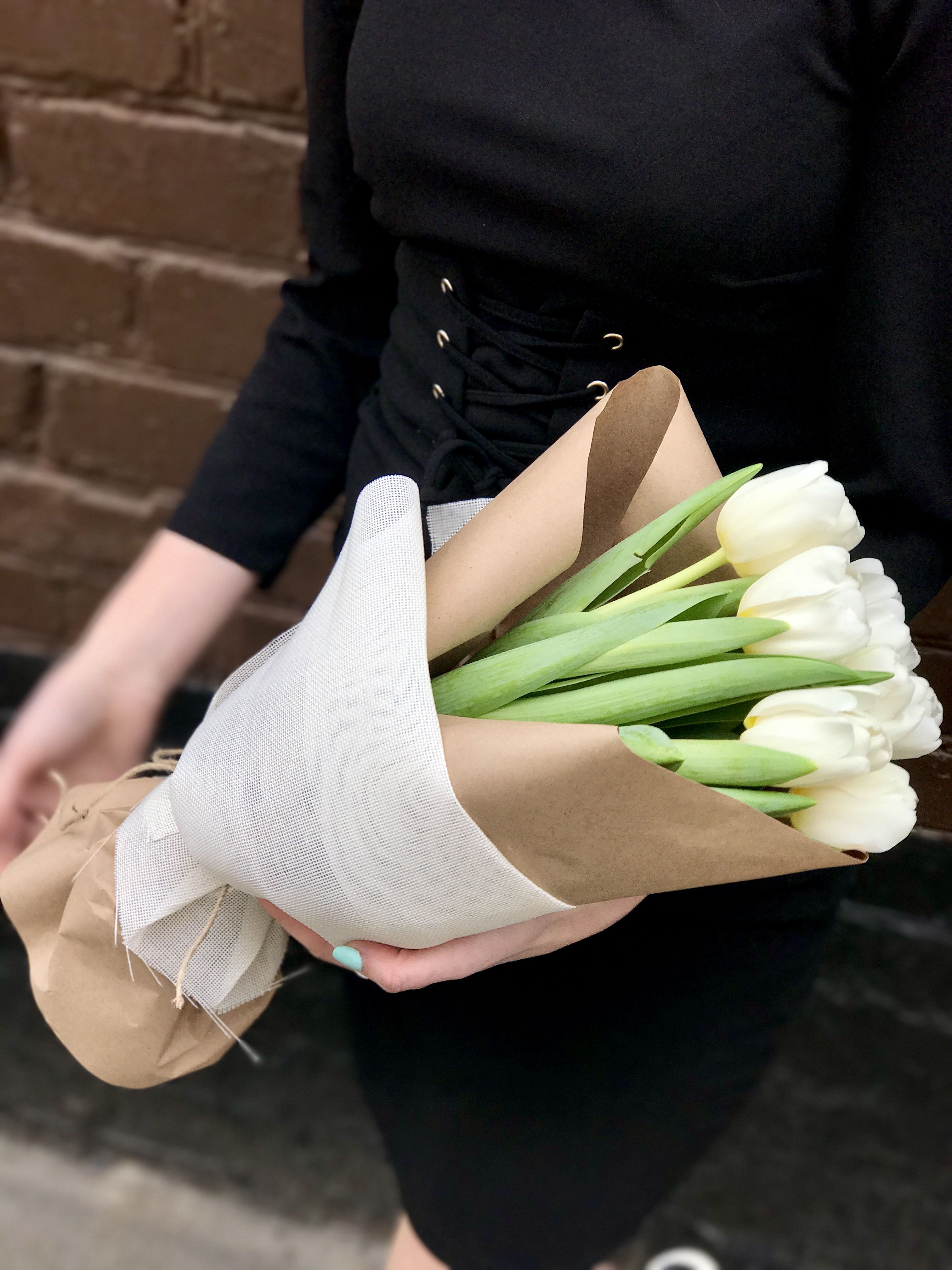
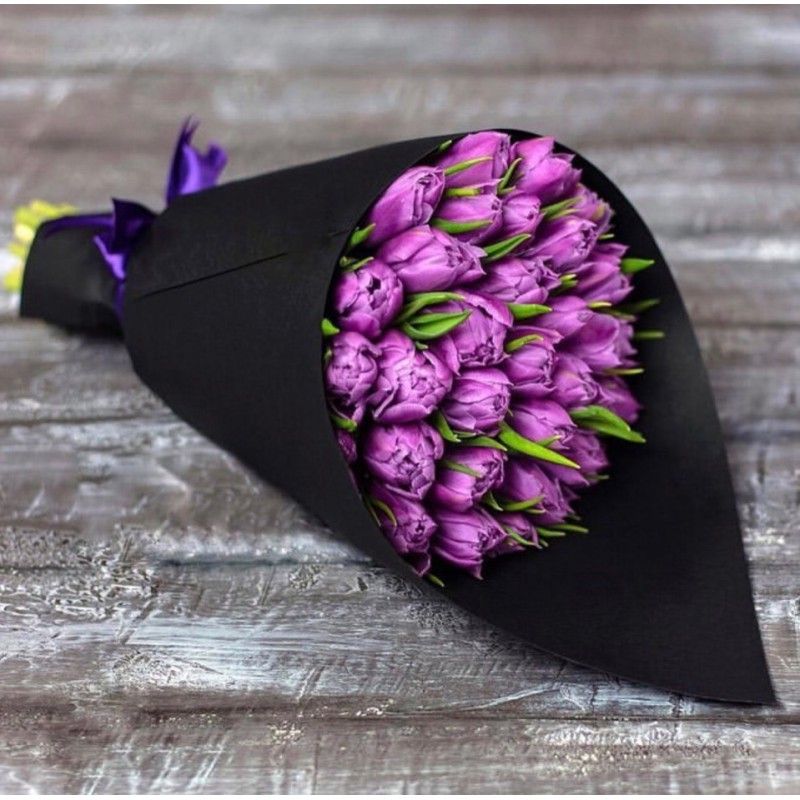


Tulips with delivery in Buenos Aires: varieties, the Southern Hemisphere spring, and freshness from the supply
The tulip is the most "springlike" flower in floristry and second in recognition only to the rose in the cool season. A clean goblet shape, quiet elegance, thousands of Dutch-bred varieties. In Argentina spring arrives in September, so here it is a genuine Southern Hemisphere spring category, with a peak roughly from September through November. For many in Buenos Aires the tulip is tied to the blooming fields of Trevelin in Patagonian Chubut — people travel there to see the spring flowering.
The category gathers single-variety bouquets, kraft-wrapped armfuls, boxed arrangements, and combinations with narcissi, ranunculus, and hyacinths. It is a seasonal flower: outside the spring months the tulip costs more and arrives less often, and the summer heat and humidity are its hardest period.

Groups and varieties in the catalogue
More than 3,000 tulip varieties are registered worldwide. Around 30–40 key ones reach the shelf, split into groups by bud shape, stem length, and flowering time.
- Triumph — the classic cup-shaped bud, stem 40–50 cm. The most widespread group. Varieties: Strong Gold (yellow), Negrita (purple), Ile de France (red).
- Darwin Hybrids — large-headed, up to 12 cm across. Apeldoorn (scarlet), Ivory Floradale (cream). For voluminous bouquets.
- French Tulips — long-stemmed tulips up to 70 cm. Maureen (white), Menton (soft pink). For wedding floristry.
- Parrot — parrot tulips with fringed, "torn" petals. Rococo (red), Blue Parrot (purple). For dramatic arrangements.
- Double / Peony — double "peony-flowered" tulips. Mount Tacoma (white), Foxtrot (pink). An alternative to peonies.
- Queen of Night — an almost-black purple, a legend of a variety in its own right. For a gothic or vintage palette.
Season and occasions
The natural tulip season in Argentina is spring, roughly September to November. In these weeks the flower is at its freshest and most affordable, and it falls neatly on Día de la Primavera, 21 September (also Día del Estudiante), and spring weddings. Día de la Madre, on the third Sunday of October, lands at the height of the season — the second peak in demand for tulips.
The tulip needs cool nights. On the La Plata plain it has the hardest time in the first warm waves of spring, when the day climbs to +28–30°C and high humidity adds strain on the bud. That is why the country's main tulip fields sit further south and cooler — in Patagonian Trevelin.
A tulip's quirk: it keeps growing
A cut tulip remains a living plant — the stem keeps growing in the vase by 2–3 cm over the first 2–3 days. This is a rare trait among cut flowers, and it has to be taken into account when assembling an arrangement.
Because of this, tulips change the shape of the bouquet every day. By the end of the week they bend toward the light source — that is normal and beautiful, not a defect. To keep an even shape, stand the bouquet in a tall, narrow vase that holds the stems upright.
"The tulip is the most honest flower on sale. It doesn't pretend to be fresh. Held a stem in your hand — soft, warm? Then the bouquet is on its final stage. A fresh tulip is firm in the hand, cool, almost 'ringing' to the touch."
— Lucía Fernández, florist with 12 years of experience
Freshness and logistics
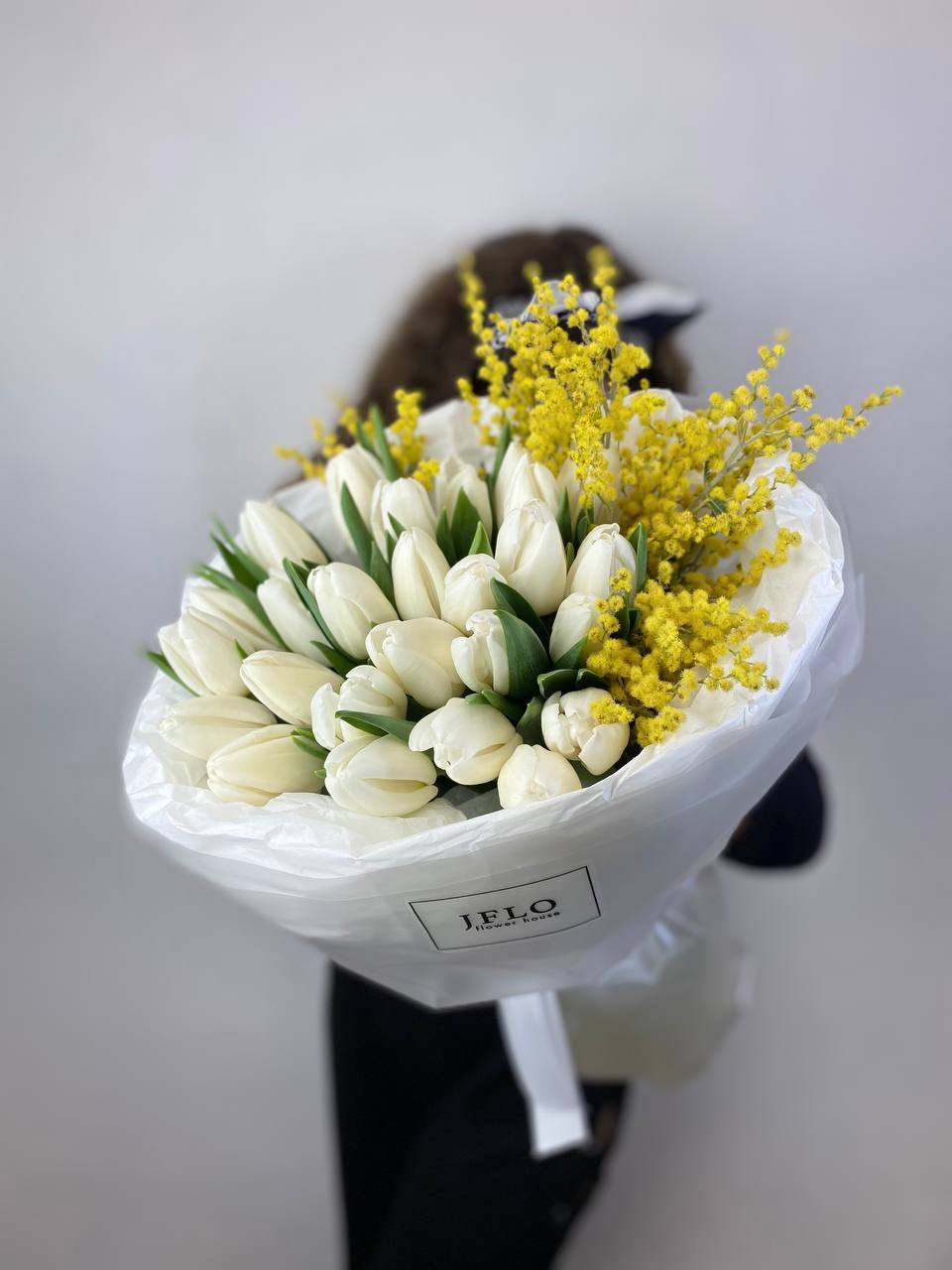
A fresh tulip shows by several signs: a firm stem, a tightly closed coloured bud, leaves without yellow spots, and no wilted edges. In season tulips come from cool Argentine farms and are supplemented by Dutch-bred imports through the city's flower wholesale trade. Tulips arrive in closed buds; ripening happens at the recipient's home.
We move tulips in cold hydroboxes: the stems stay in water at +6–8°C until delivery, and the bud keeps its firmness. On hot, muggy days we add an insulated box so the flower doesn't wilt en route. Until assembly, bouquets are kept in cold storage at +4–6°C.
Delivery specifics
The climate of Buenos Aires is humid subtropical. Summer (December–February) is hot and humid, +28–35°C, with high humidity that adds strain on the delicate bud and frequent evening thunderstorms. Winter (June–August) is mild, +8–17°C, frost is rare and snow practically never falls. The tulip is a spring flower, and getting it into a hot, humid city under cold is especially important.
We cover all the key districts: Palermo, Recoleta, Puerto Madero, Belgrano, San Telmo, Retiro, Microcentro, and Villa Crespo. Prices in the catalogue are in Argentine pesos (ARS, $), paid by card online. The season is short, so for Día de la Primavera, spring weddings, and Día de la Madre, place the order 3–4 days ahead — peak dates sell out fast.
Care at home
A tulip is handled differently from roses and peonies. The main rules: only cold water at +6–10°C, refreshing the cut with a straight (not angled) knife every 2 days, and a minimum of water in the vase (5–7 cm from the bottom). The tulip won't tolerate deep water — the stems rot.
Don't place them next to narcissi or hyacinths — their sap speeds tulip ageing by 30–40%. If you want such an arrangement, hold the narcissi separately for 24 hours, rinse the stems, and only then add them to the shared bouquet.
Heat and humidity are the tulip's main enemies in Buenos Aires: a split system quickly dries the air and the bud, while stuffiness brings on grey mould on the petals. Stand the bouquet in the coolest room with some air movement, away from the direct flow of the air conditioner. On days above +30°C, move the bouquet to the refrigerator overnight — that adds 2–3 days to its life.

