



Flowers in Chicago: from a 1927 Randolph Street market to today's bouquet
In 1927 the Wholesale Florists Exchange opened at 1313 W. Randolph Street as Chicago's central flower market, and it ran the city's flower trade until the 1950s. Those streets now sit inside the West Loop & Fulton Market delivery zone, and flowers in Chicago still travel a long way before they reach the city, which shapes their freshness, price and the format they arrive in.
Where Chicago's flowers come from, then and now
Fox & Fox designed the Randolph Street building, and it has been listed on the National Register of Historic Places since 2011. More than 80% of the cut flowers sold in the United States come from Latin America, chiefly Colombia and Ecuador, and around 90% of that supply lands first in Miami before moving on. The stems travel at about two degrees, and every hour they spend warm after that cuts into the time they will hold up in a vase. Ecuadorian roses are part of the Chicago catalogue for that reason: the farms sit high enough in the Andes to grow long, sturdy stems that survive the trip.
Local growing still has a place in the city's flower calendar, even though it never supplies JFLOO directly. From May to October the Chicago Flower Market brings together 31 farms from across the Midwest, and on Wednesdays and Saturdays flowers appear on the stalls of Green City Market in Lincoln Park. Both are city landmarks rather than suppliers: JFLOO buys the flowers for an order only after it has been paid, then photographs the finished bouquet before the courier leaves.

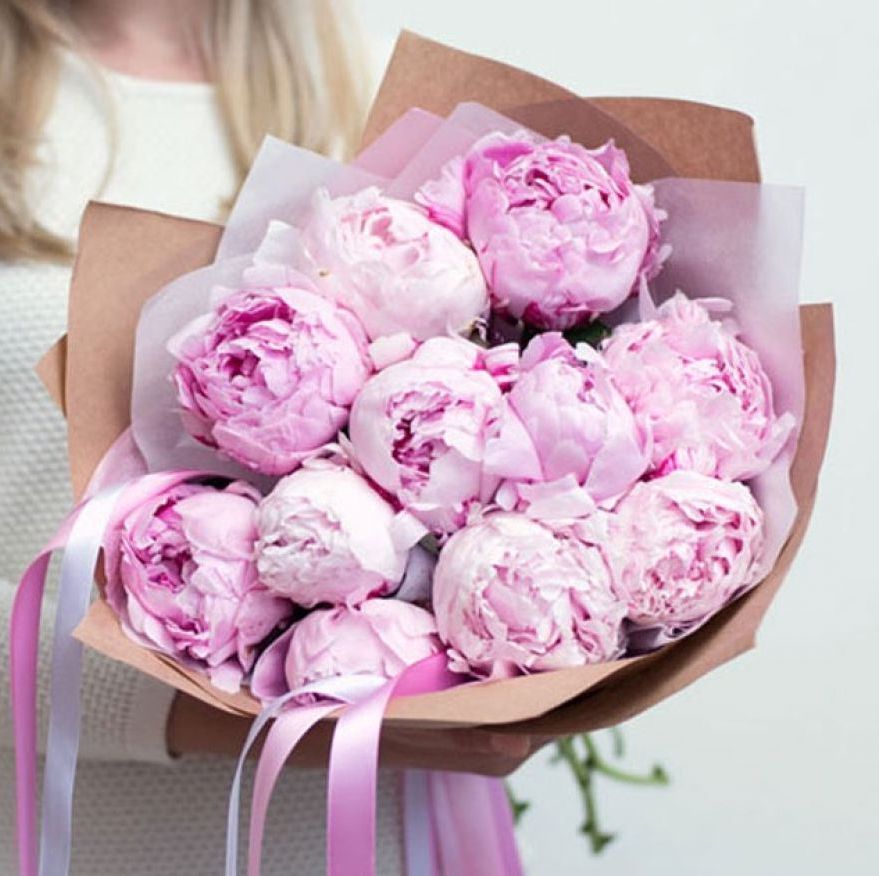
Roses grow under glass, so they are in the catalogue every month of the year; Chicago's selection includes French roses, Ecuadorian roses, pink-and-white roses, and roses paired with lisianthus. Peonies follow a shorter calendar: Midwest peonies bloom from late May into early June, and outside that window they are flown in from further away and cost more, so peonies bought in season tend to be the better value.
Lilac Time at Lilacia Park in Lombard has run every May since 1929, with more than 200 varieties on show, a reminder of how short the region's spring flowering season really is. Greenhouse tulips fill the gap either side of it, cut from December through May. Lilies, gerberas and lisianthus stay available all year, which makes a mono bouquet of a single flower a dependable choice when the date matters more than the variety. Where a mix of colours and flowers suits the occasion better, designer bouquets and mixed bouquets bring several kinds together in one arrangement.
Bouquet, box or basket: matching the flowers to a Chicago address
Hotel deliveries in Chicago go to neighbourhoods such as the Loop, River North, the Magnificent Mile and Streeterville, or the Gold Coast, wherever recipients happen to be staying. A hotel needs the guest's surname as it appears at check-in and, where known, the room number; the hotel itself decides whether the flowers go up to the room or wait at reception. An office needs the company name and the floor, and where a front desk controls access, the sender is told who signed for the delivery.
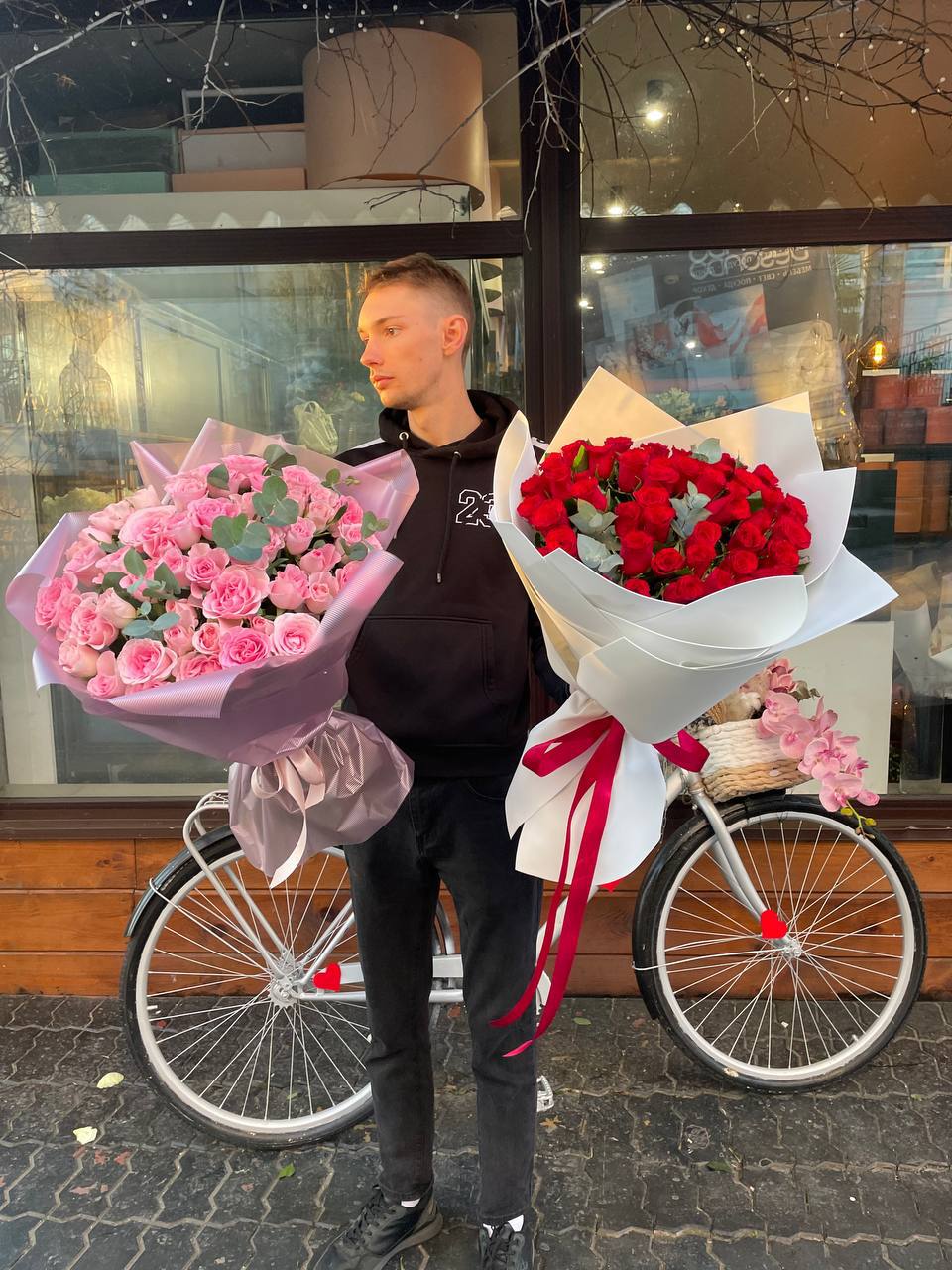
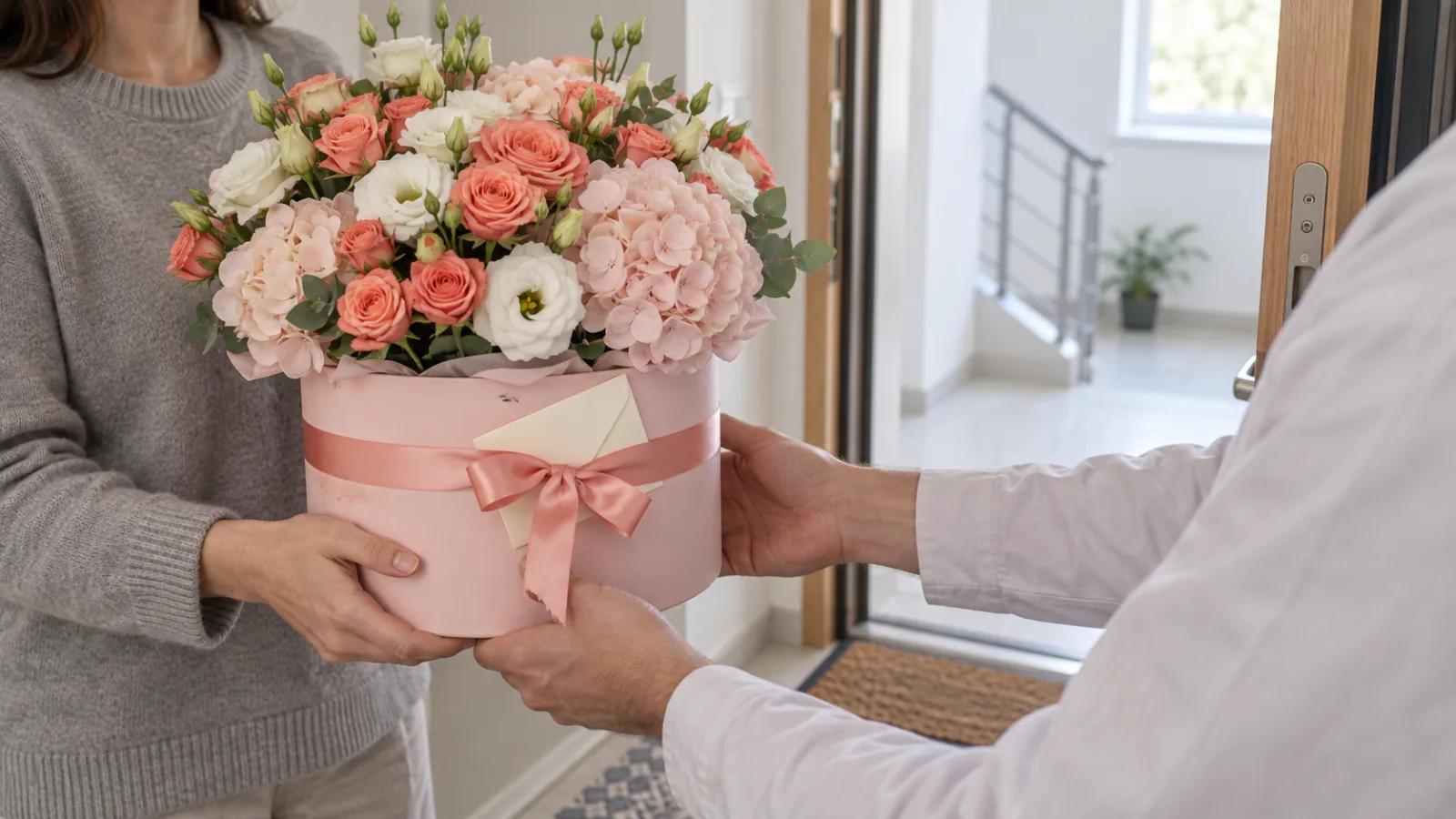
A hospital is the one address worth checking first. The manager confirms in advance whether the ward accepts flowers at all, since many do not, and if the answer is no, the handover moves to the nurses' station or waits until the day of discharge. A box or a flower basket manages without a vase: the stems sit in soaked floral foam and drink from it directly. That suits a hotel room or a desk where no vase is guaranteed. Flowers in boxes work well for exactly that reason, and for a large hall rather than one recipient, an armful fills the room on its own.
The figure shown in the cart, bouquet plus delivery, is what a bank will charge, since the catalogue changes more often than this guide does. Roses, flowers in boxes, peonies and designer bouquets each sit at a different point along that range.
Variety and stem length move these figures more than anything else: a long Ecuadorian rose costs more than a shorter one, and a peony bought in season costs less than one flown in out of season. Format adds its own cost too, since a box carries the price of the container and the foam alongside the flowers themselves. Demand pushes prices up around 14 February and around Mother's Day, which falls on a different Sunday each May, so booking early tends to widen the choice.
Flower delivery in Chicago: zones, timing and the photo
Delivery in Chicago is priced by zone, with four bands covering the city:
- City centre — flowers can go out from 45 minutes after confirmation, if the florist has the bouquet in stock.
- West Loop & Fulton Market, the streets around the old Randolph Street market, sit in their own zone with a rate and timing of its own.
- Outer neighbourhoods further from downtown carry a different rate again.
- Overnight hours are arranged through the order in advance rather than offered on demand.
A delivery for a chosen date and time slot reaches every zone, and most orders go out the same day they are placed. Hitting an exact minute rather than a window can be arranged through a manager for an extra fee, and the delivery charge is worked out separately for each address on an order. Before the courier sets off, the florist photographs the finished bouquet and sends the picture to the sender. The recipient is not called ahead unless the building cannot be entered without a call, or the sender has asked for one, and the courier waits up to 15 minutes at the door. Delivery to O'Hare or Midway can be arranged on request, with the courier meeting the recipient at the exit and holding a sign. Current zones and rates are listed on the delivery page.
Sending flowers to Chicago from another city or country
Orders are taken 24 hours a day, and no account or registration is needed: a name and a phone number for the recipient are enough to place one. An address helps but is not required, since the recipient's phone number lets the courier confirm where to go. The card that travels with the flowers can carry a signature or stay anonymous, whichever the sender chooses.
Payment is taken upfront by Visa or Mastercard, and a card issued abroad is converted by the sender's own bank at its rate; JFLOO adds nothing on top. The date, the address or the card text can still be changed up to six hours before delivery, as long as the bouquet has not already left for the recipient. Chicago is one stop in a network that covers 113 cities across 59 countries, which is what makes ordering from another city or country as straightforward as ordering from across town.
Keeping flowers fresh through a Chicago winter and summer
Chicago's January days average around 0°C (32°F), and nights drop to about −7°C (19°F). The short walk from the door to a car or a cab is where a bouquet feels the cold most, since the swing in temperature, not the cold itself, does the damage. Indoors, heating dries the air, so the vase is better kept away from radiators and heating vents than pushed close to them for warmth.
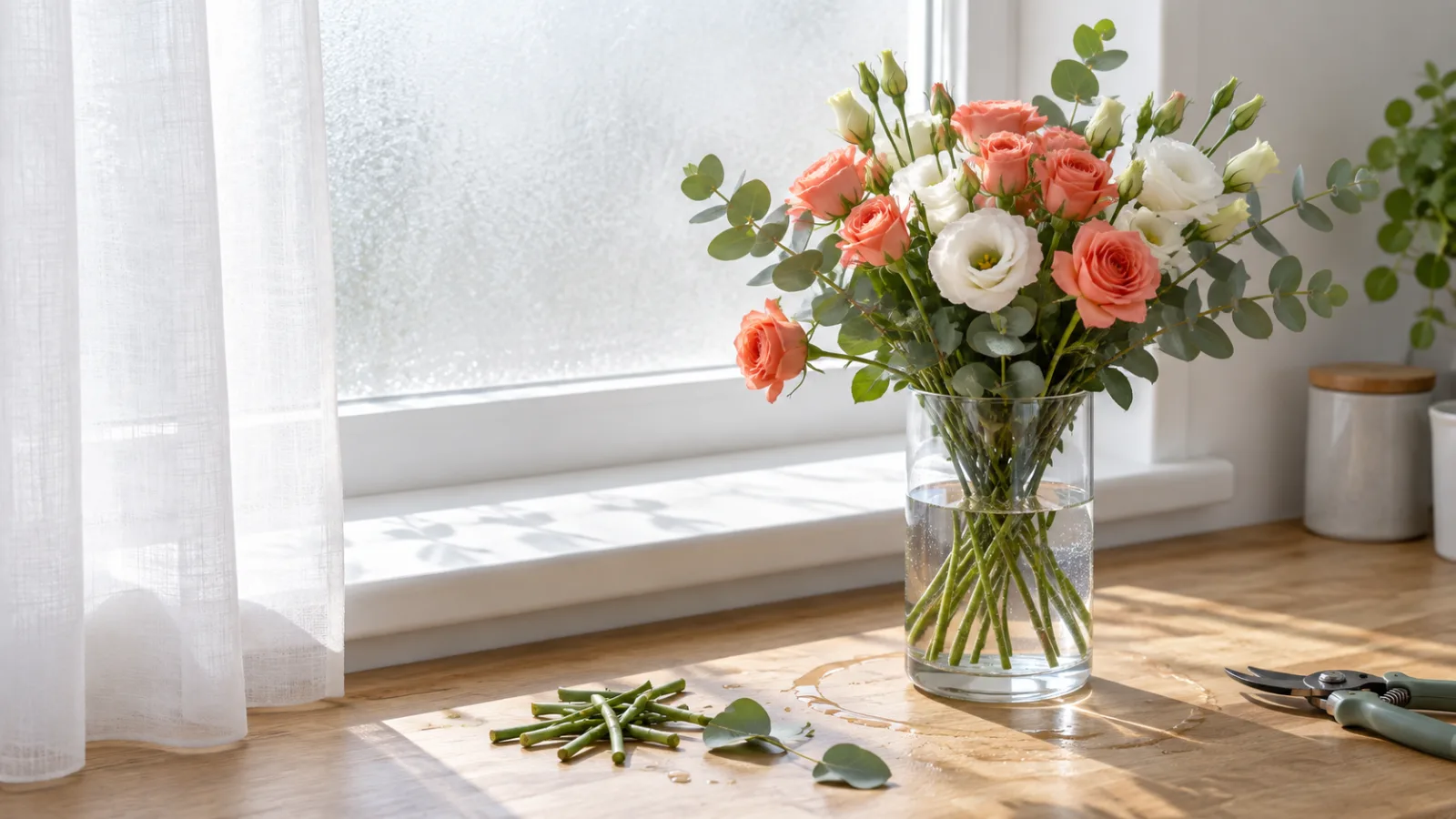
July runs the other way, with daytime highs around 30°C (86°F). A bouquet left in a parked car heats up fast, so it is worth carrying it straight indoors, and the water in the vase needs changing more often than it would in a cooler month. In both seasons the basics still apply: stems are recut at an angle before they go into the vase, any leaves that would sit under water come off, and the water itself is changed regularly rather than topped up.