





720x720_q85.jpg?v=1787130511)


_e58557720x720_q85.jpg?v=1787130512)


720x720_q85.jpg?v=1787130516)
720x720_q85.jpg?v=1787130516)
_0406c4720x720_q85.jpg?v=1787130516)
Rose delivery in Delhi: the Ghazipur market, Indian cut flowers and wedding garlands
Delhi lives by flowers as much as any city of southern India: a morning marigold garland at the doorstep, a mala on the car mirror, blooms at the home shrine and armfuls at weddings. In autumn, Mehrauli holds the Phool Walon Ki Sair — an old procession of flower-sellers, where craftsmen offer floral fans at the Yogmaya temple and at the dargah. The rose holds its place in that rhythm with confidence — as a gift and as part of the city's habit.
Unlike many cities where the rose is entirely imported, India grows its own. Cut flowers arrive from the glasshouses of Maharashtra and Karnataka, and reach the city through Ghazipur Phool Mandi — one of the country's largest wholesale flower markets, in east Delhi. Targeted imports — Dutch and garden varieties — fill in for special needs.
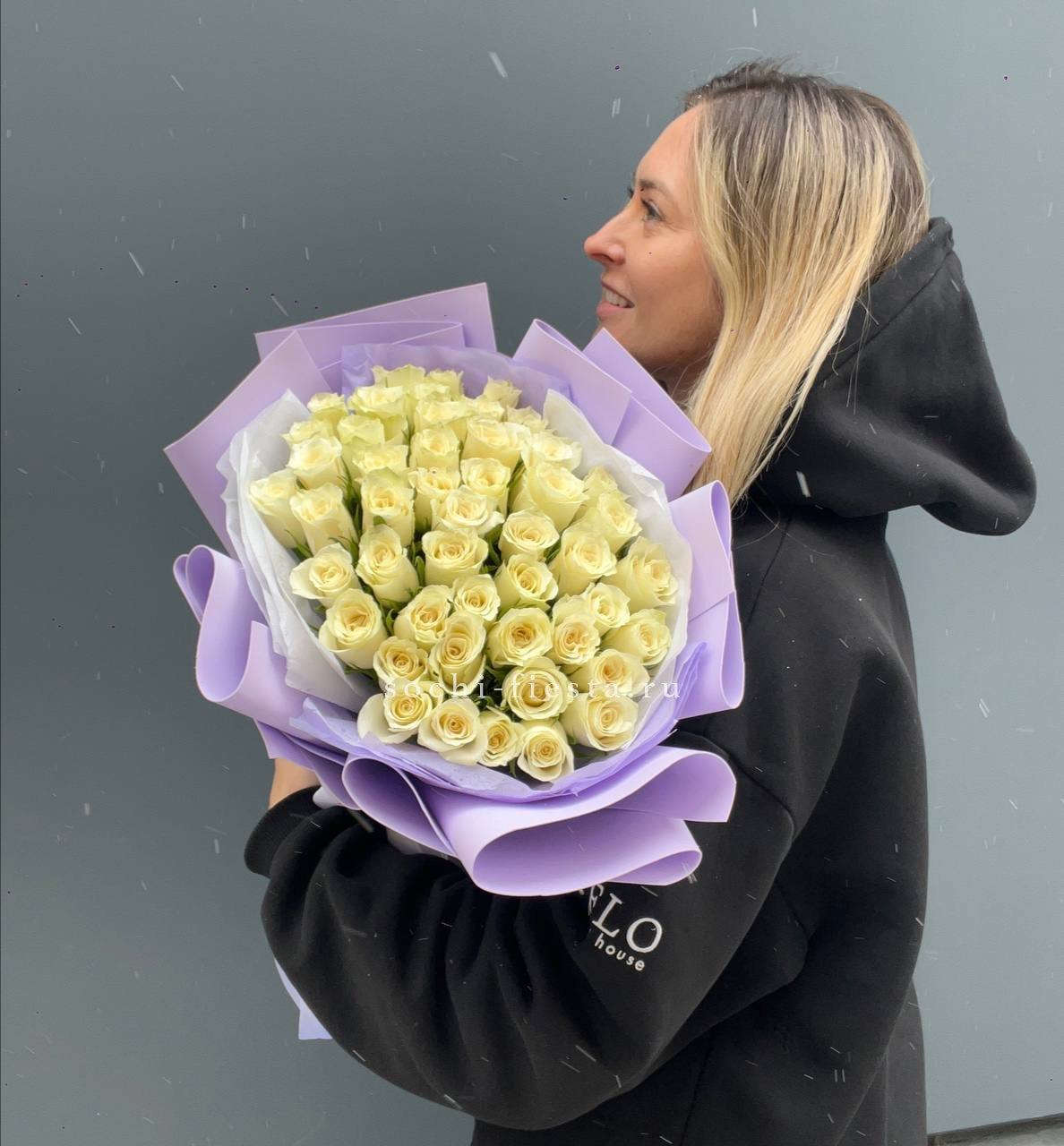
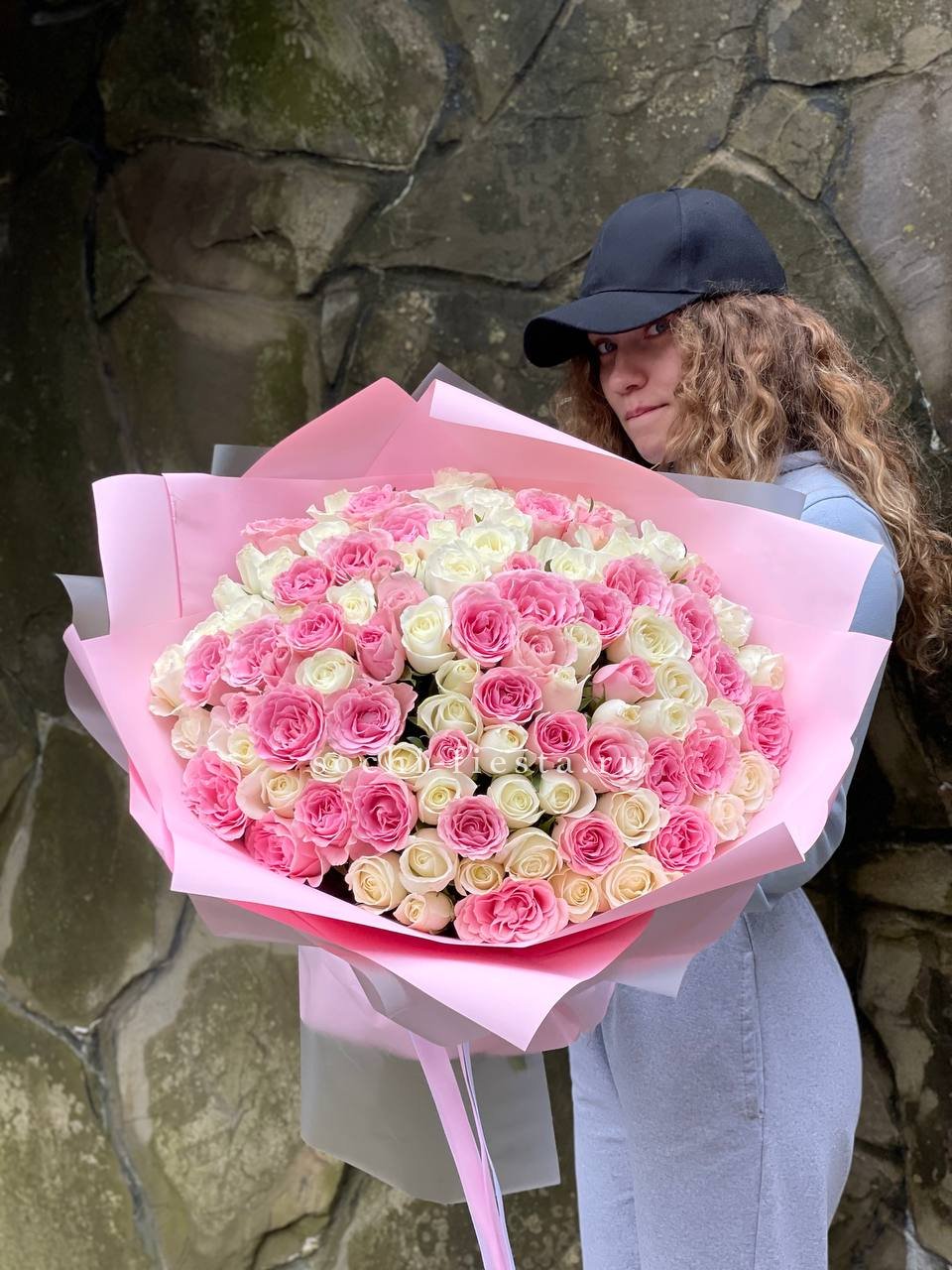
This category covers single-variety bouquets, mixed compositions, spray roses, market-style bunches in kraft and hat boxes — and, for weddings, rose garlands for the varmala exchange. Formats run from a compact bunch of seven stems to a grand 51 or 101. Offices in Gurugram and Noida tend to order boxes and larger arrangements for corporate occasions.
Which varieties to choose
The supply comes from three sources: Indian glasshouses, the Ghazipur wholesale market and targeted imports for special needs. Here is the working breakdown.
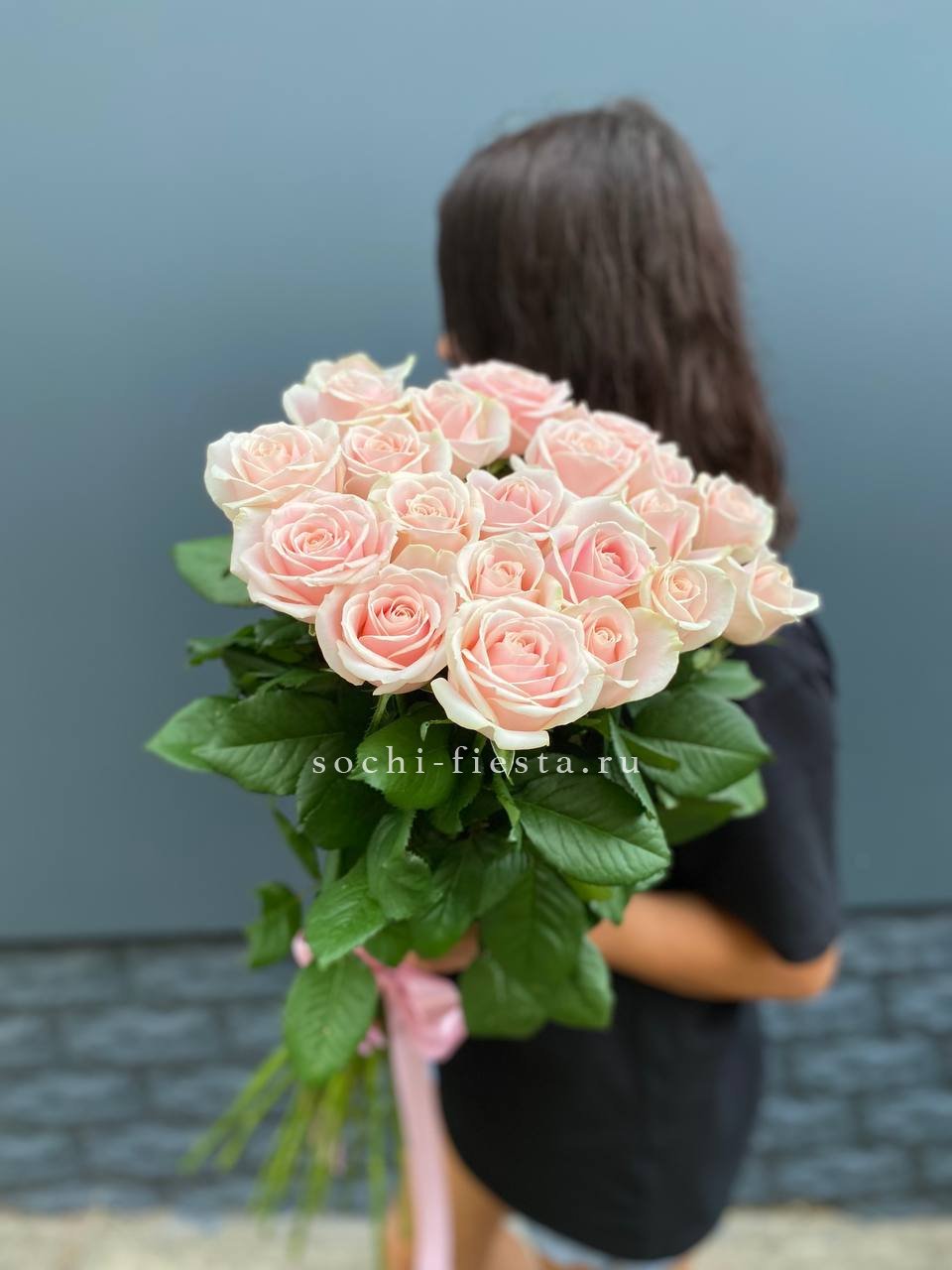
- Taj Mahal, Noblesse — pink varieties, the workhorses of Indian glasshouses. Dense head, 50–70 cm stems, lasting 8–12 days. Versatile for a birthday or a no-occasion gift.
- Top Secret, First Red — the red classics. Deep, saturated colour that holds its form. For weddings, anniversaries and romantic occasions.
- Avalanche+ — a white and cream Dutch variety, also grown in Indian polyhouses. A neutral base for mixed arrangements and wedding work.
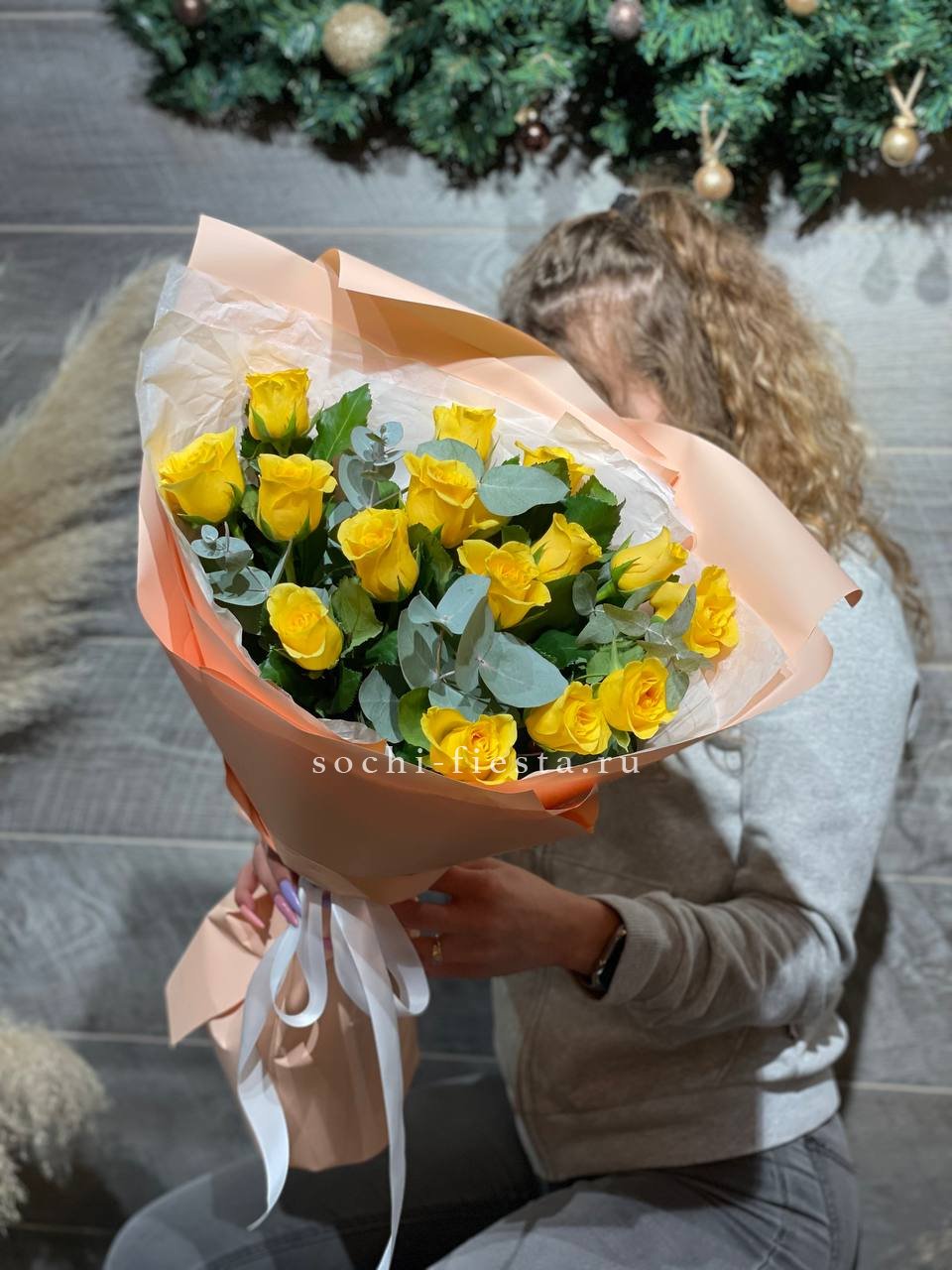
- Gold Strike — a rich yellow. For a warm, sunny palette and congratulations.
- Juliet (David Austin) — garden roses with a cupped bud and a scent of myrrh and peach. Imported, for weddings and a heartfelt gift.
- Spray roses — several buds per stem, lighter and airier in composition. Good for everyday gifts and accent stems.
Occasions and stem counts
A single stem is a spare gesture. Seven to nine is a romantic gift without theatrics. Twenty-five signals a proper celebration. Fifty-one and 101 are for anniversaries, engagements and milestone dates. At Indian weddings the rose goes beyond the bouquet: it is woven into ceremonial garlands and used to dress the venue — so in season the demand for red and pink varieties runs high.
The capital keeps no rigid colour rules: Delhi is cosmopolitan and used to many traditions. Red roses stay with romance, white and cream with weddings, and bright bunches suit a birthday and a corporate gift equally well.
Freshness and logistics
The Ghazipur market comes alive long before dawn — Indian cut flowers from Maharashtra and Karnataka reach a Delhi florist the same day. Imported lots fly into Indira Gandhi International Airport (DEL), clear customs and reach the workshops. From cut to the recipient's door takes a day for Indian roses and two to three days for imports; cared for properly, the bouquet lasts 8–12 days.
The main risk in Delhi is not frost but the summer heat and dust winds. In April–June the temperature climbs to +40 to +45 °C, the dry "loo" wind blows in with dust, and in those periods roses travel only in refrigerated transport, with no standing about in the sun. The cool winter, by contrast, only does the rose good.
"Delhi has two faces. In winter, in December and January, the rose lasts long and barely sulks — it welcomes the cool. But in summer, in forty-degree heat with a dusty wind, there is no slack: the bouquet travels only in the cold and never stands a minute in the sun."
— Meera Sharma, florist, Delhi, 14 years in the trade

Delivery specifics in Delhi
The capital's climate is one of extremes. Summer (April–June) is dry and very hot: +38 to +45 °C, with dust storms. Then the monsoon (July–September) brings rain and humidity. October–November is a pleasant stretch, though November draws smog over the city. And winter (December–January) is genuinely cool: +5 to +20 °C, foggy mornings, frost rare. The main enemies of the rose here are the summer heat and dust, so on hot days bouquets travel in refrigerated transport and are delivered in the morning or evening.
We deliver roses across all districts of Delhi: Connaught Place, Hauz Khas, Greater Kailash, Saket, Vasant Kunj, Defence Colony, Chanakyapuri, Dwarka, Rohini, Lajpat Nagar and Karol Bagh, as well as Gurugram and Noida. Payment is in Indian rupees (₹, INR). Peak dates: the wedding season (November–February), Diwali (October–November), Holi (March), Karva Chauth and 14 February. Order three to five days ahead for the major dates.
Home care
On arrival, re-cut the stems at 45° — ideally under water — and strip any leaves below the waterline to prevent rot. Place in a clean vase with cool water and a sachet of flower food or a pinch of sugar. Change the water every two days — more often in the summer heat.
In summer keep the bouquet under air conditioning, but away from the direct draught and from a window in full sun. Keep roses away from ripe mangoes, bananas and apples: the ethylene that fruit emits shortens cut-flower life by around a third. Roses suit almost any occasion — message our team to match variety, colour and stem count to the occasion and budget.

