

Plants in Hong Kong: June rain outside, a watering can on the sill
Plants in Hong Kong arrive into a June that drops around 490 mm of rain and pushes summer humidity to 81–82%, with afternoons reaching a maximum of 30.7–31.6°C. Indoors, though, a potted plant drinks only what its owner pours: a moth orchid wants water roughly once a week, a succulent under open glass only occasional drops from a misting bottle. The right gift, then, follows the habits of whoever will be doing the watering.
What plant delivery in Hong Kong brings: an orchid already in flower
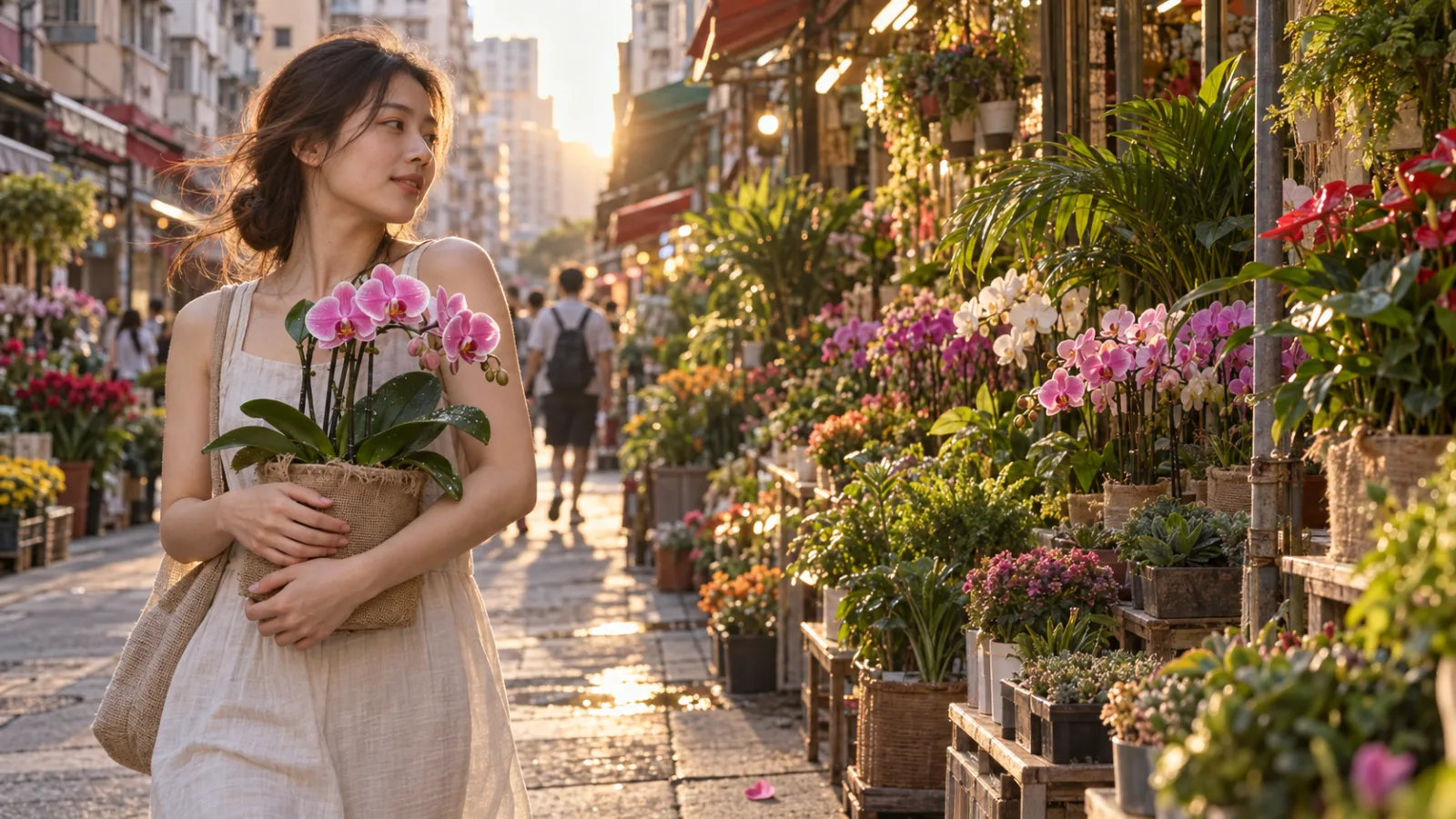
The moth orchid, or phalaenopsis, is native to a stretch of Asia running from India across southern China and into Indochina, which is one reason it sits so naturally among the plants on sale here. In its own pot it stays in flower for two to three months. A cut rose lasts roughly a week in a vase, which is the strongest reason to choose a living plant instead.
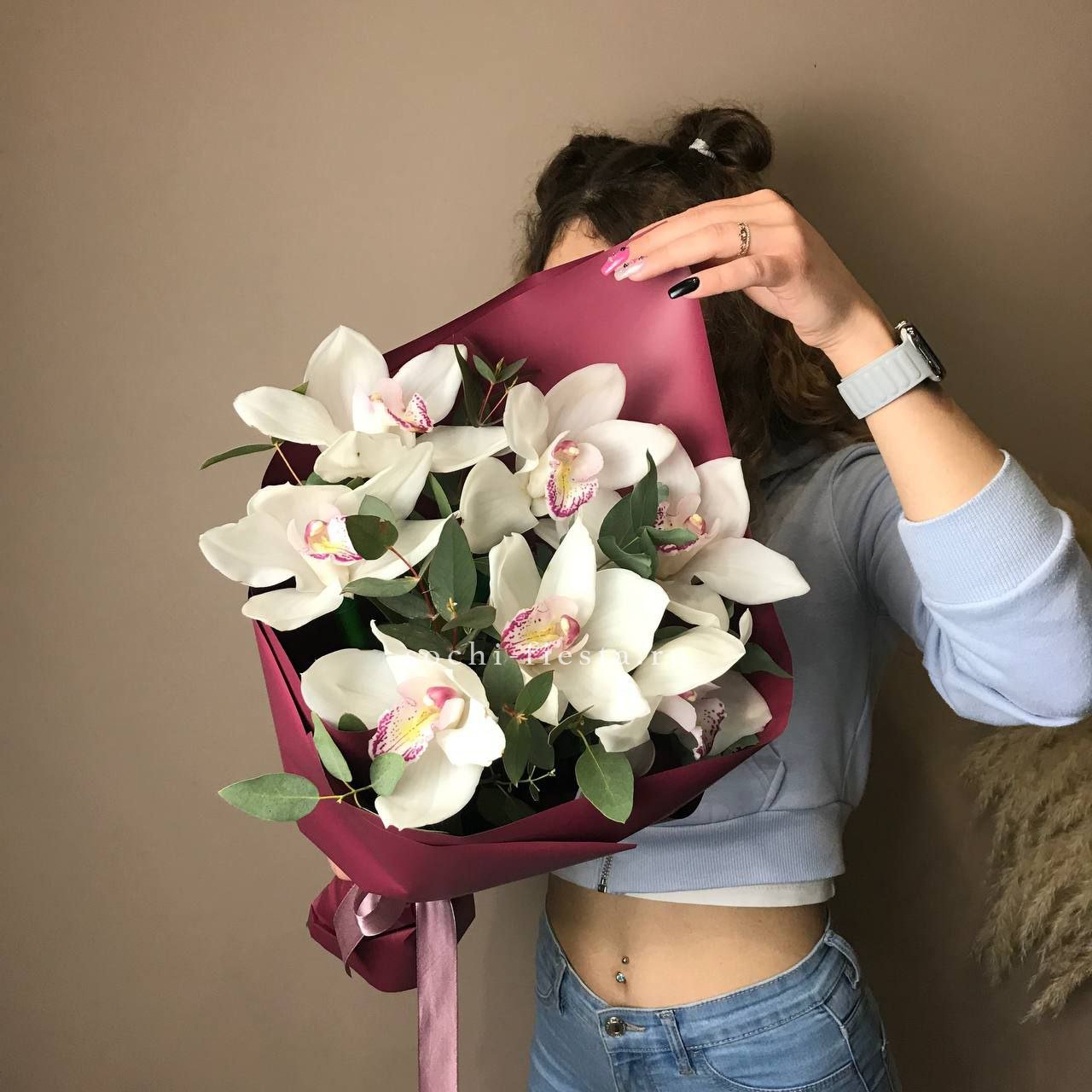
The orchid comes in several forms. It stands in its own clear pot or in a jute pot, and several stems can arrive together in a box. Other versions pair it with roses or lisianthus in a hat box, or set it beside a box of chocolates. There are cactus plants and glass florariums too, covered further down.
Colour carries its own weight in Hong Kong. For a birthday, an anniversary or a wedding, white is not the colour to send; pink works better for anything meant as good news.
Every plant is prepared to order and photographed before the courier sets off. Delivery to the centre costs nothing, other districts carry a zone charge added before payment, and the delivery slot is shown on the product page; more on delivery terms. Sending to a hotel guest or straight to an office desk suits cut flowers better than a pot in transit, covered under flowers for a hotel guest or an office.
Phalaenopsis in growth wants water about once a week, less often once it slows down for winter. The pot should never stand in water, so any that collects in the saucer underneath gets poured away, and the leaves and the growing point stay dry when the water goes in.
A clear pot is part of the design, not just packaging: it lets you see how damp the bark inside still is before you water again. Healthy roots are firm and silver-white; cloudy or soft ones mean the plant has been sitting too wet. The orchid grows in bark, not soil, which is why it drains so fast.
Hong Kong's summer maximum runs to 30.7–31.6°C, but a phalaenopsis prefers 19–30°C by day and 16–19°C by night, so direct summer sun through a window scorches the leaves. A bright spot out of the midday glare, rather than a sunny sill, suits it better than a cool air-conditioned room with no light at all.
Once the flowers drop, the spike is cut back above the second node, and often a side shoot follows from there. A new spike only forms once daytime temperatures fall below 27°C, which in Hong Kong's winter, December to February, averaging 16.5–18.2°C, happens on its own.
Open glass, a misting bottle and a cactus: gifts that need little water
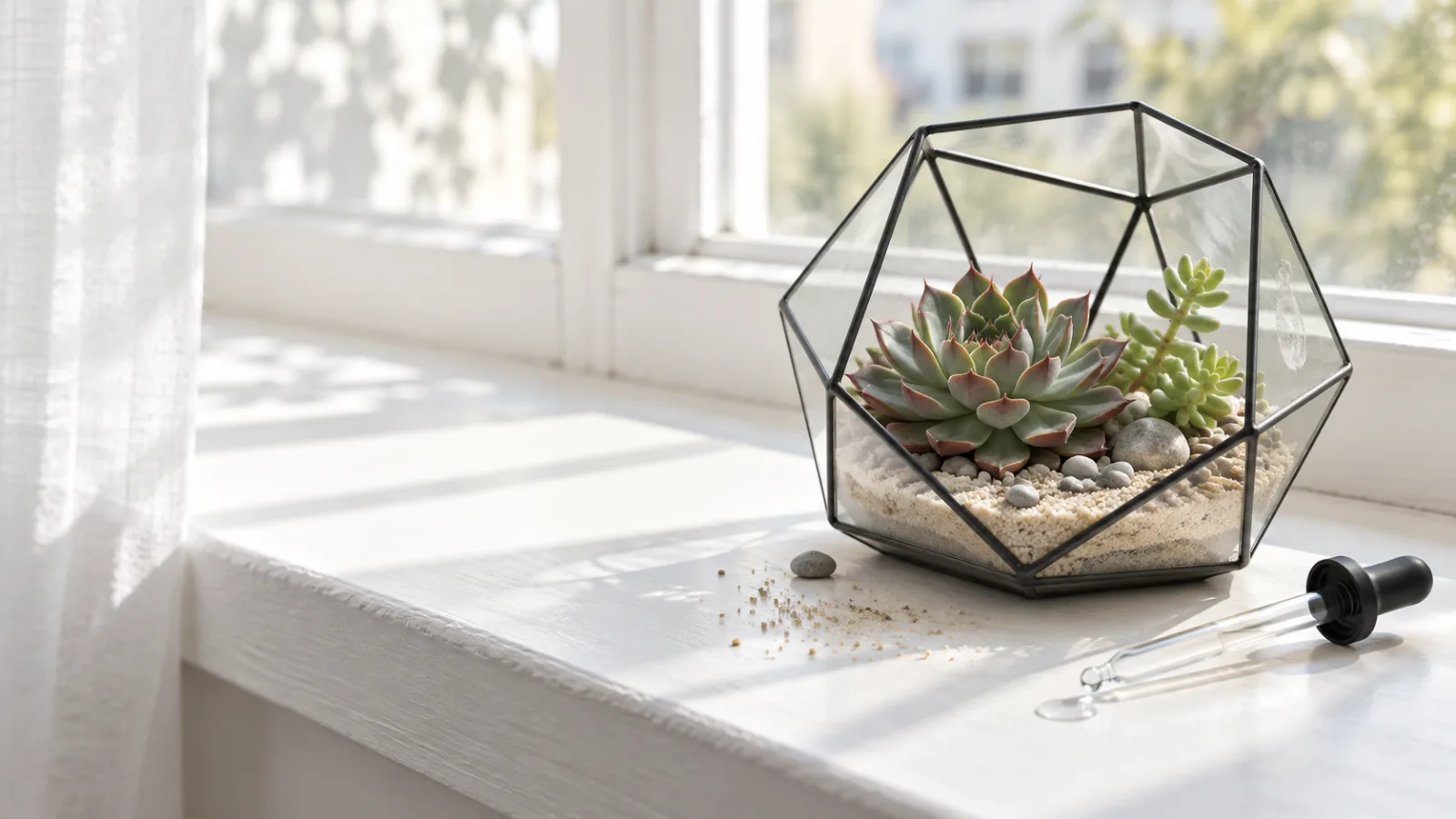
A florarium holds a succulent under open glass, shaped as a cube, a truncated cube, a teardrop or a many-sided globe. An open bowl like this suits plants built for dry country: stone rose, sedum or haworthia inside drink from a misting bottle, a few drops at a time, never a full watering can.
Succulents store their own reserves, up to nine-tenths of their weight in water, which is why they go this long between waterings and forgive someone who travels or simply forgets.
Hong Kong's driest, mildest stretch, October and November, sits at 22–26°C with humidity around 72–73% and little rain, a comfortable time to give one as a gift. A cactus on a desk works on the same principle. Other potted plants in the range are listed under other potted plants.