

720x720_q85.jpg?v=1787132831)


720x720_q85.jpg?v=1787132831)
720x720_q85.jpg?v=1787132831)
720x720_q85.jpg?v=1787131347)

720x720_q85.jpg?v=1787131348)
720x720_q85.jpg?v=1787132831)


Peonies delivered in Manchester: varieties, season, and cut stage
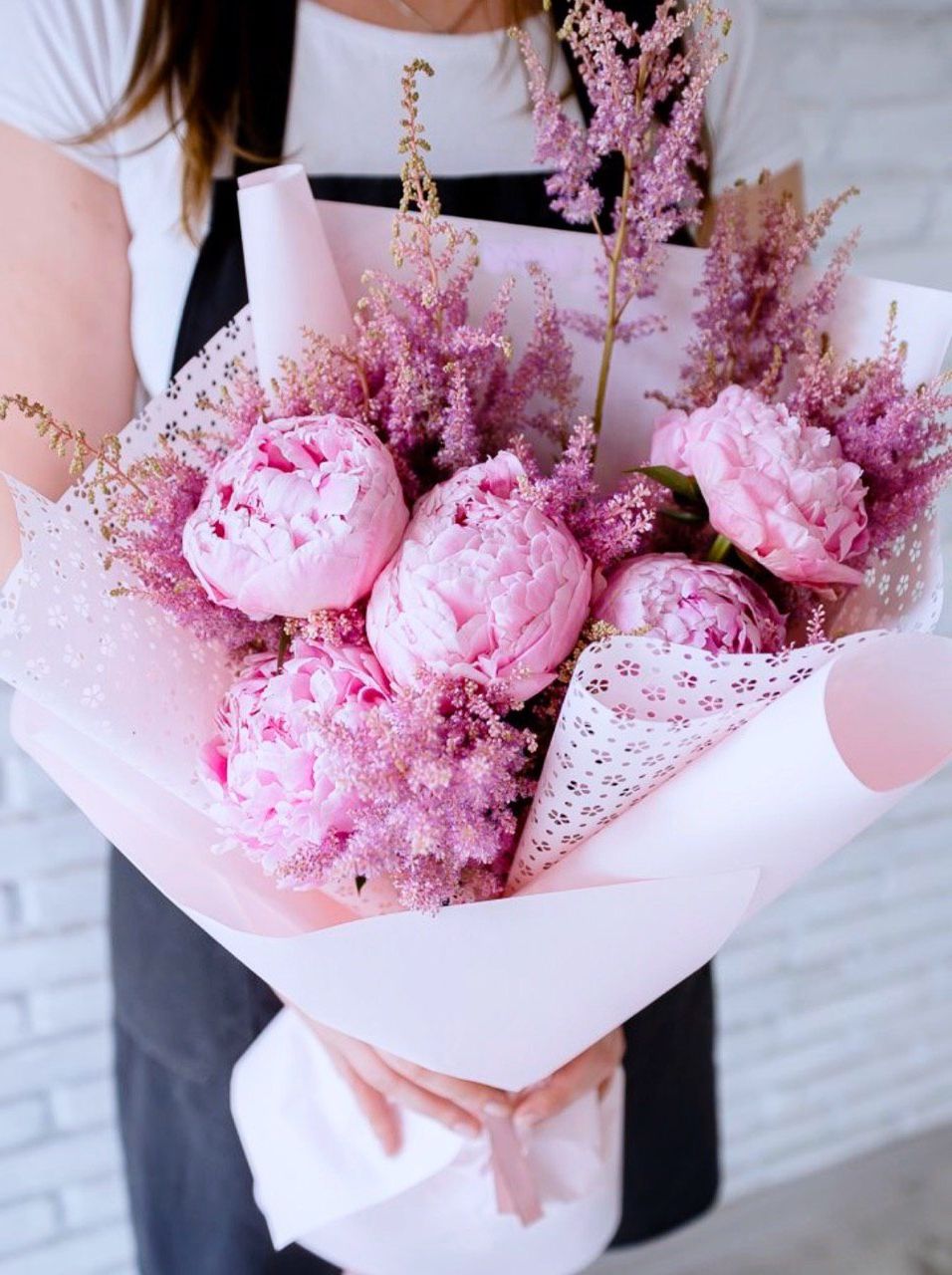
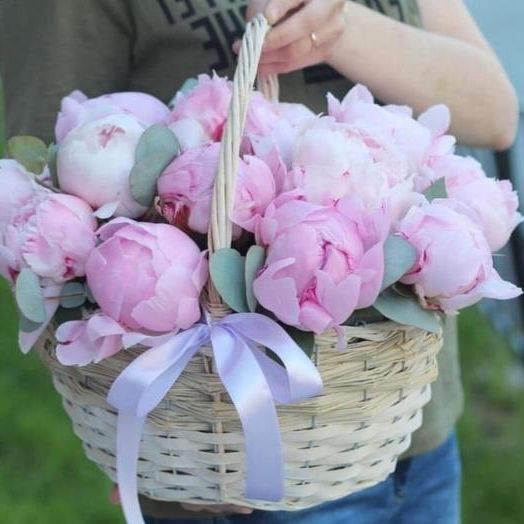
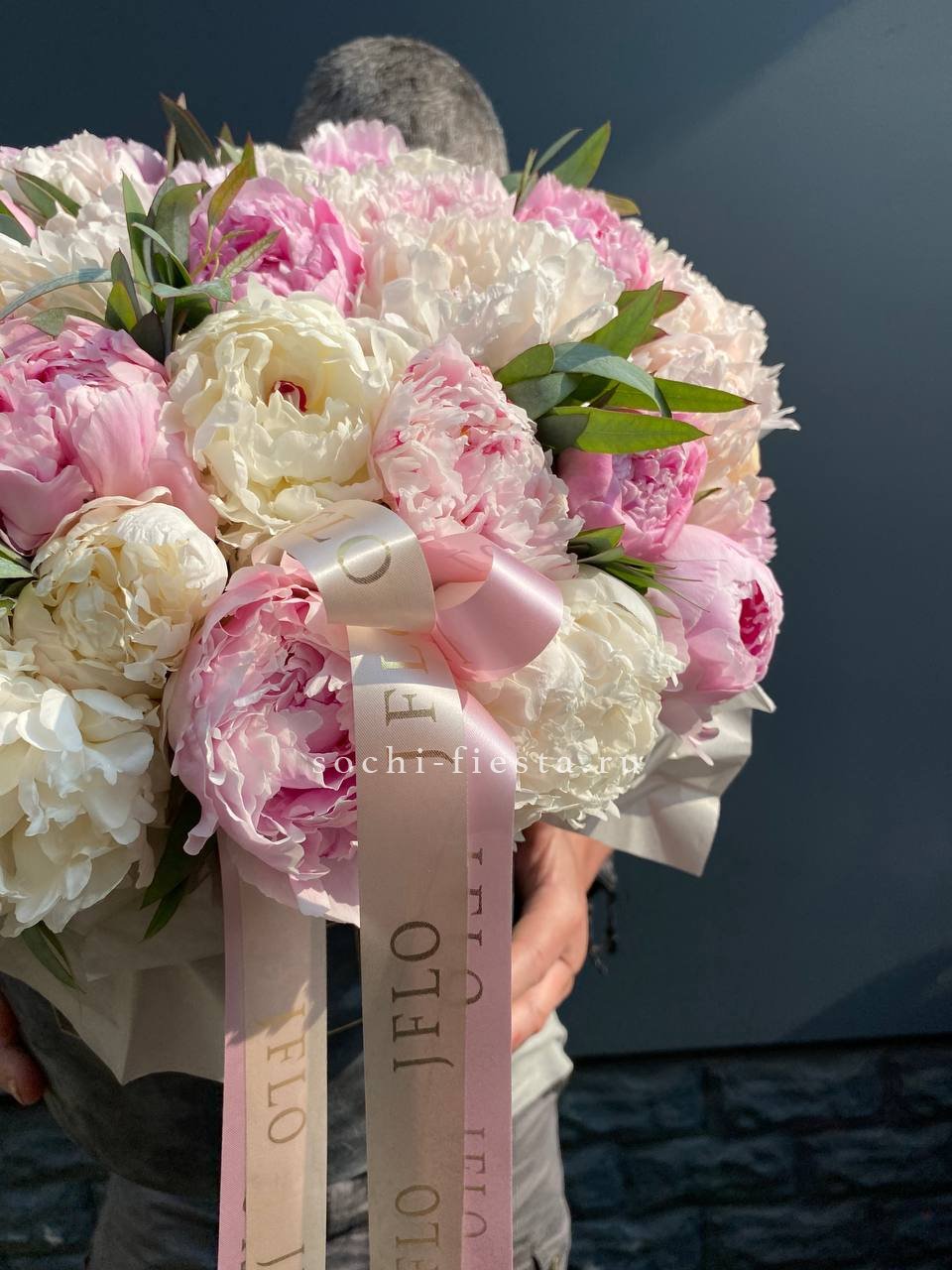
The peony is one of the most emotional flowers in modern floristry. A full, rounded bud, a soft honeyed scent, and dense layers of petals create an effect roses and ranunculus simply cannot copy. For north-west England's wedding florists it is a favourite: at ceremonies in the Midland Hotel, the Lowry Hotel on Salford Quays, and King Street Townhouse, the peony shares first place with the David Austin garden rose.
The category covers herbaceous, tree, and Itoh hybrid peonies across the most-requested varieties. Supply comes from European greenhouses via Aalsmeer, from British nurseries in Lincolnshire and Cheshire during the local season, and out of season from Chilean and New Zealand plantations. The result: peonies in the catalogue almost year-round.

Key varieties in the catalogue
Each peony variety solves its own task — from a classic romantic bouquet to a complex wedding composition. They differ in bud shape, colour, fragrance, and vase life.
- Sarah Bernhardt — a 1906 classic, pale-pink ruffled bud up to 18 cm, honey scent. The safe universal choice for weddings and anniversaries.
- Karl Rosenfield — deep-red, dense bud. Suits dramatic wine palettes and autumn bouquets.
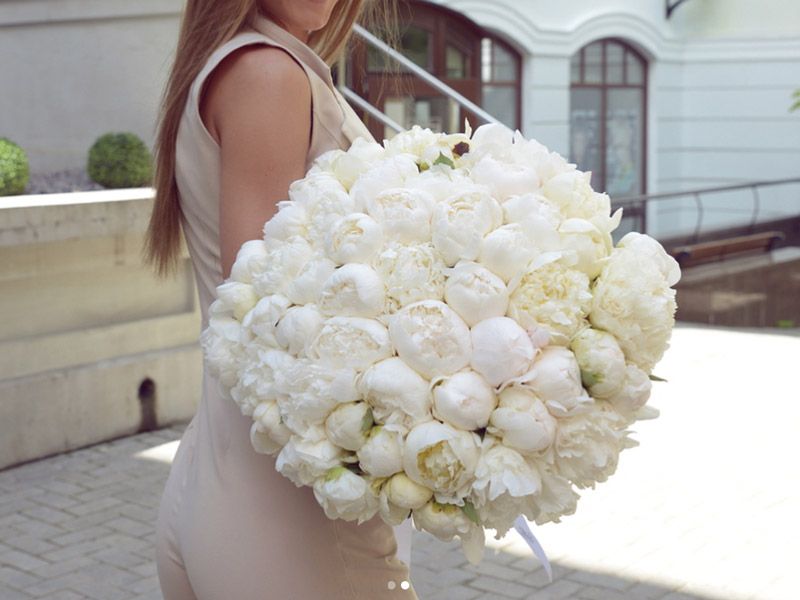
- Festiva Maxima — white with a crimson fleck at the centre. The most photogenic white peony, a wedding florist staple.
- Coral Charm — shifts from coral-peach to cream-yellow as it opens. One of the defining varieties of the 2020s.
- Duchesse de Nemours — soft white with a cream heart. Light vanilla fragrance, romantic presentation.
- Itoh hybrids (Bartzella, Cora Louise) — a cross of herbaceous and tree peony, larger and longer-lasting than standard varieties.
Cut stage and why it matters
The key rule when buying peonies is the "marshmallow" stage. That means a coloured bud still soft to the touch. If it springs back like a marshmallow when gently squeezed, it will open in 1–2 days and live 7–9 days. If the bud is hard and green, it may not open at all. If it is fully open, expect a maximum of 2–3 days.
Every batch is checked by a florist by hand against this criterion. Only "marshmallow" buds of the right firmness ship to a Manchester recipient — giving them the full cycle of bloom, not the tail end of a fading flower.
Seasonality and logistics
The natural peony season in Britain runs from late May through mid-June. In that month the market fills with local peonies from Lincolnshire, Kent, and Hampshire — the cheapest and freshest stock of the year. Dutch batches leave the Aalsmeer auction by overnight ferry or Eurotunnel, then head north up the M6 and through the New Smithfield wholesale market in Openshaw. From July through February supply switches to the southern hemisphere (Chile, New Zealand, Australia), arriving by air via Manchester Airport. Out-of-season prices run 2–3 times higher, but quality and vase life hold.
For Manchester we synchronise the delivery date with the opening moment. This matters especially for weddings and anniversaries in Spinningfields, Deansgate, and on Salford Quays: the peony has to open at the right hour, not the day after the celebration.
"The peony does not forgive rush. If you want peonies to do real work, order 3–4 days ahead. Give the bud time to open in the recipient's room. A freshly delivered closed peony is an investment in the moment, not the moment itself."
— Daria Kotova, florist, 12 years in the trade
Compositions and occasions
The peony has been the headline wedding flower of the last ten years in the north-west. Bridal bouquet, groomsmen buttonholes, arch and table dressing — it works everywhere. Second place: anniversaries — 25, 30, 35 years are typically marked with peonies. Third: high-value corporate gifts to partners in Spinningfields, business milestones, gallery and bar openings in the Northern Quarter.
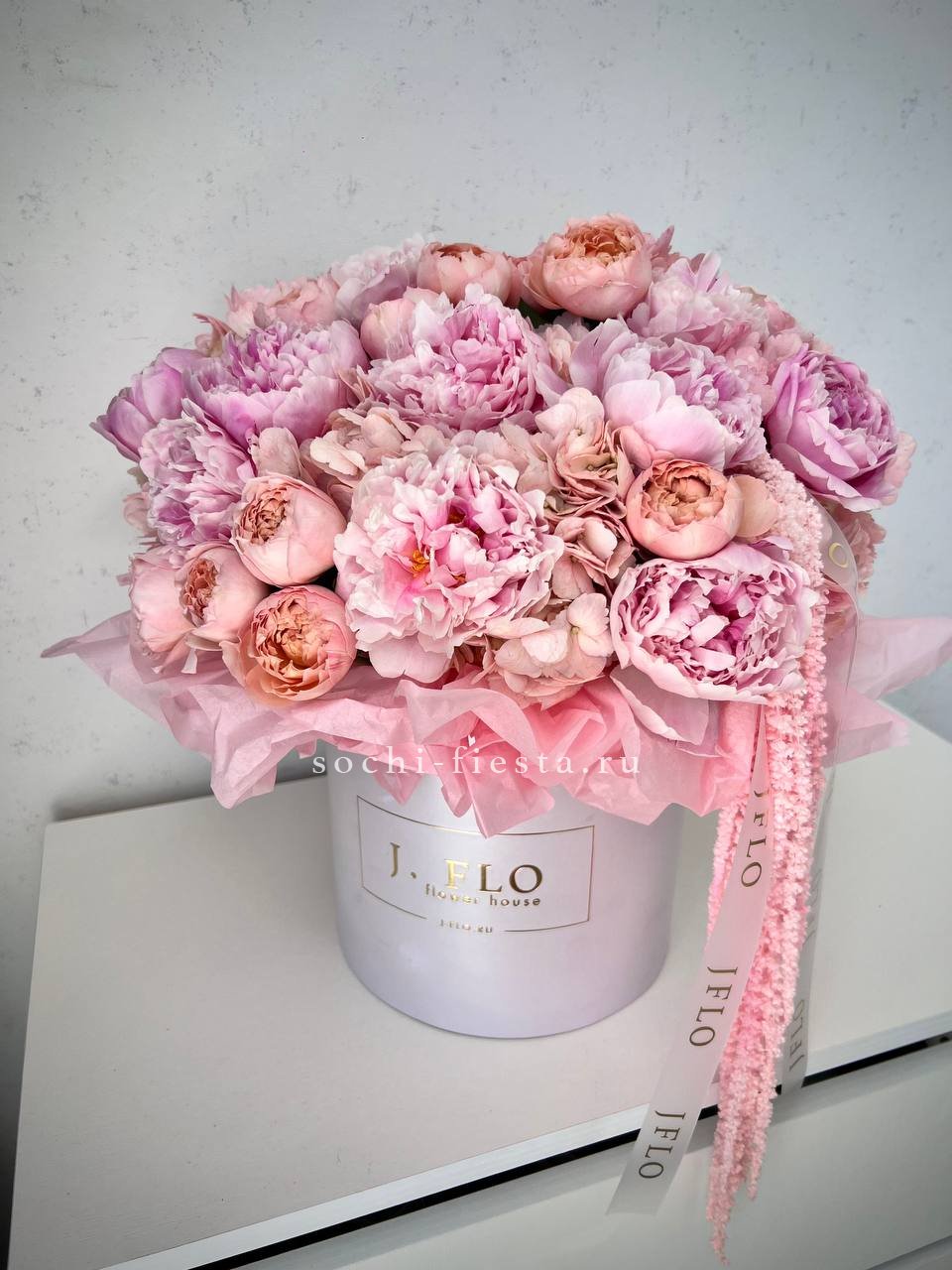
Mixed bouquets of peonies and David Austin garden roses are a category of their own, and for Manchester they make particular sense. Austin's nursery in Albrighton, Shropshire, sits barely ninety minutes' drive to the south, so in season the Austin roses in the catalogue are genuinely fresh. The two flowers sit close in form and texture and complement each other in palette and vase life. Managers will advise on proportions and the right stem count for the budget.
Delivery specifics
The city has a mild, distinctly wet oceanic climate — Manchester is nicknamed the Rainy City for good reason. Winter sits at +2…+8 °C with rare, fast-melting snow; summer runs +14…+21 °C; humidity stays at 75–85% year-round across some 140 rainy days. Cool, humid air is the peony's natural environment, so bouquets here live 1–2 days longer than in continental capitals. We deliver in Manchester year-round without temperature-driven restrictions, but against the Manchester rain we add a waterproof cellophane layer under the kraft wrap.
We cover every key district: Manchester City Centre, Northern Quarter, Deansgate, Spinningfields, Ancoats, Salford Quays, Didsbury, Chorlton. Catalogue prices are in pounds sterling (£, GBP), payment by card online or Apple Pay on receipt. For Christmas, Easter, Mother's Day (the fourth Sunday of Lent in March), St. Valentine's Day, and Bonfire Night, place orders 2–3 days ahead — and a full week ahead for Mother's Day, the single peak day in British floristry.
Care at home
After delivery, recut the stems at a 45° angle, strip every leaf below the water line, place in a tall vase with cool water. Change the water every two days. Keep away from fruit and radiators — ethylene and heat halve a peony's vase life.
New-build flats in Deansgate, Ancoats, and Salford Quays often run hot in winter — underfloor heating and radiators dry buds quickly, and that is too warm for peonies. Place the bouquet in the coolest part of the home, ideally by a window with a light curtain. On the rare summer heat day, move it to the fridge overnight if room temperature exceeds +22 °C — that quiet pause adds 2–3 days of flowering.

