


February 14 — Valentine's Day in Manchester: where the roses now fly in from
The roses bought for February 14 — Valentine's Day in Manchester — reach Britain by a different route than a decade ago. Since Brexit in January 2021, fewer cut flowers have come in through the Netherlands, and more fly straight from Kenya and Colombia. Where the stem started its journey matters less to a buyer than the colour, the format and where the bouquet has to travel on the day itself.
Not a bank holiday: a desk by day, a table by evening
February 14 isn't on gov.uk's list of bank holidays in England, so it is an ordinary working day for most people. The real choice, then, isn't whether to send flowers but when: a bouquet delivered to a desk before lunch, or a table set for the evening at home.
Sending flowers to an office near Albert Square works if the order carries the company name and floor; buildings with a pass system route the courier through reception instead of a direct handover. A table booked for the evening runs on the restaurant's own clock: staff are told roughly when to expect the delivery. So the bouquet reaches the table with dessert, or right as glasses are raised for a toast, not while starters are still coming out. The recipient isn't warned in advance unless whoever's sending them asks for that, which is what keeps the moment a surprise.
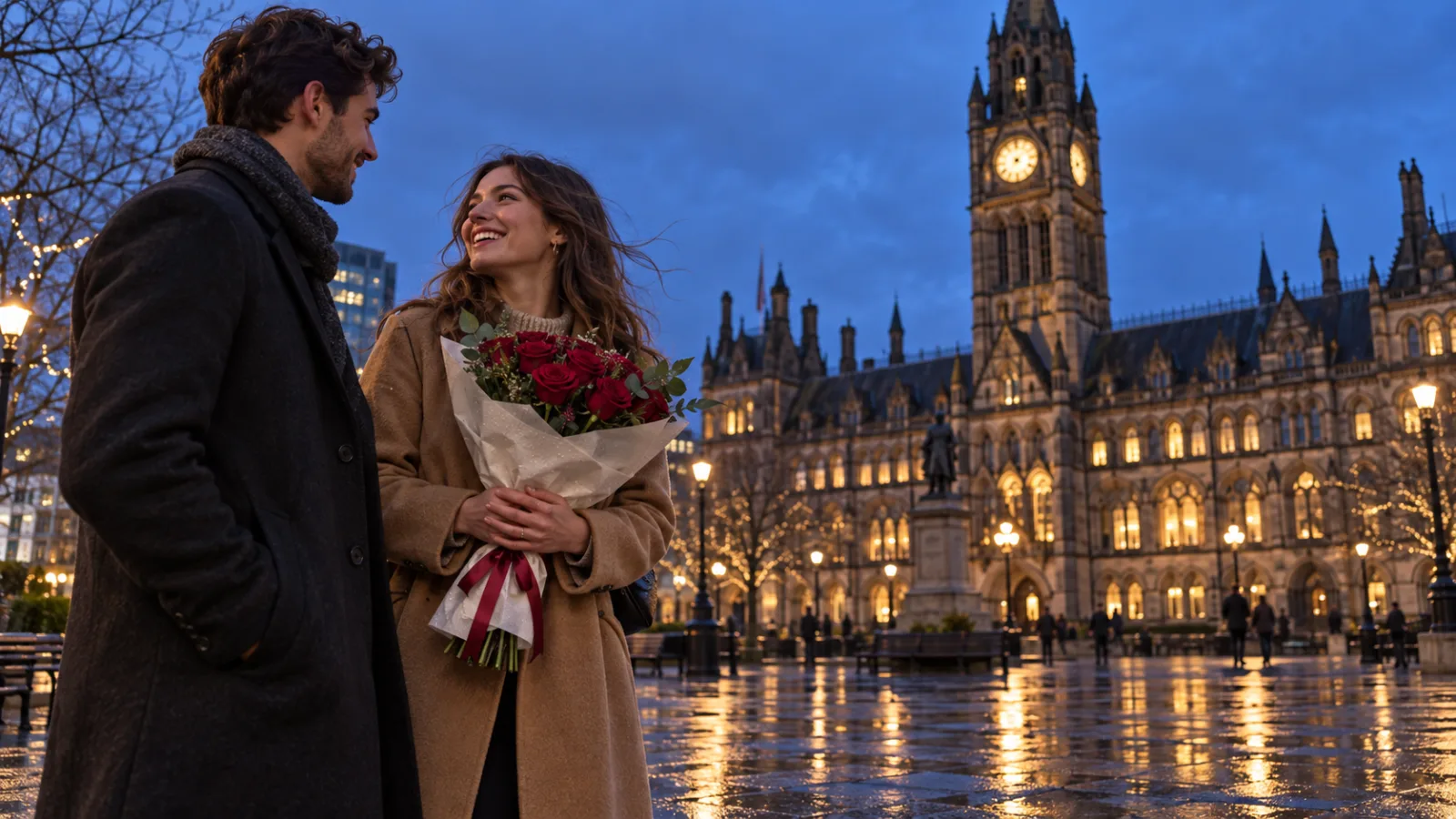
Most cut flowers sold in Britain, roses and carnations especially, used to pass through Dutch auction houses before Brexit shifted the balance toward direct imports from Kenya and Colombia.
Every bouquet is put together to order, and the flowers themselves are bought only after the order is paid for. The actual stems a recipient will receive first appear in a photograph taken before the courier sets off.
Red, pink or white: reading a Valentine's rose the Victorian way
The habit of reading meaning into flower colours took hold in Victorian Britain. Red stood for passionate love, pink for something gentler, and white for purity, though the era never settled on one fixed dictionary, so the colours worked more as a general steer than a strict code.
For a direct message, 11 Red French Roses or 11 White French Roses say it plainest. "French" signals a growing trick rather than origin: growers ease the outer petals back by hand so each bloom looks fuller and more open. For a recipient who might find red roses too direct, a mixed bouquet where roses sit beside lisianthus or hydrangea softens the message without losing it. White lilies are worth avoiding altogether: in Britain they're closely tied to funerals, whatever colour rose sits next to them. For a bouquet heading to a hospital ward rather than a home, the rules on what's allowed are covered under flowers for a ward, a hotel or a British home.
A box, a card, a booking: Valentine's flowers in Manchester
A box stands on a table on its own, no vase required, which suits a desk or a restaurant table equally well. Strawberries, chocolate, a cake or a foil balloon can all go into the same order; they're simply added alongside the flowers in the basket rather than delivered separately.
The card with a message is free, and it can be signed or left unsigned: the courier only ever knows the recipient's name and address, nothing about the sender. Valentine's flower delivery in Manchester peaks harder than any other date on the calendar, with order volumes climbing well above a normal day. That pushes delivery windows wider than usual, so nobody can promise an exact minute on the fourteenth itself. Ordering a few days ahead, rather than on the morning of the day, is what actually leaves more slots to choose from. In the city centre delivery is free; other areas are covered under delivery terms.
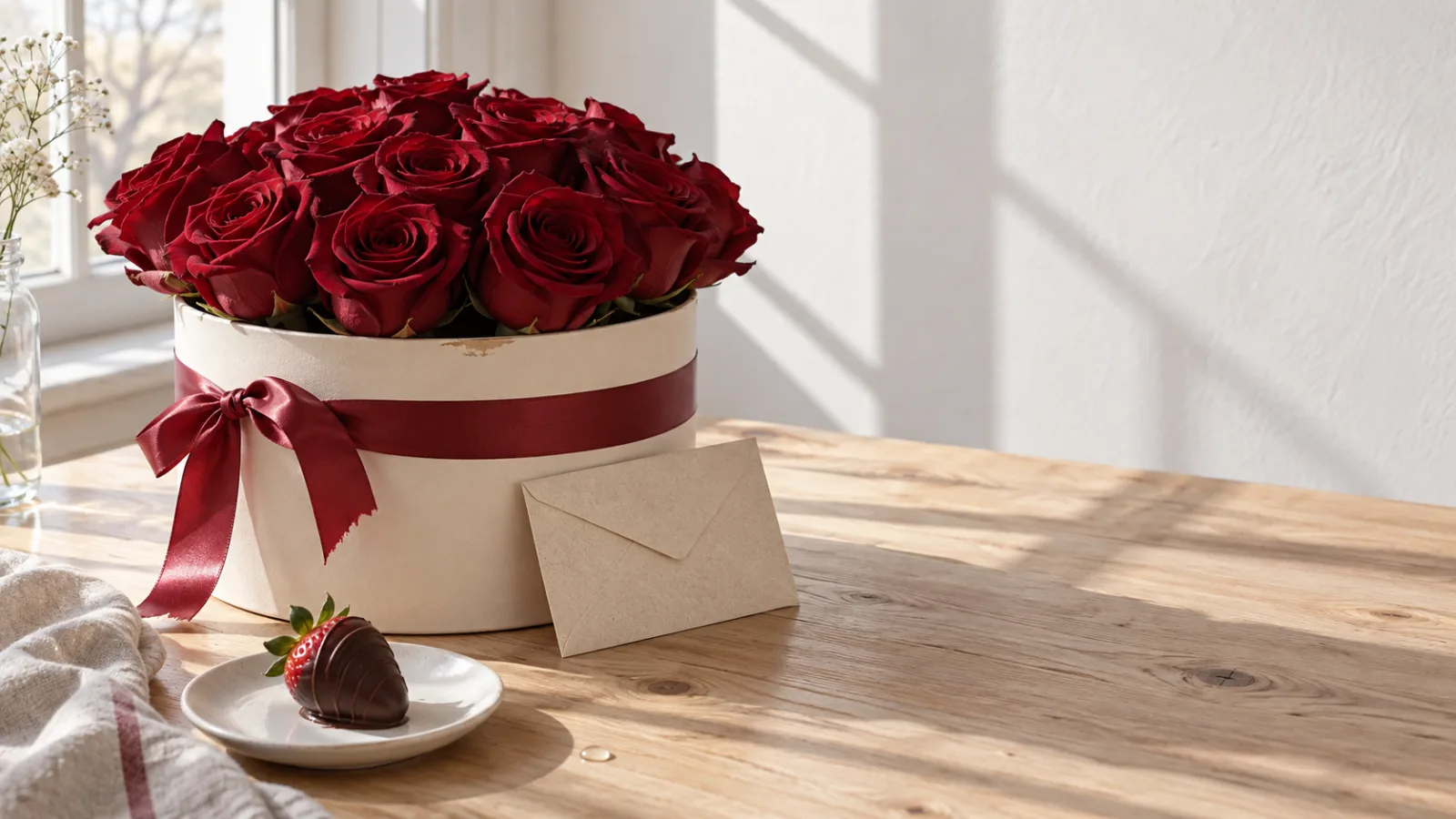
Start with French roses, a mixed bouquet or a box, and add strawberries to the same order.