




Plants in Manchester: an orchid or a succulent for a cool, rainy city
A July afternoon in Manchester peaks at about 19°C, the bottom of the 19–30°C daytime range the RHS gives a moth orchid, so the warmth the plant needs comes from the flat rather than from outside. Plants in Manchester are chosen the same way: for the person and the windowsill, not for the weather. The real question is whether the person who gets it is likely to water anything at all.
Plant delivery in Manchester: an orchid to water, a glass cube to leave be
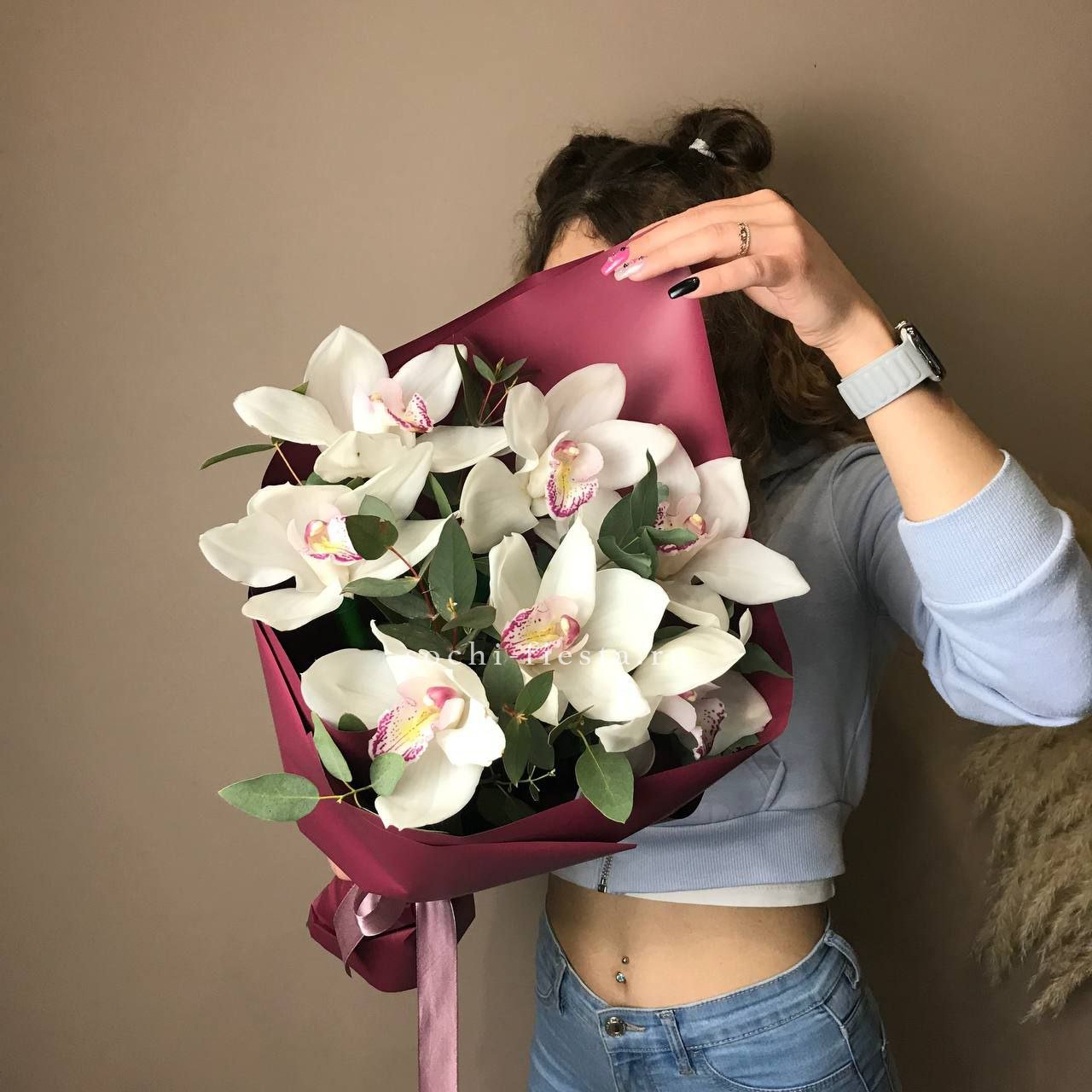
Flowering plants ask for regular attention, and the pot sent most often as a gift is a moth orchid, the orchid most commonly grown indoors. Once its flowers open they typically last two to three months, which suits someone willing to water the pot roughly once a week. Among flowering plants, an orchid can arrive in a box, in a hat box, or set beside roses or lisianthus, sometimes with chocolates or marshmallows next to it. One example of such a set is 7 Orchids in a Box.
For someone who won't water anything on a schedule, a florarium or a cactus asks far less. A florarium holds succulents in glass, and something like a Truncated Cube Florarium with Stone Rose Succulent needs only an occasional misting rather than a weekly routine. Both a florarium and cacti work this way, and anyone after a plant outside these groups has other potted plants to look through as well.
Every plant is put together to order, and the florist photographs it before the courier leaves, so a sender outside the city sees exactly what's travelling. Plant delivery in Manchester follows the same pattern as flowers: most orders go out the day they're placed, the timing is shown on the product page, and the delivery terms page sets out the rest.

A moth orchid in Manchester, where July stays cool
Manchester's July averages sit around 16–17°C, with a daytime high near 19°C, and January averages run about 4–5°C. The RHS asks for 19–30°C by day and 16–19°C by night for a moth orchid, so the plant spends the whole year indoors rather than following the seasons outside the glass.
A new flower spike tends to form when daytime temperatures stay below 27°C, and Manchester's averages sit well under that mark through the year, which gives an orchid here a reasonable chance of flowering again, though none is guaranteed to. Central heating dries the air indoors over winter, so it helps to keep the pot a little away from the radiator rather than right beside it.
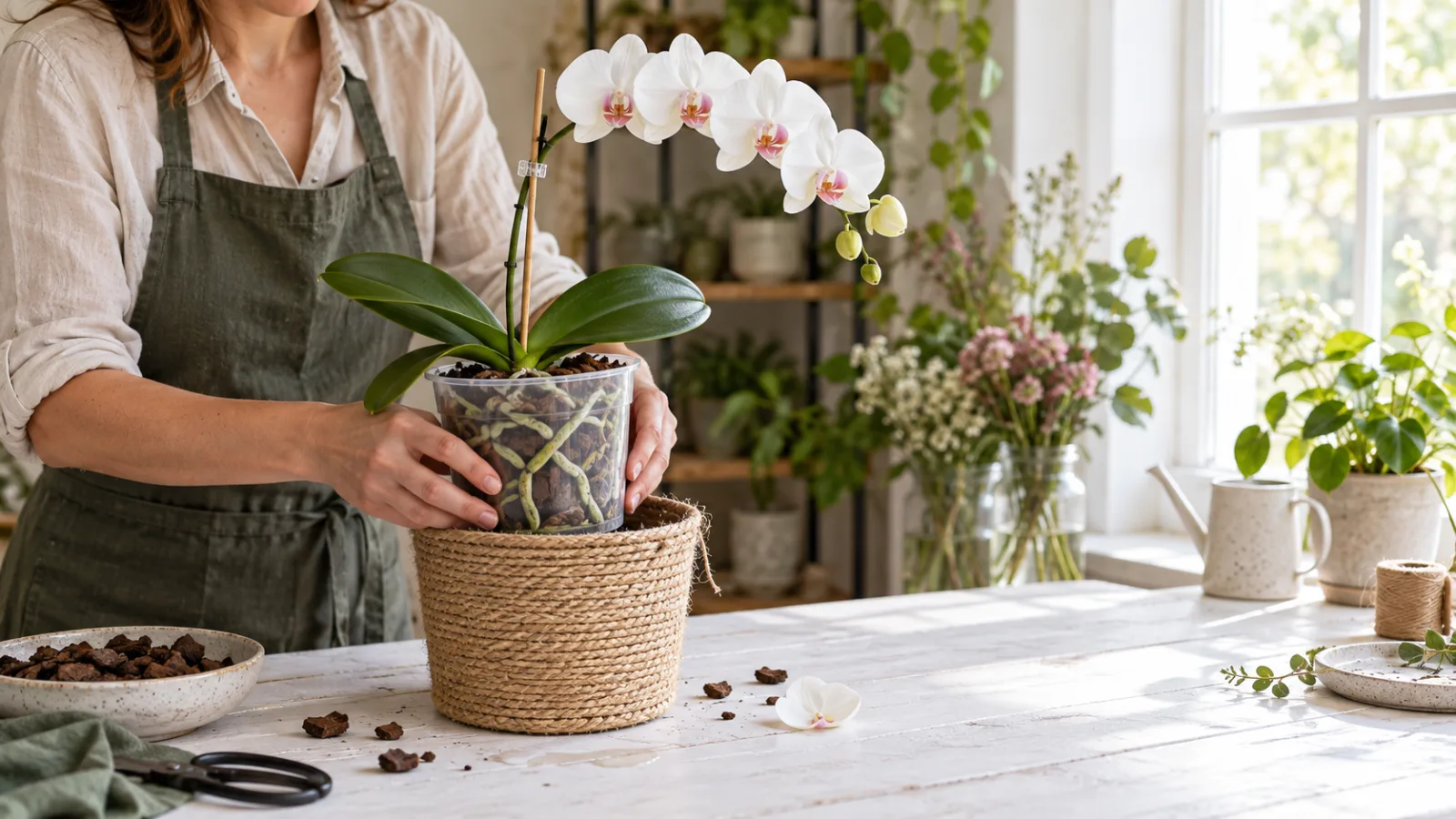
Moth orchids are usually sold in a clear pot set inside a cachepot. Left visible, the clear pot shows whether the bark underneath has dried out, and healthy roots look firm and silvery-white rather than grey or papery.
Succulents from dry country for a city where it rains in July
Succulents grow naturally in hot places with little rain, storing water in fleshy leaves and stems that can hold as much as nine-tenths of their weight in water. Manchester, where rain falls in every season including July, isn't their climate, which is exactly why they're kept indoors and watered only when someone reaches for a spray bottle rather than left to the sky.
Open glass suits succulents and cacti kept this way rather than in soil. A stone rose, a sedum, and a haworthia are the plants usually chosen for it, each one built to hold its shape in dry air without a drop of rain reaching it. The stone rose takes its botanical name, Sempervivum, from the Latin for "always alive".
Plants in Manchester are bought for the room they'll live in, not for a single day, so an orchid and a cactus end up solving different problems for different people. Occasions and sending from abroad are covered under flowers in Manchester. For the plant itself, the simplest start is the person: flowering plants for someone who'll water, glass and cacti for someone who won't, and other potted plants for everything else.