



Flowers in Melbourne: local growers, imported roses and how to order delivery
Flemington racecourse keeps about 12,000 rose bushes and times them to bloom for the first Tuesday of November, when metropolitan Melbourne takes the day off for the Cup. The roses handed over at front doors across the city have a different story: by industry estimates as many as nine in ten roses sold in Australia come from Kenya, Colombia or Ecuador, fumigated before they board the plane. That journey is the place to start when choosing flowers in Melbourne: it decides what a bouquet costs in July and which format survives a wait at reception.
Where the flowers sold in Melbourne come from
Melbourne's flower trade starts before dawn at the National Flower Centre in Epping, about 30 kilometres north of the centre, where the wholesale market moved in 2015. Growers and wholesalers trade from 152 stands on Tuesday and Thursday mornings from half past three. By the market's own figure, Victorian growers supply about two fifths of Australia's cut flowers. The Dandenong Ranges east of the city are one of the growing areas: the Tesselaar family has grown tulips at Silvan since 1939.
Local paddocks do not cover the whole year. About half of the flowers sold in Australia are imported, mainly from Malaysia, Kenya, Ecuador, China and Colombia, and in winter the imported share rises. Roses are the clearest case: the country has around thirty rose growers left. Since 2019 a shipment from Kenya, Colombia or Ecuador has needed an import permit and fumigation before departure, and roses are also treated so that a stem can never be rooted here.
What matters at the vase is how many hours the stems spent warm on the way: from farm to wholesaler they travel at about two degrees, and every warm hour comes off the bouquet's life. At JFLOO the flowers are bought for your order after payment, and the florist photographs the finished bouquet before the courier leaves, so any substitute appears in the photo rather than at the door.
Melbourne's seasons run opposite to Europe's, and the flower year follows. Valentine's Day arrives in high summer, Christmas falls in the hottest weeks, and Mother's Day, the second Sunday of May, comes in autumn, when chrysanthemums peak. That is why the chrysanthemum is the Mother's Day flower here: "mum" is both the word for mother and the short name of the flower.
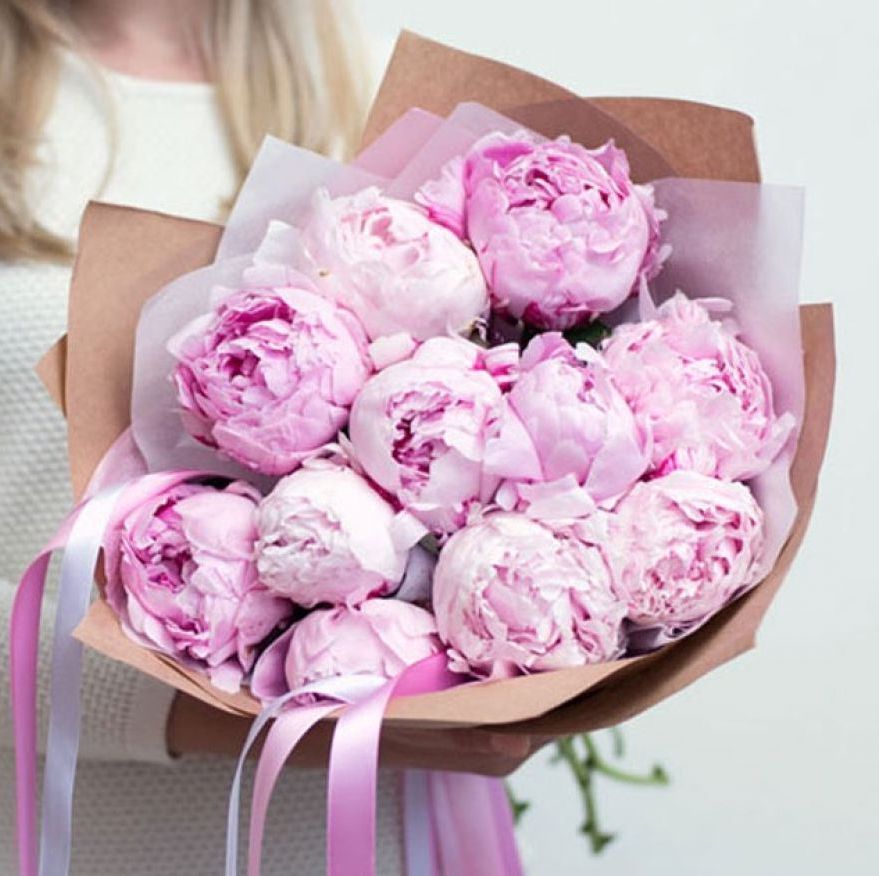
Roses are grown under glass all year, so the roses section, more than five hundred bouquets, can be ordered for any date and is sorted by colour, number of stems, height and type. Peonies keep the strictest calendar: in Australia, Chile and New Zealand they are cut from October to December, in Europe from late April to June, and in between peonies come from further away at a higher price. Tulips are a spring flower here, September and October, when Silvan opens close to a million bulbs to visitors. Chrysanthemums, gerberas, alstroemeria, lilies and carnations are grown all year, so mono bouquets of one flower are the safe choice when the date matters more than the variety; designer bouquets suit a palette rather than a named flower.
Hand-tied bouquet, hat box or basket: choosing by Melbourne address
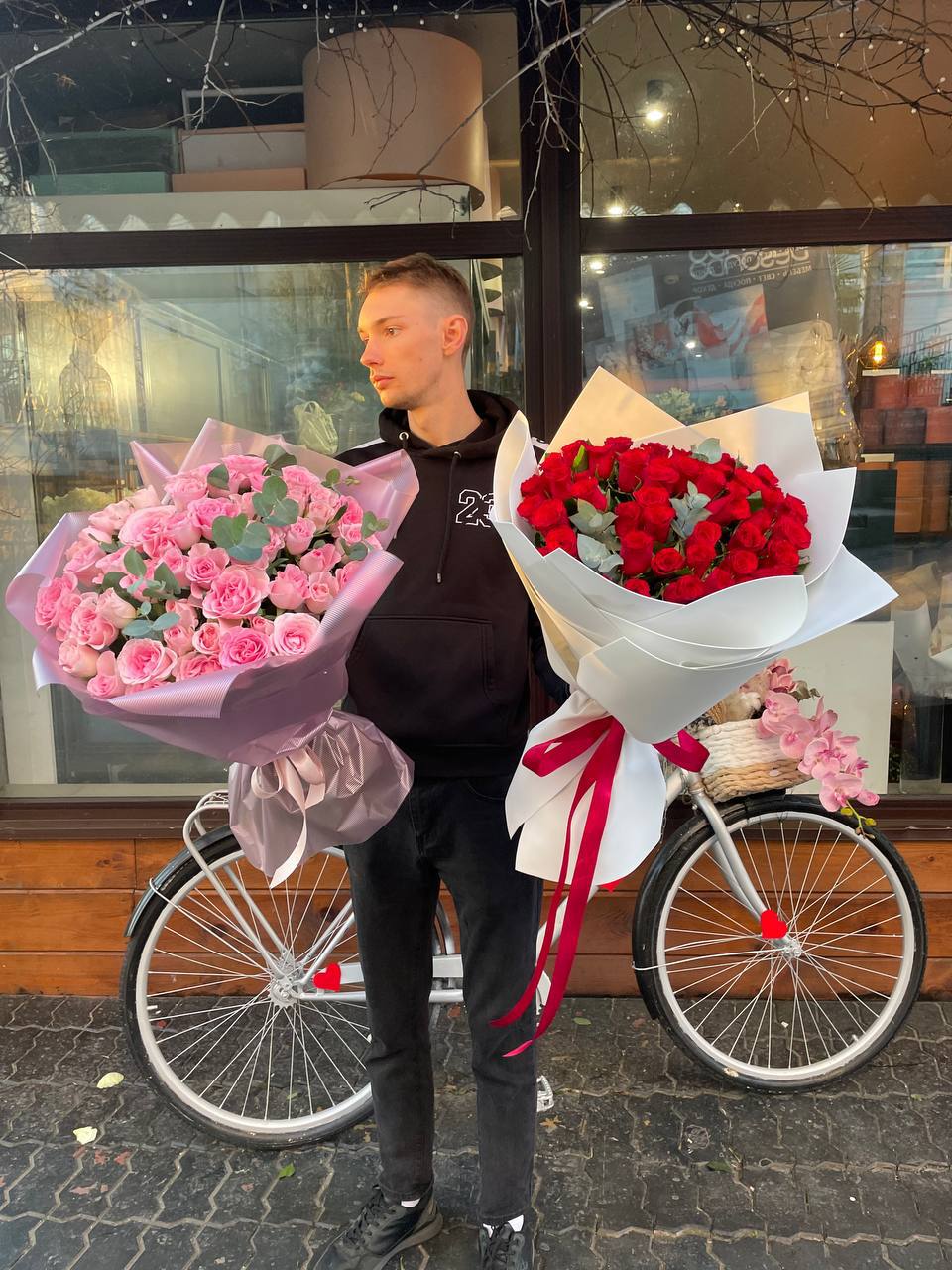
The Hoddle Grid, the mile-by-half-mile centre laid out in 1837, holds the banks and offices of Collins Street and apartments above the laneways; Docklands and Southbank add office towers and hotels beyond it. At a home address in Fitzroy, Richmond or Brunswick the recipient opens the door in person and has a vase in the kitchen, so a hand-tied bouquet in paper suits. A hotel room, a reception desk or an office where the flowers may wait for hours calls for flowers in boxes or flower baskets. Their stems stand in floral foam soaked with water, so the arrangement needs no vase.
The order form asks for what each address needs: for a hotel, the surname the guest is registered under and the room number if you know it; for an office, the company name and the floor. A building that cannot be entered without a call is the one case where the courier phones, from the door. Hospitals are stricter than any office: intensive care, oncology and haematology, burns and neonatal wards do not accept fresh flowers, general wards usually do, and the manager checks the ward first. For a hall full of people there are armfuls and designer giants.
Melbourne's flower calendar: Mother's Day, the Cup and Anzac Day
Melbourne adds dates of its own to the flower calendar. Mother's Day, the second Sunday of May, means chrysanthemums: a coloured bloom is worn for a living mother, a white one in memory of a mother who has died, and a bunch of them is the traditional gift. Father's Day falls on the first Sunday of September and is not a public holiday.
Melbourne Cup Day, the first Tuesday of November, is when Flemington's roses are at their peak, the yellow rose being the flower of the race. Anzac Day, 25 April, is a day of remembrance: dawn services, a sprig of rosemary on the lapel, red poppies beside the names on memorials. Ready-made selections for birthdays, anniversaries and Mother's Day are under occasions.
What flowers cost in Melbourne
Prices are in Australian dollars. Mono bouquets and roses are the most affordable, flowers in boxes, mixed bouquets and peonies cost more, and armfuls, designer bouquets and designer giants sit at the top of the range. What is charged is the cart total, with nothing added after payment; a card from another country is converted by your bank at its own rate, and the shop adds no fee.
Inside a category the price moves with stem length, season and format. Roses are sorted into 40, 50, 70 and 80 centimetre stems, and the longer the stem, the more each flower costs; Ecuadorian roses have the longest stems and the biggest heads. A peony in November, cut in Australia, costs less than the same peony in May, flown in from Europe. To buy flowers in Melbourne at a sensible price, go with the season and let the florist swap a scarce variety for a close one.
Flower delivery in Melbourne: zones, timing and ordering from abroad
Flower delivery in Melbourne is free in the city centre from 7 am to 11 pm: at checkout that is the zone marked "Melbourne (city centre)". Most bouquets are delivered on the day they are ordered, and the bouquet card shows the delivery time. Every other district has a flat rate that is added in the cart before you pay:
- Inner and middle suburbs: Fitzroy, Collingwood and Richmond; South Yarra, Prahran and Windsor; North Melbourne, Parkville and Brunswick; Port Melbourne, Albert Park and St Kilda; Hawthorn, Kew and Camberwell; Footscray and Williamstown;
- Outer suburbs: Brighton, Elsternwick and Bentleigh; Box Hill, Doncaster and Ringwood; Preston, Heidelberg and Epping; Sandringham, Mordialloc and Frankston; Sunbury, Tarneit and Werribee;
- 11 pm to 7 am: any zone by prior arrangement, priced individually;
- the airport and addresses outside the list: on request, with the price confirmed before payment.
A chosen date and time slot is available in every zone, and each rate covers one address. Around Valentine's Day, 8 March and Mother's Day the volume is several times the usual, so it pays to order a few days ahead. The recipient is not called in advance unless you ask; if nobody is home, the courier waits up to fifteen minutes and calls. Zones and rates are on the delivery page.
Keeping a bouquet fresh in Melbourne: hot spells and cool changes
A January day in Melbourne averages about 27 degrees, yet the city has reached 46.4 in extreme heat, and a hot northerly can give way within hours to a cool change that drops the temperature sharply. In July the days sit around 14 or 15 degrees and the heater runs indoors. A cut flower suffers from the swings rather than from any one temperature. Get the bouquet into water as soon as it arrives and keep to a few habits:
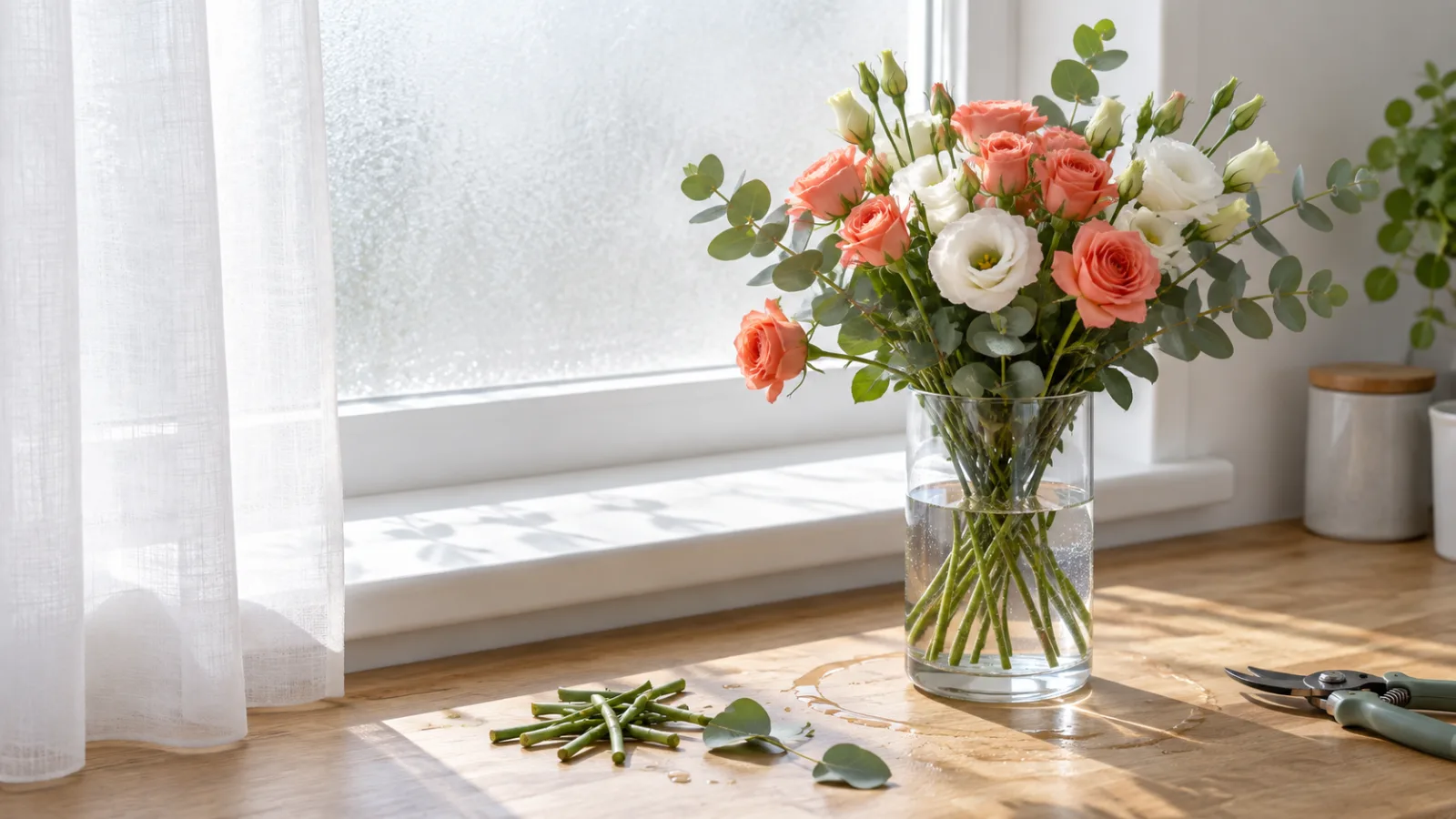
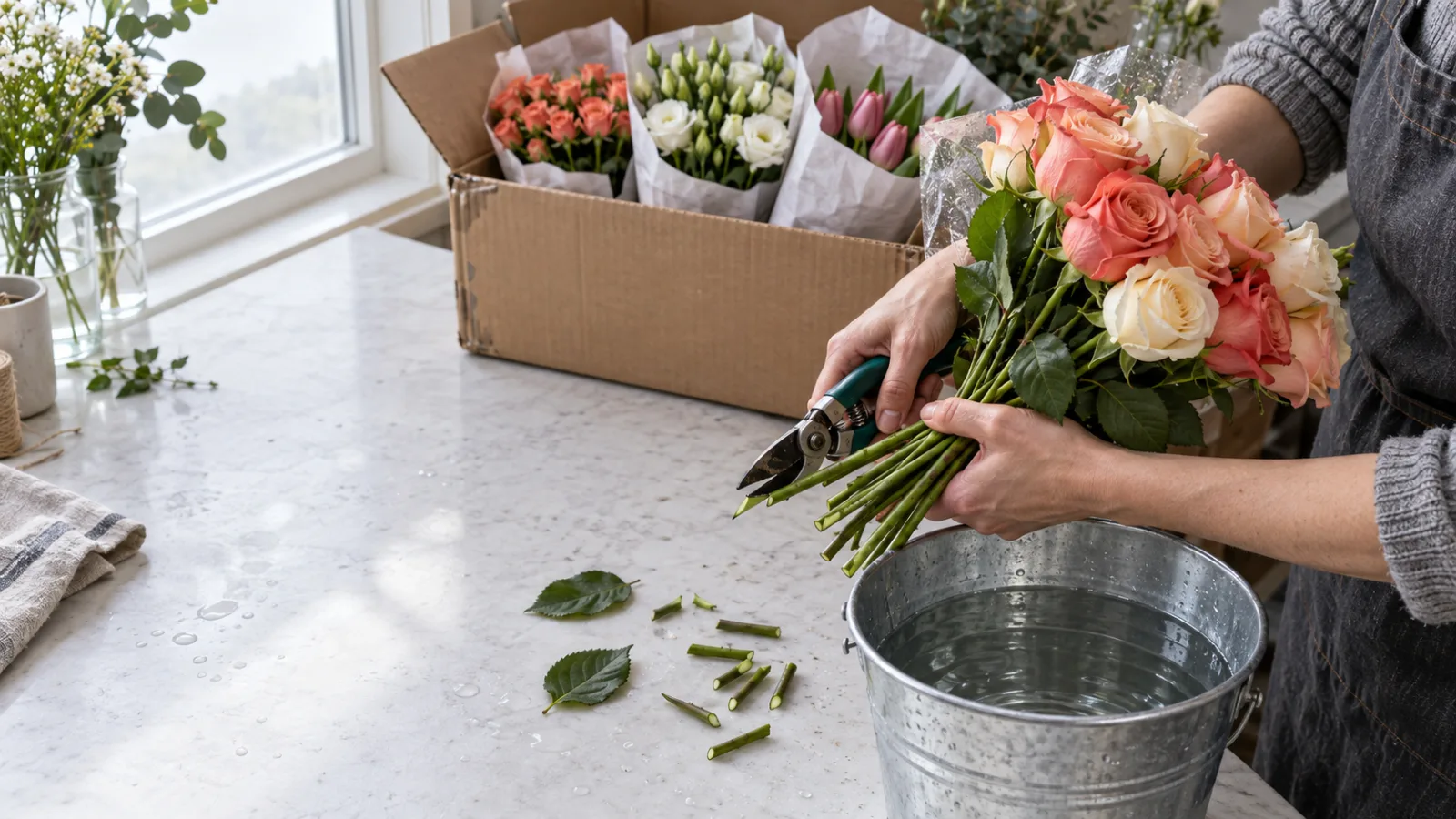
- recut the stems at an angle with a sharp knife or secateurs, taking off 1–2 cm, and strip any leaves that would sit below the waterline;
- keep the vase away from the sunny window in summer and the heater in winter, and away from the fruit bowl, since ripe fruit gives off ethylene;
- change the water every day or two, and every day in a heatwave;
- water a boxed or basket arrangement into the foam across the whole surface and never tilt it.
With that routine roses last about a week; chrysanthemums, carnations and alstroemeria last two to three, one more reason the Mother's Day flower here is a chrysanthemum.