




Bouquets in Melbourne: Dandenong tulips, native stems and flown-in roses
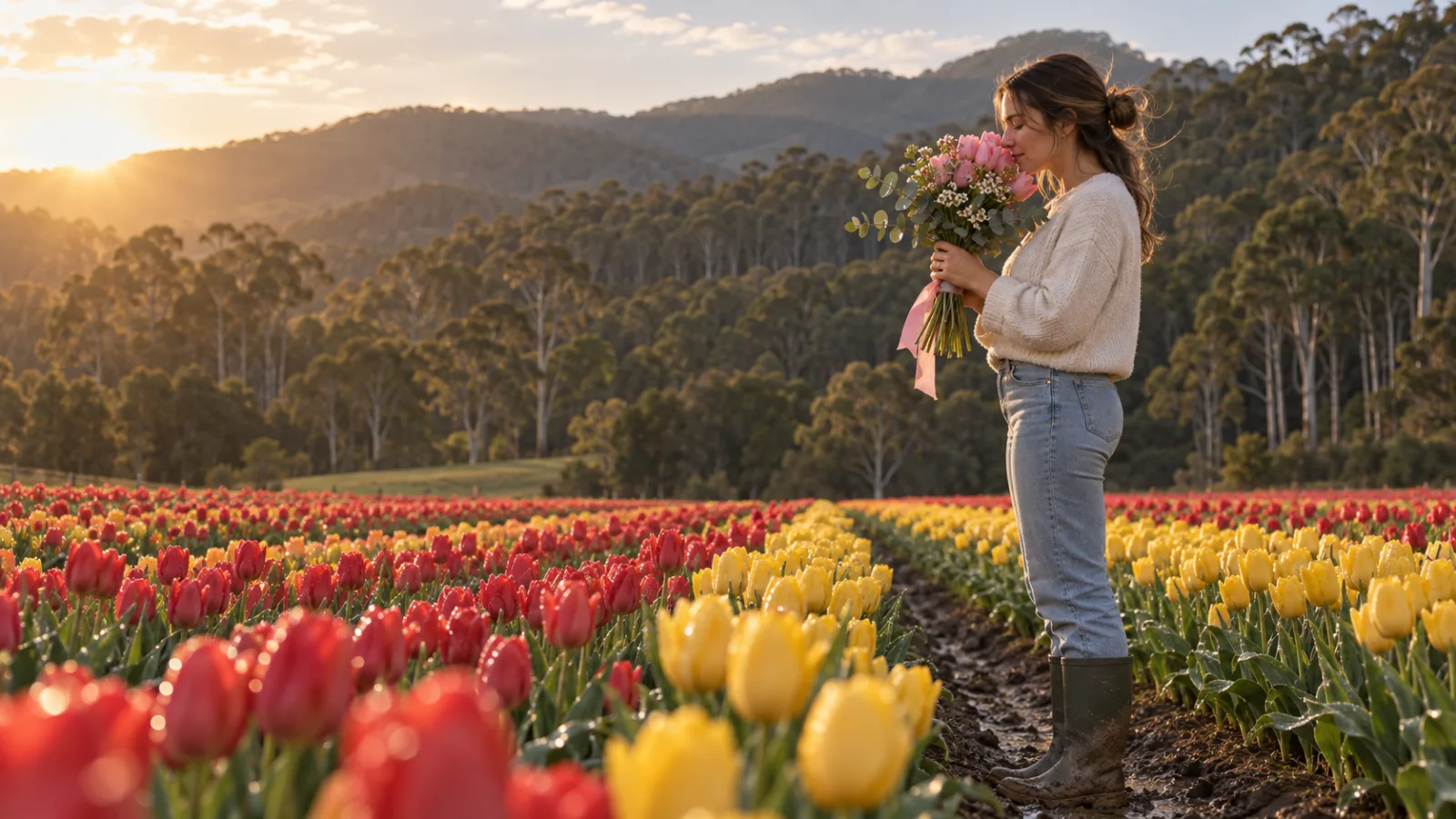
Since 1954 the Tesselaar Tulip Festival in Silvan, in the Dandenong Ranges some 35 km east of the centre, has opened fields of more than 120 varieties and close to a million bulbs every September and October. Those are the spring weeks when bouquets in Melbourne have a local tulip to draw on. A hand-tied bunch here is built from two halves, one grown nearby and one flown in, and what lands in it depends on the month.
Tulips from the Dandenongs, waxflower and gum: what Victoria adds
Victorian farms supply roughly two fifths of Australia's cut-flower crop, by market estimates. The Dandenong Ranges, around Monbulk and Silvan, are the growing district behind that figure, a short drive east of the city rather than a single farm or festival gate.
Spring is the tulip's season here, cut through September and October. From October on, into the southern summer, Victorian-grown peonies take over; the seasonal bouquets hold whatever is in flower that month, without a fixed list of names.
Australian native flowers also reach the cutting bench: waxflower, kangaroo paw, banksia, protea, leucadendron, gum and waratah, grown across Western Australia, Victoria and New South Wales. Waxflower and gum rarely stand as the main flower; florists use their small blooms and leaves to fill the gaps between larger stems. The state's floral emblem, pink epacris, is not sold as a cut flower, so it will not turn up in a bouquet whatever the season.
Roses, lilies and gerberas: the flown-in half of a winter bouquet
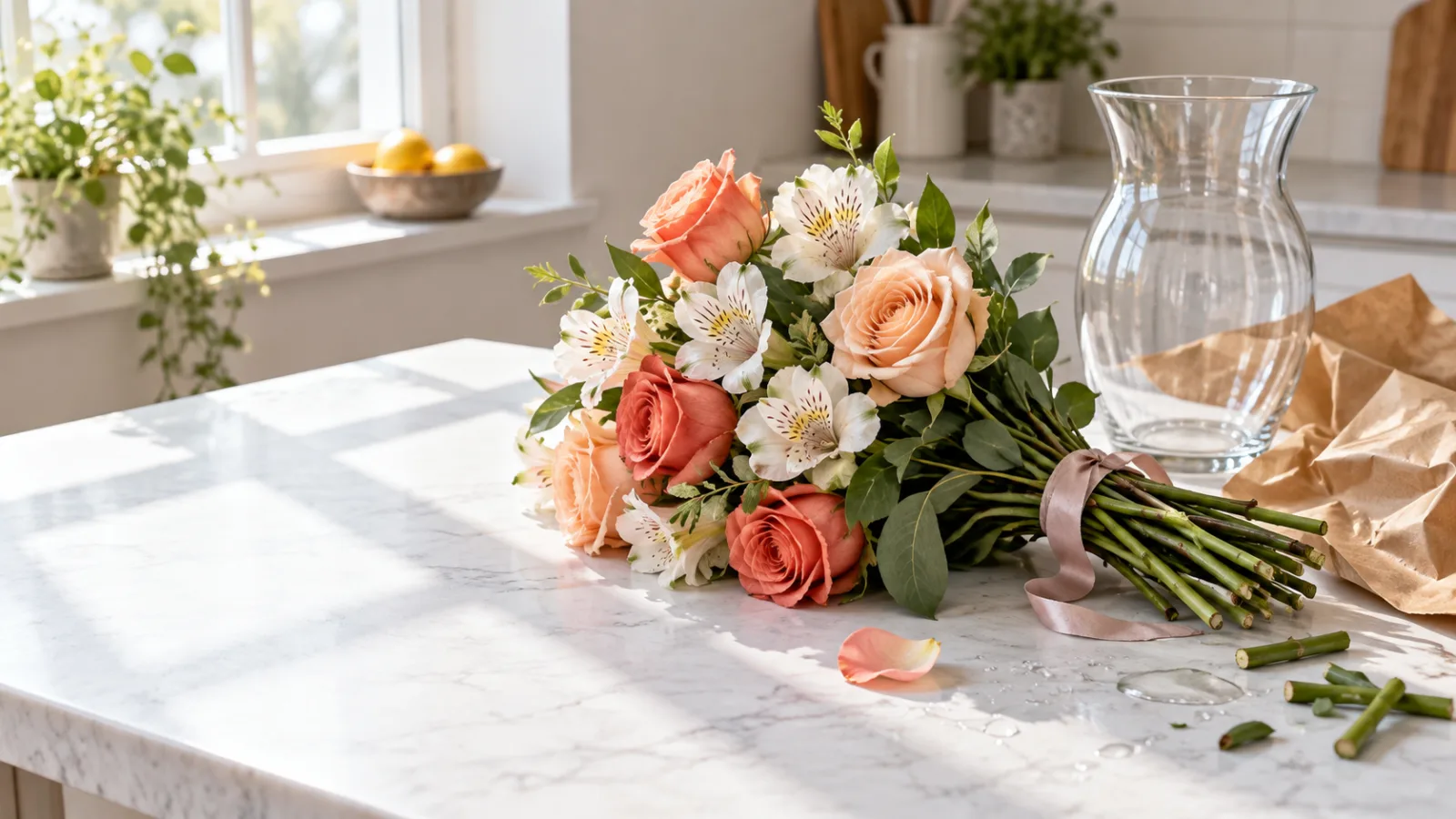
About half the flowers on the Australian market arrive by air, and industry estimates put the import share of roses as high as nine in ten, flown in chiefly from Kenya, Colombia and Ecuador; the country's own rose growers now number around thirty.
Winter here runs June to August, and local fields thin out through those months, so the imported share of a bouquet grows larger still. Stems from those three countries are fumigated before departure; a proposal to drop that stem treatment has been raised, though no decision has been made.
Lilies, gerberas, alstroemeria and chrysanthemums are greenhouse flowers, grown under glass and sold all year, which is why a winter bouquet in Melbourne tends to lean on them alongside roses; a Lily and Gerbera Bouquet is one way that pairing is sold. Chrysanthemums have their own local peak in May, Australia's autumn, when home-grown stems are easiest to find.
Choosing by colour, by flower or from a photo you saved
A choice usually starts with one of two things: a colour scheme or a particular flower. Bouquets by colour sort the range by tone, while bouquets built around one flower group it by the flower itself.
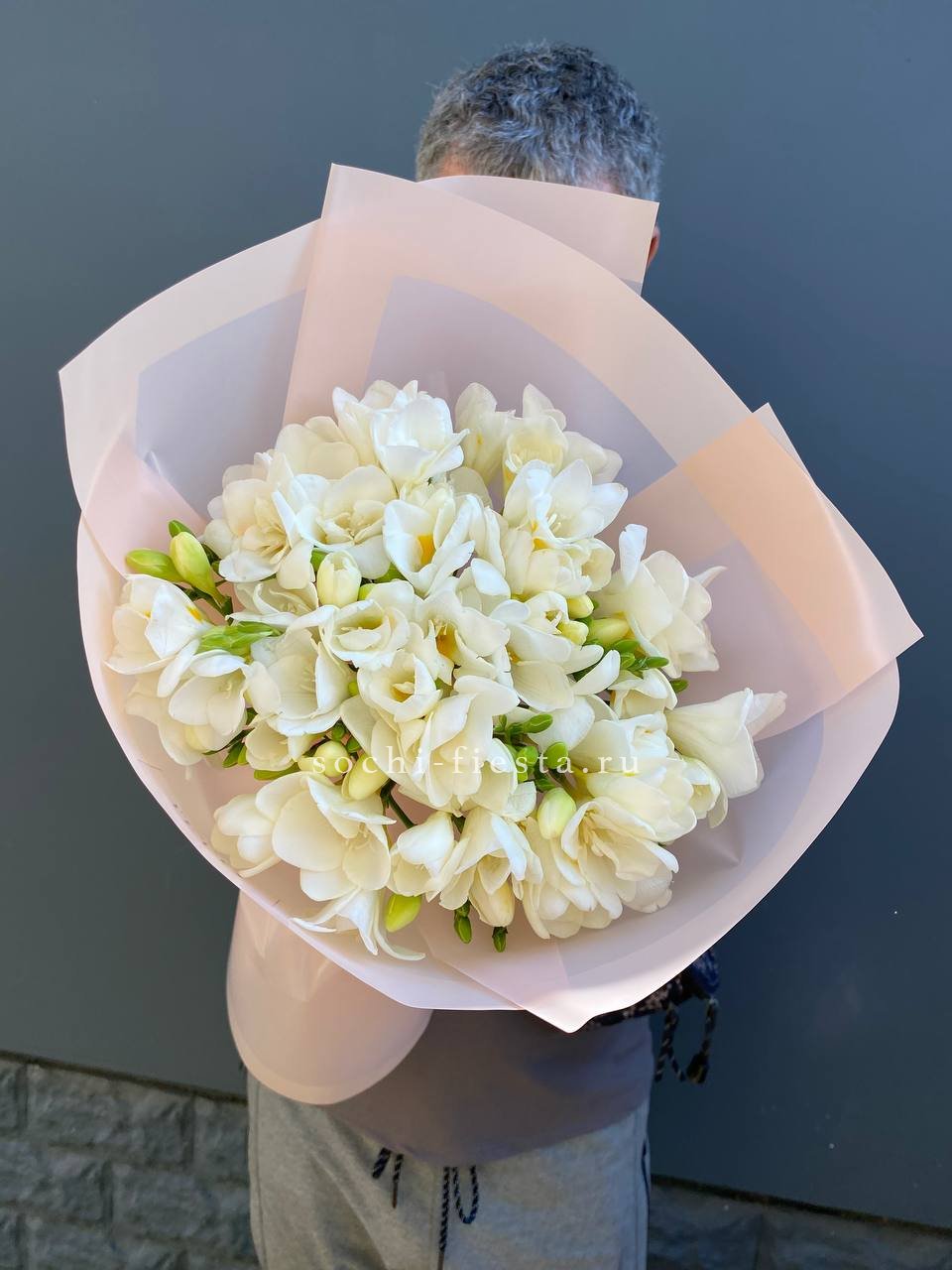
A saved photo works too. Someone might send a picture of a spring bunch with tulips or peonies in the middle of July, and the florist builds the nearest match from what is in season, with photos and prices to confirm first.
Where the exact flower in a photo or a listing is not available, the florist substitutes a close match in shade and price, and the swap shows up on the photo taken before the courier sets off. A description in chat works the same way: name the occasion and the budget, and a few options come back with photos and prices before any payment is taken.
Bouquet delivery in Melbourne is free within the centre and carries a flat zone fee elsewhere, added to the order before payment; the delivery terms page sets out both. Occasion dates through the year sit on Melbourne's flower calendar. A first look is easiest through seasonal bouquets or a bouquet from your photo.