


Designer bouquets in Melbourne: waratah and gum, not the state's heath
Victoria's floral emblem is a pink form of common heath, chosen in 1958, and it flowers from late autumn into early spring. Florists never sell it as a cut stem, though, so a designer piece built with Melbourne in mind leans on other Australian plants instead: waratah, leucadendron, gum and waxflower, all grown for cutting rather than picked from the bush. Choosing between designer bouquets in Melbourne starts with that distinction, before size or colour even come into it.
Waratah and leucadendron: the native line in a Melbourne piece
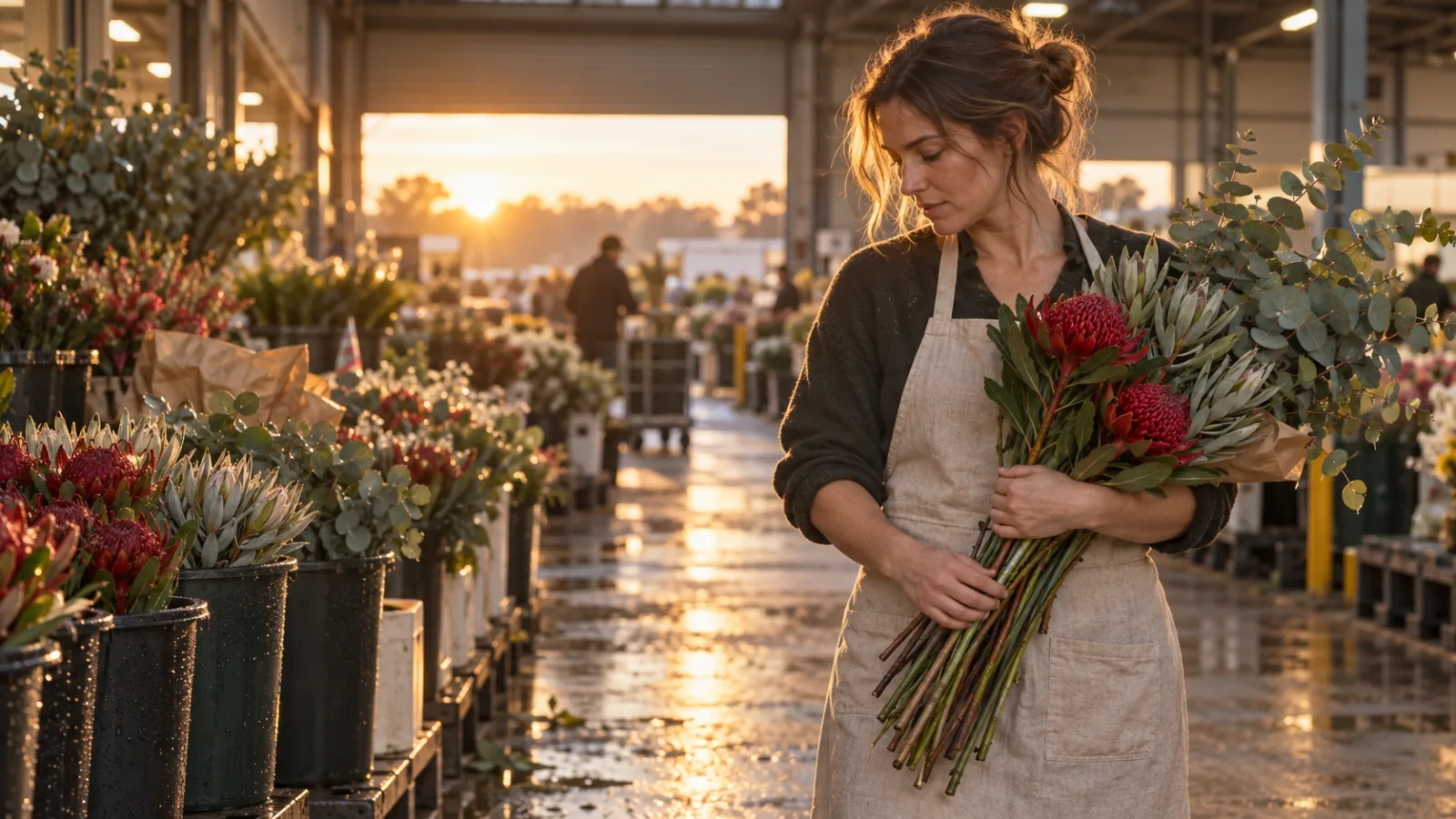
Australia's cut-flower growers work with a recognisable set of native stems: waratah, leucadendron, protea, banksia, kangaroo paw, waxflower and eucalyptus. Western Australia, Victoria and New South Wales all run farms for them, and much of what they cut is exported, Japan above all, before any of it reaches a local florist's bench.
Eucalyptus does a particular job inside a bouquet rather than just adding colour: as a filler flower, its grey-green foliage fills the gaps between larger heads and holds the whole shape together. A waratah's stiff red cone or a leucadendron's silver bract works the opposite way, as a line or a focal stem that gives the arrangement its edge.
None of this means every designer bouquet in Melbourne carries these stems, and the catalogue changes with what is in season. The way to get a native line into a specific order is to ask: describe the occasion and the budget in chat, and a manager sends back options with photos and prices before anything is paid for.
Silvan tulips, October peonies, roses flown in for winter
Spring shifts what a florist in Melbourne reaches for first. Tulips from the Dandenong Ranges, around Silvan, come into season in September and October, and Australian-grown peonies follow from October through the southern summer. May belongs to the local chrysanthemum harvest, its biggest run of the year.
Winter empties those same fields, and imported stock fills the gap. Roughly half of all cut flowers sold in Australia are brought in from overseas, and in the colder months that share climbs further; industry estimates put as many as nine in ten roses as flown in from Kenya, Colombia or Ecuador. A rose in a winter bouquet has usually travelled a long way to get there.
Every piece is put together after the order is placed, and the flowers themselves are bought once payment clears. If a particular bloom is out of stock, the florist substitutes one close in colour and price, and that substitution shows up on the photo taken before the courier leaves, so nothing arrives as a surprise.
Hand-tied, a designer box or a giant: sizing the gesture
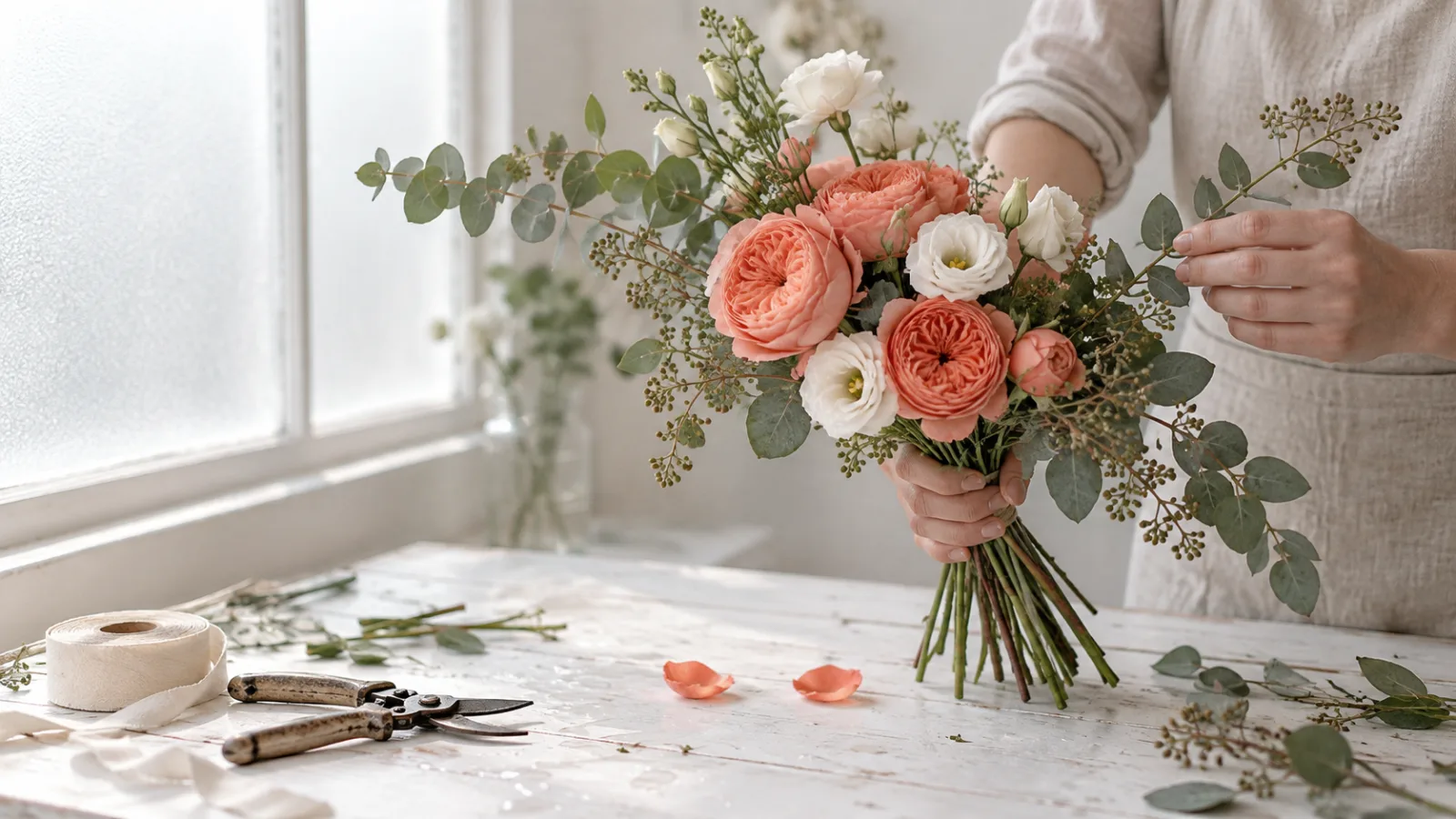
A hand-tied bouquet suits whoever is going to carry it home and find it a vase, since the stems arrive loose and need water straight away. A designer box, such as the Designer Box "Virginia", works differently: the stems sit in soaked foam inside the box itself, so it stands on a desk or a bedside table with no vase required.
"21 French Roses" takes its name from a technique, not a variety. A French rose is an ordinary rose that a florist has reflexed by hand, gently turning back the outer petals so the bloom opens wider and looks fuller than it would if left alone.
When the gesture needs to be larger again, the separate Designer Giants section holds the scaled-up pieces that a standard bouquet isn't built for. For designer bouquet delivery in Melbourne, most orders go out the same day they're placed, and the exact timing for any given piece shows on its own product page.
Delivery to the centre is free, and the delivery terms page covers booking for a date or ordering for a date or from abroad. A good place to start is peonies in their spring window, or a dependable bunch of roses, with flowers in boxes for an address that has nowhere to put a vase.