


Mixed bouquets in Melbourne: flown-in heads and Australian gum
Mixed bouquets in Melbourne carry eucalyptus as filler between the heads, and that grey-green foliage is Australian flora farmed for cutting in Victoria, Western Australia and New South Wales. About half the cut flowers sold in Australia are flown in, so a mixed bouquet usually joins local stems with imported ones. The choice starts with which flower leads the bunch and which month it is.
Eucalyptus and waxflower: the Australian stems in a Melbourne mix
Florists use eucalyptus as a filler and foliage: it closes the gaps between the heads and smooths the transition from one flower to the next, rather than leading the bouquet itself.
Australia grows a shortlist of flora for commercial cutting: waxflower, kangaroo paw, banksia, protea, leucadendron, eucalyptus and waratah, mostly from farms in Western Australia, Victoria and New South Wales. Market figures put Victorian growers at roughly two-fifths of the country's cut-flower output.
About half the flowers sold in Australia come from overseas, and industry estimates put as many as nine in ten roses from Kenya, Colombia and Ecuador. So a mixed bouquet here is rarely one country's flora: it is whatever the florist has on the bench that week.
If an Australian stem matters to you, ask for waxflower or eucalyptus when you order a mixed bouquet in Melbourne: a florist can build the bunch around it and send a photo and a price before you pay.

A spring mix: tulips that keep growing, peonies that open
Australian peonies are cut from October through November and on into the southern summer that follows.
Tulips follow a shorter local window: growers in the Dandenong Ranges, around Silvan, some 35 kilometres east of the city and known locally for its spring tulip displays, cut them in September and October.
Once cut, a tulip keeps growing, stretching roughly one to two centimetres a day and bending toward the light, so within a day or two it can rise above the flowers next to it. Turning the vase once a day keeps the stem straight.
A peony is cut at what growers call the marshmallow stage, a soft, barely coloured bud, and it opens over 24 to 48 hours once it reaches warmth and light. In a mixed bouquet that opening happens at the recipient's address, not at the florist's bench, so the bloom on delivery is only the start. For a bouquet built mostly around that flower, the peonies section is worth a look.
May to August: chrysanthemums and alstroemeria for a mix that lasts
May is Melbourne's last month of autumn and the peak of the local chrysanthemum season. Through the winter months that follow, local fields empty out and a larger share of the bouquet is flown in from further afield.
Chrysanthemums, carnations and alstroemeria are the stems to ask for if a bouquet needs to last: all three hold for two to three weeks in a vase, well past a rose's week to ten days and a peony's five to seven days. A chrysanthemum's leaves yellow before the flower does, so a florist strips them rather than leaving them to go first.
For a winter vase that has to run the distance, choose a mix where a chrysanthemum or an alstroemeria sits next to the rose rather than a bunch of roses alone. In Australia the same flower carries a second use: "mum" is short for both mother and chrysanthemum, which is why the stem turns up in Mother's Day mixes.
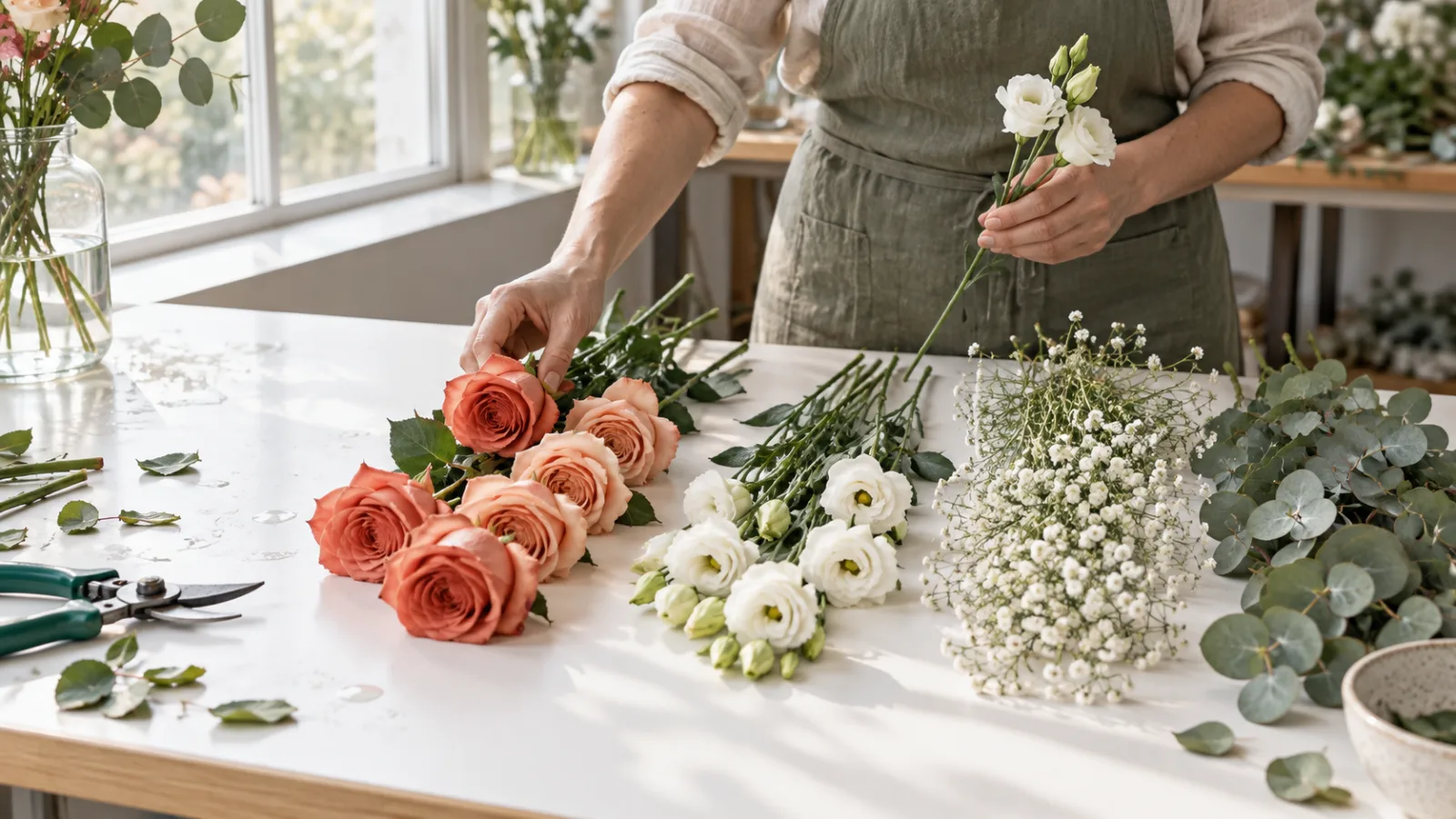
Every mixed bouquet is made to order after payment, and a photo goes to the sender before the courier leaves, so a swap can still be asked for at that point. Most orders are handed over the same day, and the exact window for yours shows on the bouquet's own page before you pay. Delivery is free in the city centre; full flower delivery terms are on the delivery page, and hotels and orders from overseas are covered there too.
If roses are the flower you want to lead with, Roses with Lisianthus or the roses section narrows the choice fast. For one flower on its own instead of a mix, mono bouquets keep it simple. For a combination the florist has already worked out, designer bouquets do the pairing for you.