


720x720_q85.jpg?v=1787130511)


_e58557720x720_q85.jpg?v=1787130512)


720x720_q85.jpg?v=1787130516)
720x720_q85.jpg?v=1787130516)
_0406c4720x720_q85.jpg?v=1787130516)
Roses with delivery in Osaka: varieties, Osaka occasions, and freshness from the Tsurumi market
Osaka is Japan's second-largest metropolis and the heart of the Kansai region, a city on Osaka Bay in the delta of the Yodo river. In Minami — Namba, Shinsaibashi, the canals of Dōtonbori — a rose goes to dinner, a date, a première. In the business districts of Honmachi and Yodoyabashi, and in the upscale dining quarter of Kitashinchi, flowers head to receptions and corporate occasions; in Tennōji and Abeno, under the Abeno Harukas tower, the pace is calmer and more domestic. The Osaka buyer is direct and practical, yet attentive to the flower — studying the bud shape, testing stem firmness, reading hanakotoba, the language of flowers. We built the catalogue with that taste in mind.
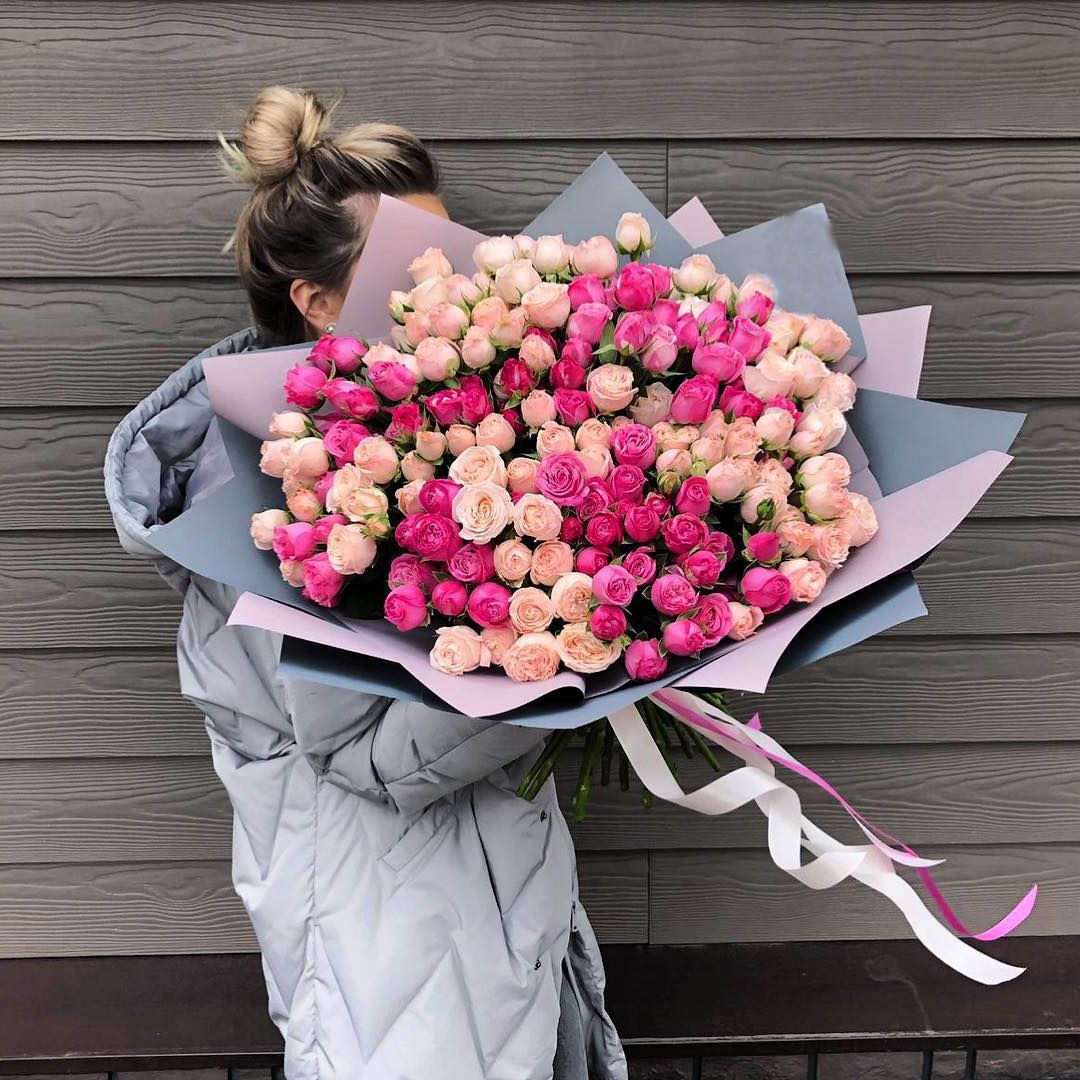
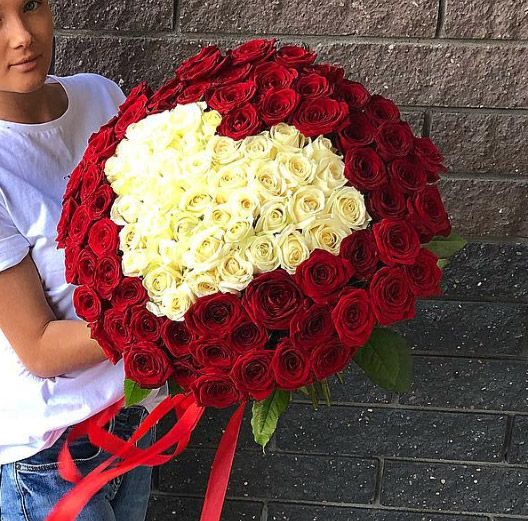
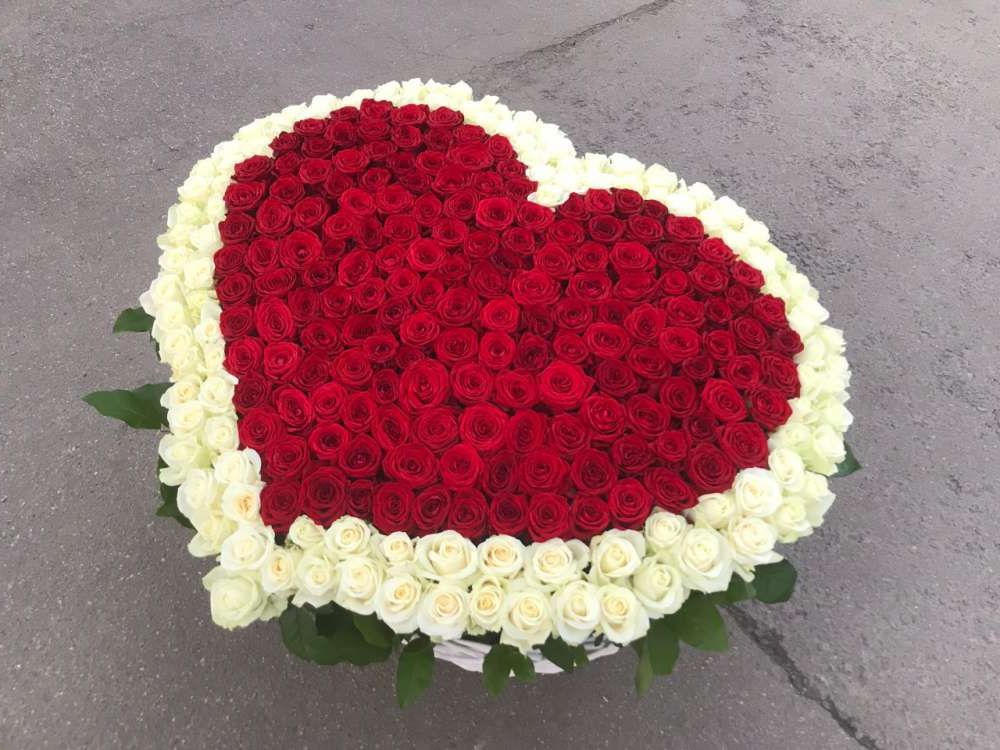
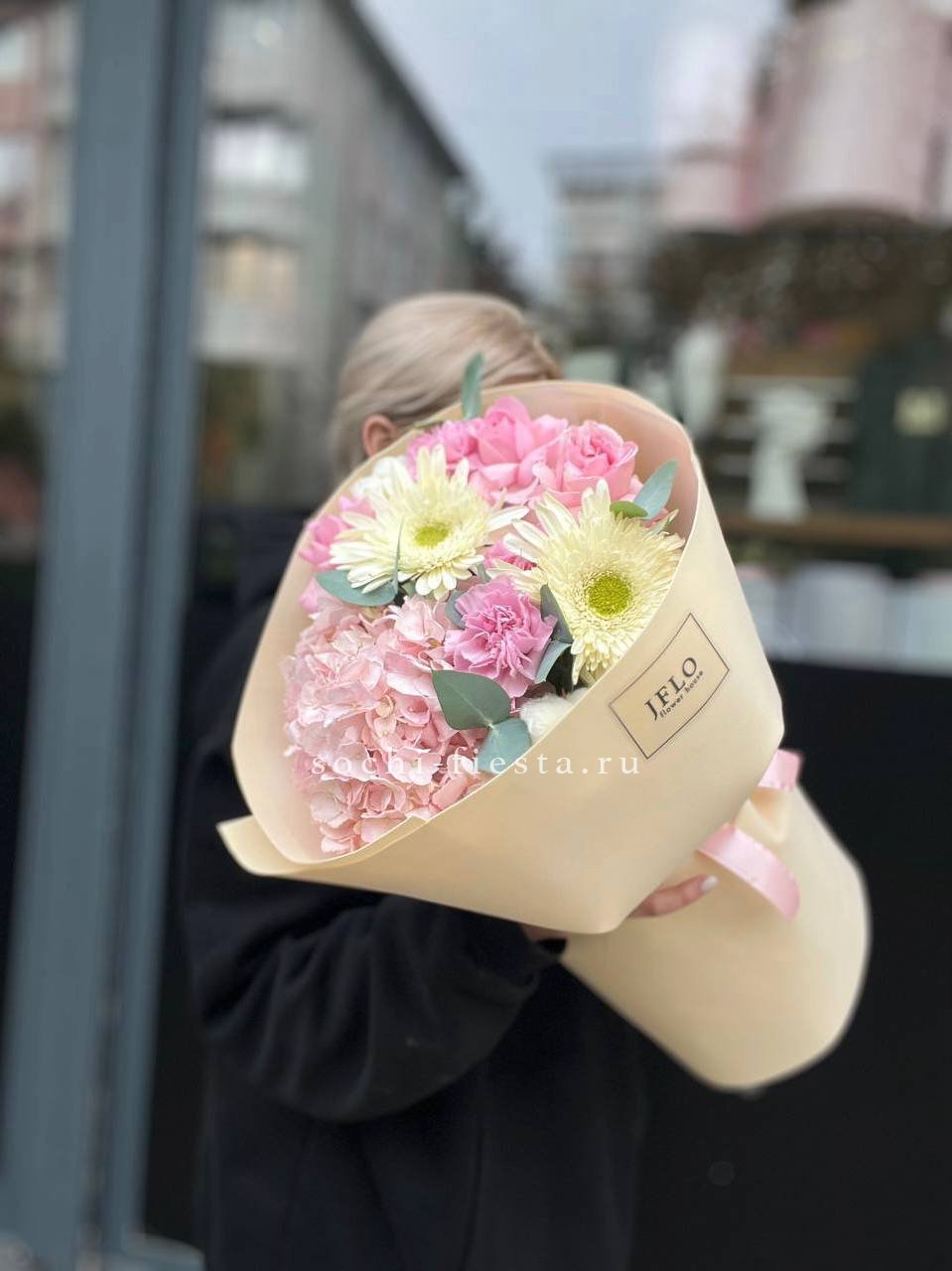
The category covers single-variety bouquets, mixed arrangements, and single stems. Sizes range from a 7-rose bundle to a formal 50 or 100-stem presentation. For hotels, restaurants, and corporate orders we supply box and hatbox formats, as well as congratulatory flower stands for business openings — a familiar gesture in Japan.
Which varieties to choose
We work with two broad groups: Japanese roses from local farms, and imports. A particular point of pride is Wabara (和ばら) garden roses from Rose Farm Keiji in neighbouring Shiga prefecture — bred for the Japanese eye, with dense petalling and a complex scent. Imported varieties arrive from Ecuador, Colombia, and the Netherlands.
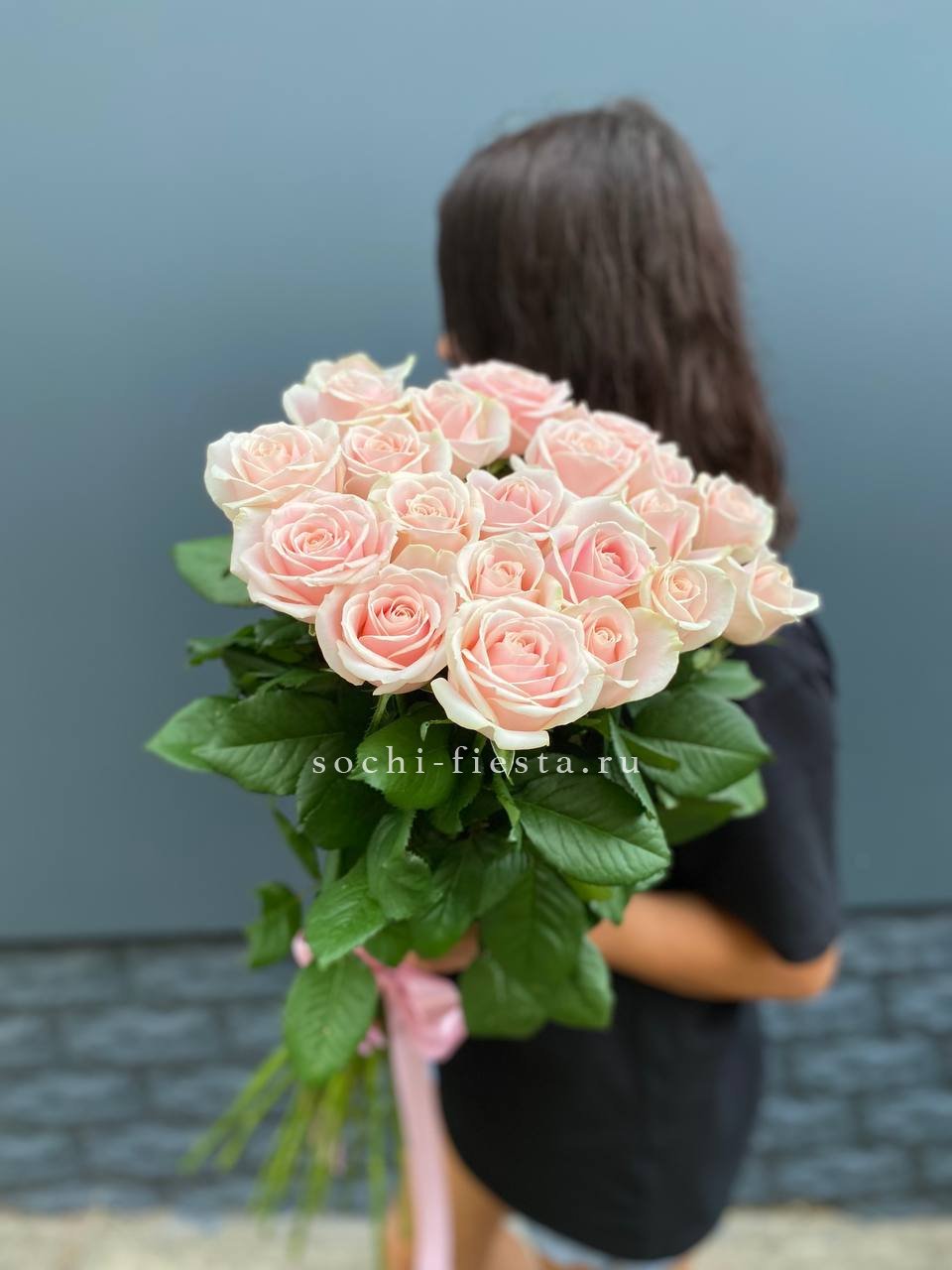
- Wabara (和ばら) — Japanese garden roses from Shiga. Cup-shaped, muted soft tones, a pronounced fragrance. A choice for gifts meant to please and for wedding work.
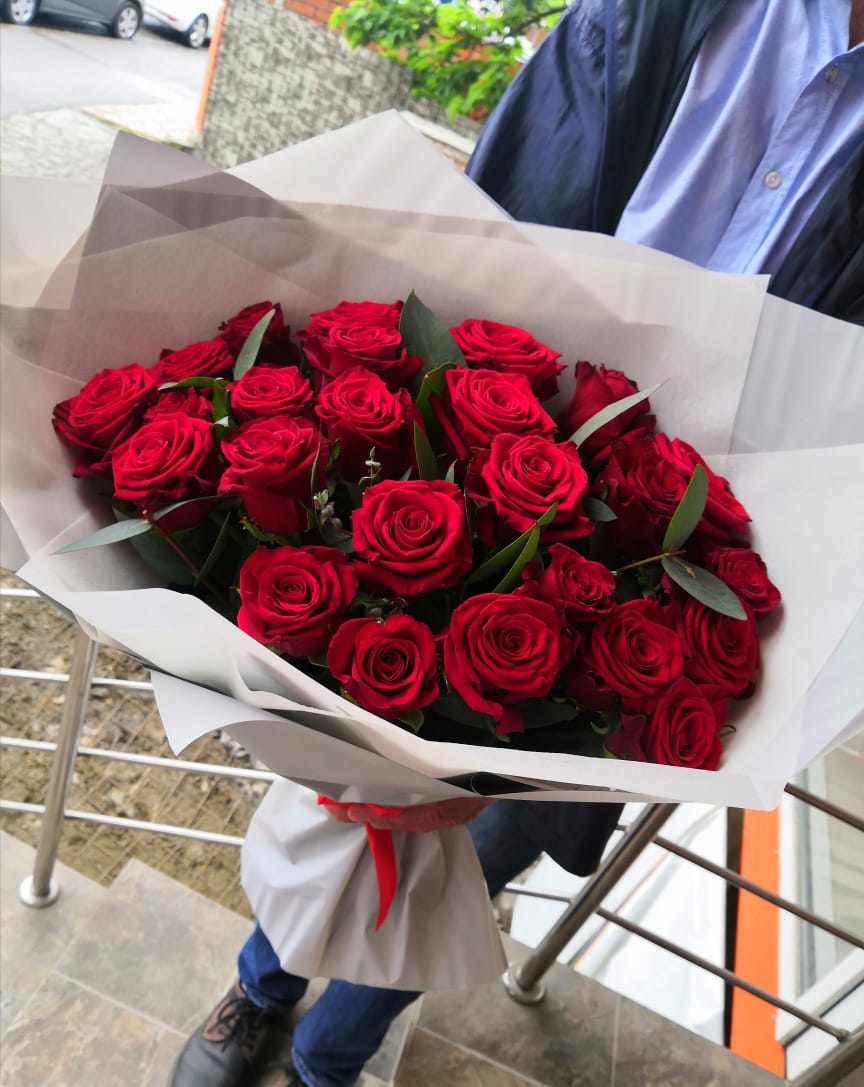
- Freedom — deep red, bud 6–7 cm, stem 60–70 cm. A vase life of up to 12 days. The benchmark red rose for anniversaries and Valentine's orders.
- Red Naomi — dark burgundy-red with velvet-textured petals. Photogenic and dramatic — often requested for hotels and Kitashinchi receptions.
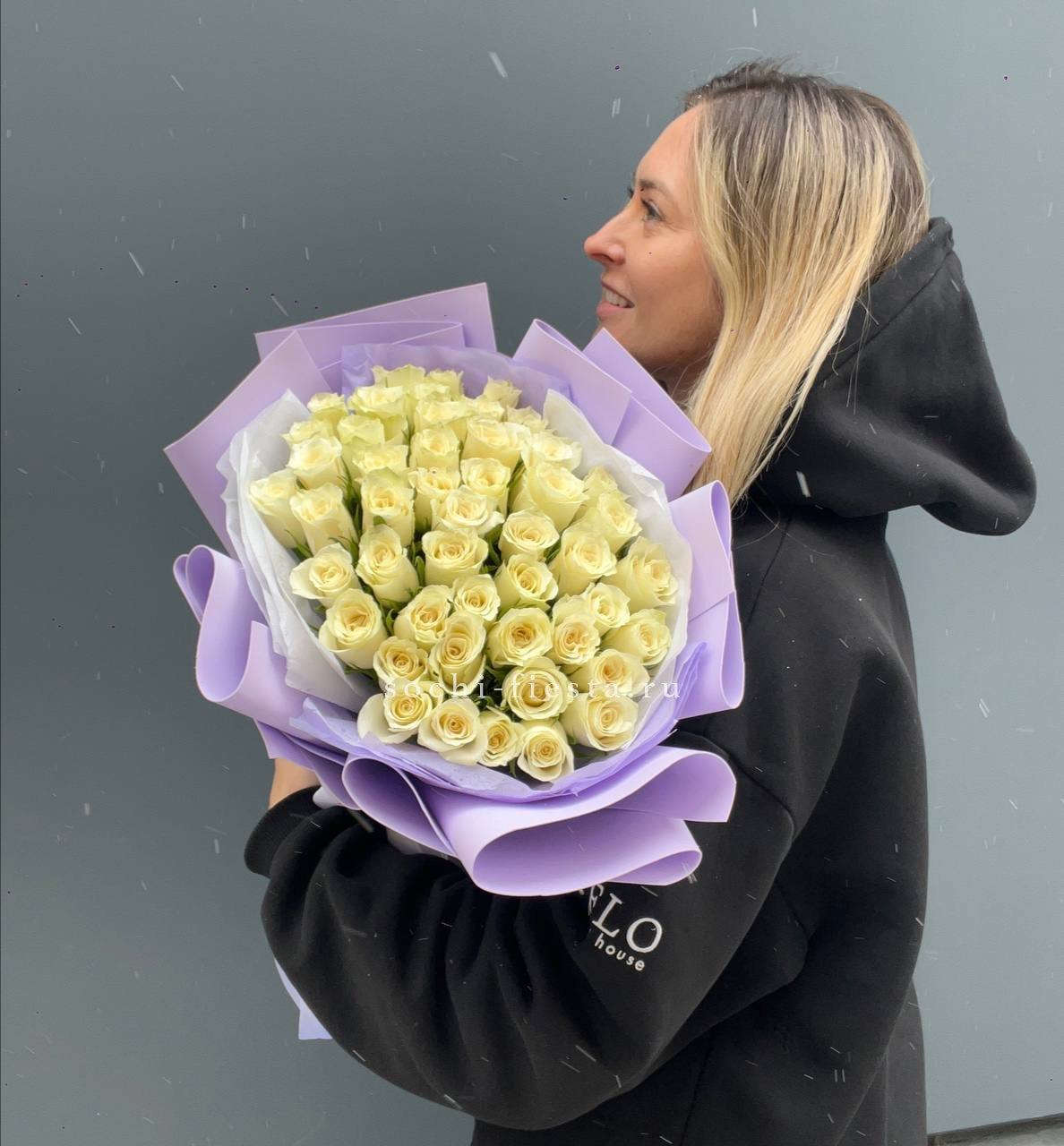
- Avalanche+ — pure white, large dense bud, no scent. A neutral anchor for mixed arrangements and weddings.
- Mondial — cream-white with a green cast, very heat-tolerant. Holds up well through Osaka's humid summer.
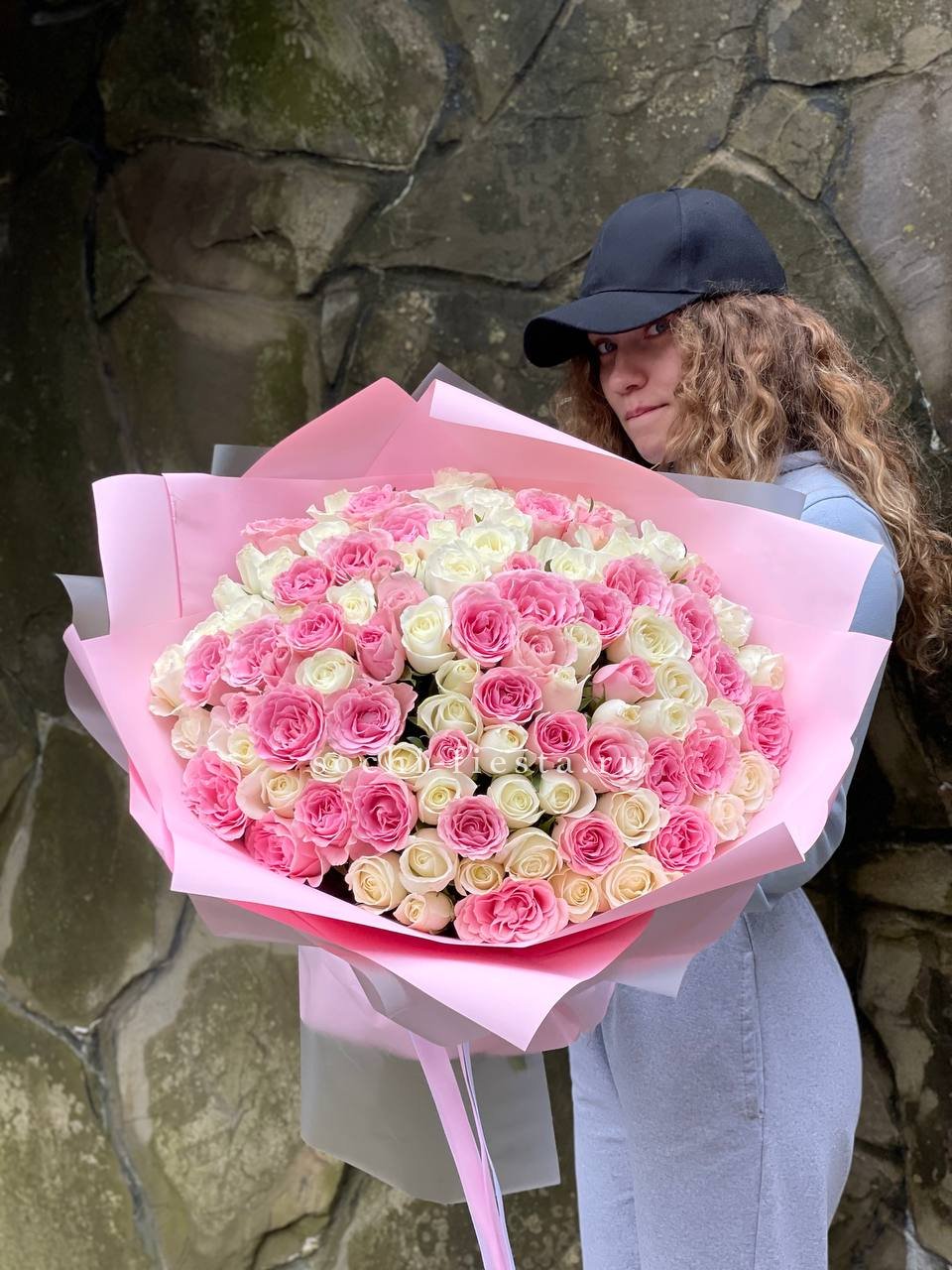
- Sweet Avalanche — soft pink, mid-sized bud. For those who want to move beyond red.
Occasions and stem count
One stem is a quiet, considered gesture. Three: a friendly thanks. Seven or eleven: romantic without being theatrical. Fifty and a hundred stems are reserved for engagements, anniversaries, and milestone dates. An important Japanese nuance: the numbers 4 and 9 are avoided in a gift — "4" (shi) sounds like the word for death, "9" (ku) like suffering. We don't assemble bouquets of 4 or 9 stems.
The Japanese calendar has its own rose occasions. The main one for the red rose is White Day (14 March), when men reply to the gifts women gave in February. Spring brings graduations (sotsugyō, March) and entrance ceremonies (nyūgaku, April), then Mother's Day (second Sunday of May) and Coming-of-Age Day (Seijin no Hi, January). Roses also go to wedding anniversaries and romantic dates year-round.
Freshness and logistics
Imported roses fly into Osaka from Ecuador, Colombia, and the Netherlands through Kansai International Airport (KIX), built on an artificial island in the bay. Lots are then distributed to florists through the Osaka Tsurumi wholesale flower market (大阪鶴見花き地方卸売市場), one of the largest in western Japan. Japanese roses from local farms move faster — a day or two from the cut.
From unloading to your door, the window is 24 hours or less. Flowers are held in cold storage at +4…+6°C until assembly. From cut to the recipient's vase takes 2–3 days, and with proper care imported varieties last 10–12 days, Wabara garden roses 7–10.
"The Osaka customer is honest — they'll ask the price straight out, but they'll pay for a good flower without haggling. In summer our worst enemy is humidity: in the rainy season and through August the bud catches grey mould easily, so we keep roses in dry cold right up to assembly. And always confirm the stem count — we never make fours or nines here, it's an old tradition."
— Kenji Nakamura, florist, Osaka, 15 years in the trade
Delivery specifics in Osaka
Osaka sits in a lowland by the bay, with a humid subtropical climate. Summers are hot and muggy, +33–35°C at high humidity; the tsuyu rainy season runs from mid-June to mid-July, and typhoons arrive in August and September. Winters are mild and dry, +2–9°C, with snow a rarity. Cherry blossom comes in late March and early April. In summer we move bouquets with cooling packs and keep moisture in check; in winter we add thermal packaging for any outdoor leg.
We deliver roses across Osaka: Kita and Umeda, Namba, Shinsaibashi, Dōtonbori, Kitashinchi, Honmachi, Yodoyabashi, Nakanoshima, Tennōji, Abeno, Horie, Amerikamura, Shinsekai, the bay and Konohana with its theme park, Tsuruhashi. Payment is in yen (¥, JPY), by card online. For White Day and graduations we recommend ordering a week ahead; for anniversaries, 3–5 days.
Care at home
On arrival, cut the stems at a 45° angle, remove any leaves below the waterline, and place them in a clean vase with cool water. Change the water every two days; add a Chrysal sachet or a pinch of sugar. Keep the bouquet away from direct sunlight and ripening fruit — ethylene from apples and bananas shortens vase life by roughly a third.
Osaka summers are muggy: keep the vase under air conditioning, but out of the direct airflow — dry blowing air burns the petal edges. On hot nights, move the roses to the refrigerator to add 2–3 days of life. In winter, keep the vase away from heaters. Roses suit almost any occasion: message our manager and we'll help match the variety, colour, and stem count to the task and budget.

