


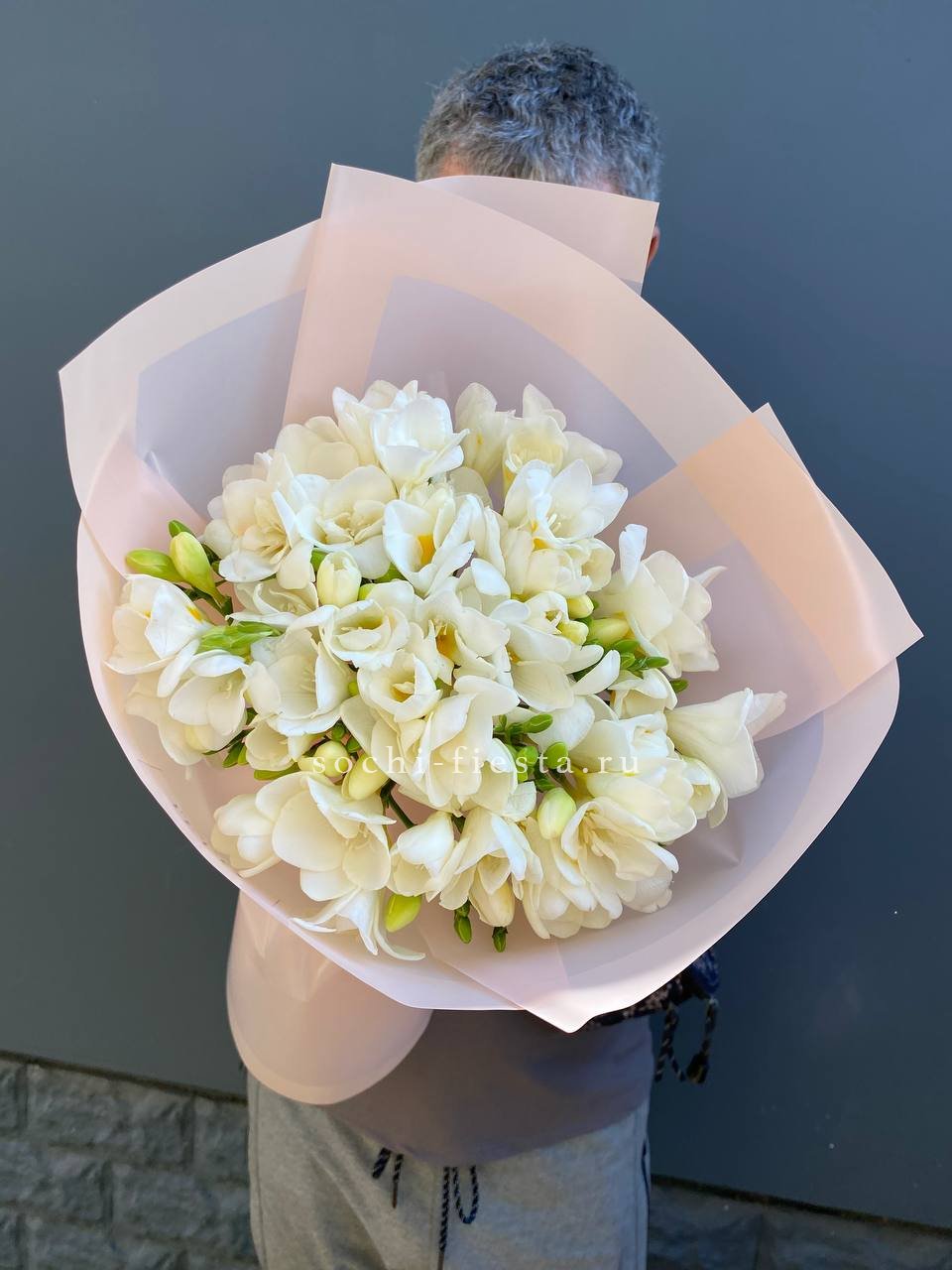


Bouquets in Paris: the Île de la Cité market and a bouquet made to order
Bouquets in Paris start somewhere other than a market stall. The flower market on the Île de la Cité, at place Louis-Lépine and quai de la Corse in the 4th arrondissement, was set up by a decree of Napoleon I and now carries the name of Elizabeth II. A bouquet sent to someone in Paris isn't picked up there ready-made: the florist buys the flowers for this particular order after payment clears, builds the bouquet and photographs it before the courier sets off.
Made to order, not off a stall: what goes into a Paris bouquet
Most of what goes into a Paris bouquet is bought to order rather than kept on a shelf. The range runs from roses, including white Ecuadorian ones, to peony-shaped roses, usually English varieties bred by David Austin, and on to lilies, gerberas, hydrangea and chamomile. Payment comes first, and the florist shops for that specific order only once it's confirmed.
If a flower is out of stock, the florist swaps it for one close in colour and price. That swap shows up in the photo sent before the courier leaves. The buyer can still ask for a change at that point, as long as it's before the courier sets off. Around eighty per cent of the cut flowers sold in France are imported, which is one reason the roses in a Paris bouquet are often flown in rather than grown nearby.

Paris splits the choice two ways: by colour, in Bouquets by Colour, and by the flower that leads the arrangement, grouped as bouquets built around one flower. Past those two entry points, mood takes over from botany: delicate pastel bouquets, romantic ones built on roses, something stylish for a fashion-minded recipient, a bright mix for someone who likes colour, and plain classic shapes for everyone else.
One flower best left for the recipient to ask for, rather than choosing it yourself, is the chrysanthemum. In France it's the flower carried to graves around All Saints' Day and isn't given to a host or hostess, a custom covered on the French flower etiquette page.

Where the bouquet is going decides its form more than anything else. Paris bouquets come wrapped in kraft paper, in plain wrapping, carried in a bag, or standing in a planter, and the choice really comes down to what the recipient will do with it next.
A desk at work calls for a business bouquet, usually more restrained than a romantic one, and whether it passes through reception or goes straight to the recipient follows whatever rules that particular building keeps. A restaurant table works differently: the courier's arrival is agreed with the restaurant's manager beforehand, so the bouquet lands with dessert or with a toast rather than at a random point in the meal.
Bouquet delivery in Paris is free within the city centre, and most orders go out the day they're placed; how fast a given bouquet can travel is shown on its own card, and delivery across Paris lists the zones and the rest.
A first order is easiest to start by shape: bouquets in kraft paper suit something simple to carry away, bouquets in planters suit a desk or a table with no vase waiting, and the delivery page settles the rest once an address is on hand.