


Plants in Paris: moth orchids, florariums and a year on one sill
Plants in Paris face a 27 °C daytime threshold below which a moth orchid sets a new flower spike, and Paris-Montsouris's July average high of 25.7 °C sits below that line, though hot spells still need shade. A pot is not a bouquet: it stays on one sill for months, so the choice starts with what that sill does across the year.
Moth orchids in Paris: summers that stay under 27 °C
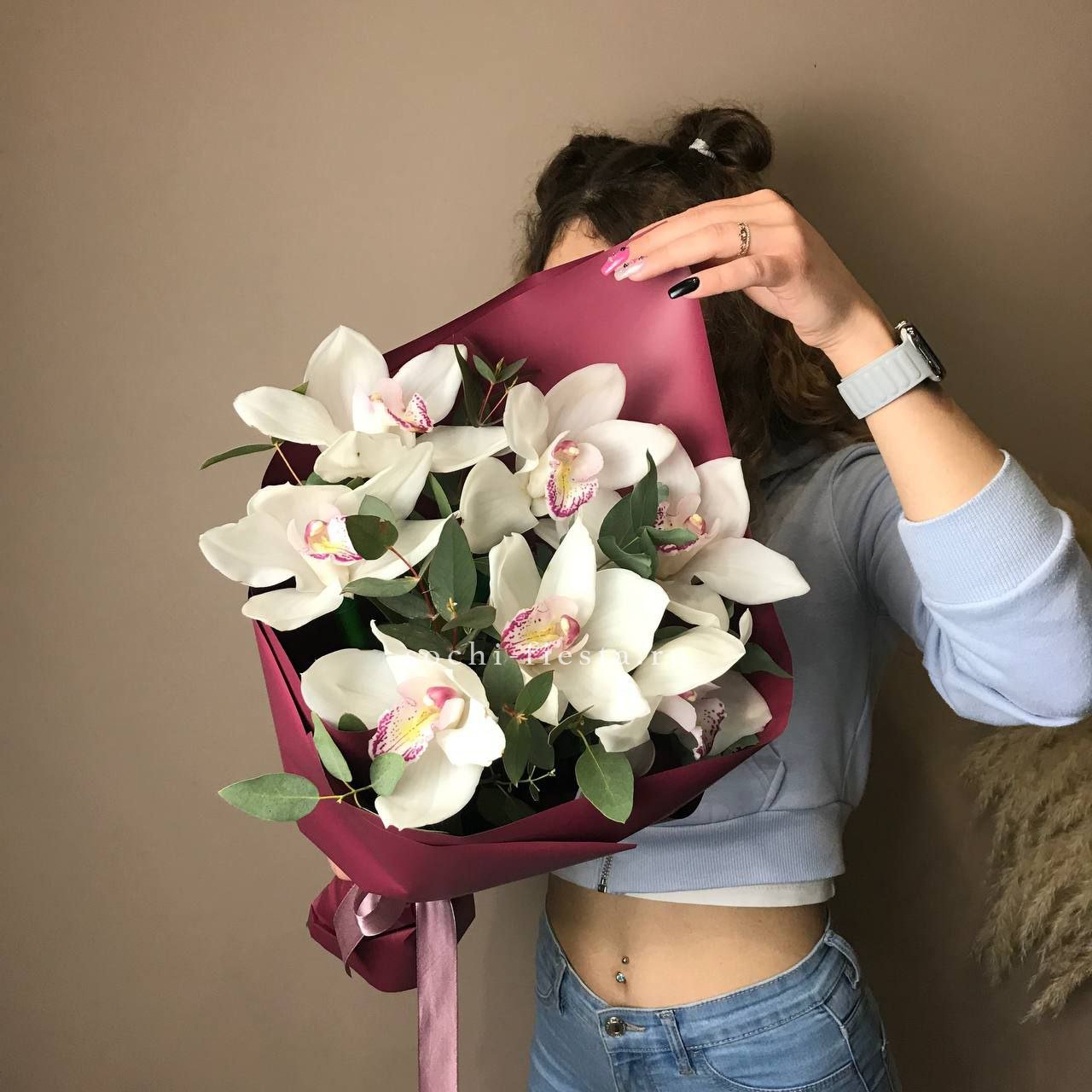
A moth orchid grows as an epiphyte in the wild, rooted on trees rather than in soil, which is why it ships in bark inside a clear pot rather than potting compost. The roots want light and air through the pot wall, not darkness.
A new flower spike forms when the daytime temperature stays under 27 °C, and Paris sits below that mark for most of the year: the July average high is 25.7 °C, April runs at 16.6 °C and October at 16.5 °C. The monthly averages stay below the budding threshold. Once open, the flowers usually hold for two to three months on the stem.
When the last flower drops, the spike is cut above the second node from the base. A side shoot often grows from that node; if nothing appears after a few weeks, the spike is cut back to the base instead.

A south window in July, a heated flat in January: placing the pot
The July average is a mean, not a ceiling: one July day reached 42.6 °C, and one summer the city sat above 30 °C for weeks with little drop overnight. On days like that, direct summer sun through glass scorches the leaves, so a south-facing sill wants a sheer curtain or a step back from the glass once the sun gets strong.
The orchid is comfortable by day between 19 and 30 °C and by night between 16 and 19 °C, a band most Paris rooms hold without help for much of the year. January is the exception: the average outdoor high is only 7.6 °C and the low 3.2 °C, so through the coldest months the plant depends on the flat's heating to stay in range. That heating also dries the air, which is worth watching once the radiators come on.
Watering follows the season rather than the calendar: roughly once a week while the plant is growing, less often once growth slows in winter. Any water left in the saucer is tipped away, and the leaves and the central growing point are kept dry when watering.
Florariums and cacti: the pots that ask least of a Paris sill
Succulents and cacti come from hot places with little rain, and a succulent leaf can be up to nine-tenths water by weight, stored for the dry spells between waterings. That storage is what lets them sit for weeks on a sill with barely a glance.
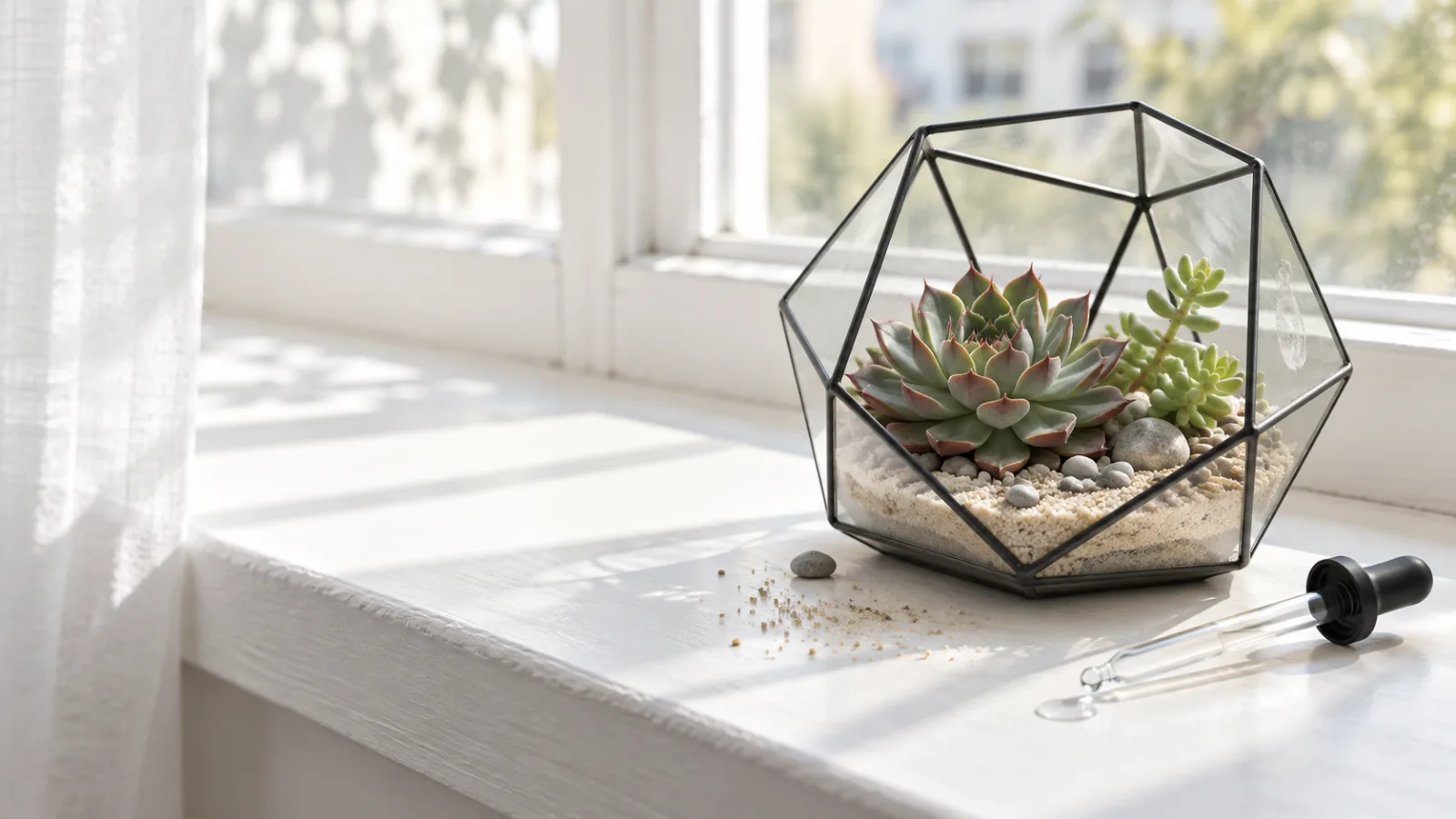
An open glass florarium, rather than a sealed one, suits both succulents and cacti: the shape lets moisture escape instead of collecting, and watering stays light, a few pumps from a spray bottle rather than a full pour. A cactus kept in an ordinary pot wants the same dry routine.
The glass shape is one way to choose between pieces: the Cube Florarium with Haworthia Succulent sits square and upright, while the Truncated Cube Florarium with Stone Rose Succulent angles one face open to the plant inside. Stone rose is the trade name used for that rosette-shaped succulent on the shelf, not a species.
Plant delivery in Paris: an orchid on its own or with roses
An orchid can travel alone in a box, in a hat box, in a jute planter, or paired with roses or with sweets for a fuller gift; the Orchid Box is one option built around the plant itself. The wider run of potted plants, grouped by type, is worth a look before settling on one pot over another.
The florist photographs the finished order before the courier leaves, the card is free, and a phone number for the recipient is enough to get it moving. Most orders are handed over on the day they are placed, though the exact window shows on each product's own page. Full zones and timing sit under how delivery works in Paris.
One address needs checking first: AP-HP hospitals keep flowers and plants out of intensive care, transplant wards and units for very young children, because of the microbes that water and soil carry; what wards, hotels and offices need covers that in full.
Starting from the flower rather than the format narrows things fastest: flowering plants for something already in bloom, florariums for a sill that gets little attention, and cacti in pots for the same dry routine without the glass.


