




Tulips in Rio de Janeiro: a greenhouse spring and how to choose your bouquet
Dutch cut tulips in Rio de Janeiro run from December to May, because the bulbs are first given an artificial winter in the cold and then forced in greenhouses. The section here splits by colour, stem count and type, and colour is the easiest place to start.
When tulips are in season and how greenhouses stretch it
Tulips are spring bulbs, like daffodils and hyacinths, flowers of the northern hemisphere that bloom as the days lengthen. Dutch growers cut them from December to May. The bulbs first spend weeks in the cold, an artificial winter, and are then forced into bloom under glass — a spring flower reaching a vase months before its outdoor season. Each stem carries a single flower, so a bouquet of tulips in Rio de Janeiro reads as a mass flower — its weight and shape come from many identical heads rather than one showy bloom. Every bouquet here is put together to order, and the flowers are bought once the order is paid for.
Choosing a colour: one shade or a mix
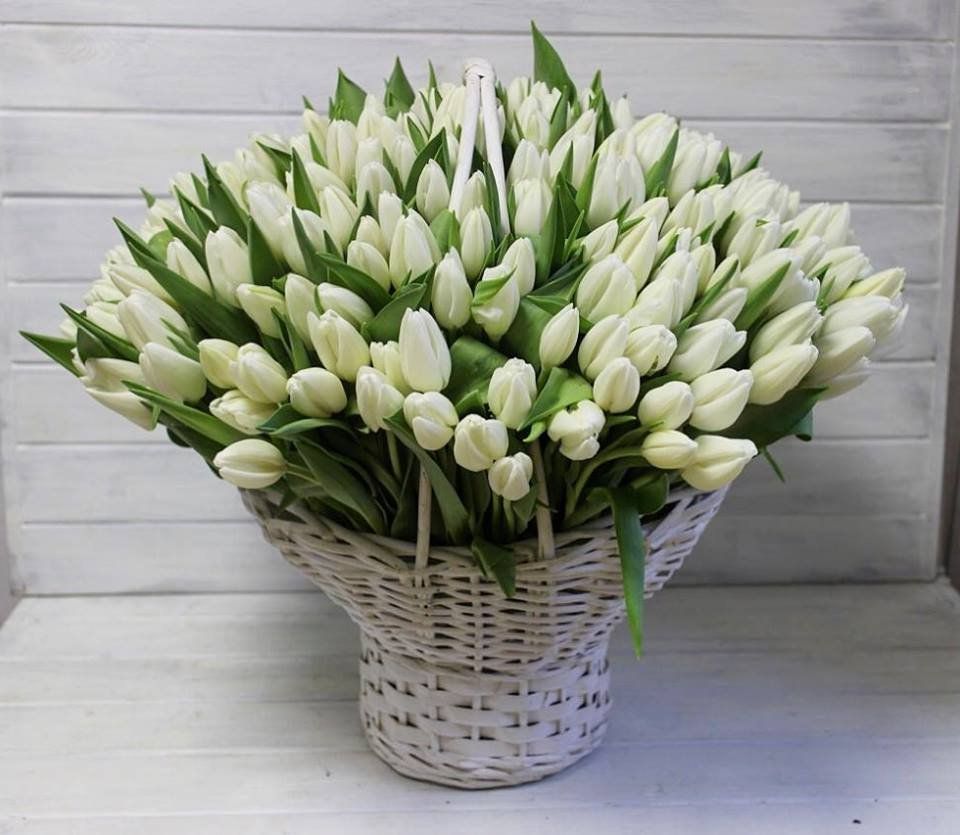
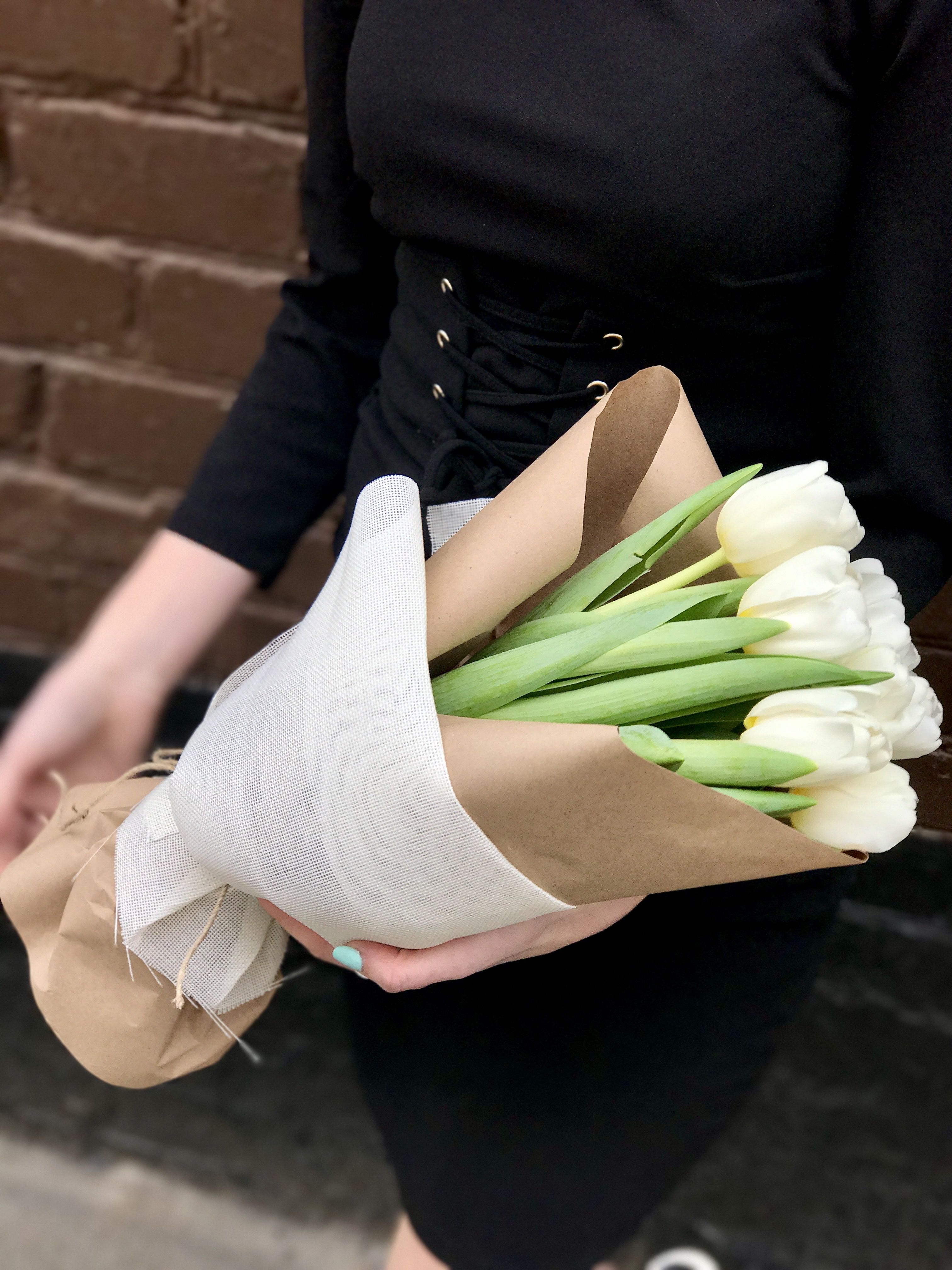
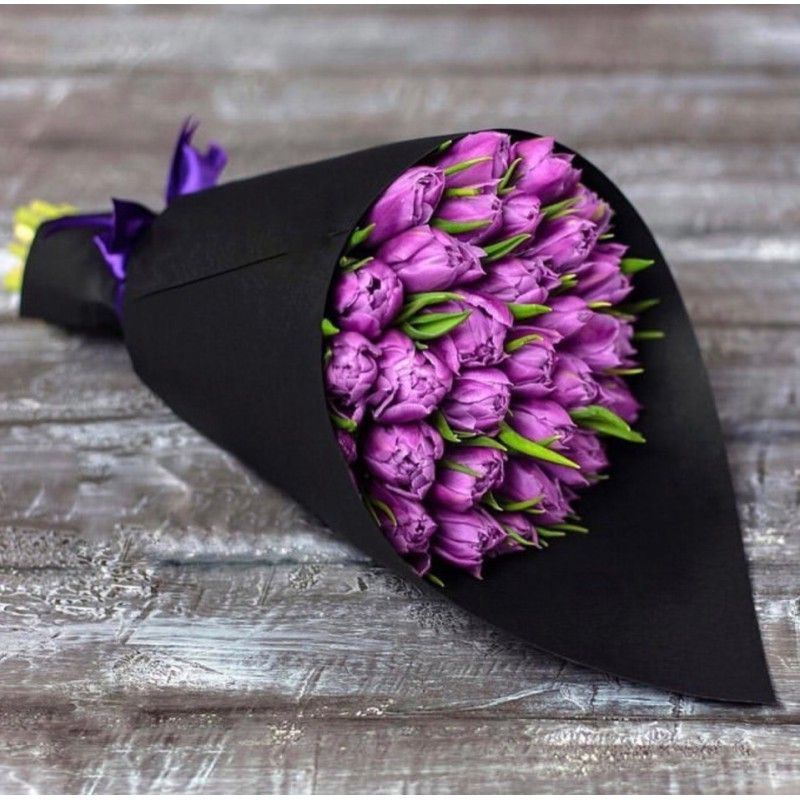
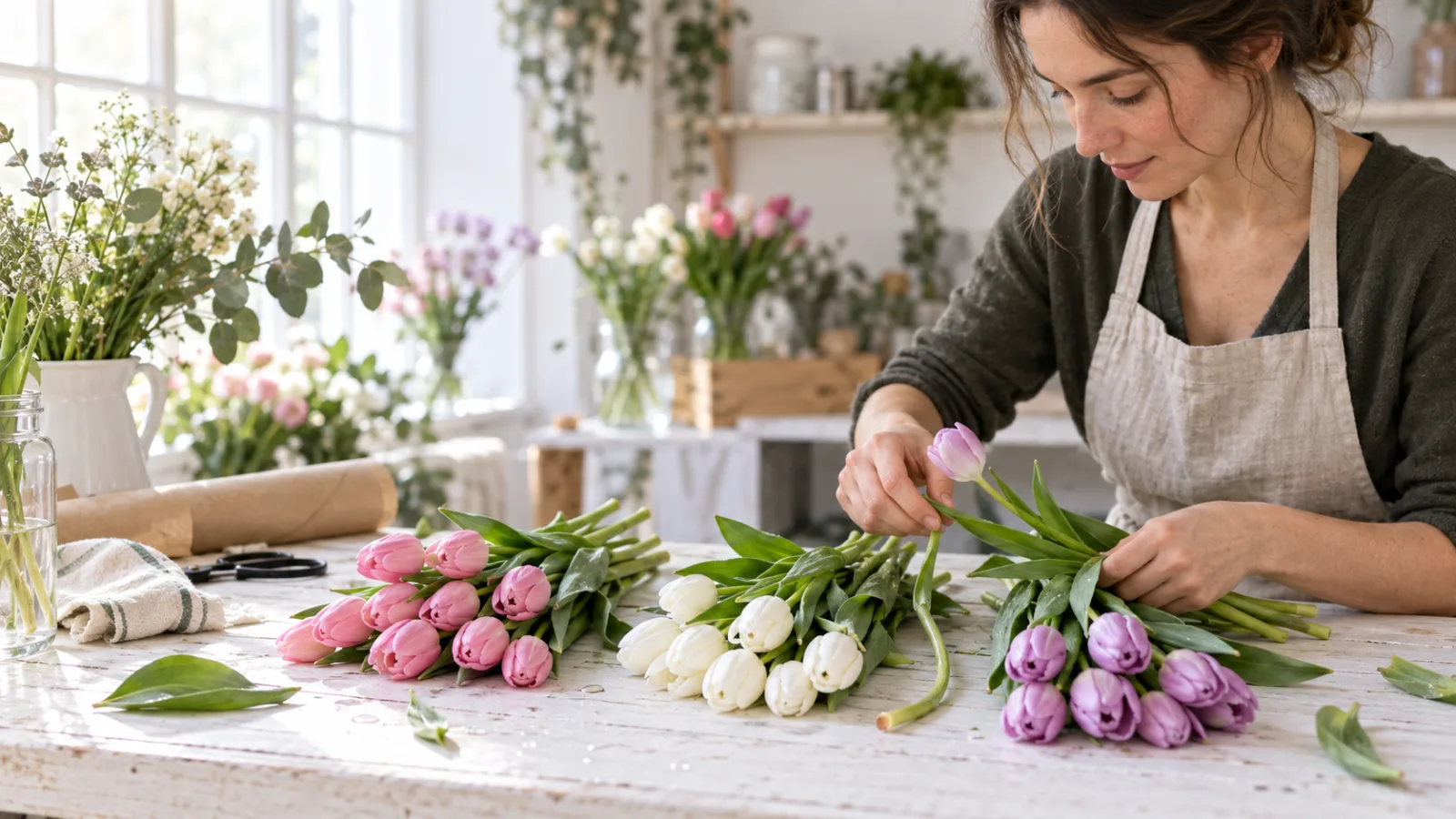
Colour is where the section is widest, and tulips sorted by colour covers pink, white, lilac, lavender, red, yellow and soft pink. A monochrome bouquet keeps to one colour and lets the shades within it do the work: nineteen pink stems or a hundred and one white ones read as calm and unbroken. An analogous scheme pairs neighbours on the colour wheel, lilac with lavender or pink with soft pink, and the result feels layered without clashing. A complementary pairing sets opposite colours side by side for sharper contrast. If the exact shade ordered is out of stock, the florist swaps in a flower close in both colour and price, and the substitution is visible on the photo sent before the bouquet leaves.
Stem count decides the scale of tulips in Rio de Janeiro. The smaller bouquets in the section start at nine stems. A dense field of small-flowered tulips needs roughly two dozen stems before the heads read as a solid block rather than a handful, and twenty-five is one example among the bouquets by number of stems. Every count named in the section is odd. In Russia, Ukraine, Belarus and most of the former Soviet Union an odd number is what you give the living, while an even number is kept for remembrance. Outside that custom, a dozen is the ordinary choice. A basket holds no vase: woven reeds don't hold water, so the basket is lined with an insert and the stems sit in wet floral foam, watered daily over its whole surface. For something beyond a single colour, a duo pairs tulips with waxflower, the small Australian Chamelaucium bloom, and the tulips by type subsection groups the section's other formats.
Looking after tulips in a vase
Tulips want cold water and a vase filled to about a third: in deep, warm water the stems soften and bend. A cut tulip keeps growing after it leaves the field, by a centimetre or two a day, and leans towards the light. Turning the vase once a day keeps the bouquet even, though the silhouette still shifts over a day or two regardless. Daffodils are worth keeping apart: they release a sap that yellows tulips and shortens their time in the water. If daffodils are in the house, stand them alone for about a day before adding anything else. The rest of the routine is the usual one: an angled cut, leaves stripped below the waterline, and the vase kept away from radiators, direct sun and a bowl of fruit.

Before the courier sets off, the finished bouquet is photographed, and the order can still be changed up to that point: the colour, the count, the card text. Most orders are delivered the same day they're placed, and the exact timing for a given bouquet shows on its page. The card that goes with it costs nothing and can be left unsigned; the courier is told only the recipient's name and address, nothing about who sent it or why. Without an address, the recipient's phone number is enough to arrange the handover. Payment is by Visa or Mastercard, and the total in the cart is final. Zones and timing details are on the delivery page.
Choosing tulips in Rio de Janeiro is easiest by colour first: start with a colour sorts the widest part of the section, and a stem count is easy to settle on once the palette is picked.