




Plants in Riyadh: a gift with roots and how to choose one
In 1825 the botanist Carl Ludwig Blume described a new genus of orchid and, taking its flowers for a cluster of moths, named it Phalaenopsis, from the Greek phalaina, "moth". Two centuries later the moth orchid is one of the main plants in this section, and it can look like a bouquet while still needing a plant's care. Plants in Riyadh are chosen by a different rule than cut flowers: not by how the gift looks on the day, but by which window it will stand on and who will water it.
Potted plant or bouquet: what changes when the gift has roots
A cut flower lives on the water in its stem and leaves on schedule: a rose lasts about a week, a chrysanthemum two or three. A plant has no schedule, but it has conditions, and the conditions belong to the recipient, so the section is easier to read from the person than from the occasion.
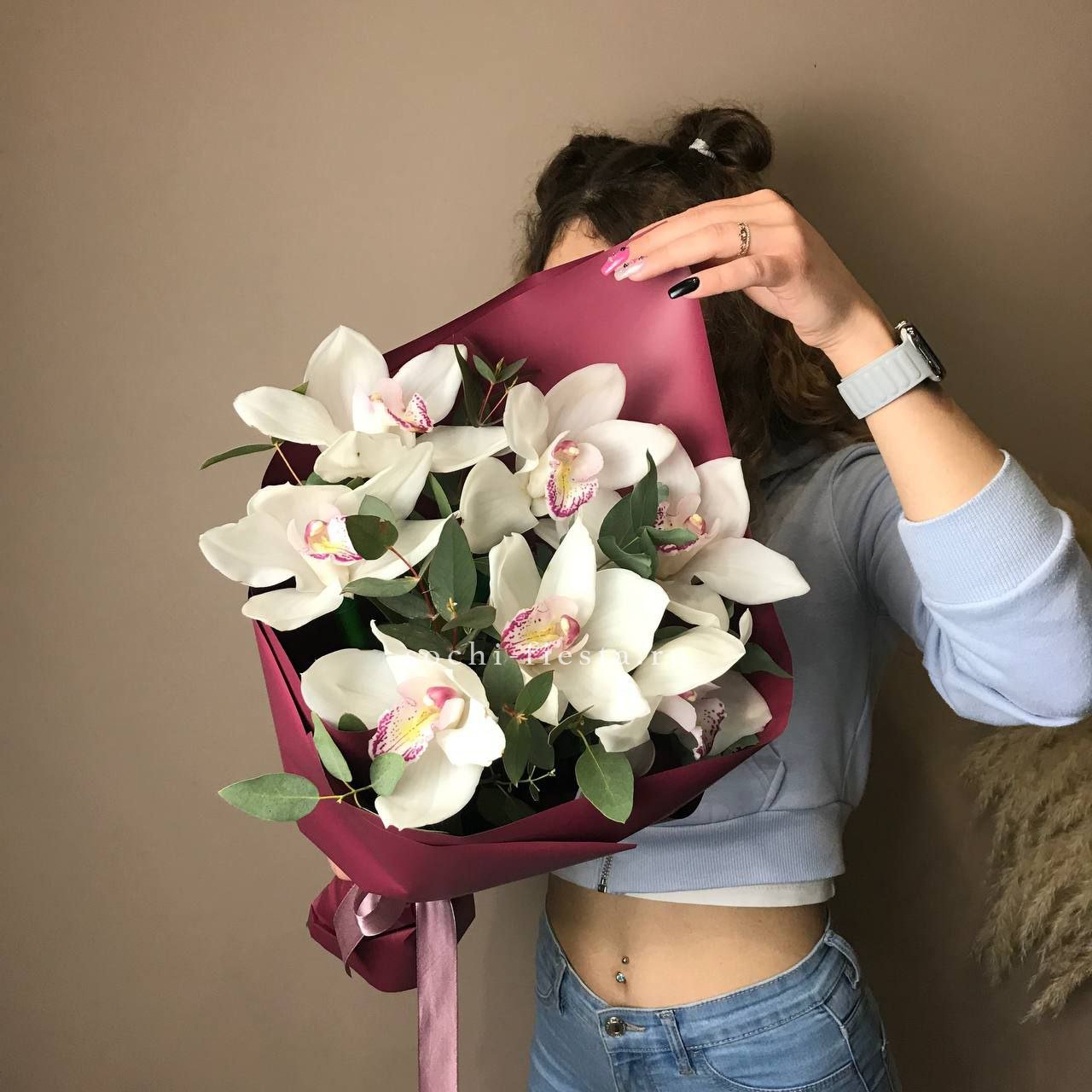
The section runs along three lines. Flowering plants are mostly orchids, plus a peace lily and an African violet. Cactus plants hold the succulents and the ZZ plant. Florariums are succulents planted in geometric glass. The orchid comes in a cachepot, in a box or in a hat box with lisianthus, and the product card shows which is a rooted plant and which is an arrangement for the evening.
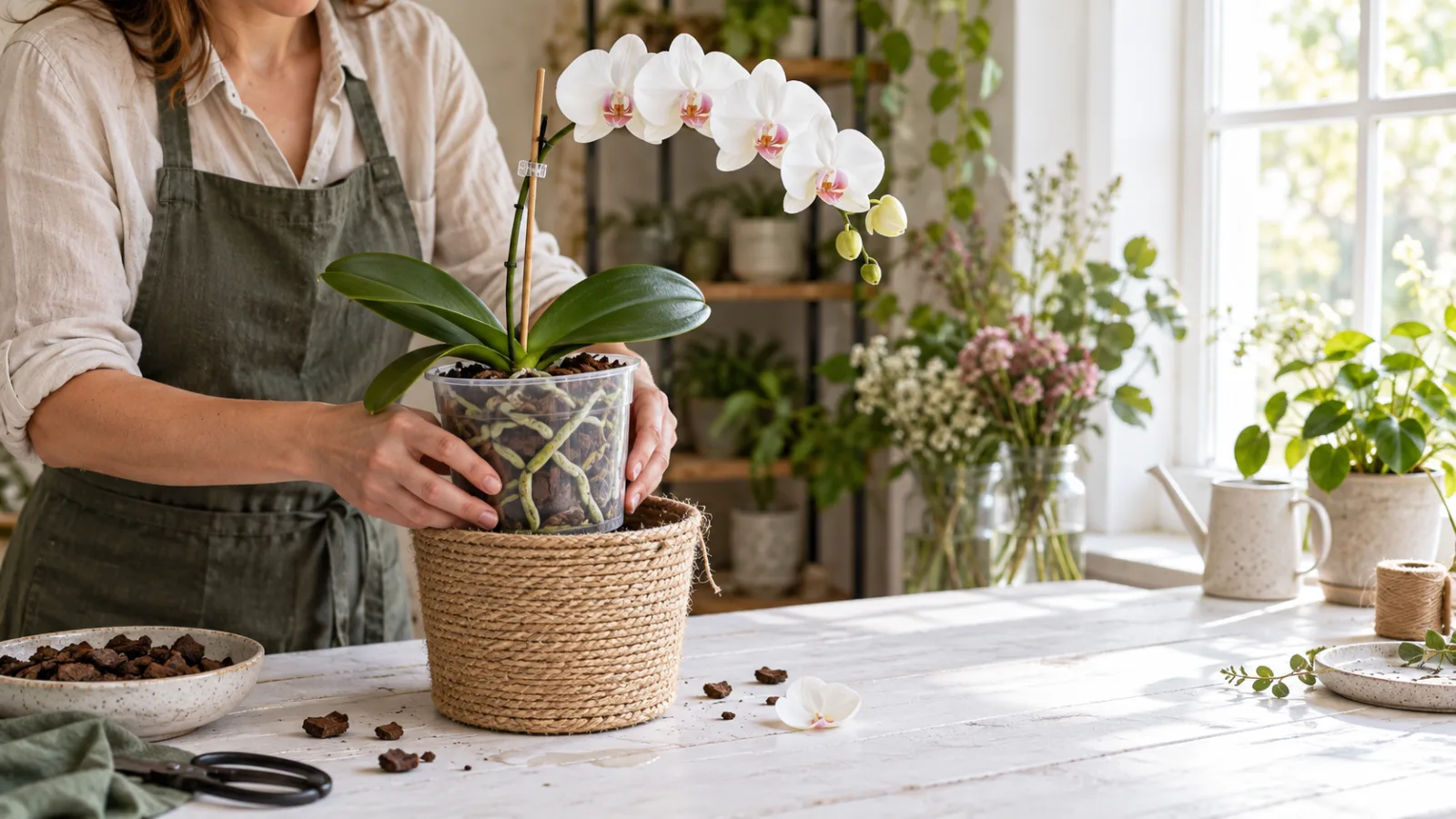
The moth orchid grows on trees in the forests between India and New Guinea, and its roots photosynthesise. That is why it comes in a clear pot of bark rather than soil: the roots need light, and the owner can see whether the bark is still damp. The flowers last two to three months, and a new spike is triggered when daytime temperatures fall below 27 °C.
A peace lily flowers more quietly. Its white "flower" is a spathe, a modified leaf wrapped around a spadix with the real, tiny flowers, and despite the name the plant is not a lily. It lives in shade and needs watering about once a week, so it suits a desk with a north window. The African violet is not a violet either: it comes from the Usambara Mountains in Tanzania, where Baron Walter von Saint Paul-Illaire collected seed in 1892. It is day-neutral, so it flowers for most of the year, and it does not forgive cold water on the leaves, which marks them.
Succulents in glass: why an open florarium wants less water
In 1829 the London physician Nathaniel Ward found a fern and a grass sprouting in a corked jar he kept for moth cocoons, and in 1833 his glazed cases carried live plants to Sydney and back. A sealed case recycles its moisture: it condenses on the glass and drips back down. The florariums here are the opposite kind, open glass shapes, a cube, a droplet, an icosahedron, with one succulent inside: a stone rose, a sedum, a haworthia or a Crassula "Hobbit". Succulents store water in their leaves and come from places where rain is rare, so a humid sealed dome is the wrong place for them.
"Stone rose" is a trade name for rosette-forming succulents, houseleeks among them, and the houseleek's Latin name, Sempervivum, means "always living". Charlemagne ordered it grown on roofs in his Capitulare de villis, to keep lightning off the house as the Romans believed. Each rosette flowers once, then dies and leaves a ring of offsets. The same plants are sold without glass in the succulents subsection, next to the ZZ plant, which can go four months without watering in a dim room.

Plants in Riyadh go where a bouquet would not stay: a housewarming, a new office, a colleague's desk. On a desk a pot needs no vase and drops nothing, and a peace lily or a ZZ plant puts up with a north window. An office order needs the company name and the floor; with access control, the plant goes through reception and the sender is told who took it. Hotels are the exception: the guest leaves and the pot stays, so flowers in a box are the better gift there.
The peace lily and the ZZ plant, like many aroids, contain calcium oxalate, and a chewed leaf burns the mouth. For people and pets that is mild, nothing like true lilies, which are lethal to cats. Still, a home with a cat or a small child is better served by an orchid, an African violet or a florarium. When the recipient is known better than the occasion, sorting by plant type is the quicker way in.
Plant delivery in Riyadh: ordering, the photo and the first weeks
Plant delivery in Riyadh works like any other JFLOO order: the city centre is free, and other districts have a fixed price for their zone, added before payment. Most orders are handed over on the day they are placed, an express order is possible if the plant is in stock with the florist, and the product card shows the delivery time. Before the courier leaves, the florist sends a photo of the plant in its cachepot. A phone number is enough when the address is unknown, and payment is by Visa or Mastercard, with the sum in the basket final.
The first weeks are the plant getting used to a new window, and a few habits help it settle:
- water a moth orchid about once a week, less in winter, and never leave the pot standing in water: empty the saucer and keep water off the leaves and the crown;
- when the flowers drop, cut the spike just above the second node, where a side shoot often forms; if none appears, cut it at the base;
- water succulents and florariums only once the substrate has dried out;
- water an African violet at the soil, not over the leaves;
- keep every plant away from radiators and an orchid away from direct summer sun.
Choosing by recipient is the shortest route: orchids for someone who likes looking after things, succulents and florariums for someone who waters rarely, neither the peace lily nor the ZZ plant for a home with a cat. Zones and timing are on the Delivery page, and a message to the florist with the person and the budget brings back options with photos and prices before anything is paid.