



720x720_q85.jpg?v=1787132831)


720x720_q85.jpg?v=1787132831)
720x720_q85.jpg?v=1787132831)
720x720_q85.jpg?v=1787131347)

720x720_q85.jpg?v=1787131348)
720x720_q85.jpg?v=1787132831)


Peonies with delivery in Santiago: varieties, the local southern season, and the cut stage
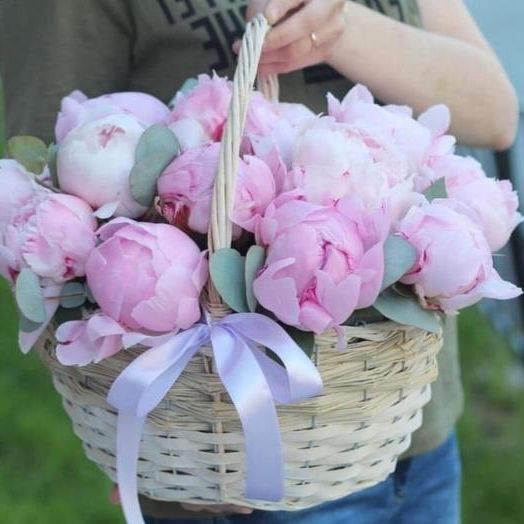
The peony is a flower that needs no explanation. A full, globe-shaped bud, dense layers of petals, a light honey scent — that's enough for a bouquet to speak without a label. Santiago knows how to value the gesture: roses come in all year round, while the peony is chosen when the occasion truly matters.
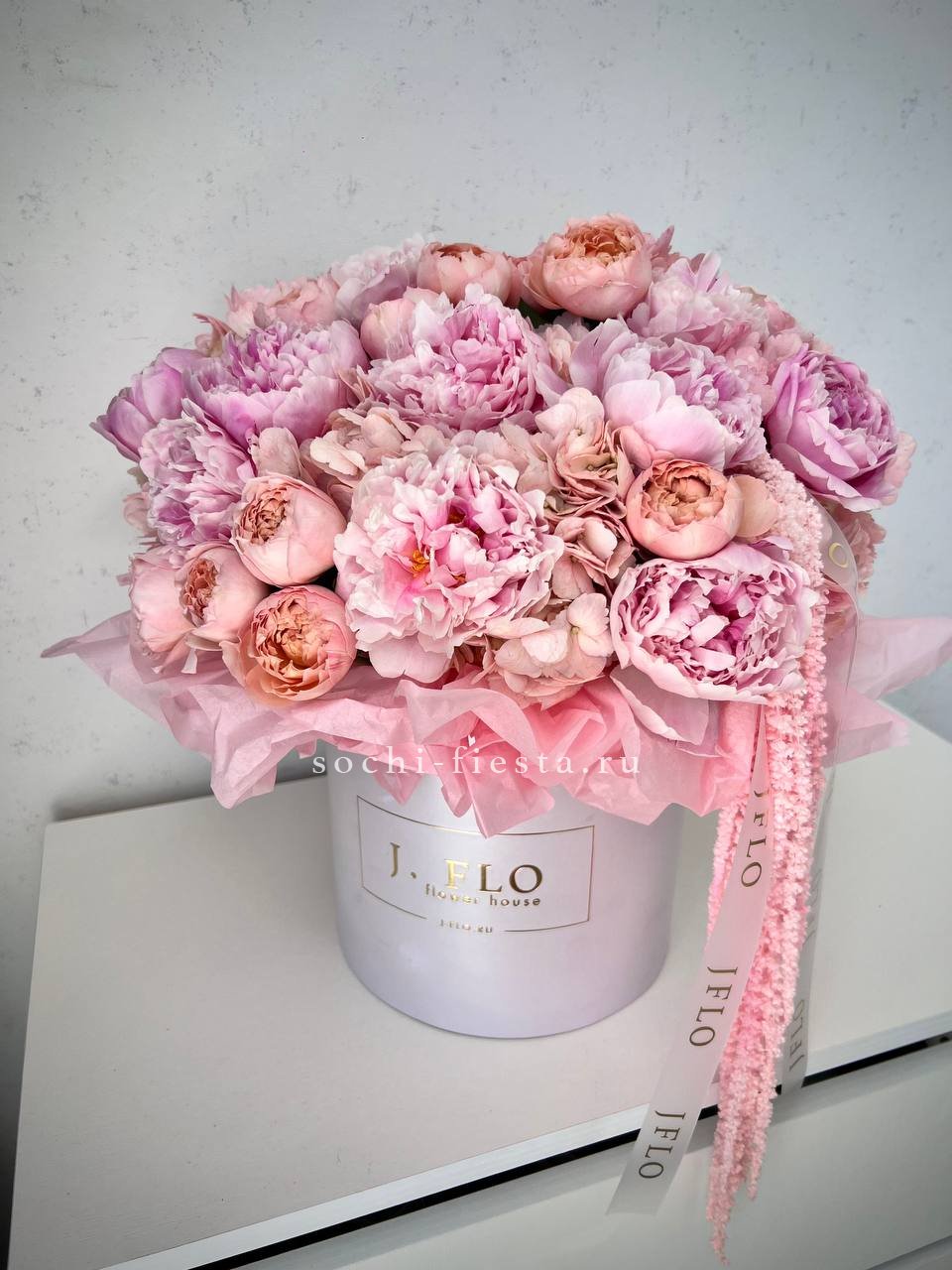
Chile is one of the few countries in the region that genuinely grows the peony. In the south of the country — the regions of Araucanía, Los Ríos, and Los Lagos — cool winters give the peony the cold it needs, and from there a local cut reaches the capital during the southern season, roughly from November to January. The rest of the year the category is covered by imports from the Netherlands and Europe. It includes single-variety bouquets of 9 to 50 stems, mixed arrangements with roses, lisianthus, and eucalyptus, and hatboxes for weddings and corporate orders.

Main varieties in the catalogue
Each variety solves its own task — from a classic romantic bouquet to a complex wedding arrangement. They differ in bud shape, colour range, scent, and vase life.
- Sarah Bernhardt — a 1906 classic, a pale-pink double bud up to 18 cm, honey scent. A universal choice for a wedding or an anniversary.
- Karl Rosenfield — a dark-red, dense peony. Suited to a dramatic wine palette.
- Festiva Maxima — white with a crimson "drop" at the centre. The most photogenic white peony, a classic of wedding floristry.
- Coral Charm — shifts from coral-peach to creamy-yellow as it opens. One of the most fashionable varieties of recent years.
- Duchesse de Nemours — soft white with a creamy centre, a light vanilla scent, a romantic look.
- Itoh hybrids (Bartzella, Cora Louise) — a cross between herbaceous and tree peony, blooming longer and larger than the usual kinds.
The cut stage and why it matters
The main rule when buying peonies is the "marshmallow" stage. That's a bud showing colour but still soft to the touch. If the peony springs back like a marshmallow when squeezed, it will open in 1–2 days and last 7–9 days. If the bud is hard and green, it may not open at all. If it's already fully open, it will last 2–3 days at most.
Every batch passes a florist's hand check against this criterion. Only "marshmallow" buds of the right firmness go into shipment — so the recipient sees the full blooming cycle, not the final fading stage. If you need open peonies for a specific date, tell us when you order and we'll pick a batch with the right head start.
Two seasons and occasions
The peony comes to Santiago in two waves. The first is local, from the southern hemisphere: from November to January the Chilean cut from the south of the country arrives — the freshest and most affordable. The second is the northern hemisphere, roughly May to June, when the main cut flies in from the Netherlands and Europe. In between there's almost no peony, and that's normal for a seasonal flower.
The local southern wave lines up nicely with spring–summer occasions and the wedding season. The northern import in May falls on Día de la Madre — the second Sunday of May, the country's main floral peak, when the peony is the first to sell out. San Valentín on 14 February catches the tail of the local season, so the peony is still around for it, but it's worth ordering well ahead. Mixed bouquets of peonies and garden-style roses form a class of their own: the two flowers are close in shape and complement each other in palette and vase life.
"The peony doesn't forgive haste. If you want to impress, order 3–4 days ahead and let the bud open in the recipient's room. We're lucky in Santiago — we have our own southern season, when the peony is local and fresh. But it's still a flower of short windows: a closed bud on time matters more than a pretty display."
— Camila Fuentes, florist with 12 years of experience

Delivery specifics
Santiago's climate rather favours the peony, but with its own traps. The local season falls in the valley's warm, dry summer (December–March), +28…+33°C — in the heat a delicate bud lasts less, so we move the summer batch cold and keep it out of the sun. Winter (June–August) is cool, +3…+15°C, with occasional rain and basin smog — dry air and dust are the main concern here. We handle delivery in Santiago carefully, keeping the cold from warehouse to door.
We cover the key districts: Las Condes, Vitacura, Providencia, Lo Barnechea, Ñuñoa, La Reina, Santiago Centro, Macul, Maipú, La Florida, Peñalolén, and San Miguel. Prices in the catalogue are in Chilean pesos (CLP, $), paid by card online. The season is short, so for peak dates order 3–4 days ahead — the best buds go early.
Care at home
After delivery, refresh the cut at a 45° angle, remove all leaves below the waterline, and place the peonies in a tall vase with cool water. Change the water every 2 days. Don't keep them near fruit or a heater — ethylene and warmth halve a peony's life.
In Santiago's dry, hot climate the peony has one main enemy — summer warmth. At the height of the local season keep the bouquet in the coolest room, away from direct sun through the window, and don't let the water warm up. Fresh cool water and shade are all the peony needs in Santiago to open at its own pace and last longer.

