


Tulips with delivery in Seoul: varieties, Dutch supply, and spring the Seoul way
In spring Seoul warms noticeably to the tulip. After the long dry winter, this bright, graphic flower with its clean colour reads as the first sign of warmth — earlier than the cherry blossom. Korea loves the tulip enough to throw it its own festivals: the festival in Taean and the tulip fields at Everland draw hundreds of thousands of visitors, and many come to us for a bouquet right after such an outing. We built the catalogue with an eye on those who value a fresh spring flower all year round.
The category covers single-variety bouquets from 11 to 51 stems, mixed arrangements, and gift boxes with tulips and companion flowers — ranunculus, freesia, hypericum. Since the tulip in Korea is almost all imported, timing precision matters: we plan delivery to the date and keep the cold chain to the door.
Which varieties to choose
The tulips in our catalogue are of Dutch origin. We select varieties that combine stem strength, long vase life, and a clean colour — which matters especially after a flight across half the world and through Seoul's swings of weather.
- Strong Gold — golden-yellow, a classic tulip on a tall, even stem. Pairs well with white and greenish spring arrangements.
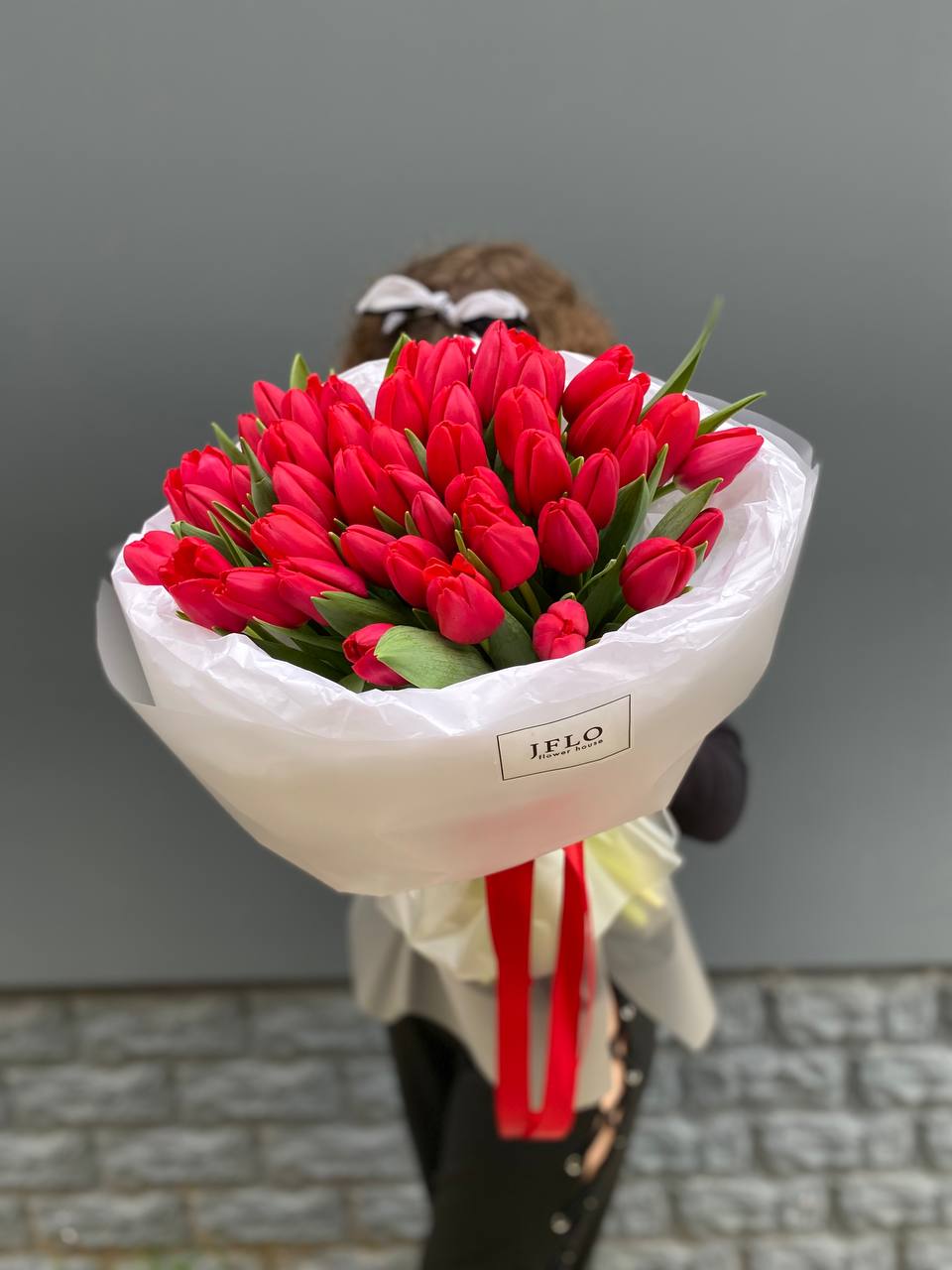
- Red Impression — deep red, large bud, very strong stem. Suited to big single-variety bouquets; red in Korea reads as the colour of joy.
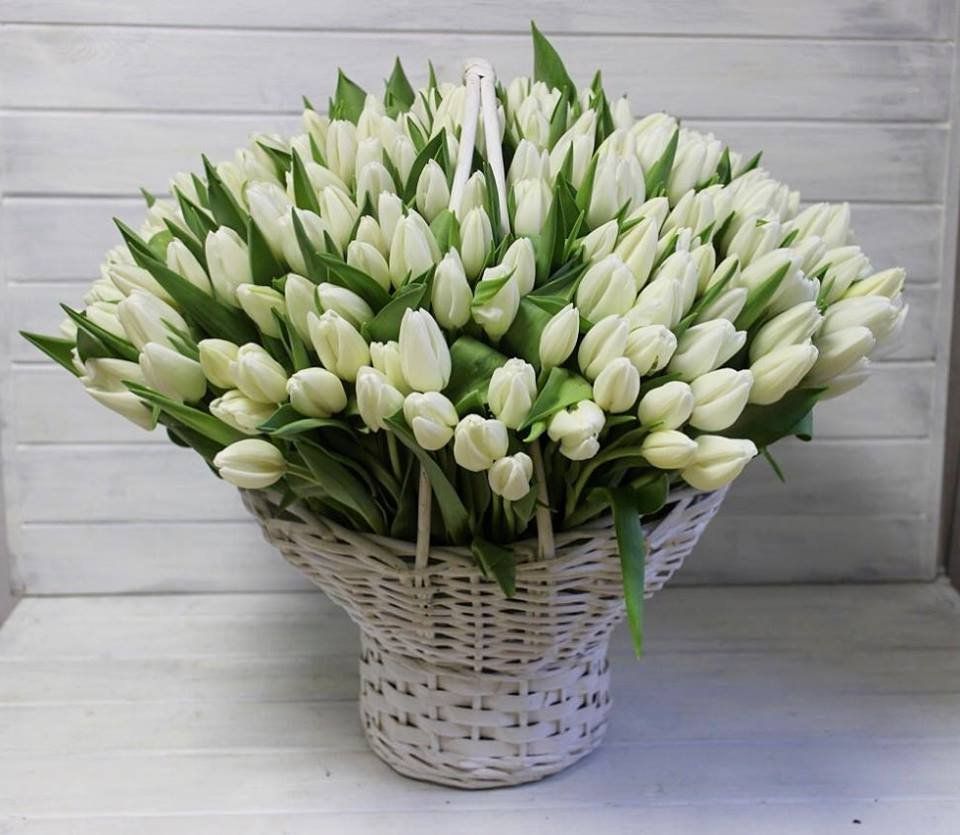
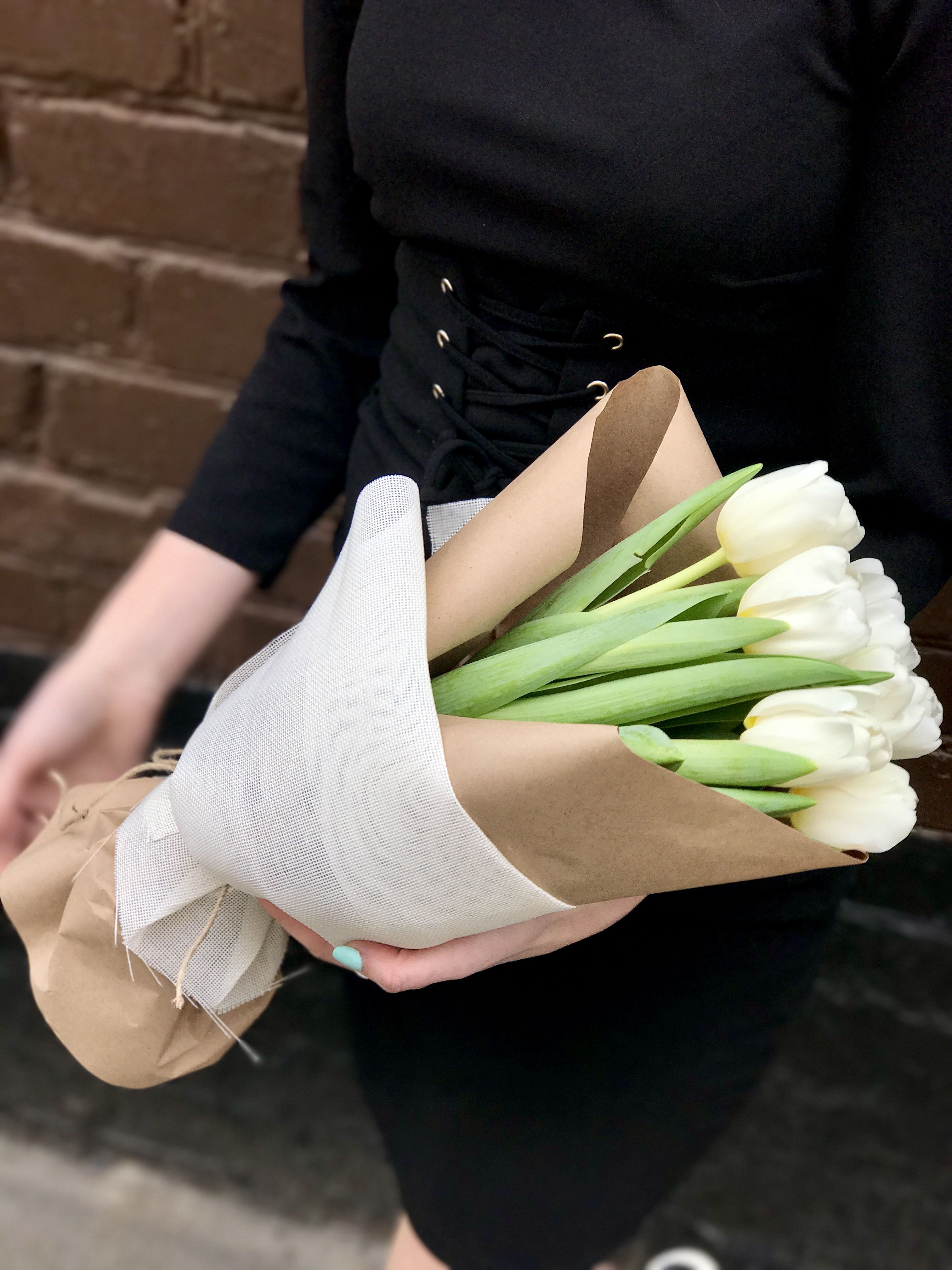
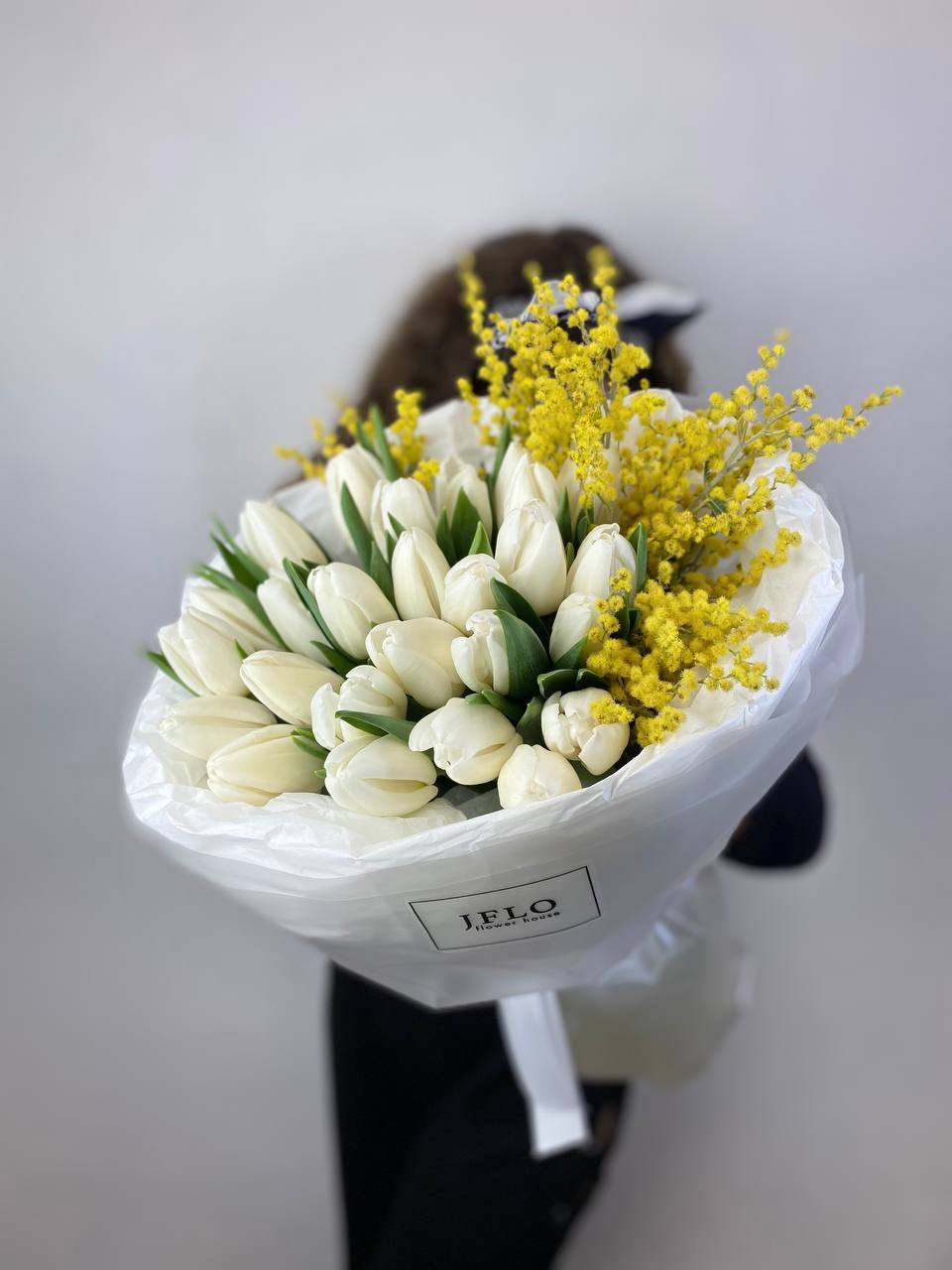
- White Dreamland — pure white, slightly matte. Neutral and elegant, good in mixed bouquets.
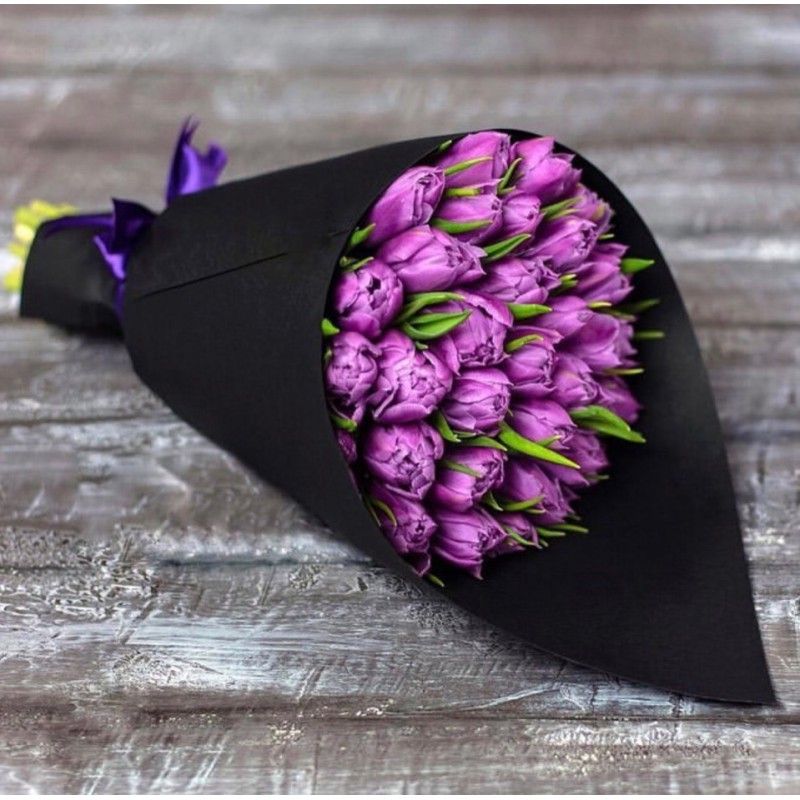
- Purple Flag — deep purple. For those after a colour beyond the red-yellow-white palette.
- Double Price — double purple-lilac, peony-like in form. A striking choice for modern interiors.
- Foxtrot — double soft pink, full bud. Good in romantic arrangements and gifts.
Occasions and seasonality
In Korea the tulip isn't tied to one "own" day the way 8 March is in Europe — it sells year-round as a stylish, slightly unusual gift. The clear spikes come with the spring festival season (March–April) and with the graduation and admission season in February, when a tulip bouquet is often given in place of roses.
Tulips are readily chosen to style offices, cafés, and restaurants in Gangnam, Yeouido, and Hongdae, for just-because gifts, and as part of mixed bouquets. They're given as single stems less often than roses — the formats of 15, 25, and 51 stems are more typical. Multi-coloured armfuls read more vividly than a single colour and work well in bright Korean interiors.
Freshness and logistics
Tulips arrive in Seoul by air from the Aalsmeer and Royal FloraHolland auctions through the cargo terminal at Incheon (ICN) — in closed buds and deep chill. Maturing happens at the recipient's end: this is standard practice that extends freshness. Until assembly we hold the flowers in cold storage at +2…+4°C.
A key point for Seoul's climate: in warmth tulips open markedly faster, while in winter the bud chills easily on the street. For an event order, take delivery the evening before, keep the bouquet in a cool room, and the buds will open right on cue — not early, not late.
"The tulip is the most temperature-sensitive flower in our work, and in Seoul that's a double challenge: it flies thousands of kilometres to reach us, and here it's frost in winter, heat in summer. The advice is simple — keep tulips cool, away from the heated ondol floor and direct sun. For large orders, take delivery the day before the event, not on the day. And remember: a tulip keeps growing in the vase."
— Lee Ji-hoon, florist, Seoul, 11 years in the trade
Delivery specifics in Seoul
Seoul has four distinct seasons. Spring (March–April) is the best time for the tulip: cool and sunny, the flower lasts longest. Summer (June–August) is hot and humid with the jangma rains — the tulip opens fast, so in summer we keep a strict cold chain. Winter (December–February) is dry and frosty, down to −10°C, and here the key is not to chill the bud in transit; we use insulated packaging.
We deliver tulips across all parts of Seoul: Gangnam, Seocho, Songpa, Jongno, Jung-gu, Yongsan, Mapo, Yeouido, Myeongdong, Hongdae, Itaewon, Insadong, Jamsil, Seongdong, Gangdong, Dongdaemun, Yeongdeungpo, Gangseo, Nowon, Eunpyeong. We take corporate orders for offices, restaurants, and hotels. Payment is in South Korean won (₩, KRW). For the spring season and graduations, book 3–5 days ahead.
Care at home
Tulips keep growing in the vase — a quirk of theirs: stems stretch 3–5 cm after going into water. Cut at a 45° angle, remove the lower leaves, and change the water every two days — tulips are very sensitive to bacteria. Cool water and a room at +18°C extend their life to 7–9 days.
Don't add anything extra to the water — aspirin and a copper coin work worse than clean cool water changed regularly. In winter keep tulips away from the heated ondol floor and the radiator: heat from below forces the bud open too fast. In summer keep the bouquet from direct sun and hot air by the window, and at night you can move it to the coolest room to slow the opening.

