
_633646720x720_q85.jpg?v=1787135615)
_8c5da0720x720_q85.jpg?v=1787130505)
_baafc1720x720_q85.jpg?v=1787135615)


720x720_q85.jpg?v=1787131158)


_076f68720x720_q85.jpg?v=1787130506)


Rose delivery in Shanghai: number symbolism, Yunnan freshness and the fight against humidity
Shanghai is called the Paris of the East: the plane-tree streets of the former French Concession, the Bund along the river and neon Lujiazui on the far bank. The city is European in its habits and Chinese at its core, and flowers here are read with a double eye. For some a rose is a Western declaration of love; for others, especially a red one, it is a sign of luck and prosperity. The recipient checks the freshness of the bud, the firmness of the stem and whether the colour fits the occasion. We build this category around exactly that twin taste.
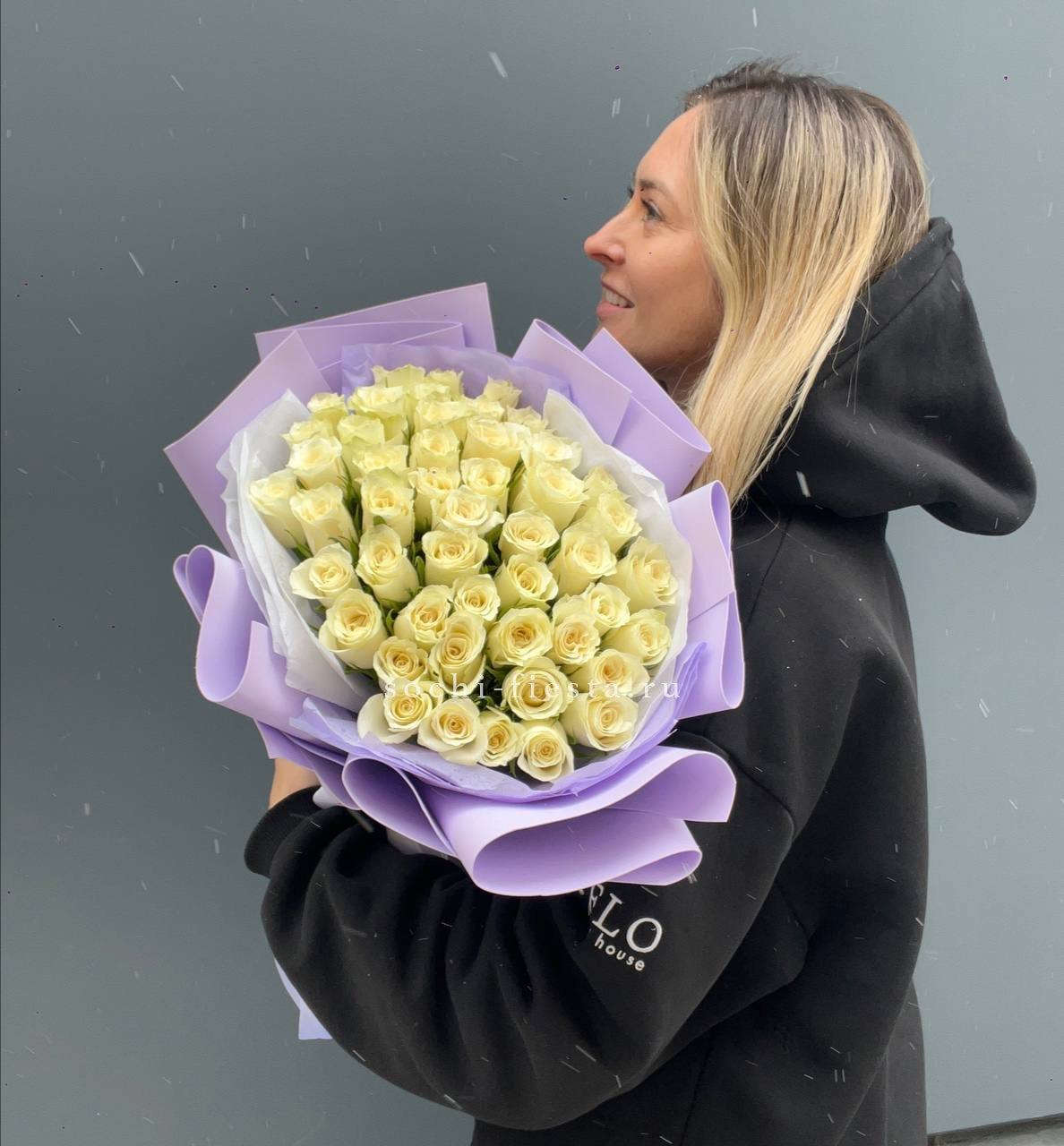
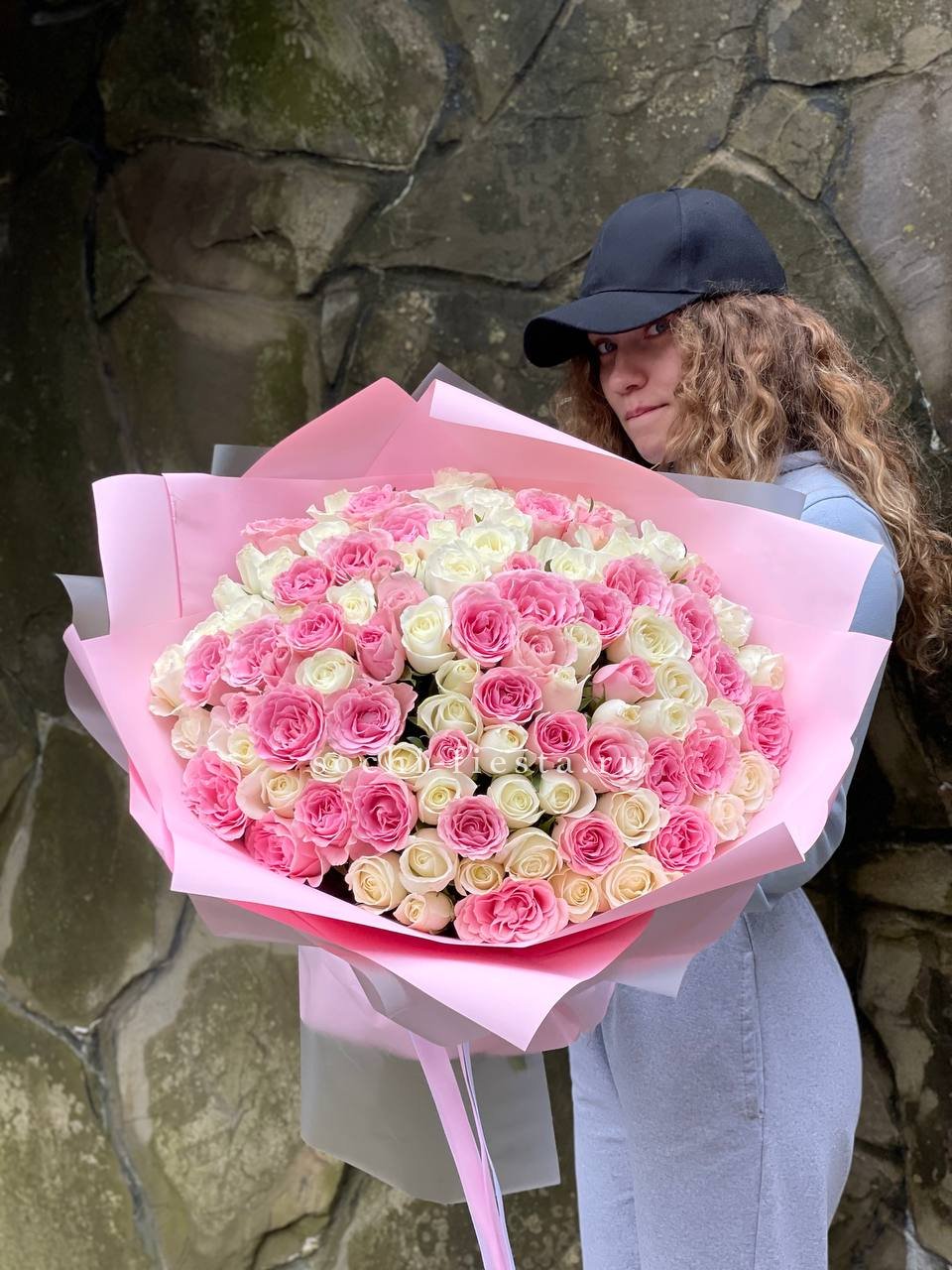
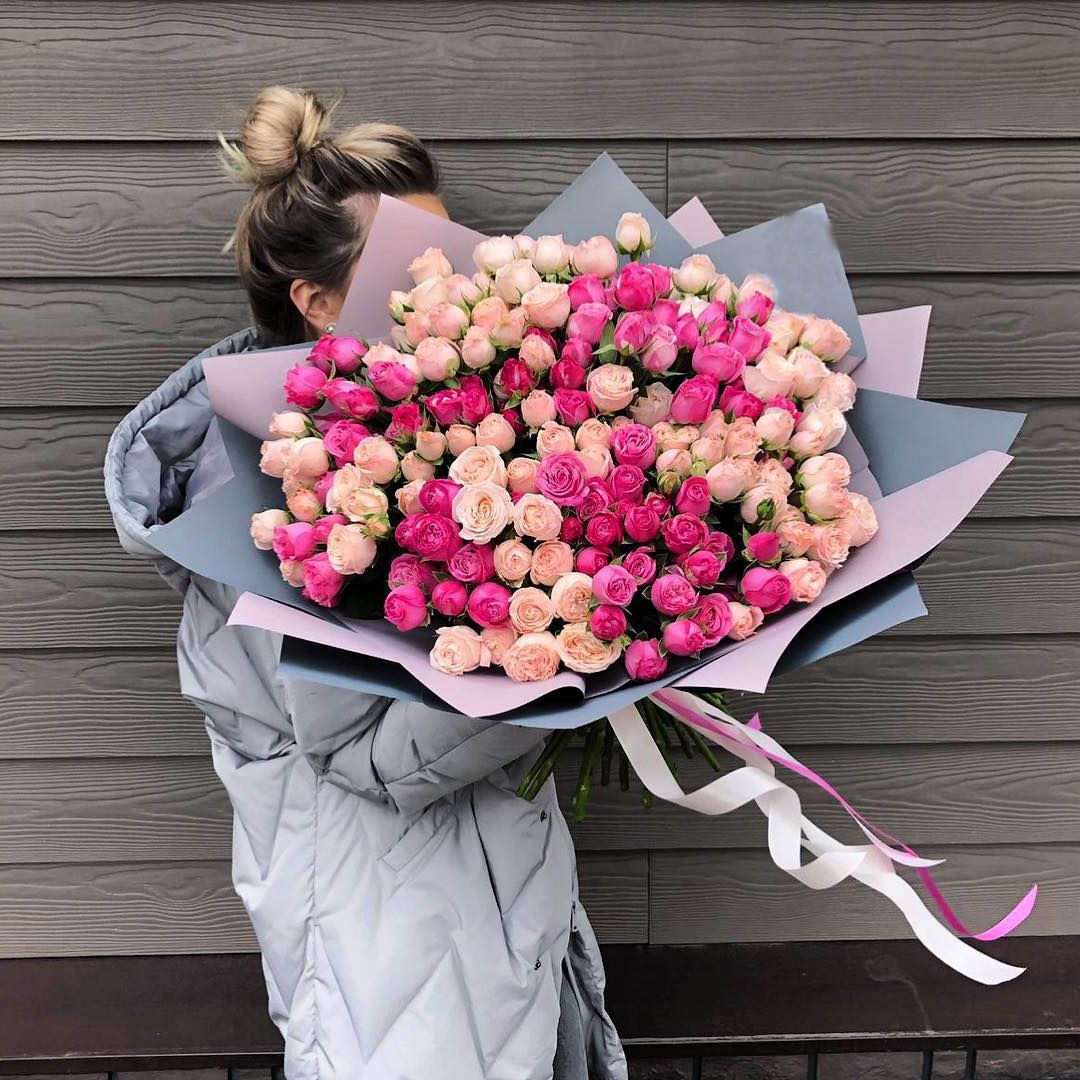
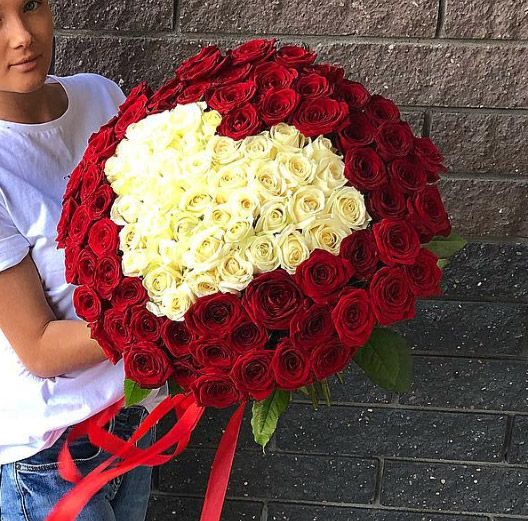
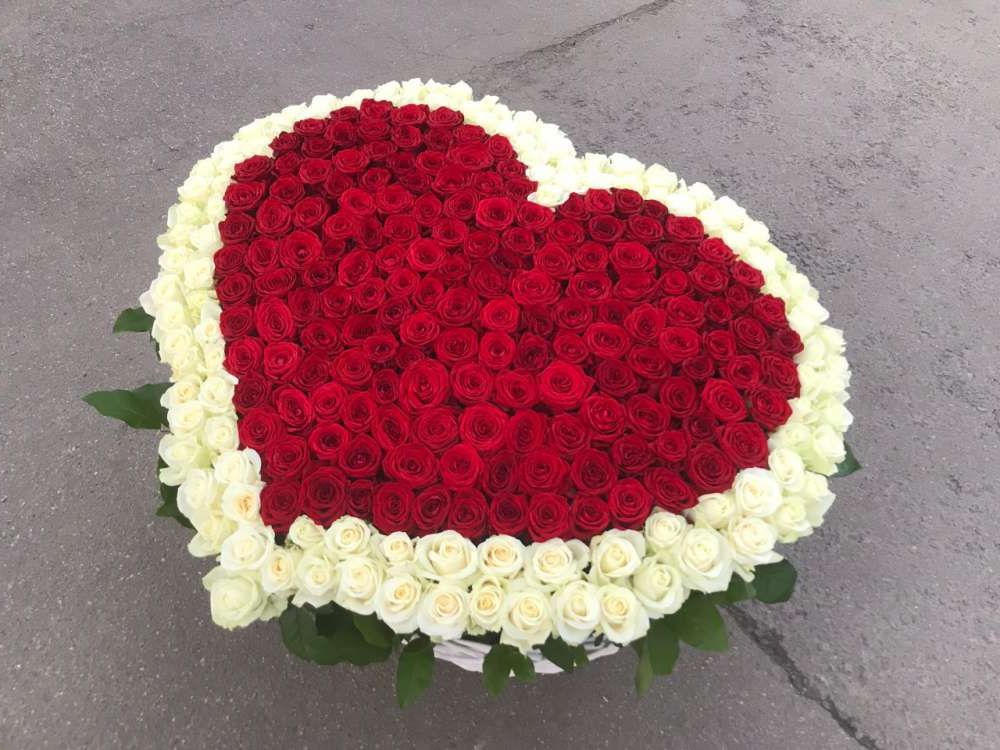
It covers single-variety bouquets, mixed compositions and single roses. Sizes run from an intimate nine stems to a grand 99 or 101. Offices in Lujiazui and on Nanjing Road and restaurants in Xintiandi and on the Bund tend to order hat boxes and larger arrangements, while a Shanghai business opening calls for a congratulatory flower basket.
Which varieties to choose
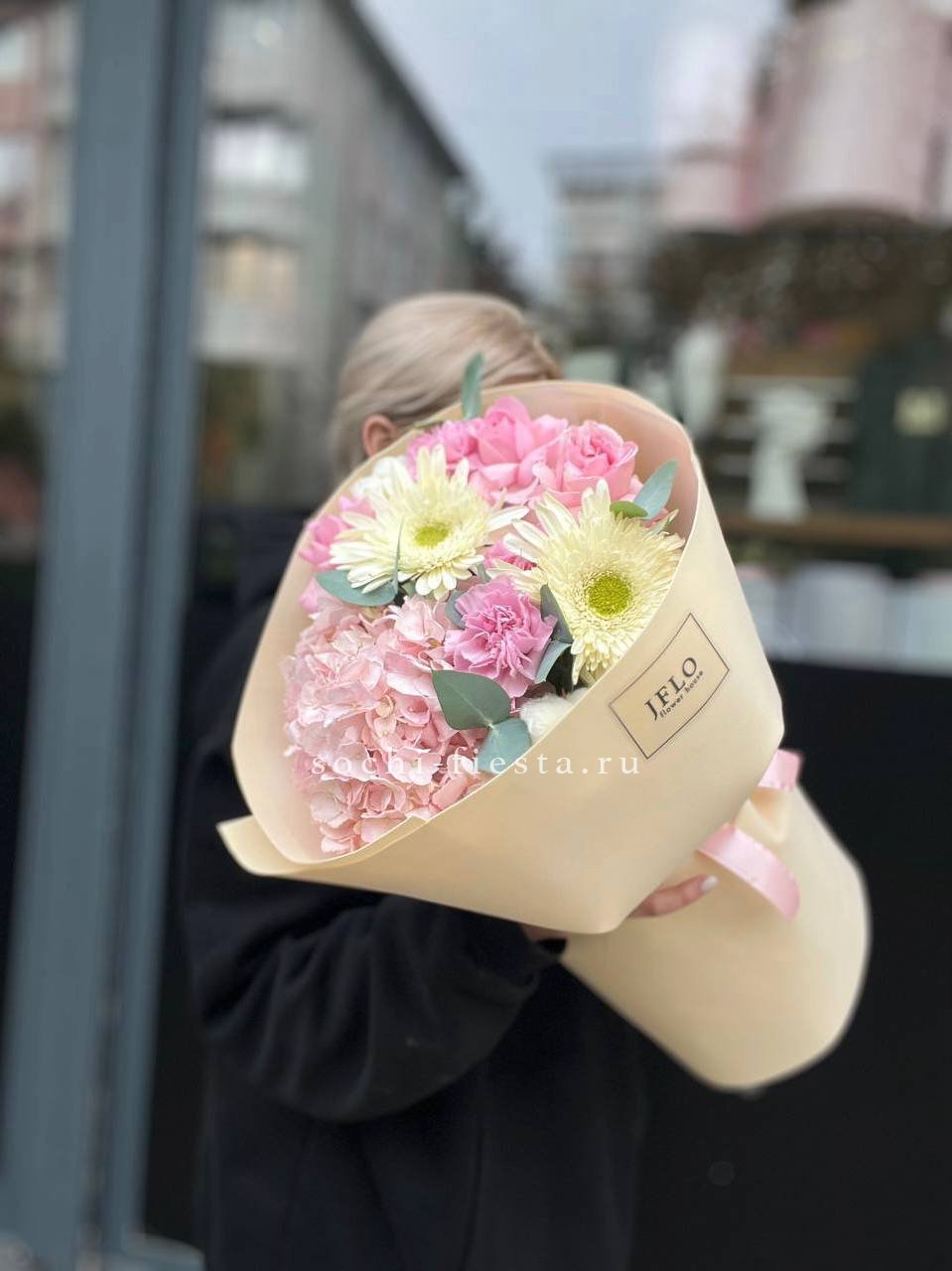
We work with four sources: Chinese roses from Yunnan, large-headed varieties from Ecuador, Dutch classics and David Austin garden roses. Each group answers its own occasion — from a loud gesture to a quiet sign of attention.
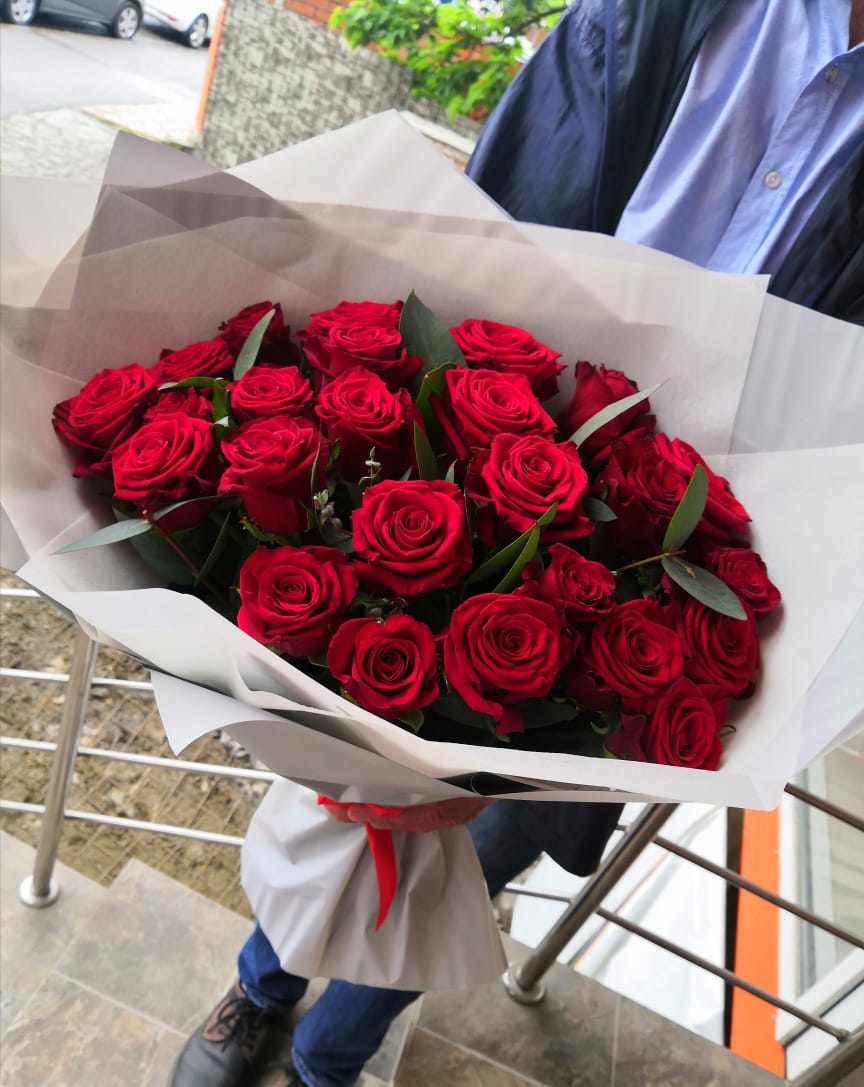
- Freedom — deep-red classic, 6–7 cm bud, 70–80 cm stem, up to 14 days in the vase. The benchmark for anniversaries and Valentine's Day.
- Yunnan red rose — a Chinese variety grown near Kunming. Arrives fast and fresh, wins on price and lasting power. For everyday bouquets.
- Avalanche+ — white, with a large firm bud. A neutral base for mixed work and weddings. But go carefully with white in China — see the note on colour below.
- Red Naomi — velvety dark red with a wine undertone. Photogenic and high-status, a regular at hotels and banquets.
- Juliet, Patience — David Austin garden roses: a cupped bud and a scent of myrrh and peach. For wedding work and a heartfelt personal gift.
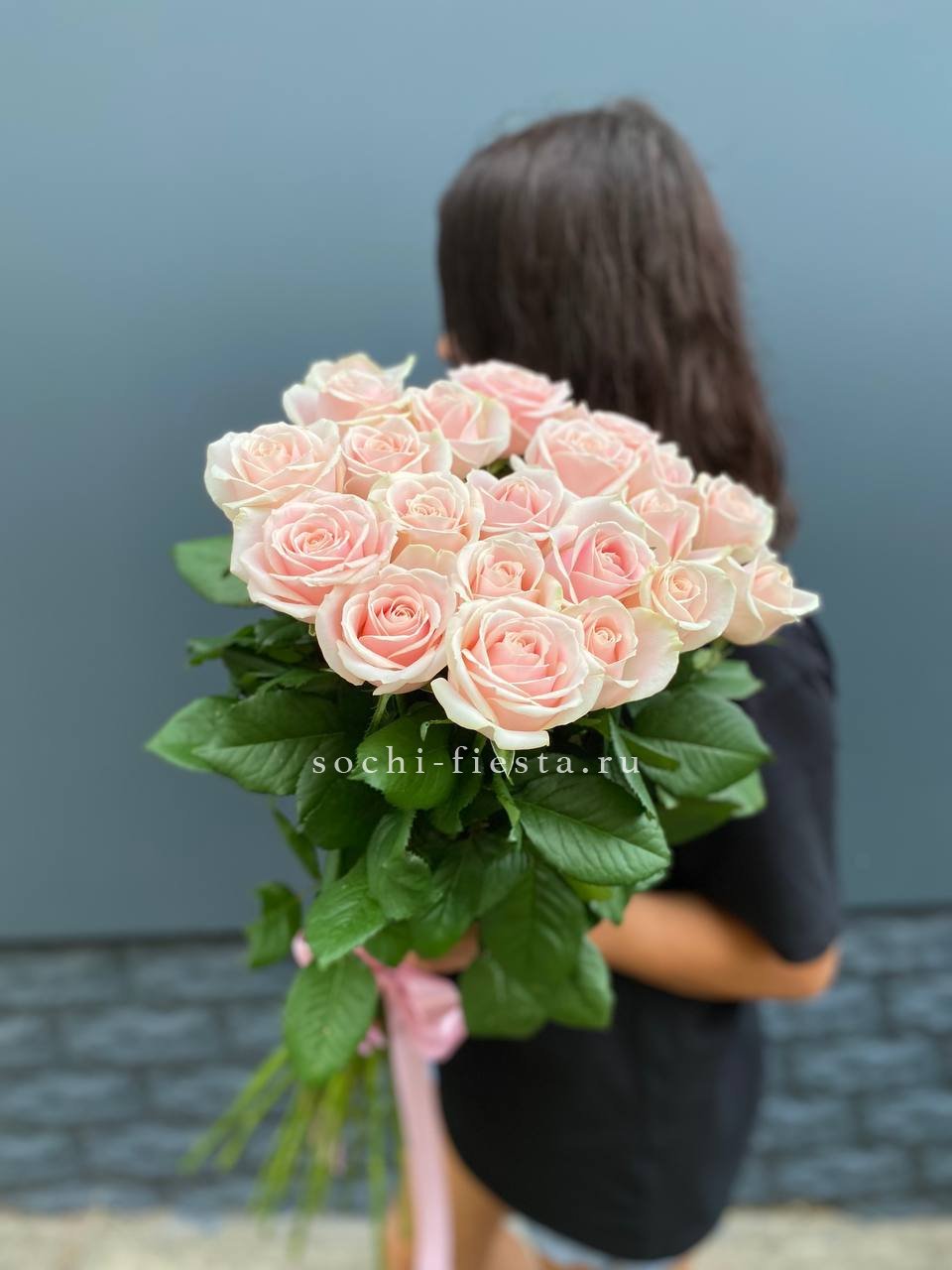
- Sweet Unique — lilac-pink, medium bud. For anyone who wants to step away from red.
Occasions and stem counts
In China the number of roses is read by ear. Fours are avoided: "four" (四, sì) sounds like "death" (死, sǐ), so four stems are never given. Eight (八, bā) is close to "wealth" (发, fā), nine (九, jiǔ) to "lasting, forever" (久, jiǔ), and 99 roses read as a wish for love that endures. The biggest romantic day of the year here is 20 May: "520" sounds almost like "I love you" (我爱你). Then come Qixi (七夕, the Chinese Valentine's), 14 February and Mother's Day in May.
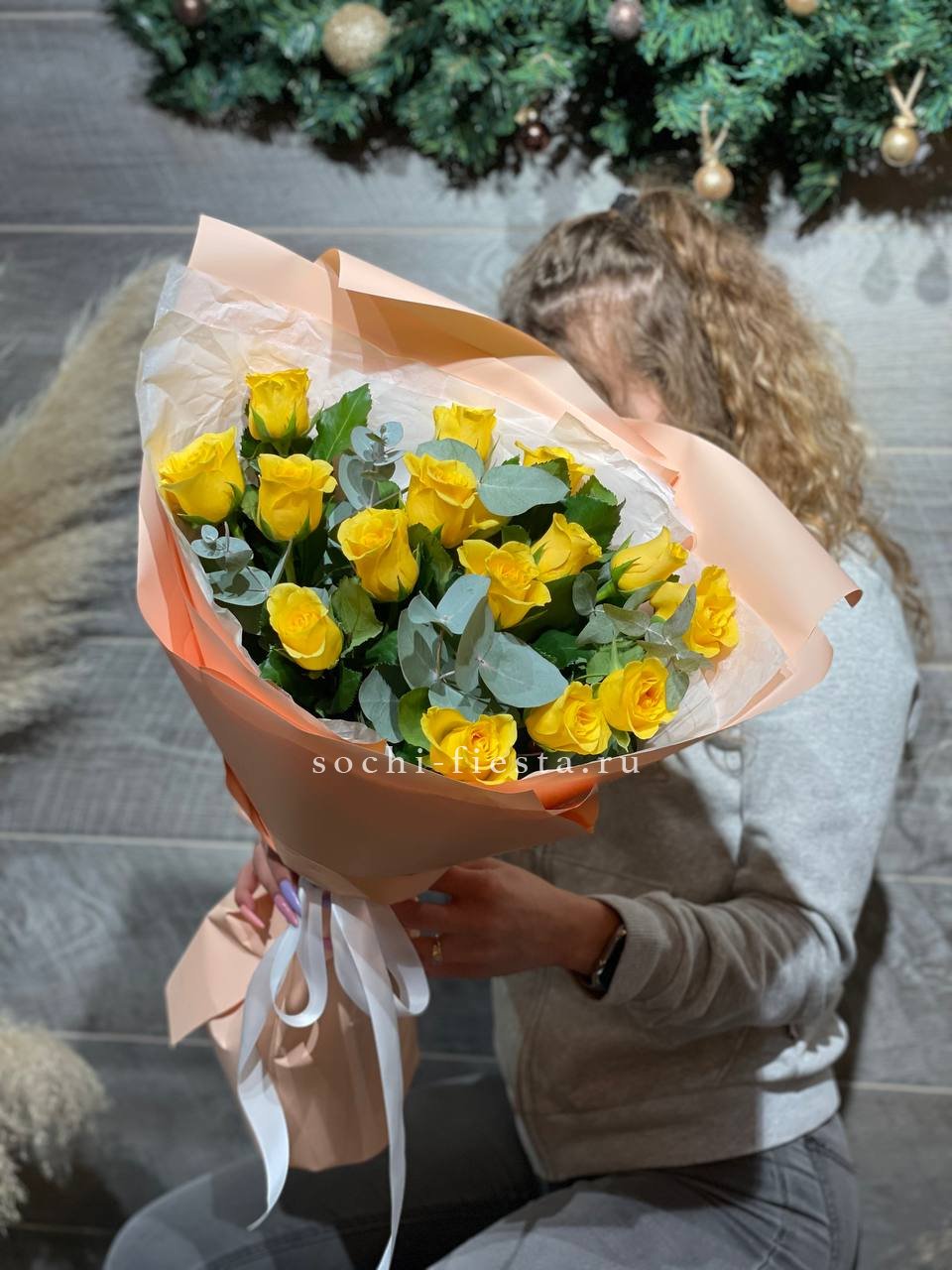
Colour matters too. In Chinese tradition white and yellow are tied to mourning, so romantic and festive occasions take reds and pinks. Before the Spring Festival (Chunjie) demand shifts to peonies, orchids and peach blossom, but the red rose keeps its place as a symbol of luck.
Freshness and logistics
Shanghai barely grows cut flowers — they are brought in. Chinese roses come from Yunnan through the Dounan market near Kunming (斗南), Asia's largest flower hub, by plane or refrigerated truck (about 2,000 km). Ecuadorian, Kenyan and Dutch lots fly into Pudong (PVG) and Hongqiao (SHA) airports, and the wholesale sorting runs through the Hongqiao flower market (虹桥花卉市场).
Yunnan's proximity is decisive: a Chinese rose reaches the recipient two to four days from cut, while Ecuadorian and Dutch stems travel longer but arrive with reserve vase life. Before assembly the bouquets sit in cold storage at +4 to +6 °C. With proper care Dutch and Ecuadorian varieties last 10–14 days, David Austin garden roses 7–10.
"In Shanghai the rose's main enemy isn't the cold, it's the damp. In the plum-rain season and the muggy summer the air sits heavy, and on delicate petals — especially the pale varieties — grey mould shows within a couple of days. So we don't mist roses, we keep the bouquet where the air moves and we strip any spoiled petals at once. And in the damp winter we ask the recipient to bring the flowers into the warm and let the wrapping dry out."
— Chen Jing, florist, Shanghai (Xuhui), 11 years in the trade
Delivery specifics in Shanghai
Shanghai has a humid subtropical climate. Summer (June–August) is hot and muggy, +33 to +37 °C, and in June–July the plum-rain season (meiyu) brings humidity to the limit. Winter (December–February) is mild but damp and penetrating: +5 to +10 °C by day, occasionally near freezing, with rare wet snow. Spring and autumn are short and pleasant — the best time for cut flowers. So in summer bouquets travel in chilled, ventilated boxes so the petals don't smother in the humid heat.
We deliver roses across all districts of Shanghai: Huangpu, Jing'an, Xuhui, Changning, Putuo, Hongkou and Yangpu, as well as Pudong, Minhang, Baoshan and Jiading; landmarks include the Bund, Lujiazui, Nanjing Road, Xintiandi, the former French Concession and Jing'an Temple. Payment is in yuan (¥, CNY). Peak dates: 20 May (520), Qixi, 14 February, Mother's Day and the eve of the Spring Festival. Order five to seven days ahead for these.
Home care
On arrival, re-cut the stems at 45°, strip any leaves below the waterline and place them in a clean vase with cool water. Change the water every two days and add a sachet of flower food (Chrysal) or a pinch of sugar. Keep the bouquet away from direct sun, fruit and heat: ethylene from ripe apples and bananas shortens cut-flower life by about a third.
The Shanghai subtlety is damp. In the rainy season and the muggy summer, let the bouquet breathe: stand the vase where the air moves, don't pack the roses into a tight bunch, and remove any wilting petals before mould sets in. Don't mist the pale varieties. In winter, by contrast, protect the flowers from a damp draught and from the sharp temperature swing as they come in from outside. Roses suit almost any occasion — message our team and we'll help match variety, colour and stem count to the occasion and budget.

