



Flowers in Sydney: from the Flemington market floor to your door
The Sydney Flower Market at Flemington is Australia's largest cut-flower market: about 170 stands, growers only, most of the trading finished before 9 am. Yet roughly half the cut flowers sold in Australia are imported, so flowers in Sydney owe their freshness, their price and the format they arrive in to that journey as much as to the market floor.
Where the flowers sold in Sydney come from
Florists from Sydney, the rest of New South Wales and the ACT are the ones buying at Flemington. Some of what changes hands there was cut that morning within a few hours' drive: growers around the Central Coast, Horsley Park, Leppington, Dural and Glenorie send stems down roads that take two to three hours, not container ships.
About half the cut flowers sold in Australia are imported. Malaysia, Kenya, Ecuador, China and Colombia are the main suppliers of imported cut flowers, and stems from Kenya, Colombia and Ecuador are fumigated before they leave, a biosecurity step Australia has required since 2019. Either way, the cold chain matters more than the country of origin: flowers travel at around two degrees, and every hour spent warm after that shortens how long they will last in a vase. At JFLOO the flowers for an order are bought only after payment, so the stems a florist picks up at Flemington or unpacks from an import box are the ones going out that day.
Sydney's seasons run opposite to the northern hemisphere's, so spring is September to November and summer is December to February. That reversal is worth knowing before choosing a bouquet, because a flower's local season here rarely matches what a northern hemisphere calendar would suggest.
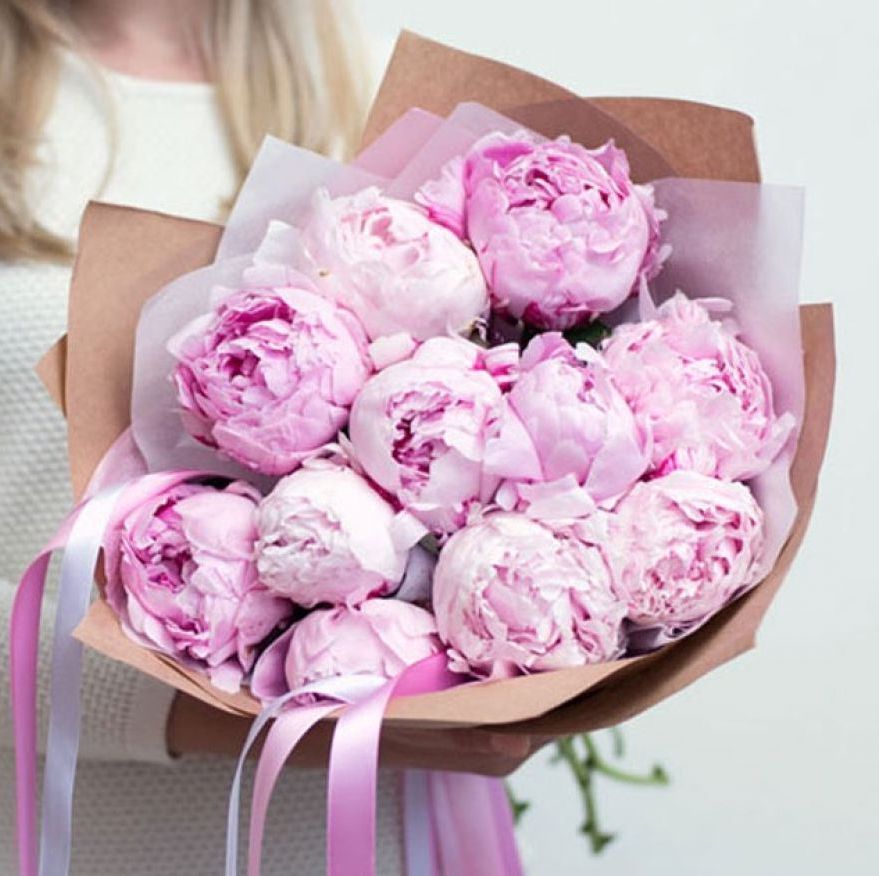
Peonies follow the reversed calendar closely: the main Australian season runs October to November and continues into the southern summer, rather than sitting in the northern hemisphere's spring window. Roses don't follow a season at all, since they're grown in greenhouses and sit in the catalogue every month of the year.
Waratah flowers in September and October, and jacarandas bloom from mid-October into November, turning whole streets purple. The Christmas bush colours up around December too. None of the three is sold as a bouquet; they're simply part of what the city looks like when they're out. Weddings cluster around two peaks instead, spring and March–April, when the mild weather either side of summer suits an outdoor ceremony. Where the flower itself needs to be exact for a date, mono bouquets built from a single variety are the safer choice. Where the colour matters more than the botany, designer bouquets mix several kinds within one palette. Peonies themselves are worth timing around that October–November peak, since that's when the price and the size both work in the buyer's favour.
Bouquet, box or basket: matching the format to a Sydney address
A hotel address in Circular Quay, The Rocks or Darling Harbour needs the guest's surname and room number, since the flowers can go either straight to the room or wait at reception until the guest returns; either way, staff decide which option suits their building. An office in the CBD, Martin Place, Barangaroo, Pyrmont or North Sydney needs the company name and the floor instead, and where a security desk controls the lifts, reception takes the delivery and signs for it.
Hospitals are stricter. Intensive care units across NSW don't accept flowers at all, so anything meant for a patient in a general ward should be checked with the sending florist beforehand, since visiting rules vary by ward.
Condolence flowers follow their own customs: white lilies, white roses and chrysanthemums in pastel tones, usually arranged in a basket or a box rather than handed over loose. A hand-tied bunch travels less well to a desk that may sit empty for hours, which is exactly the gap boxed arrangements and flower baskets are built to cover, since their stems sit in soaked floral foam and keep drinking until someone unpacks them. Where the room itself is the audience rather than one recipient, an armful of stems fills a table without needing a vase at all.
Four bands cover most of the catalogue, each shaped by the format:
- Mono bouquets and roses — the simplest formats, priced lowest
- Peonies, flowers in boxes and mixed bouquets — a step up from that
- Designer bouquets — priced higher again
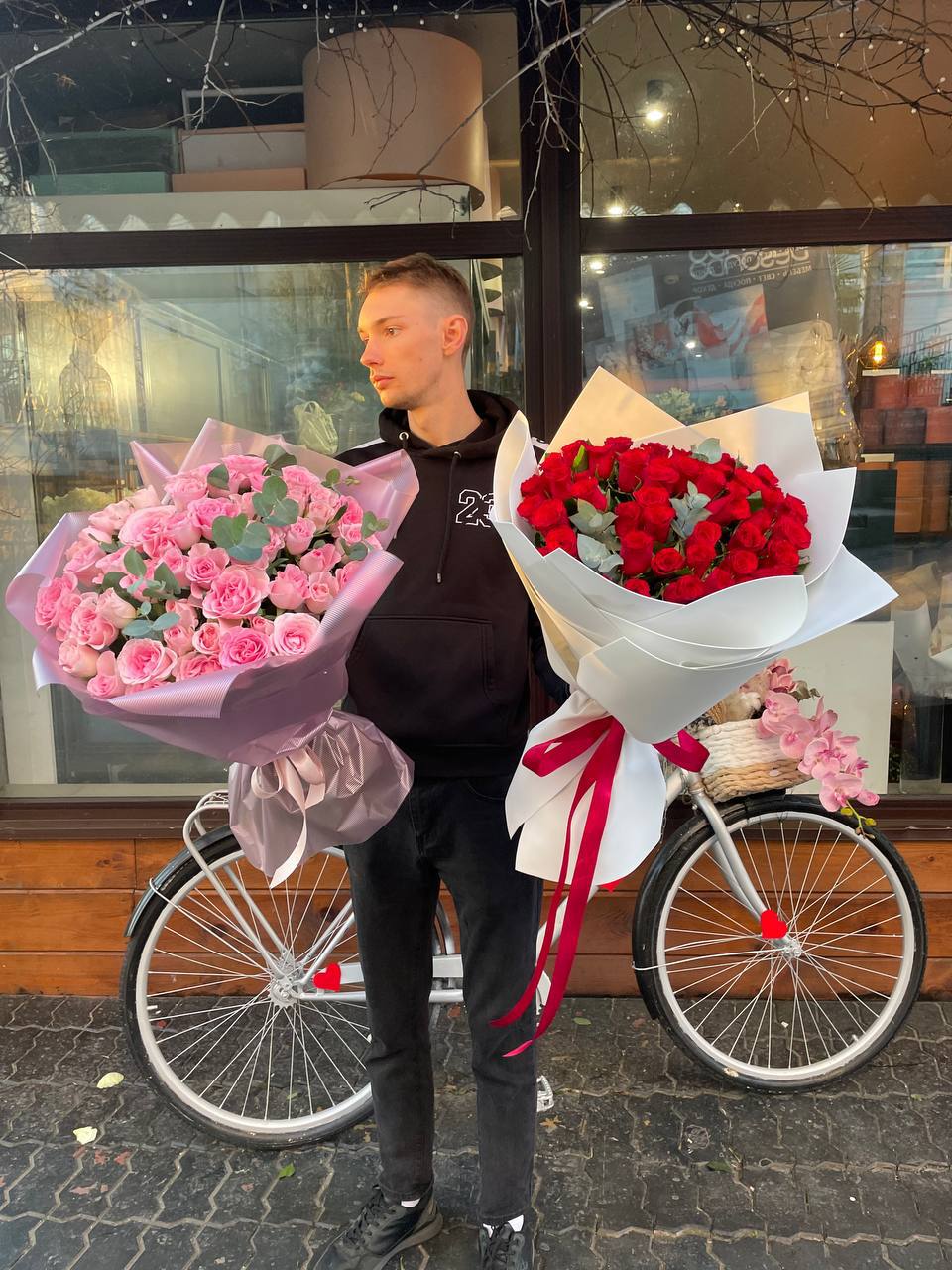
- Designer giants — the most expensive format
What sits behind that difference is the variety and length of the stem, the season and the format. A peony bought in its October–November season costs less than one grown out of it. A box costs more than the same stems handed over loose, because the container and the floral foam are priced in as well. Whatever the cart shows at checkout is the final total, with nothing added afterwards.
Two dates push prices and booking both: 14 February and Mother's Day, whose date shifts every year. Delivery slots either side of those dates fill up first, so ordering a few days ahead matters more than usual. The most popular bouquets collect what regularly sells well across the catalogue, and for a landmark occasion, arrangements built at a larger scale go beyond what a hand-tied bunch reaches.
Flower delivery in Sydney: zones, timing and the photo
Delivery is priced by zone, with an express option if the florist already has the bouquet in stock, and the bouquet card shows the delivery time for each zone. Nearer suburbs cost less than the far ones; overnight, any address is arranged and priced separately.
Parramatta and Macquarie Park sit outside the standard zones altogether, so a delivery there is quoted before payment rather than fitted into one of the standard bands. Sydney Airport has its own routine too: the courier waits at the arrivals exit holding a sign with the recipient's name.
Whatever the address, a photo of the finished bouquet goes out before the courier leaves, and the recipient isn't called ahead unless the sender asks for it; at the door, the courier waits up to 15 minutes. Full zones and current rates are listed on the delivery page.
Sending flowers to Sydney from another country
Orders are taken around the clock, and no account is needed to place one. A recipient's phone number is enough to get an order moving even without a street address, since the courier can be pointed to the right door once the details are confirmed. The card that goes with the flowers can be left unsigned if the sender would rather stay anonymous.
Payment is by Visa or Mastercard, and a card issued abroad is simply converted at the bank's own rate, with no extra fee added on top. A single order can carry several delivery addresses at once in the cart, and delivery is charged separately for each one.
Keeping a bouquet fresh through a Sydney summer
A Sydney January averages around 27 degrees by day and 20 by night, with a UV index that can reach 12, and the heat sometimes breaks with a southerly buster that drops the temperature fast. Winter is mild by comparison, but a bouquet left beside an indoor heater dries out just as quickly as one left in summer sun.
A few habits keep flowers going through either season:
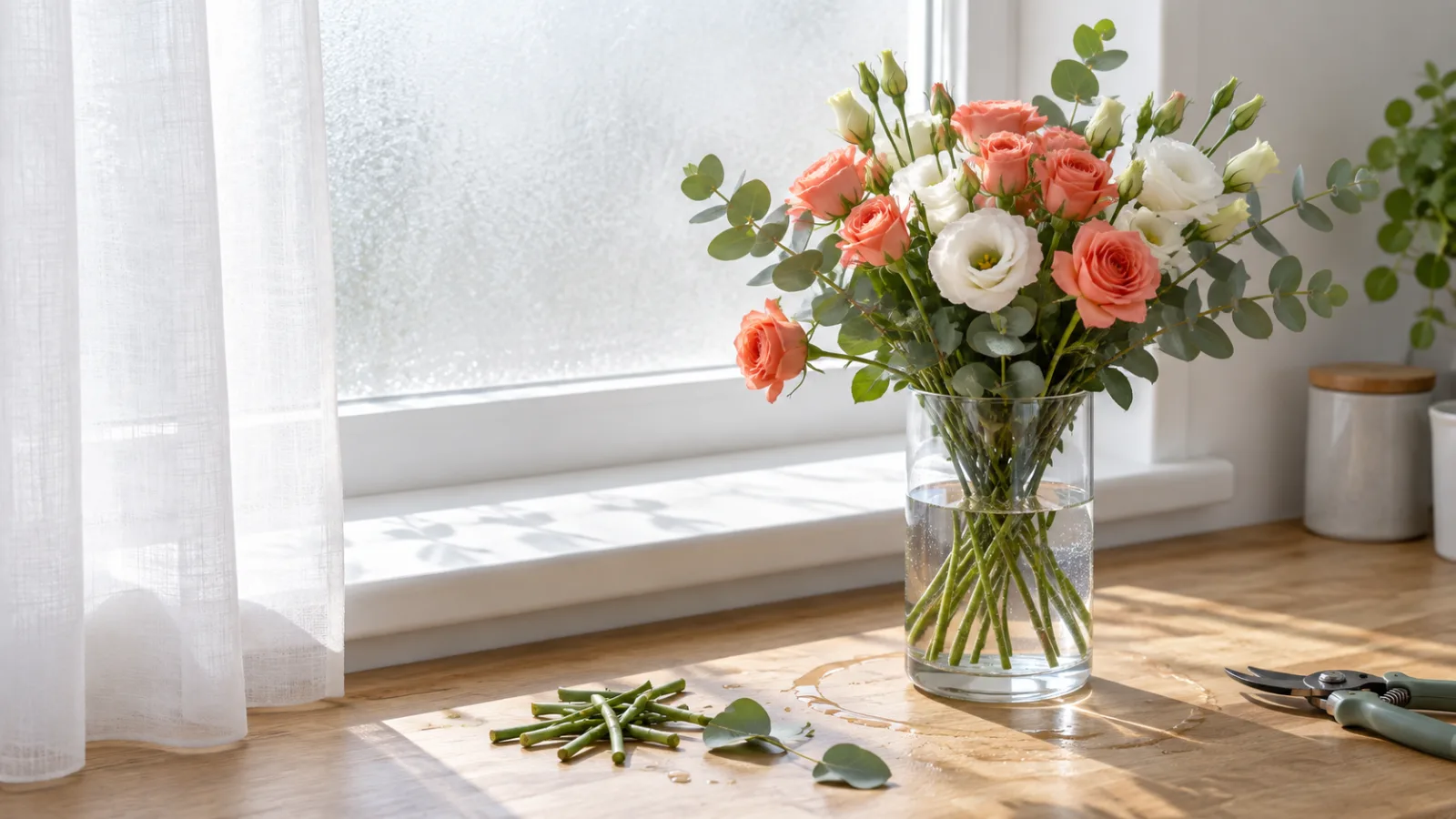
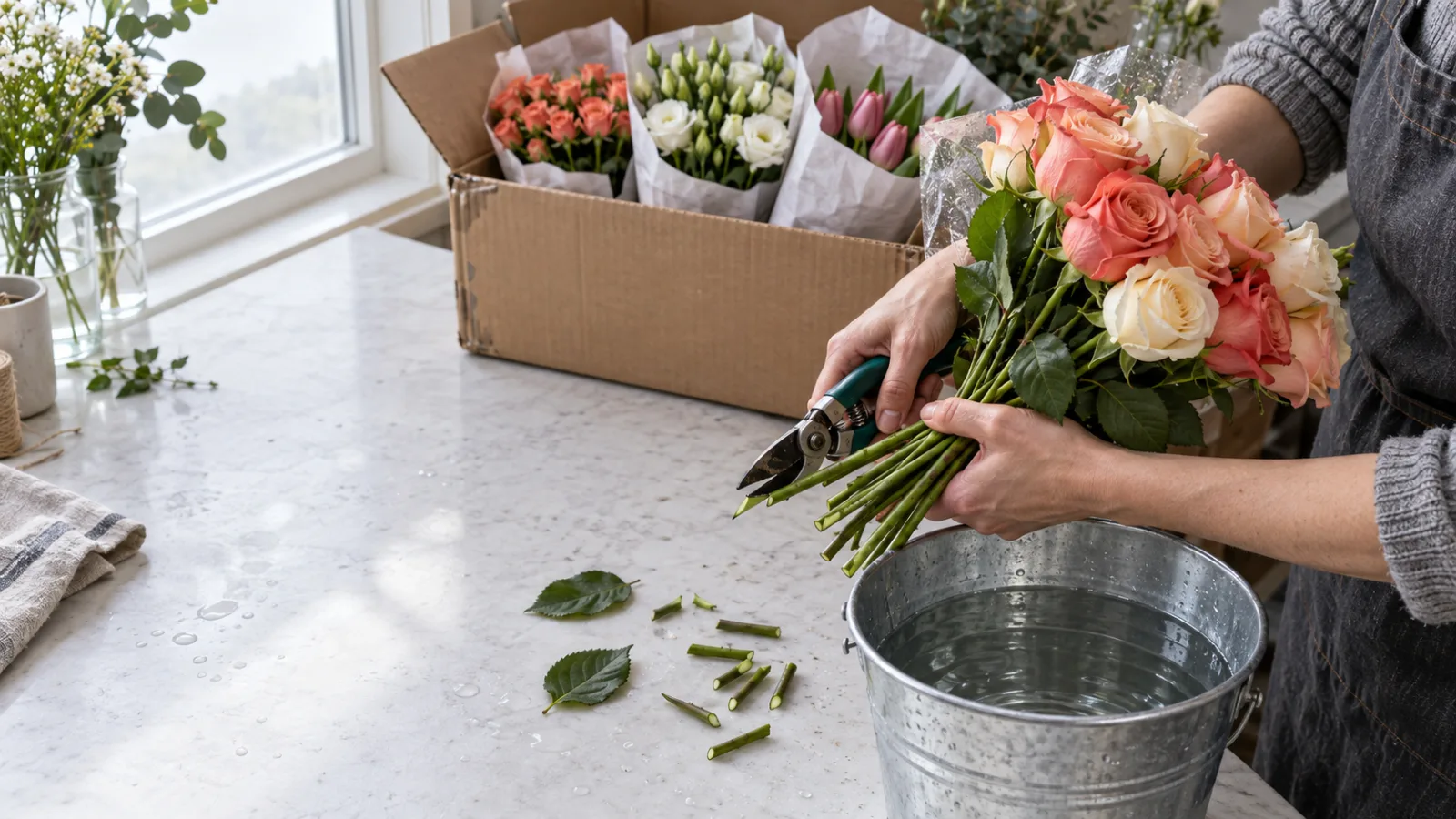
- Recut the stems at an angle every couple of days, a centimetre or two off each time.
- Strip any leaf that would sit below the waterline in the vase.
- Change the water daily rather than topping it up.
- Keep the vase out of direct sun and away from heaters and air-conditioning vents.
One more thing worth knowing if there's a cat in the house: lilies are toxic to cats, pollen and vase water included, according to RSPCA NSW, so they're worth leaving out of a bouquet meant for a home with one.