




Plants in Sydney: a moth orchid's 27 °C January and succulents in glass
Plants in Sydney meet a January that averages 27.0 °C at its warmest, the daytime mark below which a moth orchid sets a new flower spike, and by April the average day cools to 23.6 °C. The choice between an orchid, a cactus and a florarium starts with where the pot will stand, a sunny windowsill or a desk in the CBD, rather than with the date on the calendar.
Moth orchids through a Sydney year: summer UV, mild July nights
A moth orchid is an epiphyte from South East Asia, which is why it grows in bark rather than soil, clinging to tree branches in the wild. From December to February, Sydney's UV index averages 12, and direct summer sun scorches the plant's leaves, so a window with no direct light is the safer spot.
Winter stays mild. Near the coast the temperature rarely drops below 7 °C, and July averages 17.9 °C by day and 8.9 °C at night. A moth orchid prefers 19–30 °C by day and 16–19 °C at night, an indoor guide rather than a forecast for any particular flat.
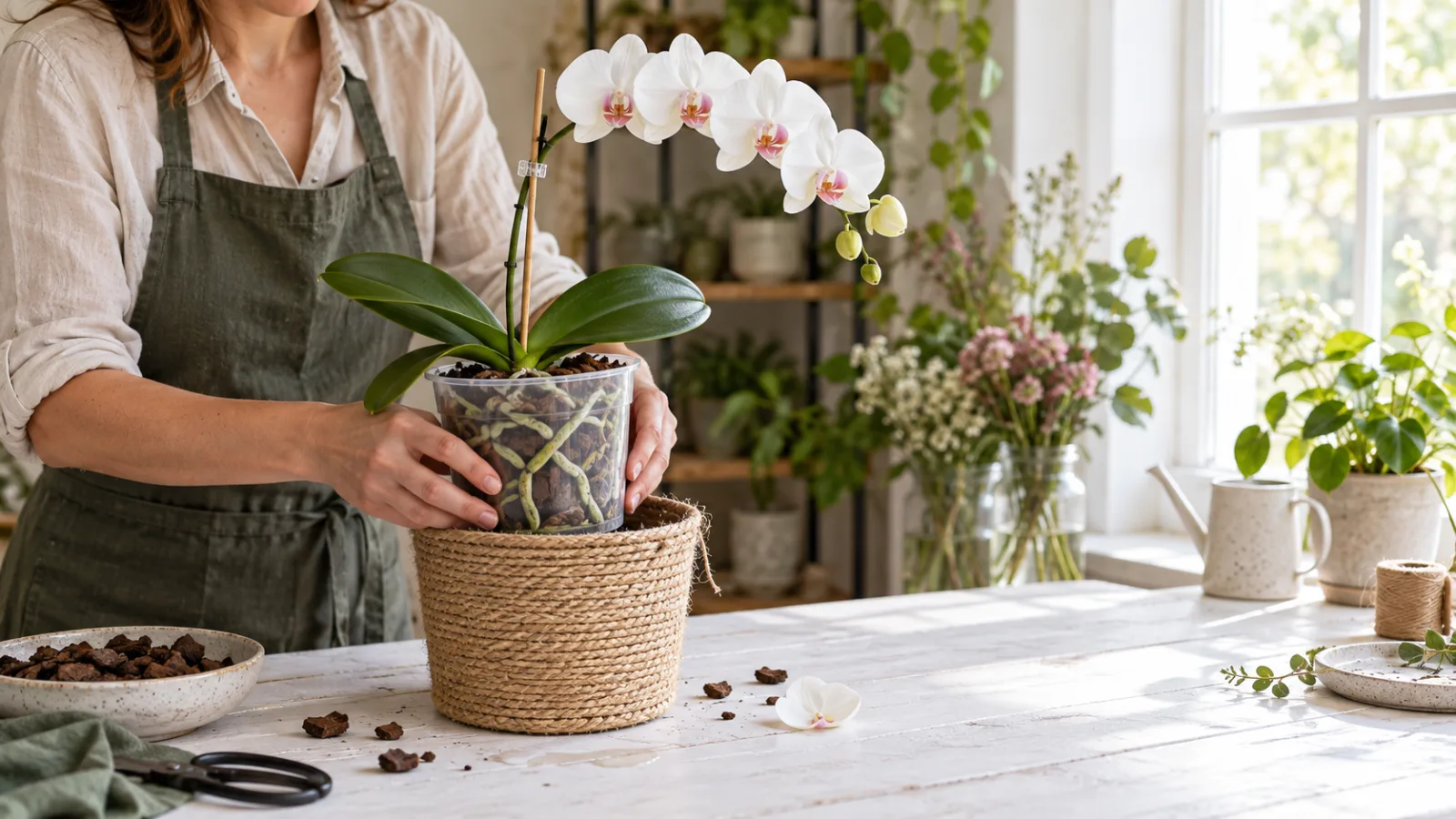
A clear pot shows at a glance whether the bark inside is still moist, and healthy roots look silvery-white. Water roughly once a week while the plant is growing and less often in winter, and never let the pot stand in water or the bark dry out completely. Grown this way, a moth orchid's flowers last two to three months.
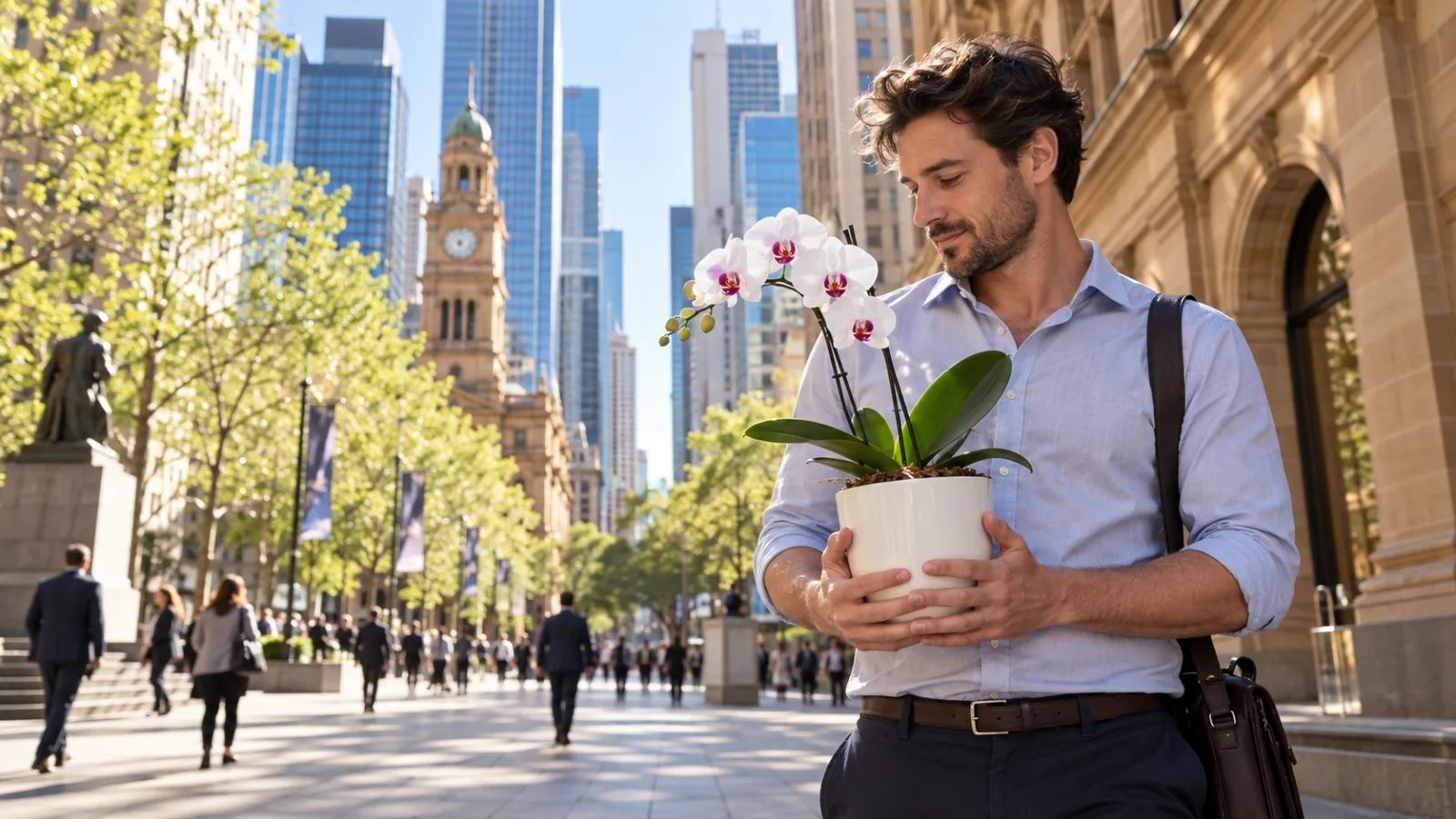
Delivering plants in Sydney's CBD towers works the same way as a bouquet: a moth orchid on an office desk reaches reception and waits there for the recipient.
Stone rose, sedum or a cactus: succulents for a humid coast
Sydney's afternoon humidity, measured at 3pm, holds between 56 and 60 per cent in every month of the year, and rainfall totals around 1,150 millimetres, heaviest in February and June. From late winter into mid-spring, dry westerly winds take over for a stretch.
Succulents come from hot places where rain is rare, and they store water in fleshy leaves and stems; in some of those tissues water makes up as much as nine-tenths of the weight. A plant built for drought does better in an open glass bowl than sealed inside a florarium. A closed florarium runs its own small water cycle and suits moisture-loving plants instead, watered with no more than an occasional misting from a spray bottle.
A rosette succulent sold as a stone rose, together with sedum and haworthia, fills that kind of open bowl well. If the stone rose is a houseleek, it likes full sun and soil that drains fast and never stays wet. For the closed version, browse florariums; for something that stands in its own pot rather than glass, cacti are the drier choice still.
An orchid that goes home after the visit: box, hat box or pot
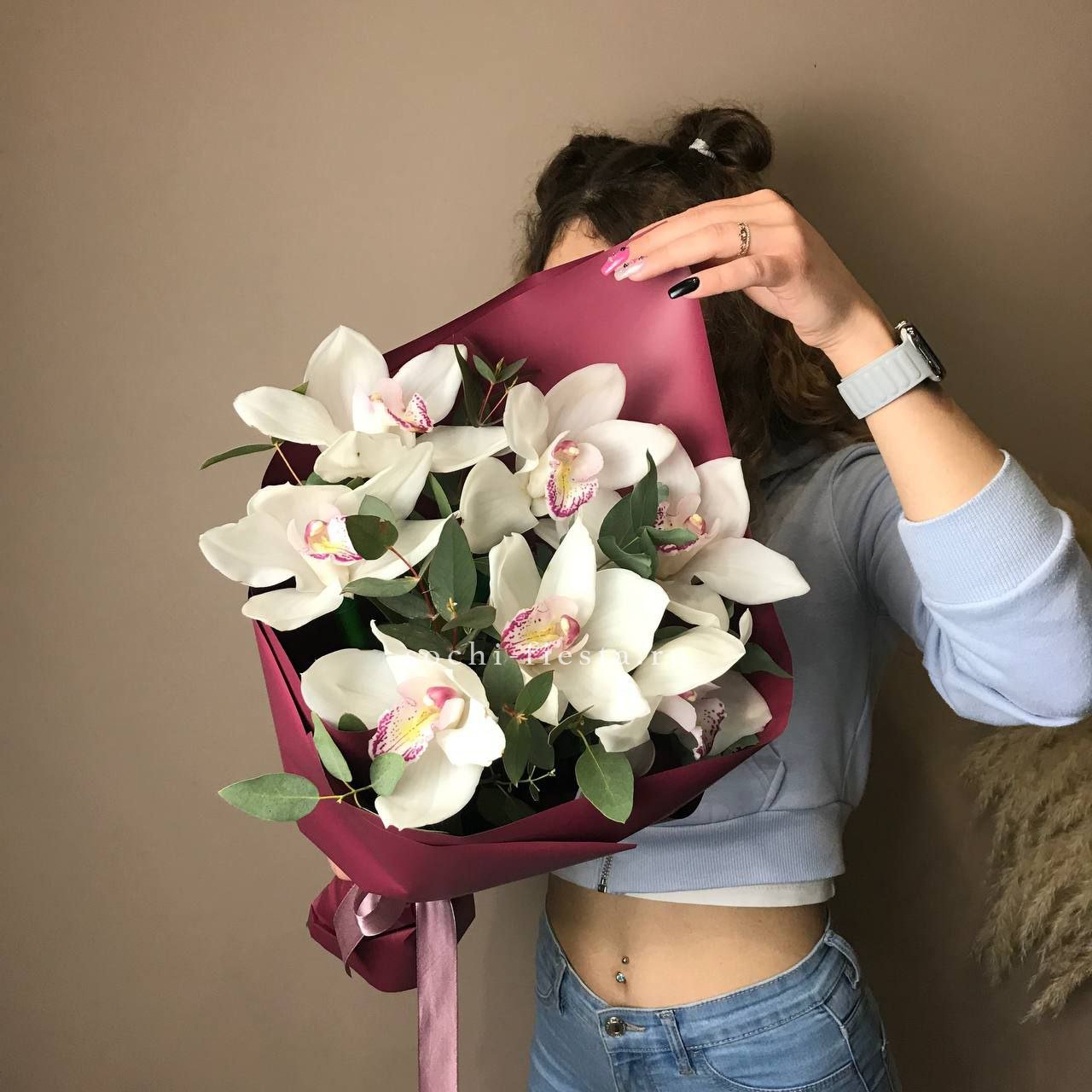
In Australia, friends and colleagues often send a potted orchid as a condolence gift, since a living plant can go home with the family afterwards. White and soft pastel tones are usual for these.
For a visit, an orchid arriving in a box travels well and needs no vase on arrival. Where cut flowers are wanted alongside it, the Orchid and Lisianthus in a Hat Box and the Roses and Orchids in a Box both bring an orchid together with flowers in one gift.
For a flowering pot that isn't an orchid, or help picking a plant by type, see flowering plants and plants chosen by type. The florist photographs the finished order before the courier sets out, whichever of these it turns out to be.
A sunny window suits a florarium or a cactus best, while a flowering plant works better as a gift handed over in person. Plant delivery in Sydney is free within the centre, and the delivery window for each plant shows on its own page.