





Plants in Auckland: a moth orchid's year on a southern calendar
Plants in Auckland come with a calendar attached: the RHS says to water a moth orchid about once a week while it is growing, and less once winter sets in. In Auckland that winter runs from June to August, and June and July are the city's wettest months. A plant lives in a room for months rather than days, so the right choice depends less on the flower than on how much care the recipient wants to give it. That, and how much light falls on their windowsill.
Flowering orchid, cactus or glass cube: who looks after what
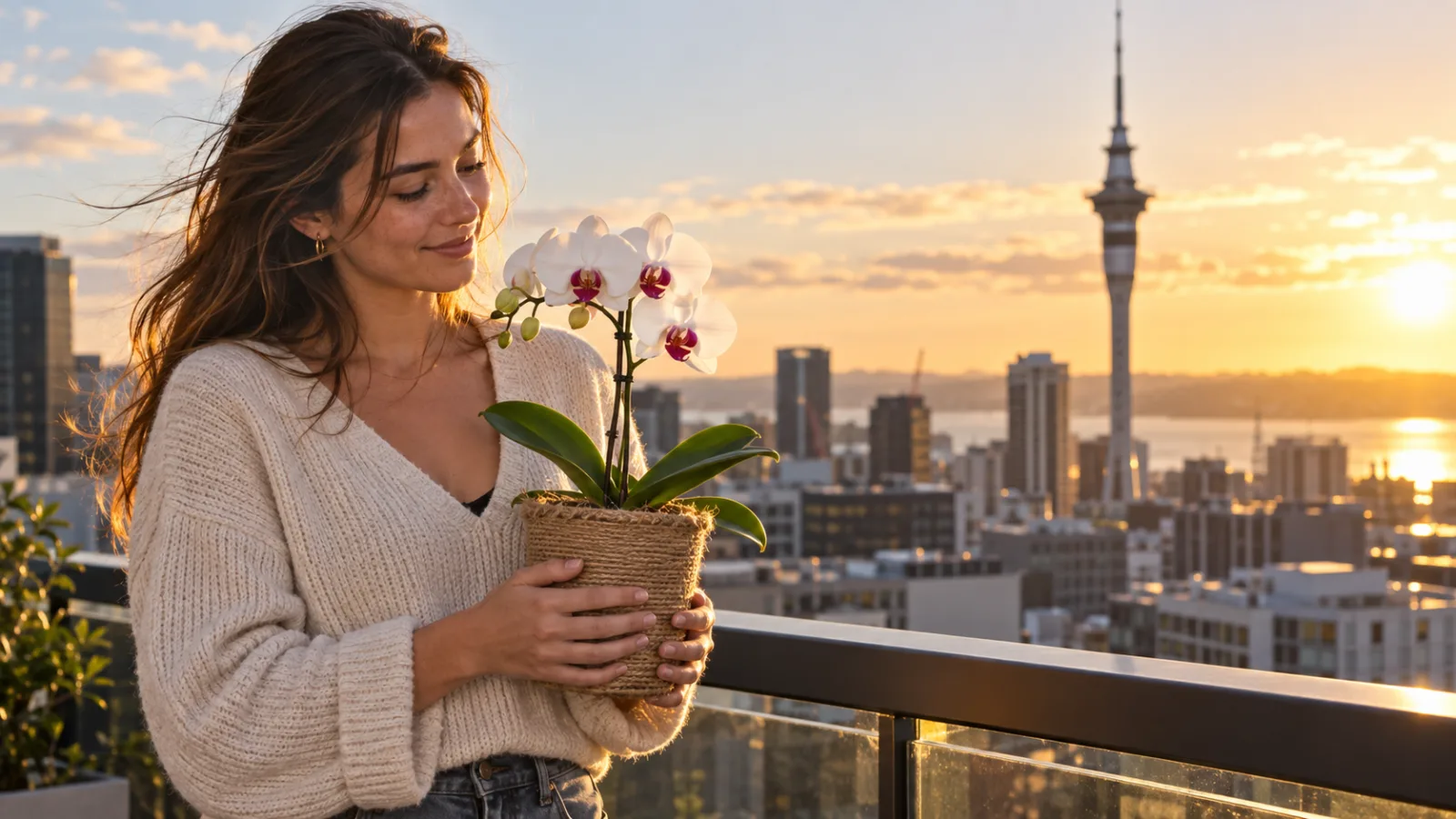
Flowering plants in Auckland are almost all moth orchids, sold rooted in a pot rather than cut for a vase. They come in a clear pot of their own, in a jute pot, in a box, next to roses, in a hat box or set beside sweets such as chocolate or marshmallow. Cut orchid stems go together into a bouquet as well. Floralariums, small glass vessels holding succulents, share the section with cacti and potted plants by type.
An orchid in flower keeps its blooms for two to three months. It asks for a clear pot filled with bark rather than soil, and a weekly watering while it grows, which makes it a gift for someone who likes checking on things.
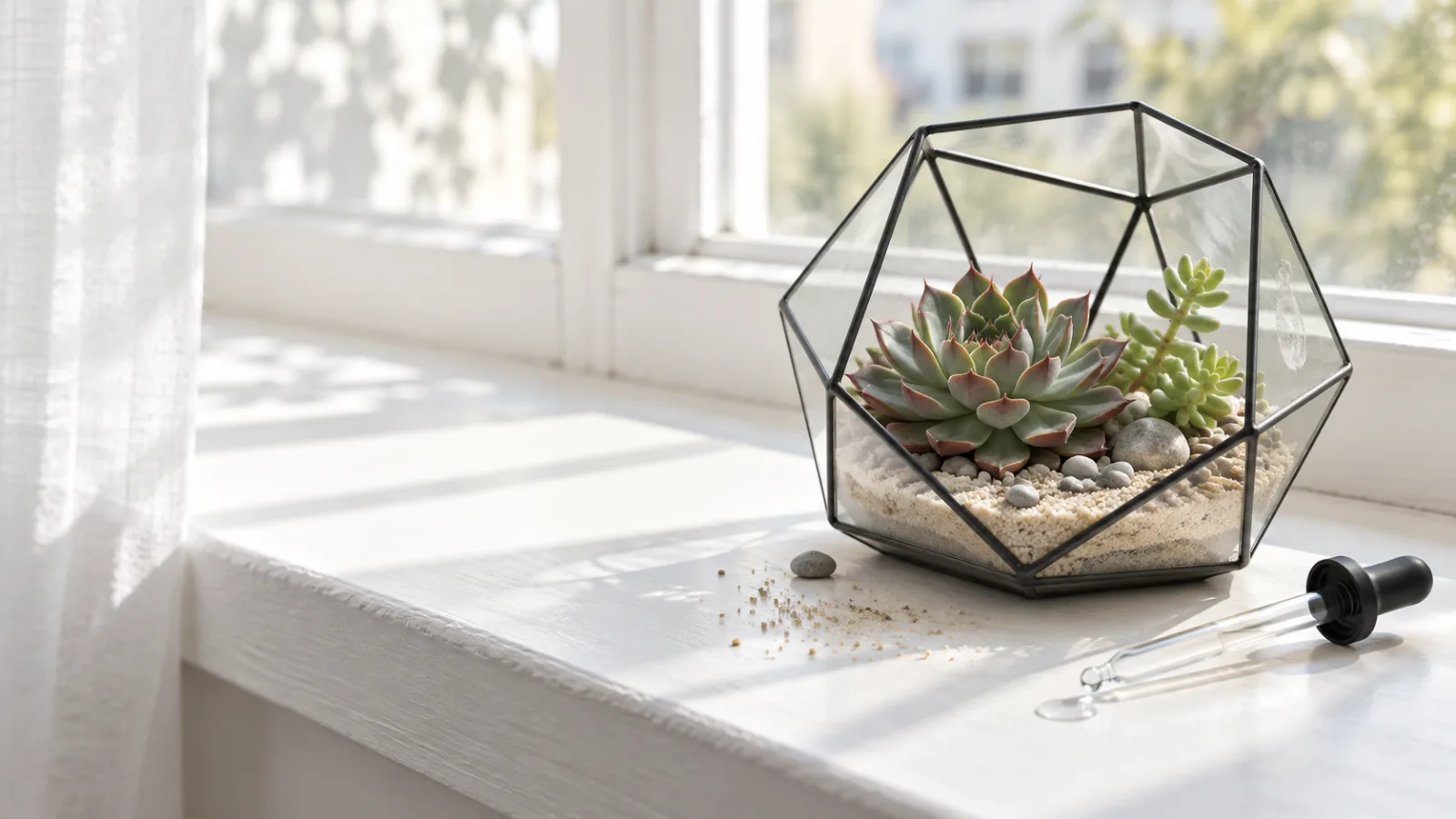
A succulent behind open glass stores water in its leaves, up to nine-tenths of its own weight, and takes a few pumps from a spray bottle rather than a pour. It suits someone who travels often, or simply forgets a routine.
June and July rain: an orchid's southern winter
Auckland in July runs to around 8°C overnight and 14°C by day, well under the 16 to 19°C a moth orchid wants after dark. Through the city's winter the plant has to stay indoors, clear of any draught from a door or a window.
Frost is rare in Auckland, but the winter is mild and wet, and June and July are its wettest months. The RHS advice to water less in winter lands squarely in that stretch, so watering should become less frequent in winter.
Healthy roots are firm and silvery white, visible through the clear pot. Any water left in the saucer should be tipped out rather than left standing, and the leaves and the growing point should stay dry when watering.
Once flowering ends, the spike is cut above the second node from the base. That often brings on a side shoot and a second run of blooms.
A summer that starts in December: shade for orchids, light for glass
Summer in Auckland runs from December to February, warm and humid, with around 2,000 hours of sunshine spread across the year. The average January high sits near 24°C, under the 27°C that pushes a moth orchid into sending up a new flower spike, and direct summer sun through glass will scorch its leaves. A bright sill out of the midday sun suits it best.
Succulents want the opposite setting: an open bowl rather than a sealed jar, because they come from hot places with little rain, and damp air inside a closed container does their leaves no favours. A florarium like this belongs on the sunniest windowsill in the flat, the spot an orchid would never forgive.
A box, sweets or roses beside the orchid: plant delivery in Auckland
The gift formats worth weighing against each other are an orchid in a box, an orchid set beside roses, an orchid paired with sweets, or one arriving in a jute pot. The 7 Orchids in a Box and the Misty and Orchid Duo Box are two more worth choosing by name alone.
Each order is put together to match the request, and a florist photographs the finished plant before the courier leaves, so anything on the picture can still be changed. Most orders go out the same day they are placed, and the card that comes with them is free.
Delivery runs to set zones around the city, and the current delivery terms sit on their own page. Sending plants in Auckland from abroad, or to a hotel, works the same way as sending cut flowers in Auckland.
Someone who wants a weekly routine with their gift does well with flowering plants, almost always an orchid. Someone often out of the house does better with florariums, where a spray bottle once in a while is enough.