


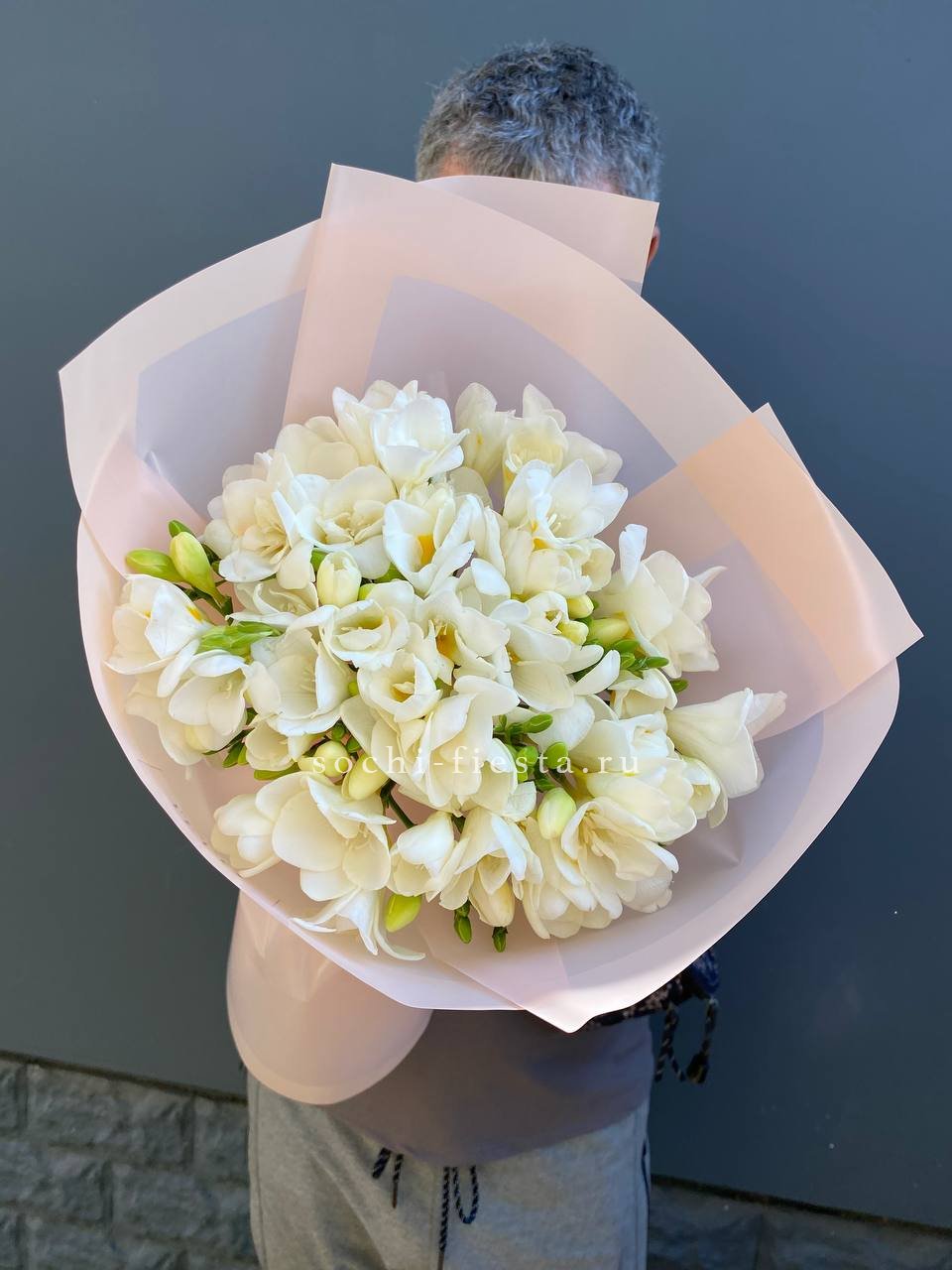


Bouquets in Barcelona: from the first Maresme carnations to today's stems
In 1923, in Vilassar de Mar on the Maresme coast north of Barcelona, Italian grower Beniamino Farina, who had settled there two years before, harvested Spain's first cut carnations. That is where Spain's cut-flower production began. Bouquets in Barcelona today are built from none of them: the catalogue has moved on to roses, lilies and hydrangea, and choosing one comes down to the flower and the size rather than the carnation Farina started with.
Andean roses and lilies, not the carnation the Maresme began with
Most of the roses sold in the city fly in from Colombia and Ecuador, as Mercabarna-flor's spring forecast for Sant Jordi puts it plainly. A rose sold as French has nothing to do with France: a florist opens it by hand, bending the outer petals back until the bloom looks fuller. That is how a bunch such as 11 Red French Roses or 11 White and Pink Roses gets its look.
A lily is the one flower to leave off the list for a home with a cat. Every part of the plant is toxic, pollen and vase water included, and a florist strips the anthers once the bloom has opened, mainly to keep pollen off clothes and furniture. Hydrangea drinks more water than most cut flowers and needs its vase topped up more often than the rest of the bouquet. Hyacinth belongs to spring.
Beyond the flower itself, a bouquet can be chosen by the bloom it is built around or by its overall shade, whichever makes the decision easier.
Past the Sant Jordi rose: a compliment, a classic or a giant
On 23 April, Catalonia's Sant Jordi, the custom calls for one red rose with an ear of wheat and a ribbon in the colours of the Catalan flag; the single rose covers that day on its own.
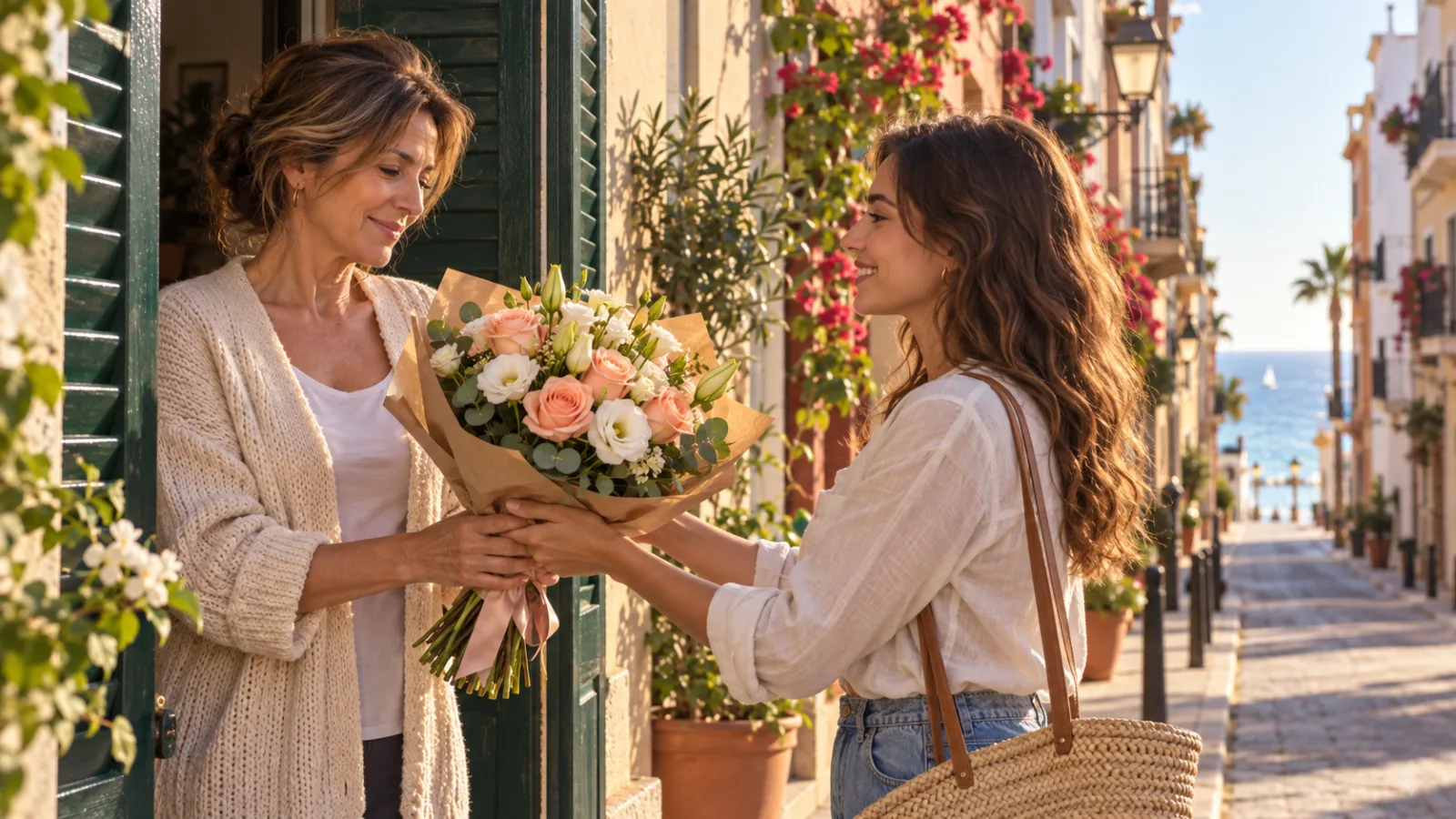
Any other day, the question is scale rather than season. A compliment bouquet suits a short visit or a desk, a classic or large bouquet works for a proper gift, and giant bouquets, a sizeable part of the section, are built for an entrance or a stage rather than a side table. Compliment bouquets sit at the small end of that scale, ready without much thought behind them.
Where the gift needs to be more than flowers, edible bouquets add something to eat alongside the stems. Chrysanthemums are missing from the selection because in Spain they are associated with the cemetery rather than the gift table; flowers in Barcelona sorts everything else by occasion.
Barcelona's bouquet wrapping: kraft paper, bag, planter or envelope
The Barcelona catalogue sorts bouquets by wrapping as well as by flower. Kraft paper keeps a classic bunch loose and informal, and a bag holds the stems upright for a short trip from door to table. The Barcelona catalogue also has planters and envelopes. Delivery zones and rates are listed in delivery terms.
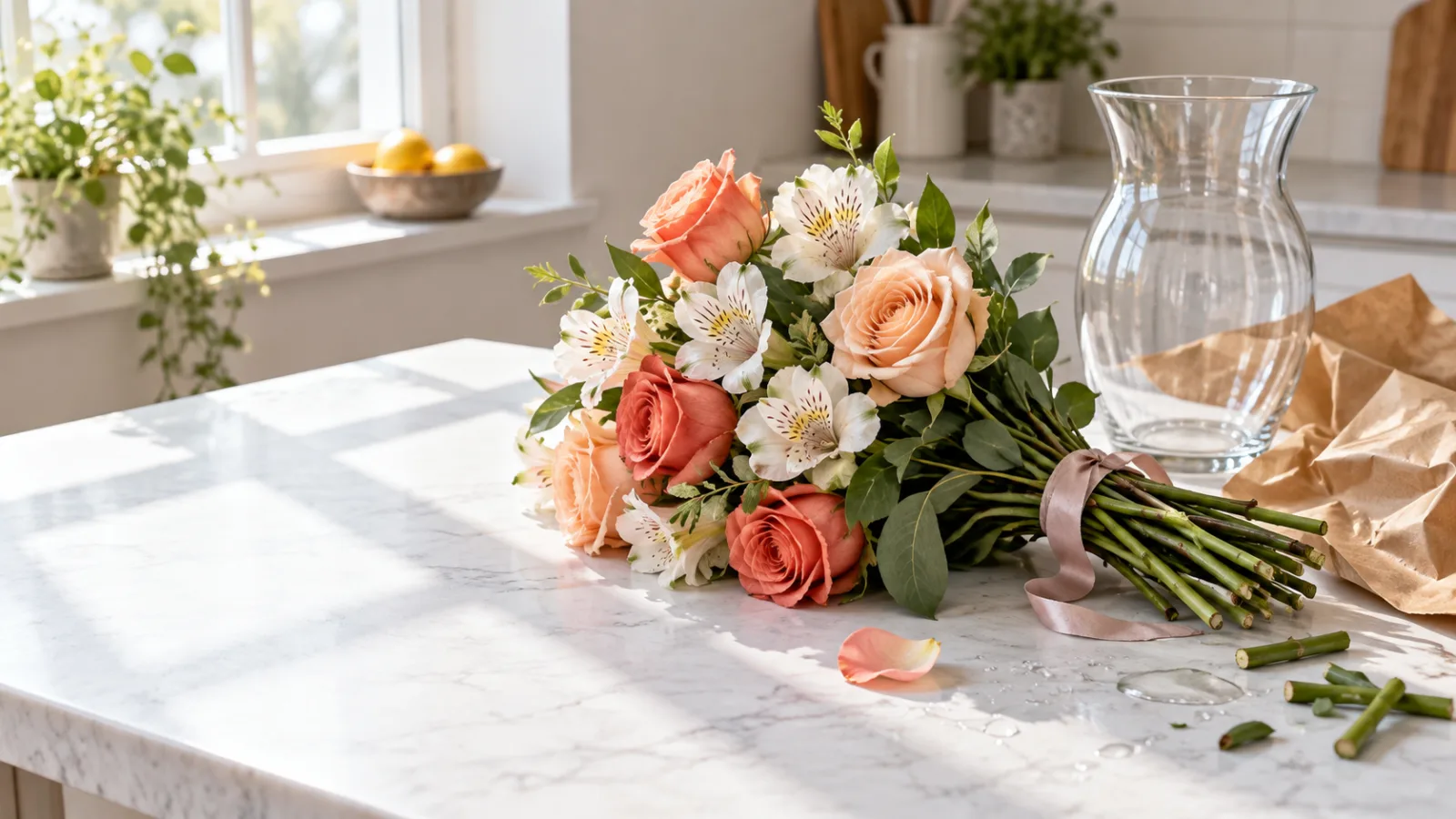
At the vase, the wrapping comes off and the stems get a fresh cut before the water goes in.
A good place to start is the flower itself: bouquets with flowers groups the catalogue by rose, lily or hydrangea, while by colour sorts it by shade instead. For a gift that needs real scale, giant bouquets is the section to open first.