




Roses by quantity in Buenos Aires: why the counts are odd and how to choose
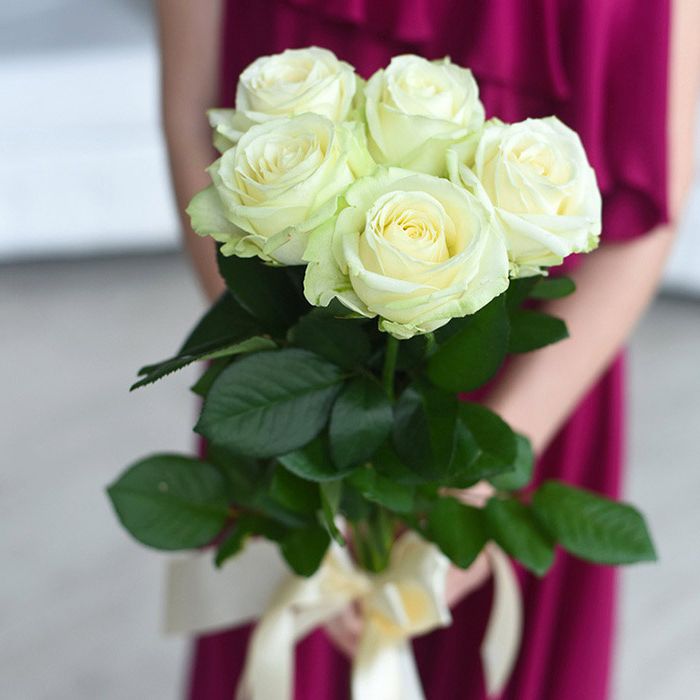
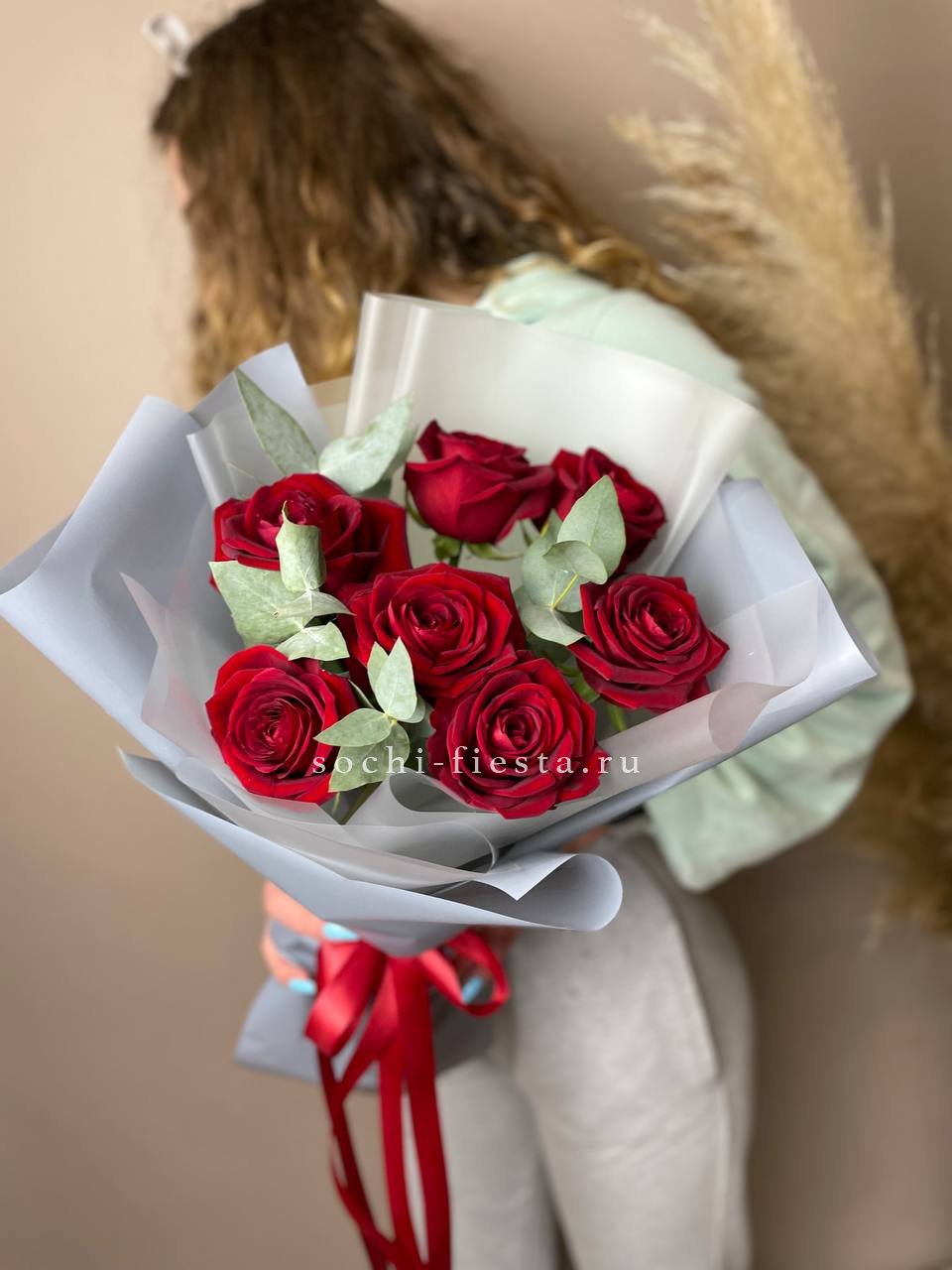
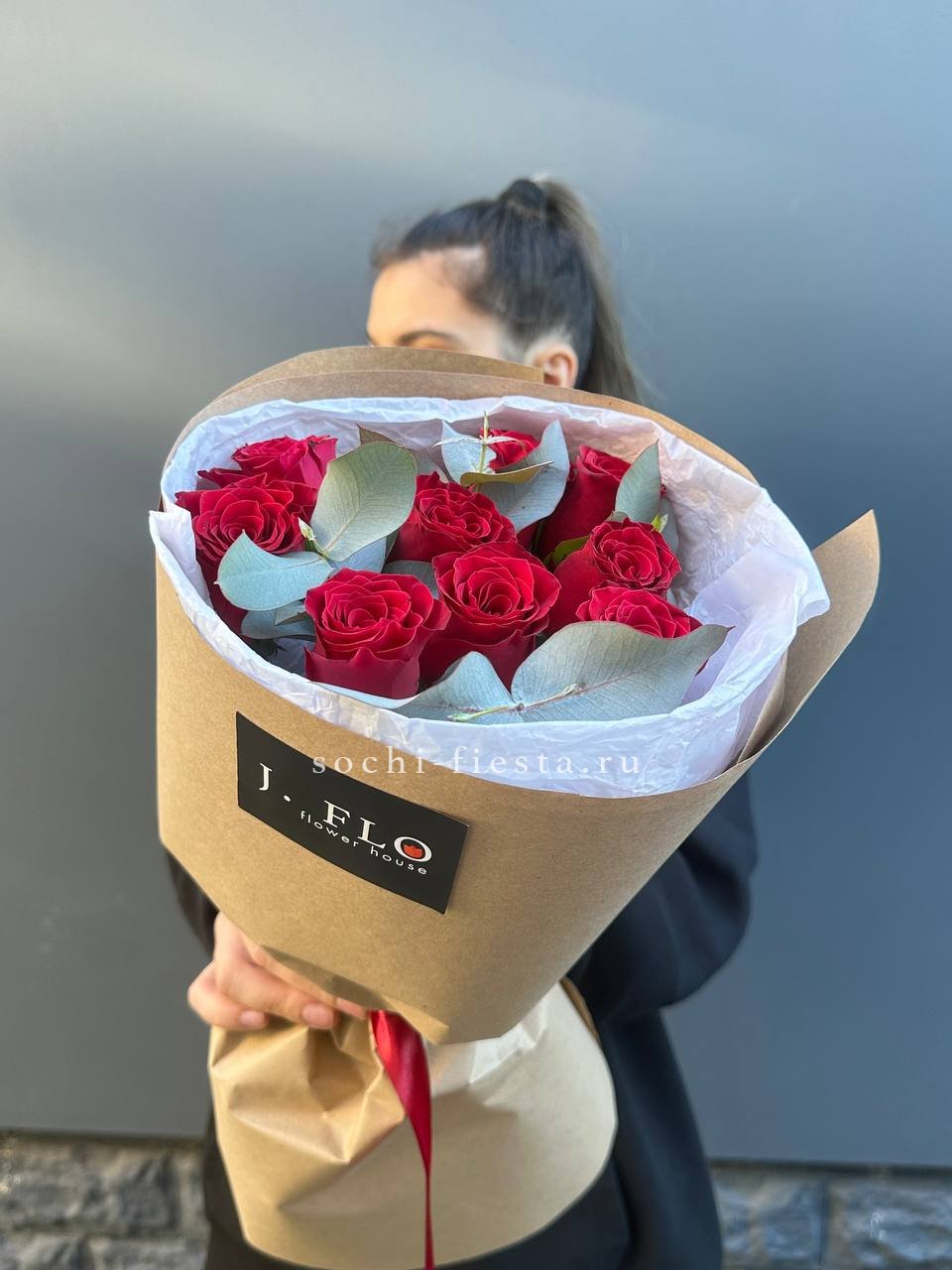
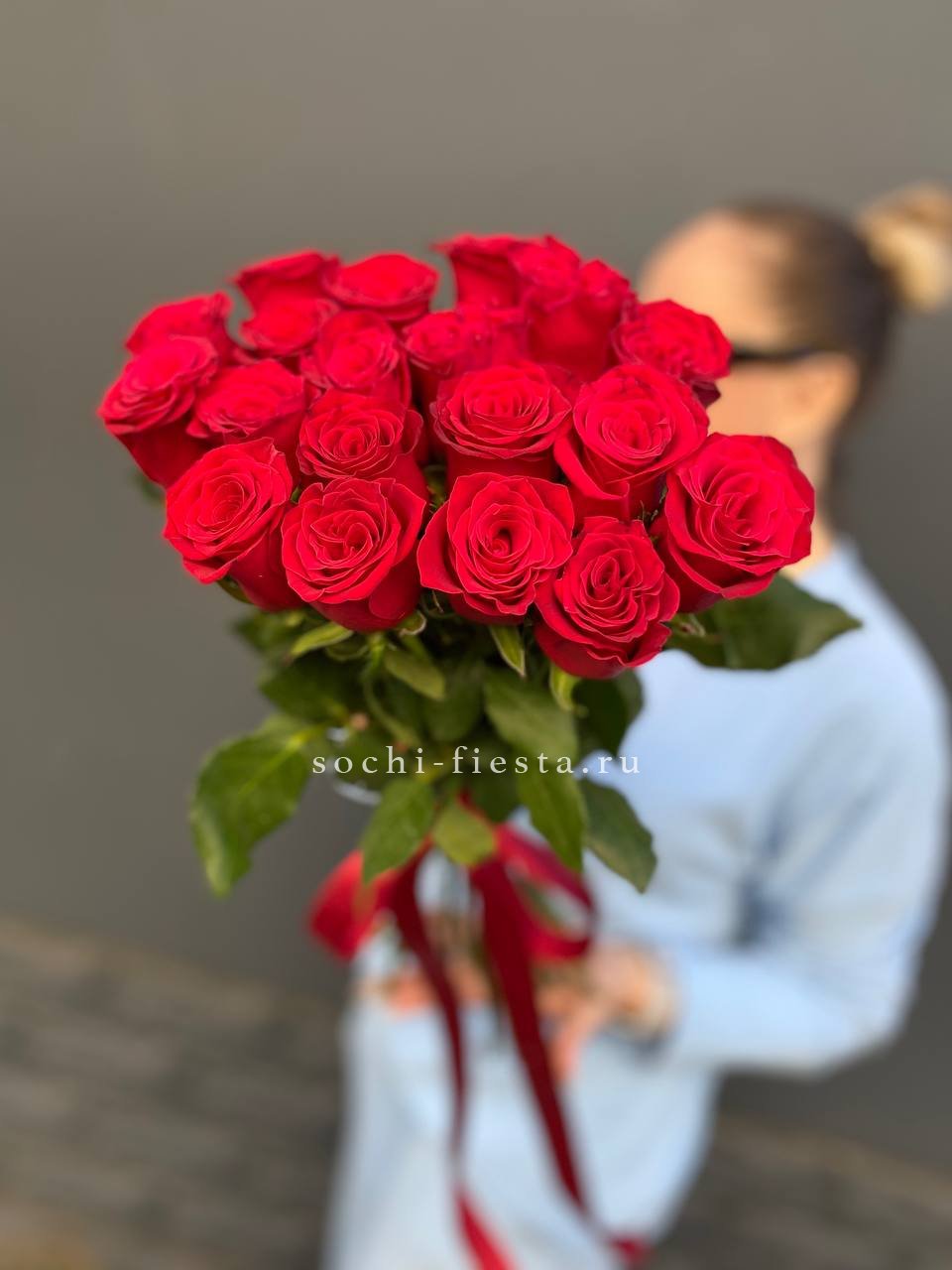
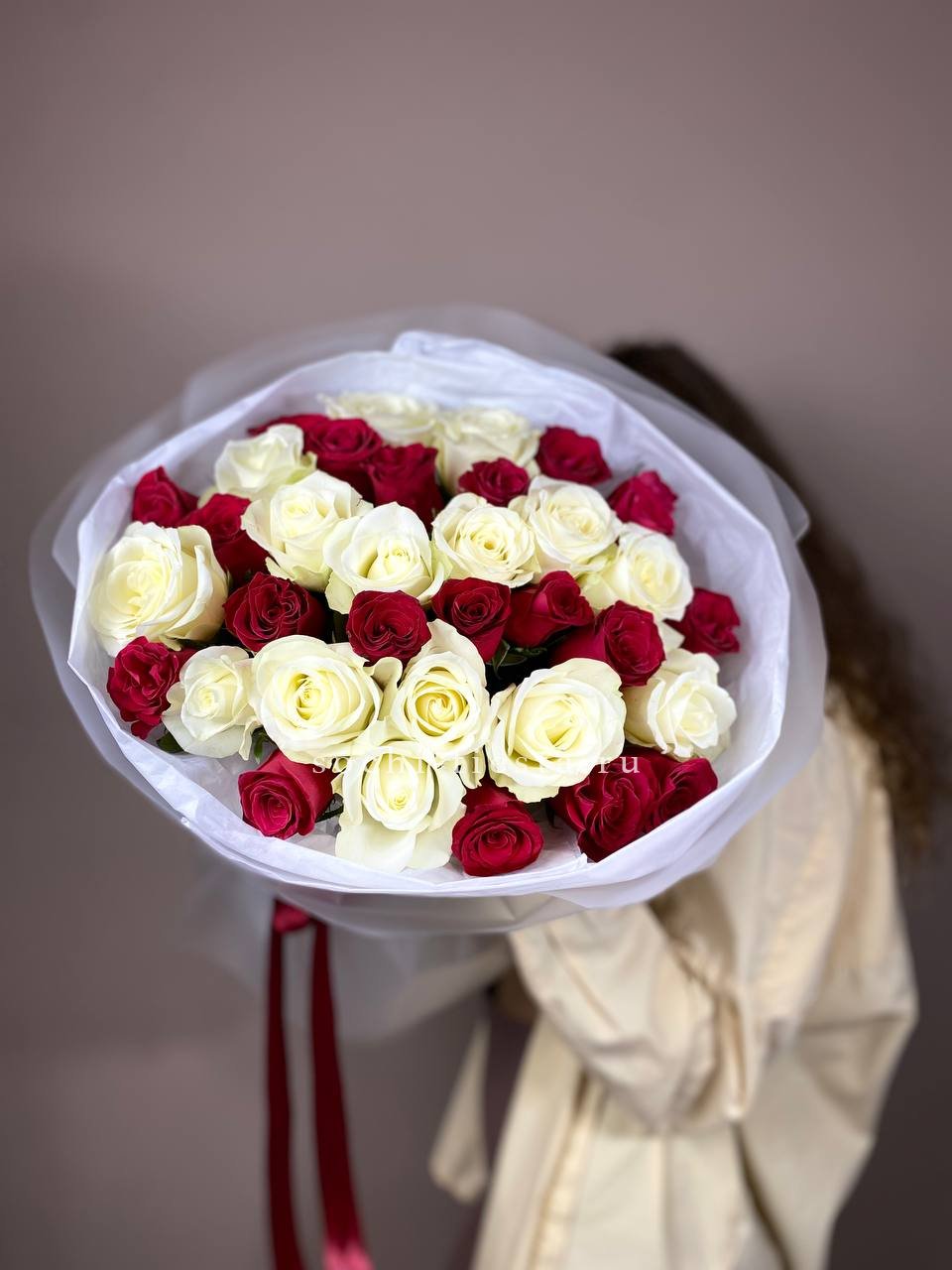
Roses by quantity in Buenos Aires come only in odd numbers, from five stems to a bouquet of 1,001. In Russia, Ukraine, Belarus and most countries of the former Soviet Union, an odd count is what you give the living, while an even one is kept for memorials; outside that tradition, a dozen roses is the ordinary gift. The number is usually the first thing a buyer settles on, but it says less about the bouquet than the variety and the stem length behind it, and that is where the real choice sits.
Why every count here is an odd number
Every count in this section is odd, starting at five stems. In Russia, Ukraine, Belarus and most of the former Soviet Union, that matches a custom of its own. An odd number of flowers goes to someone living, an even number is brought to a grave or a memorial. Five, seven or nine simply mark the start of the range rather than a gap where a dozen might sit.
Outside that tradition a dozen roses is a perfectly normal present, so a reader used to buying twelve may come looking for that figure and not find it. It has not been left out by mistake; the range simply starts counting from a different point, at five.
If the recipient keeps the tradition, the odd count is not a small detail, and swapping it for an even one changes what the bouquet says. Outside that tradition, five, eleven or twenty-five can be judged like any other size, on how the bouquet looks rather than on the figure attached to it.
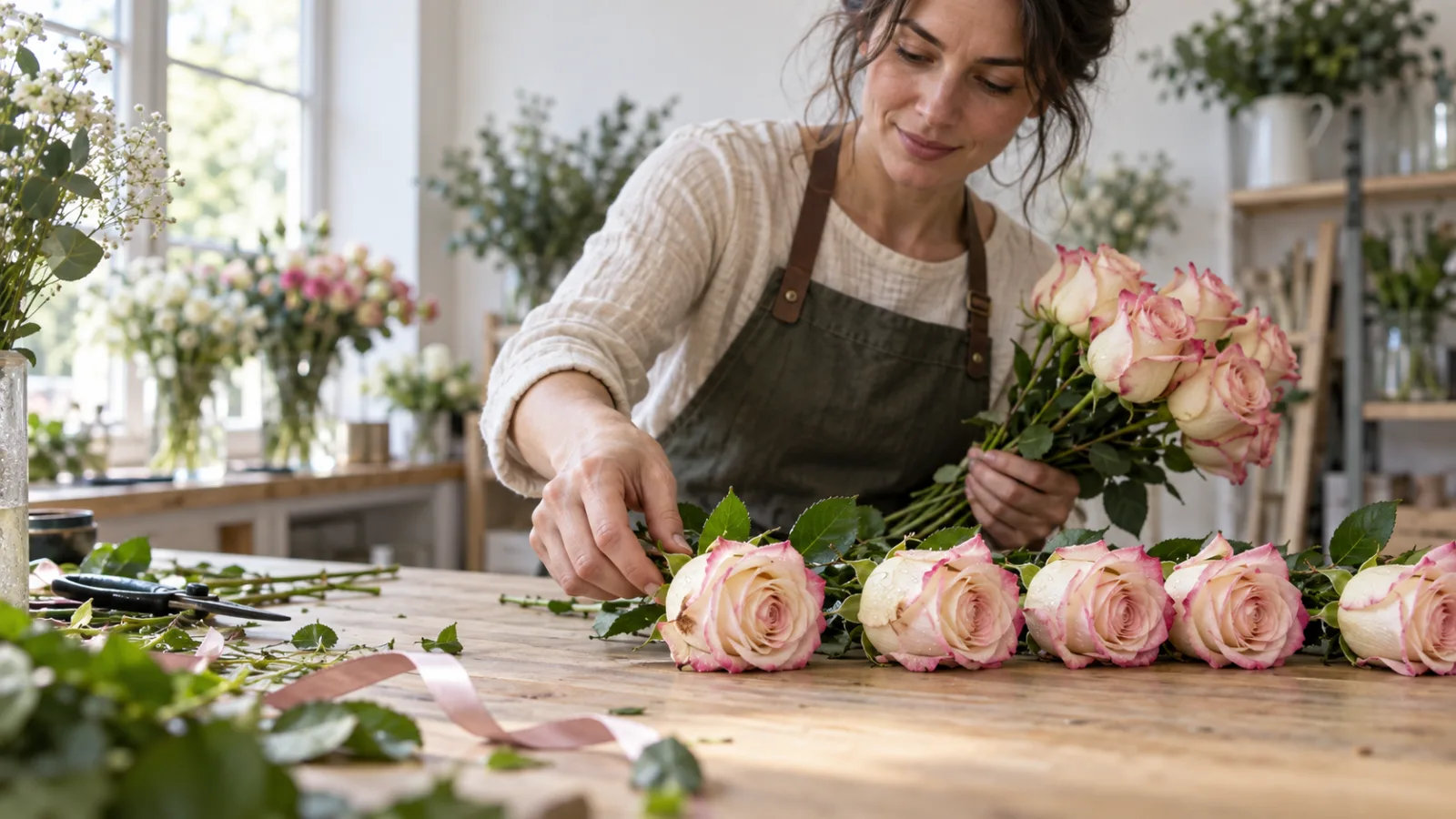
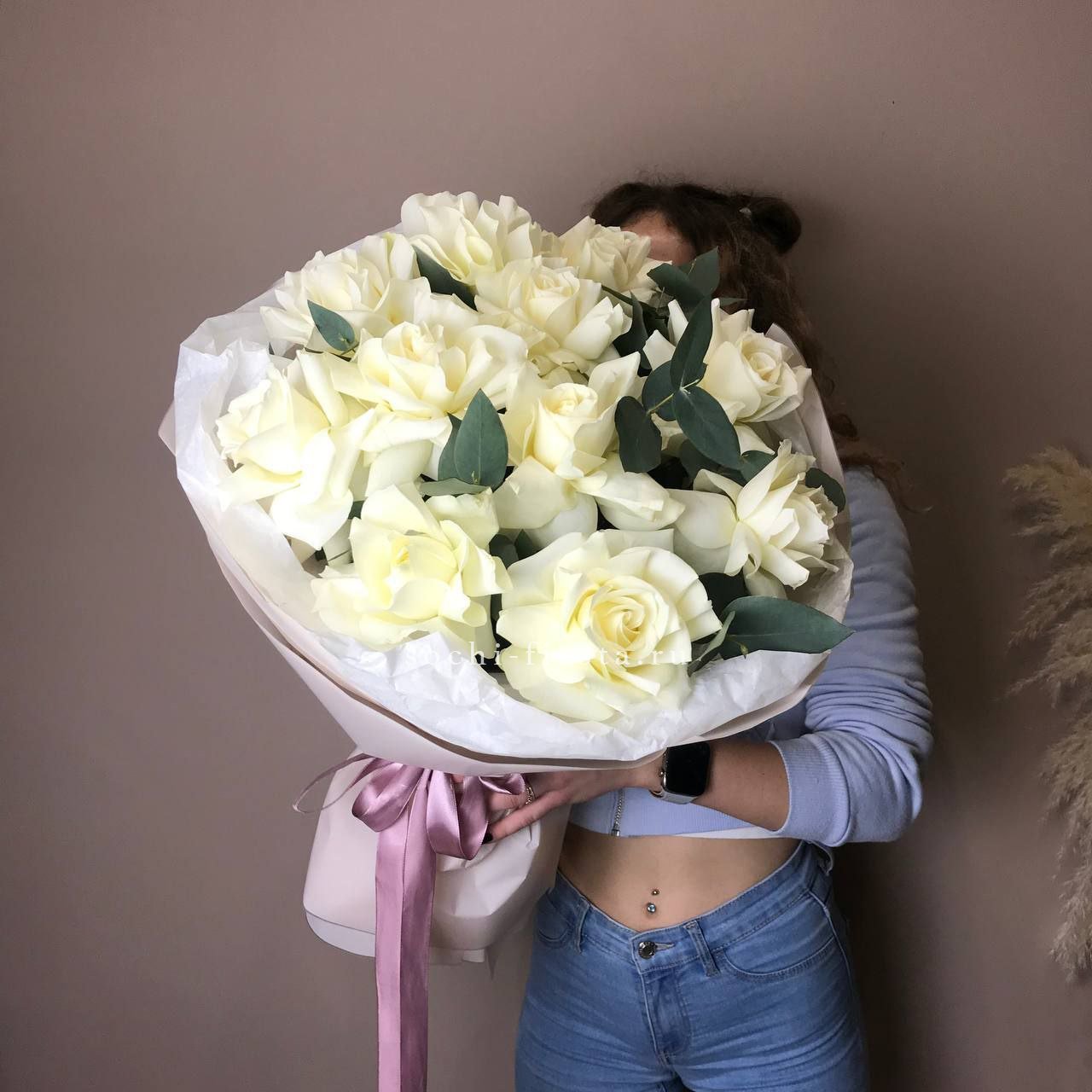
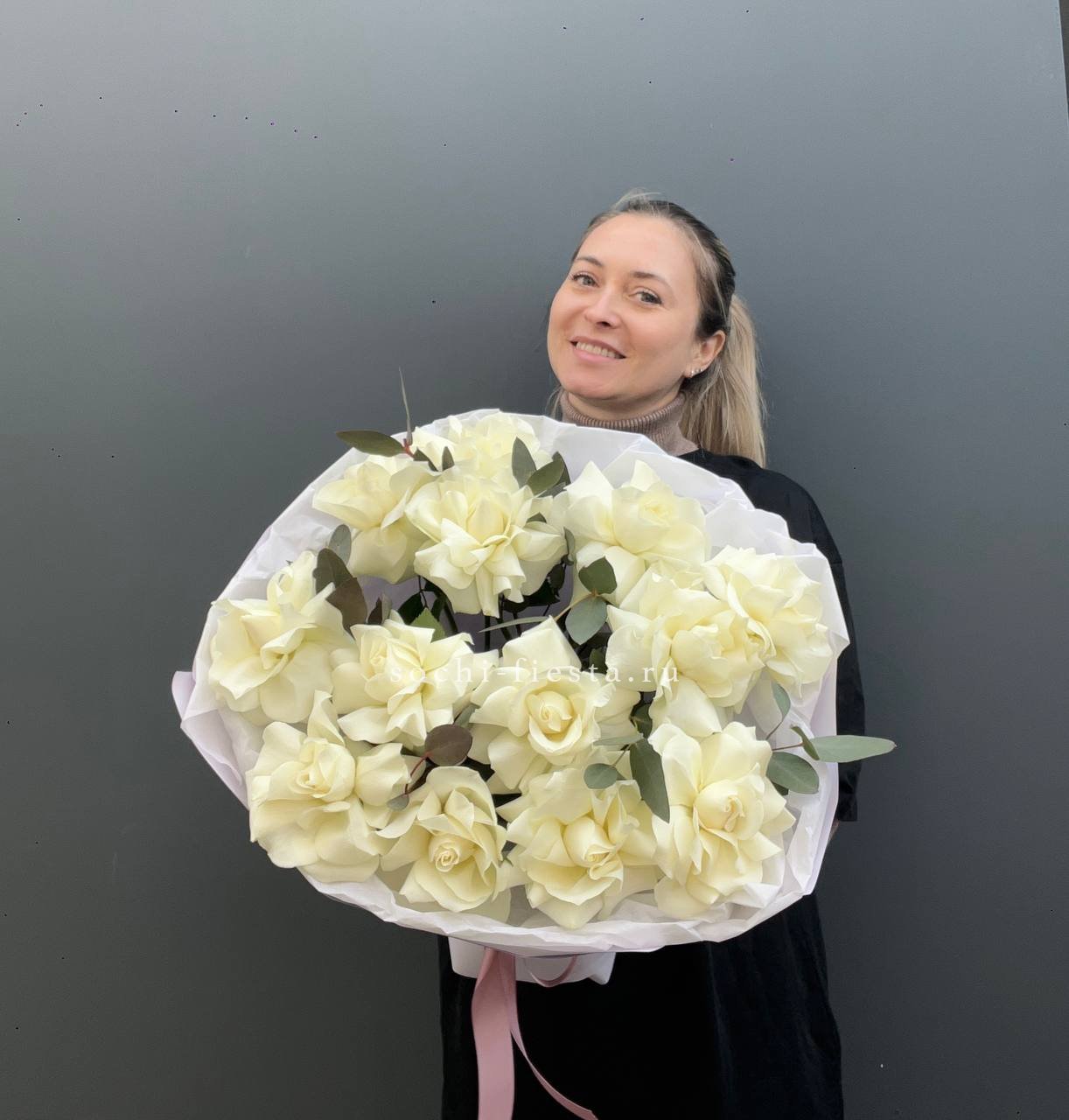
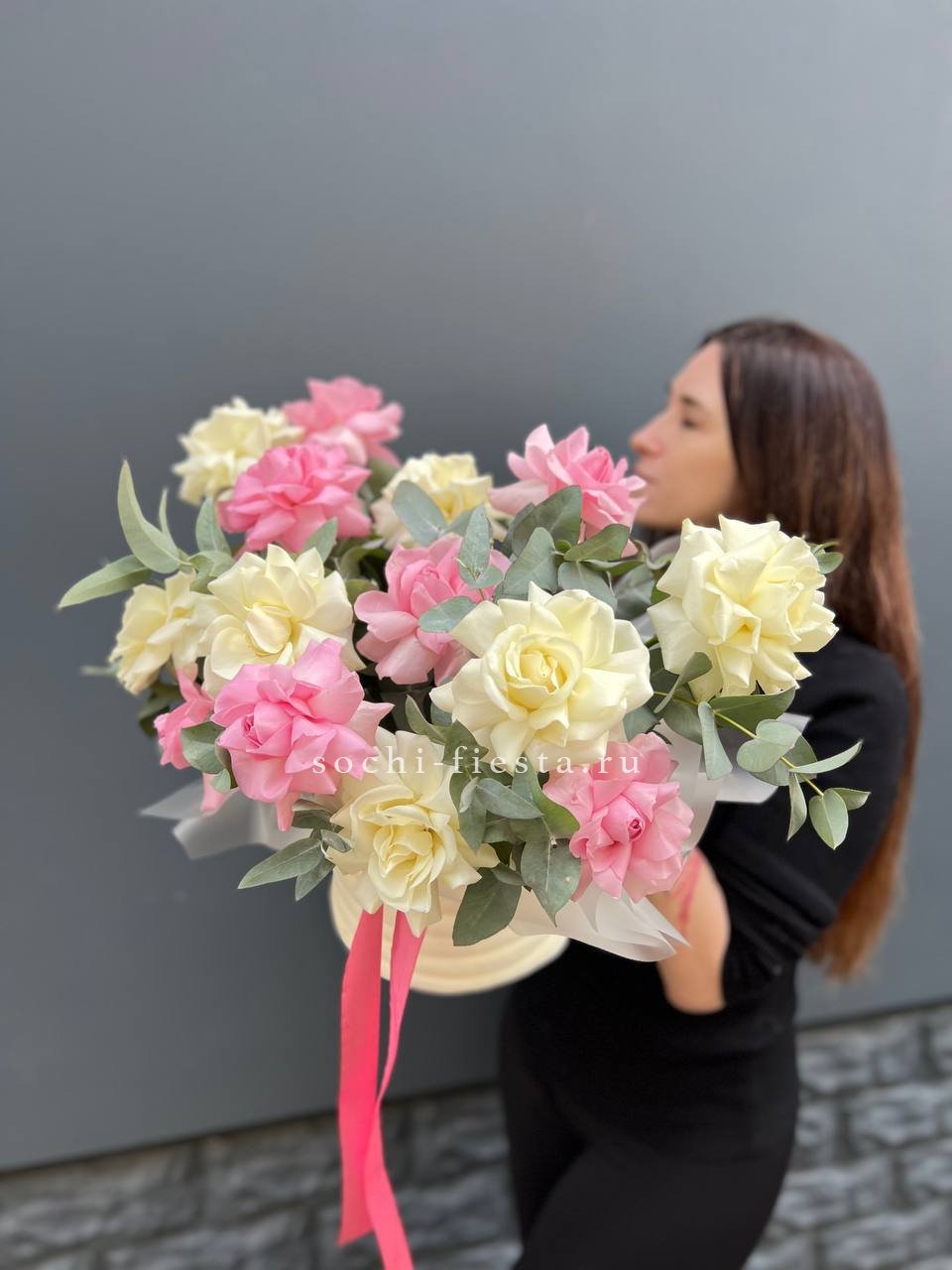
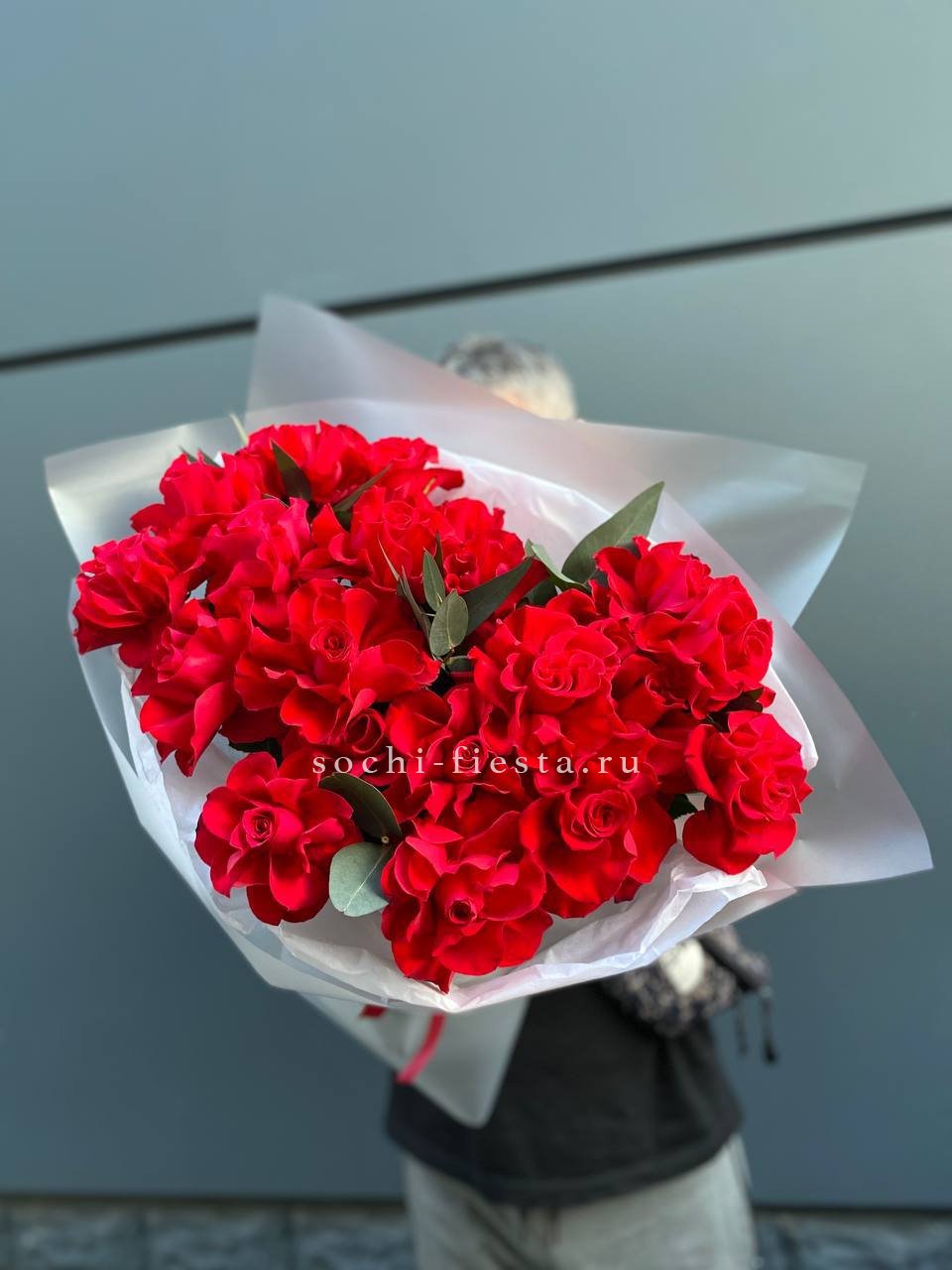
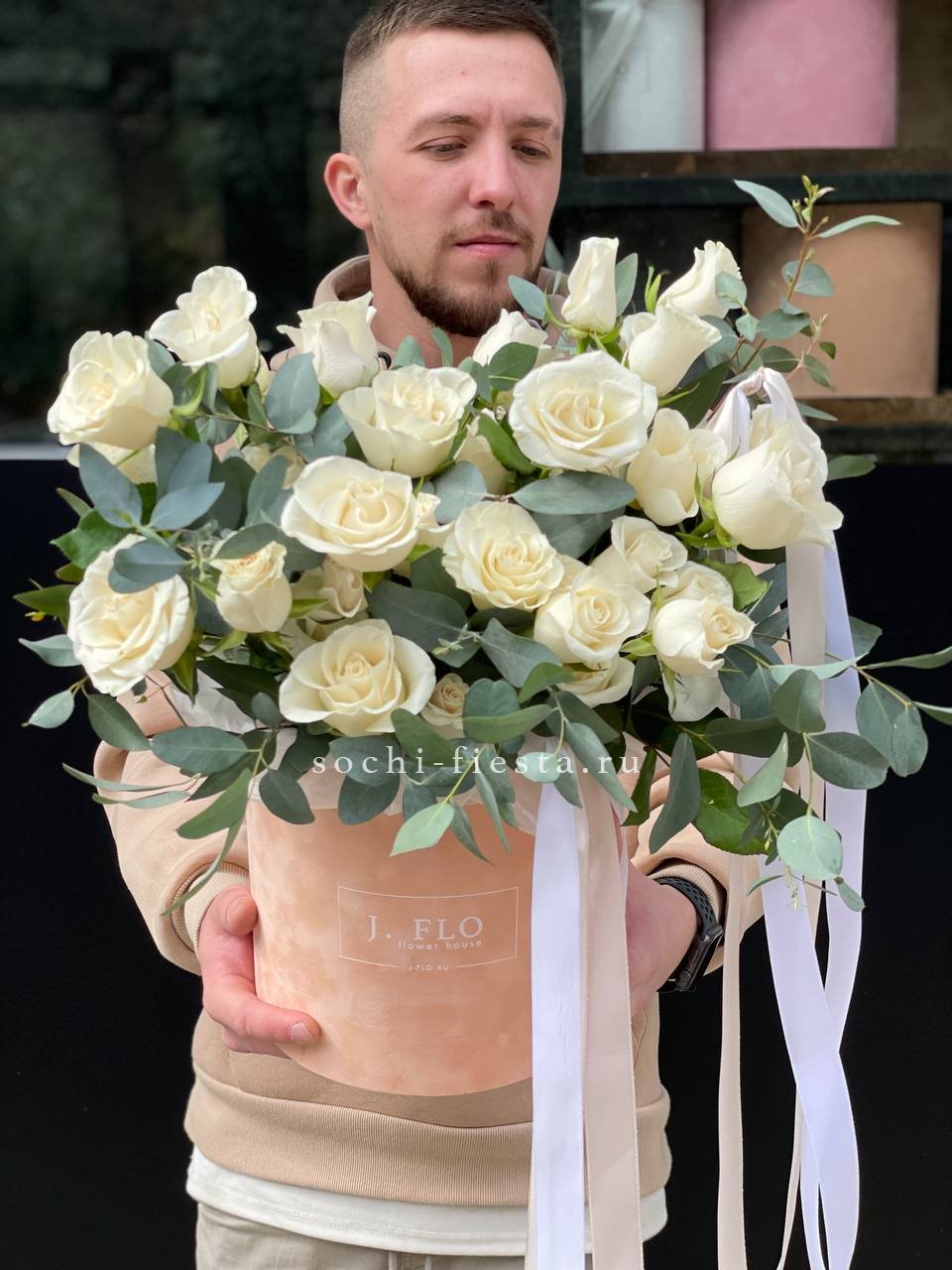
Two bouquets with the same count can look nothing alike, because the number on its own says nothing about the rose behind it. "French" is not a variety but a technique: the florist bends the outer petals back by hand, so the flower opens wider than it would on its own, as in the fifteen-rose bouquets of Jumilia sold in a box.
Jumilia is a rose with a bud up to seven centimetres across, a white base and a pink edge, which gives it a paler, softer look than a plain red rose of the same size. Peony-style roses, such as the lavender fifteen-stem bouquet in the range, are usually David Austin roses or similar varieties bred for that dense, many-petalled shape rather than the classic single bloom.
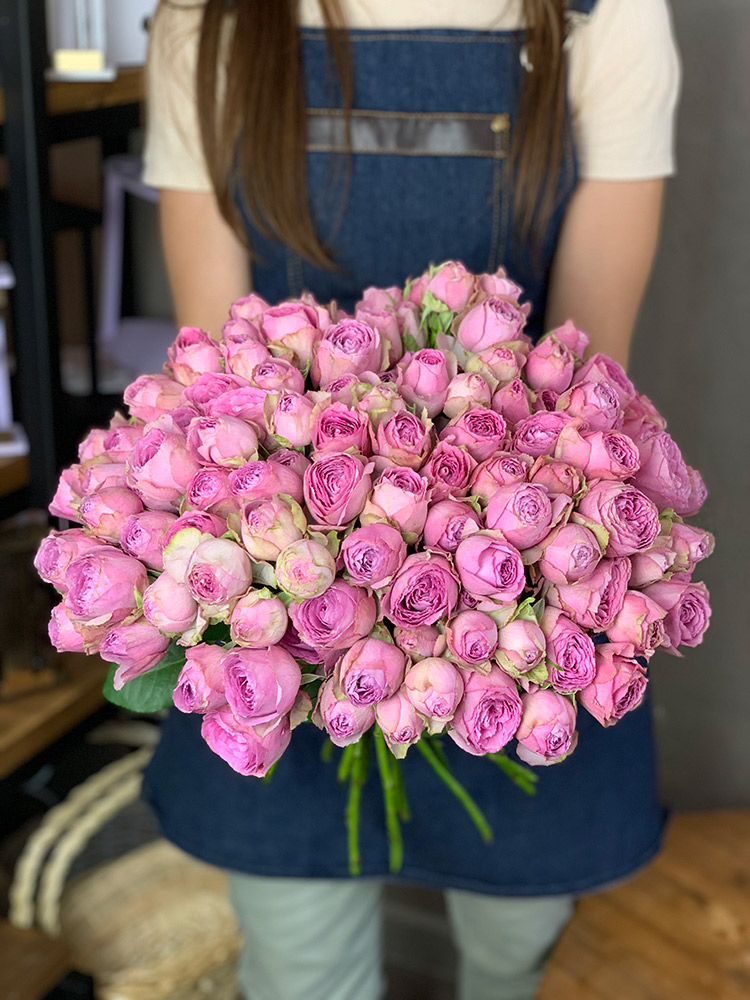
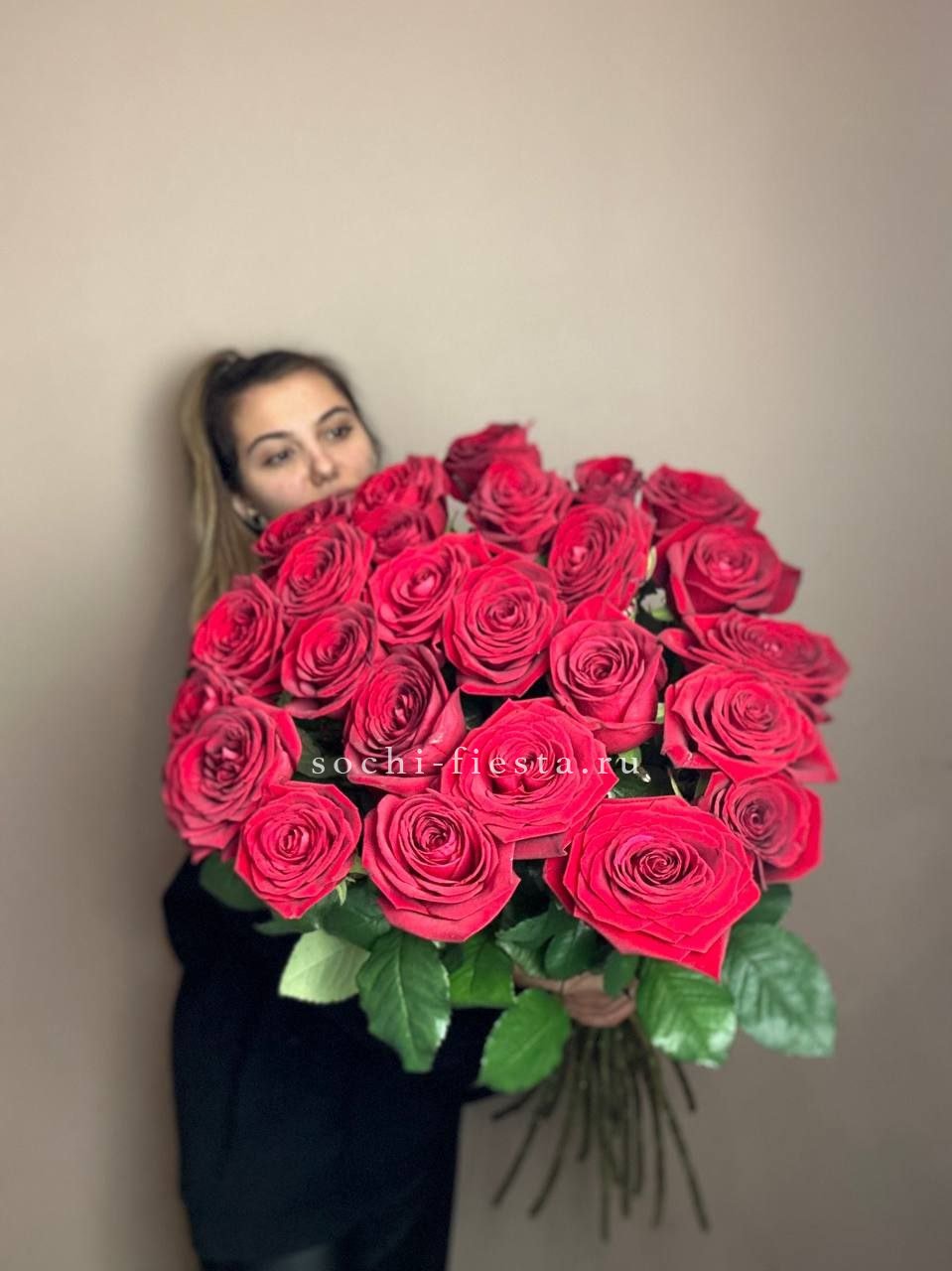
Spray roses carry several smaller heads on one stem instead of a single large bloom, as in the eleven-stem bunches of bombastic or lavender spray roses in the catalogue. Stem length depends on where the rose was grown: Ecuadorian roses typically run from seventy centimetres to a metre or longer, Dutch roses usually sit between forty and seventy centimetres, and Kenyan roses tend to be shorter than Ecuadorian ones. Comparing two bouquets of the same count means looking at the variety and the stem, not stopping at the figure on the label.
From a single stem to 1001 roses
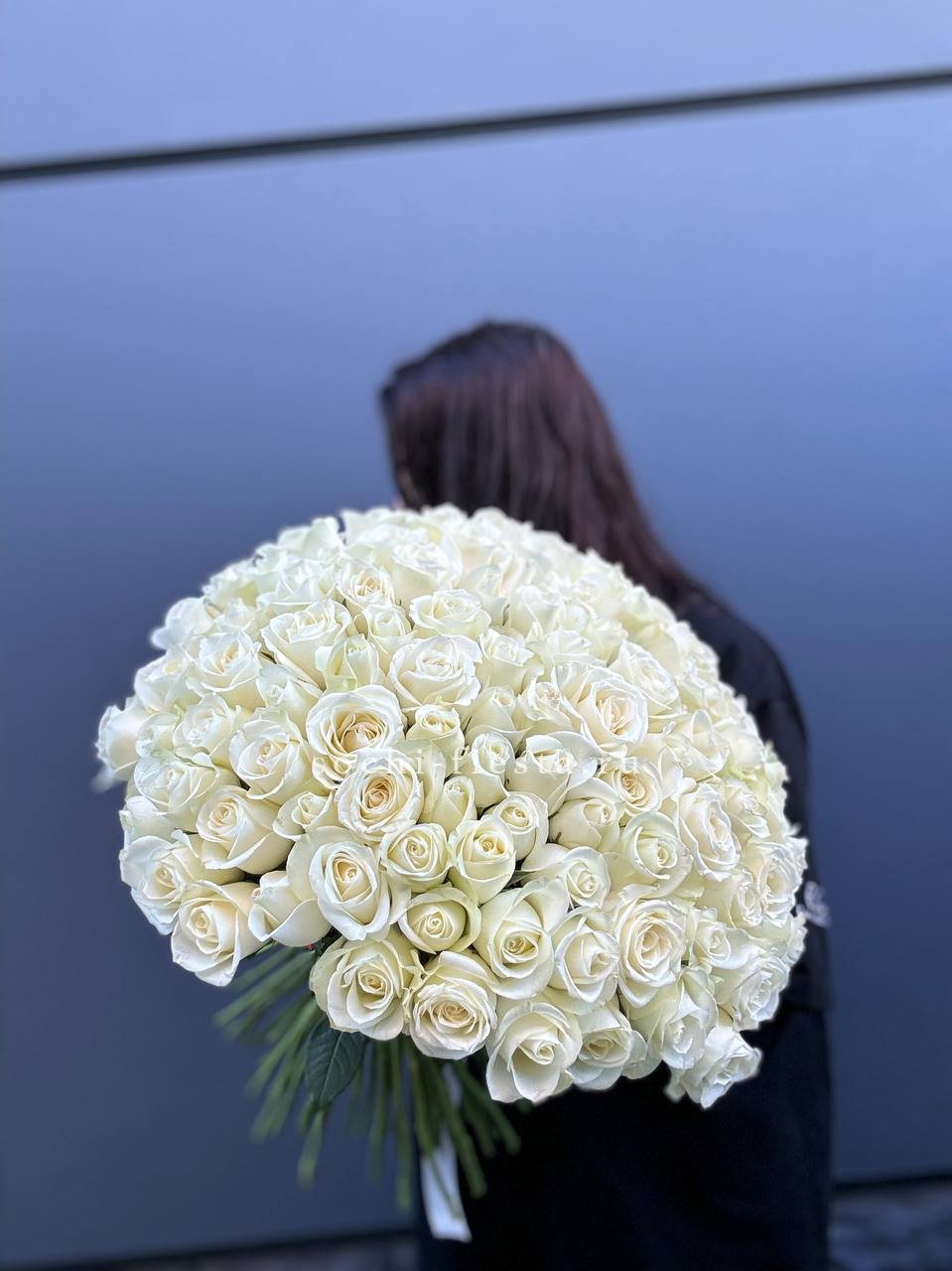
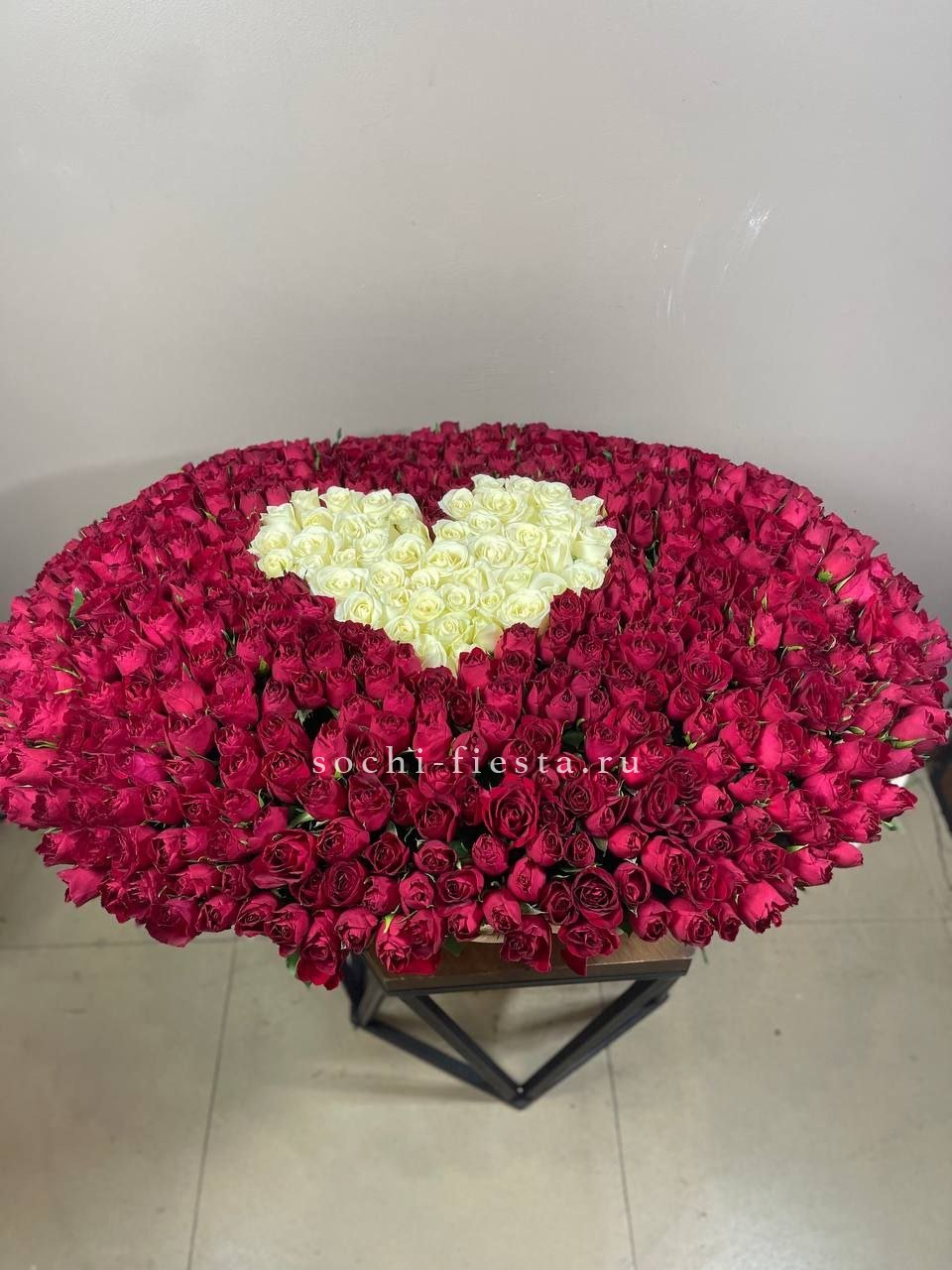
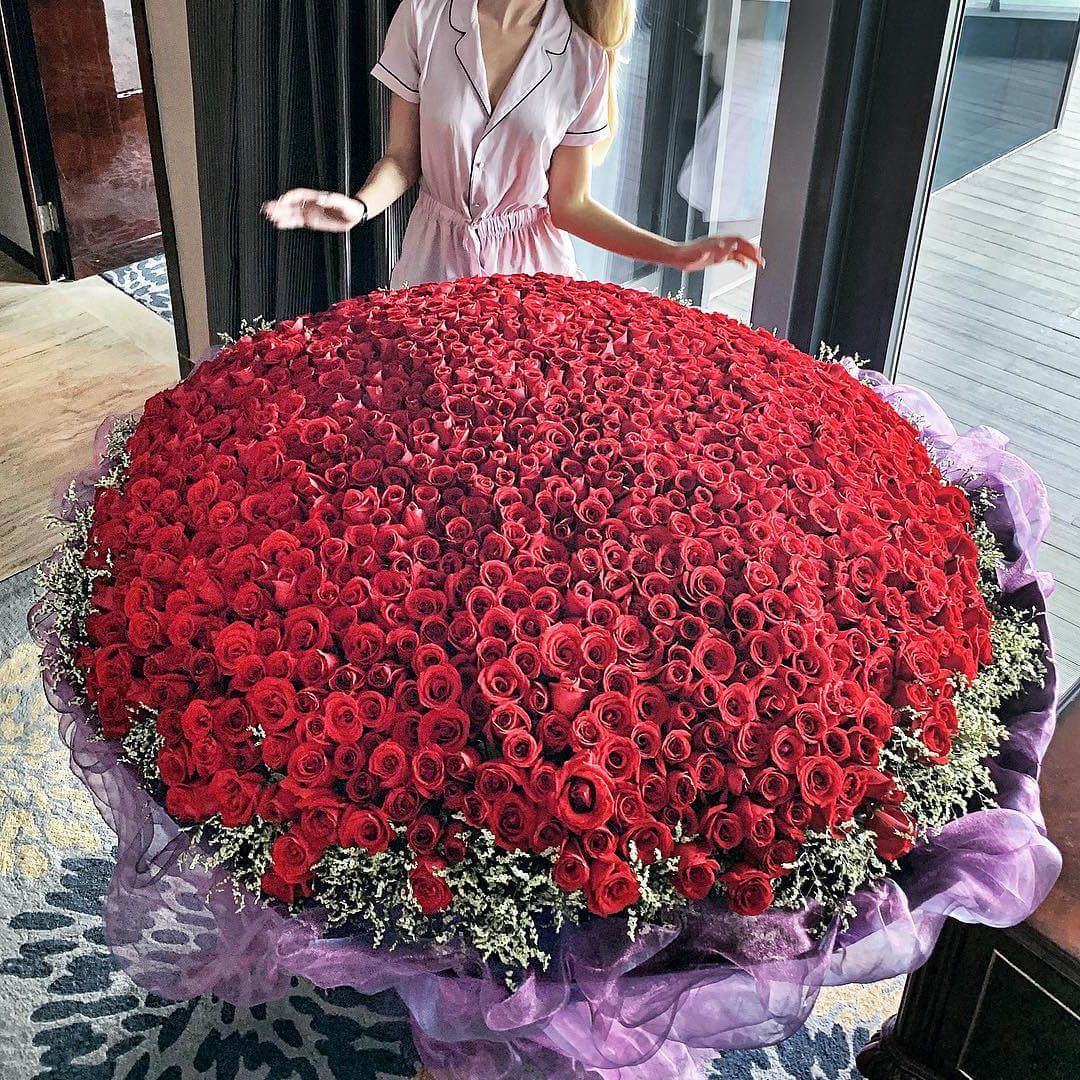
Within this odd-only range, the number of products on offer varies by subsection. Fifteen, twenty-five, fifty-one stems and a hundred and one have the most products in the section, while counts such as forty-one or thirteen have the fewest. The range still stretches as far as five hundred and one and a thousand and one roses for anyone who wants a bouquet on that scale.
Flowers are bought for an order only after it has been paid, so a large bouquet is put together specifically for that order rather than kept ready on a shelf in advance. A count outside the listed range is not a dead end, either: single roses are sold individually, or the occasion and the budget can be described in a chat, and a manager sends back options with photos and prices before anything is paid. A vase, if wanted, is added separately in the cart.

Before the courier sets off, the finished bouquet is photographed and the photo is sent to the sender, so a change can still be made while the flowers are still with the florist. If a particular rose is not available, the florist substitutes one close in shade and price, and that substitution shows up in the same photo rather than as a surprise at the door.
The card that comes with the bouquet is free and can be left unsigned if the sender prefers to stay anonymous. An address helps but is not essential: a phone number is enough for the courier to arrange the handover, and delivery to the centre costs nothing. How long delivery takes is shown on the bouquet's own page rather than promised here, and most orders go out on the day they are placed; current zones are listed on the delivery page.
Valentine's Day, 8 March and Mother's Day are the busiest days for roses in Buenos Aires, so ordering a few days ahead avoids the last-minute rush. Cut and kept properly, roses last around a week in a vase, sometimes closer to ten days, and Jumilia roses can hold for up to two weeks. A little care stretches that further:
- cut each stem at an angle before standing it in water
- strip off any leaves that would sit below the waterline
- change the water every day or two
- keep the vase away from radiators, direct sun and fruit bowls
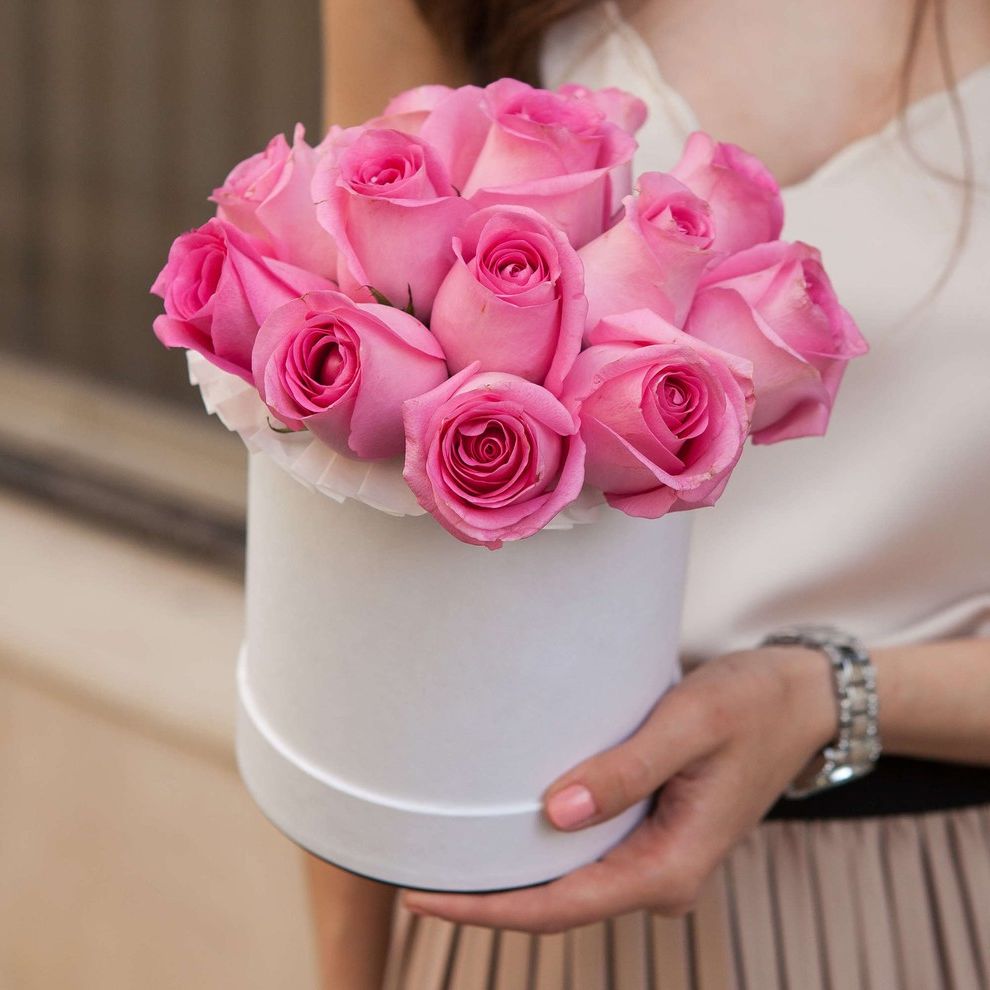
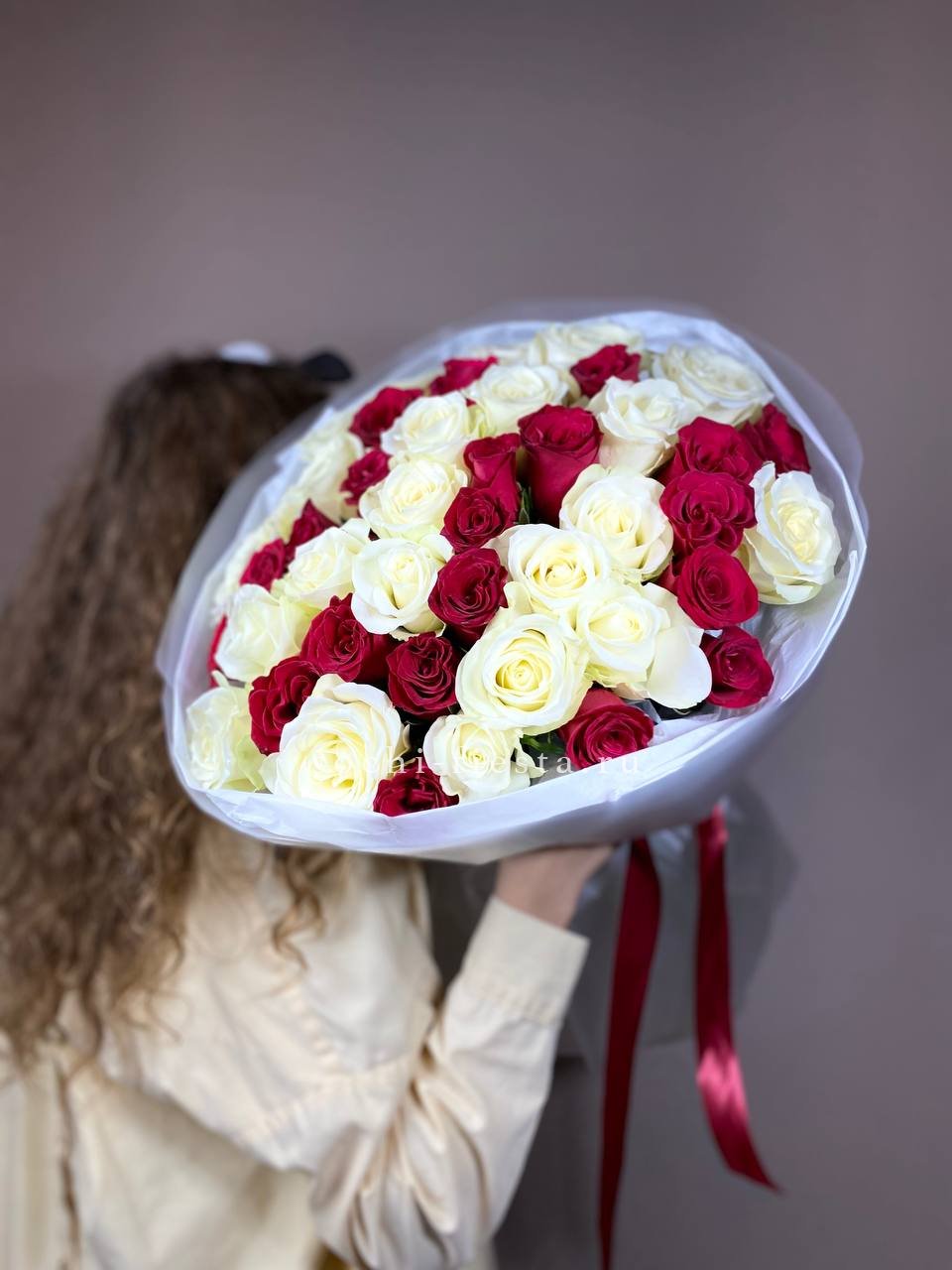
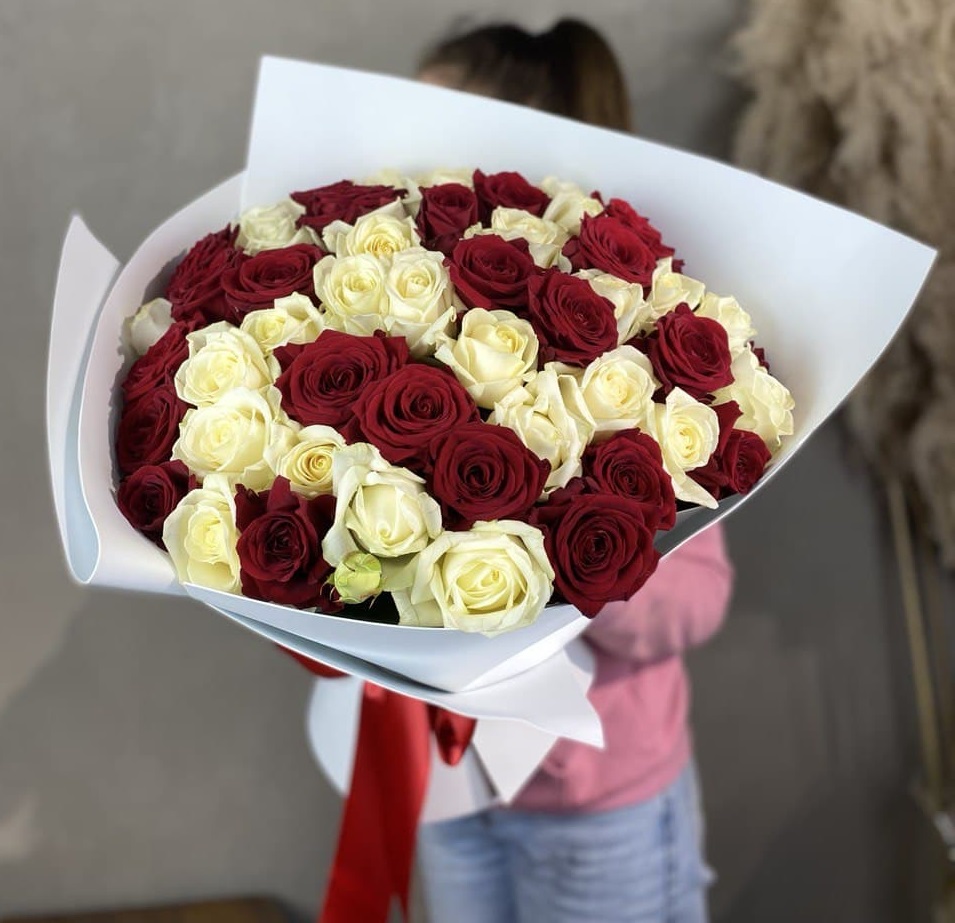
For a first look at roses by quantity in Buenos Aires, eleven roses make a compact bunch, 25 roses sit in the middle of the range, and bouquets of 101 roses cover the larger end. For a count outside the list, roses sold individually let you build the exact number yourself.