














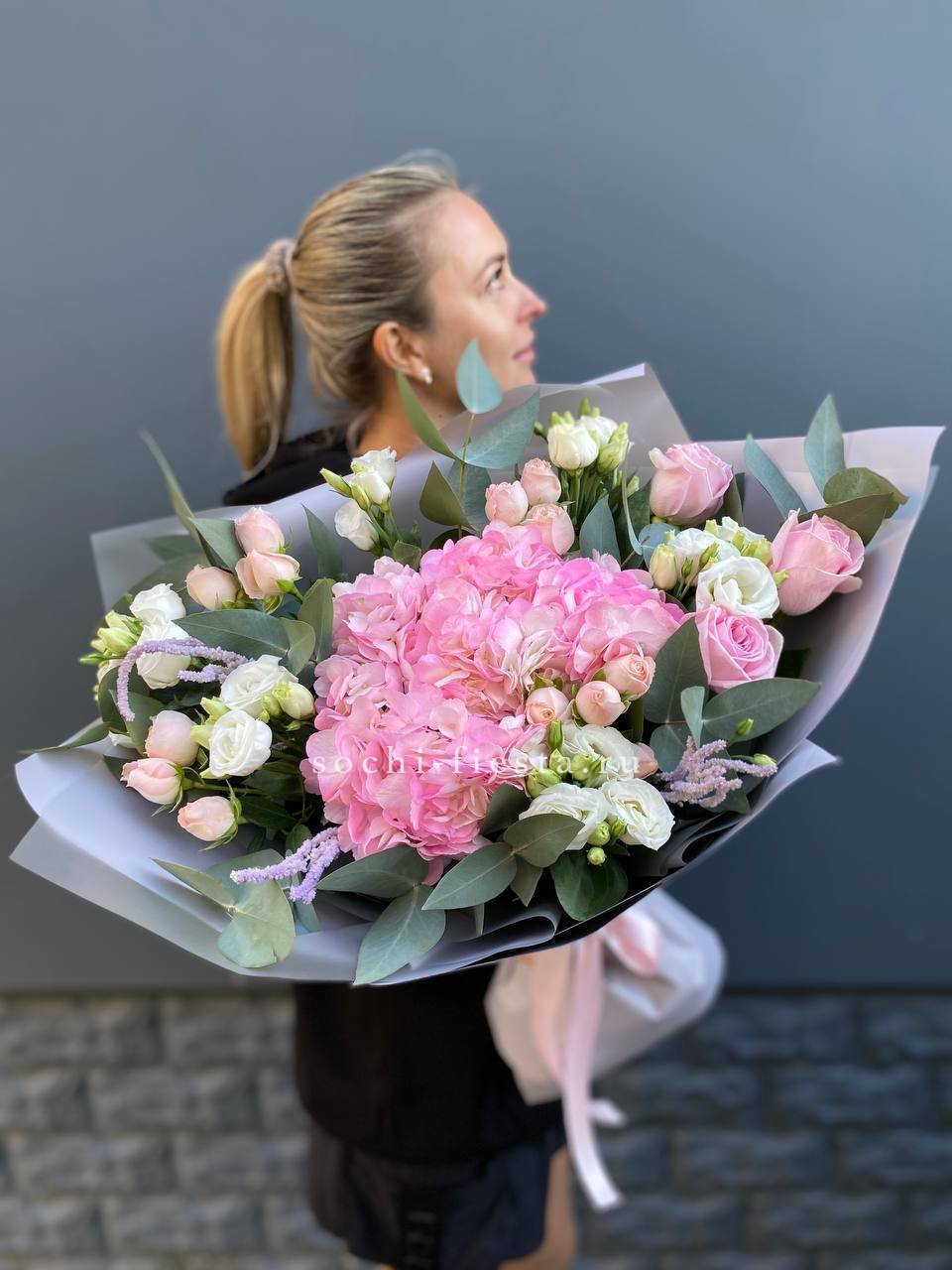


Flowers in Delhi: from a 4 am flower market to a bouquet at your door
Ghazipur Phool Mandi, Delhi's wholesale flower market on the eastern edge of the city, trades hardest between 4 and 6 am, and three older markets, Fatehpuri, Mehrauli and Connaught Place, moved their flower trade here over the years. That wholesale rush happens before dawn, while flowers in Delhi ordered online are bought for a specific order only after payment, and most orders are delivered the same day. Three things decide what to choose: the address, the date and the weather.
Flower delivery in Delhi: what each zone adds
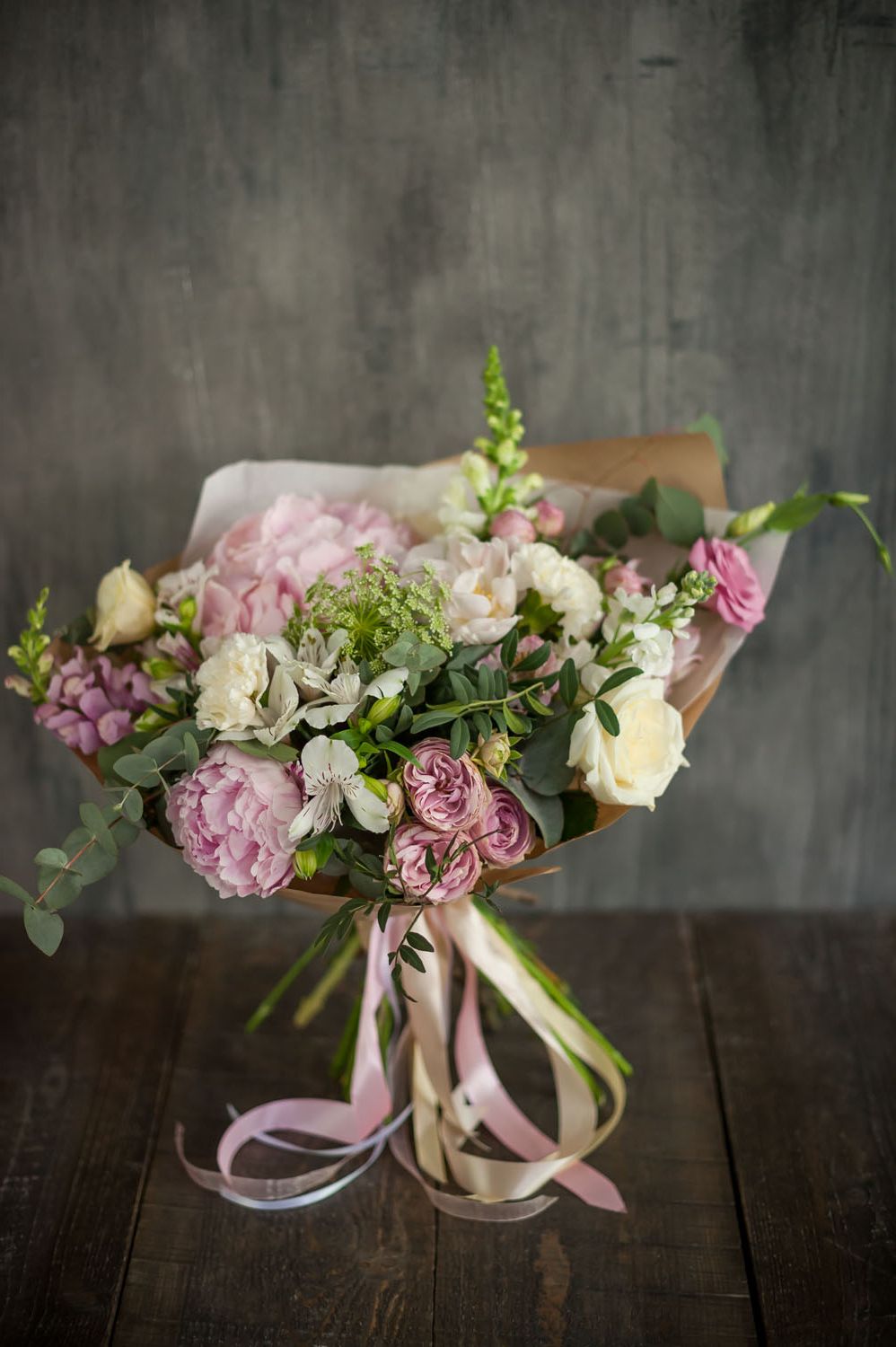
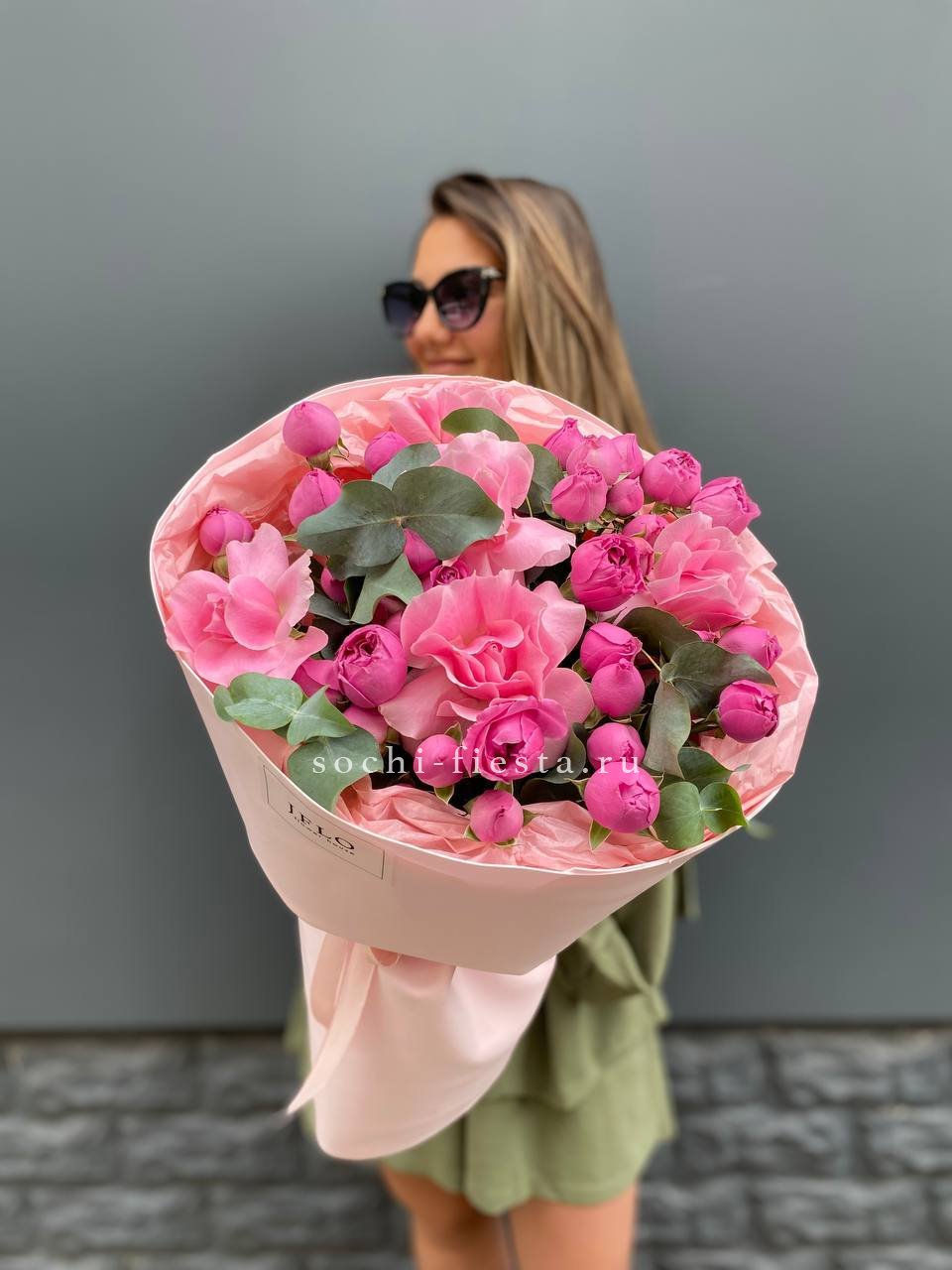
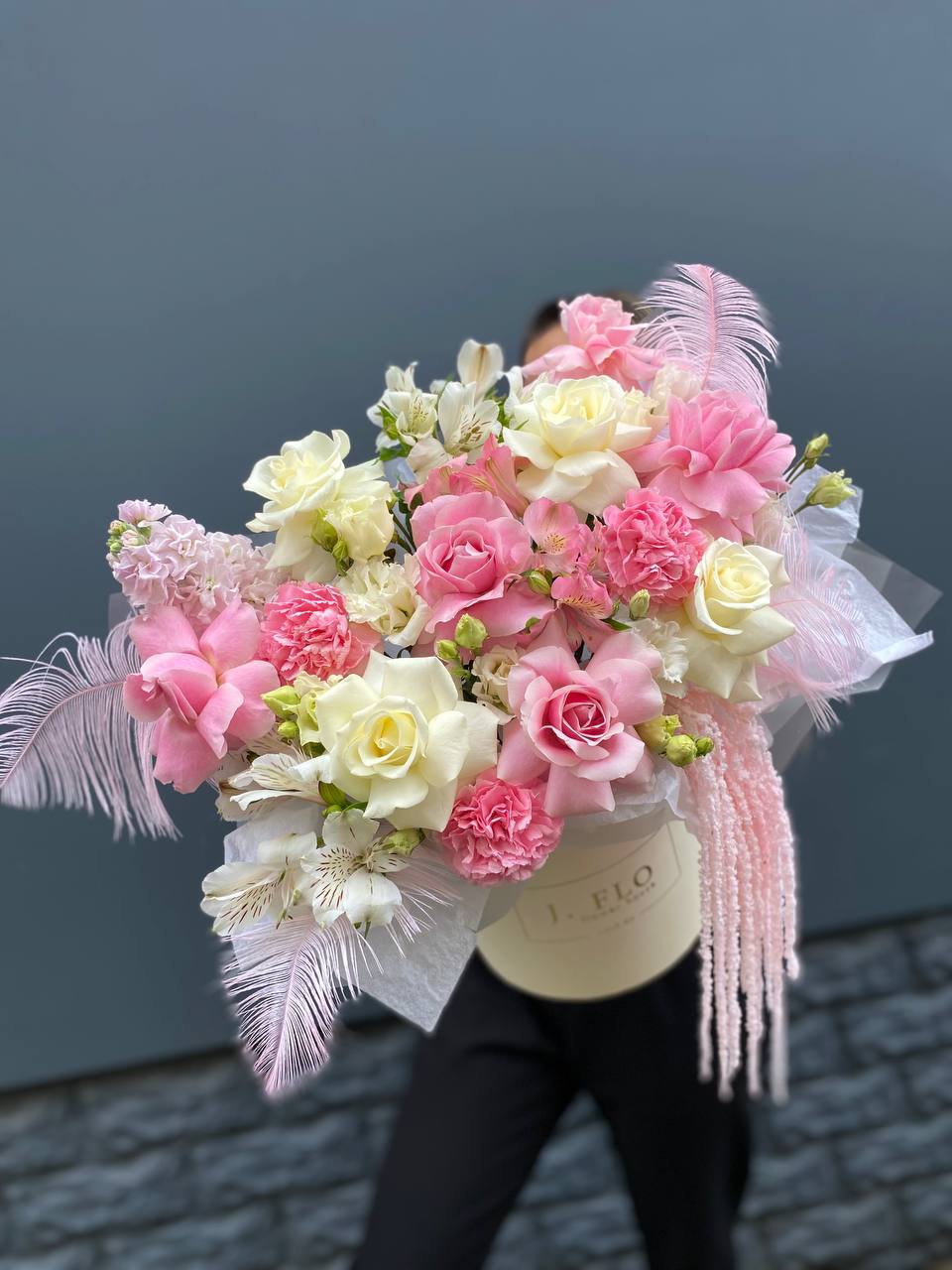
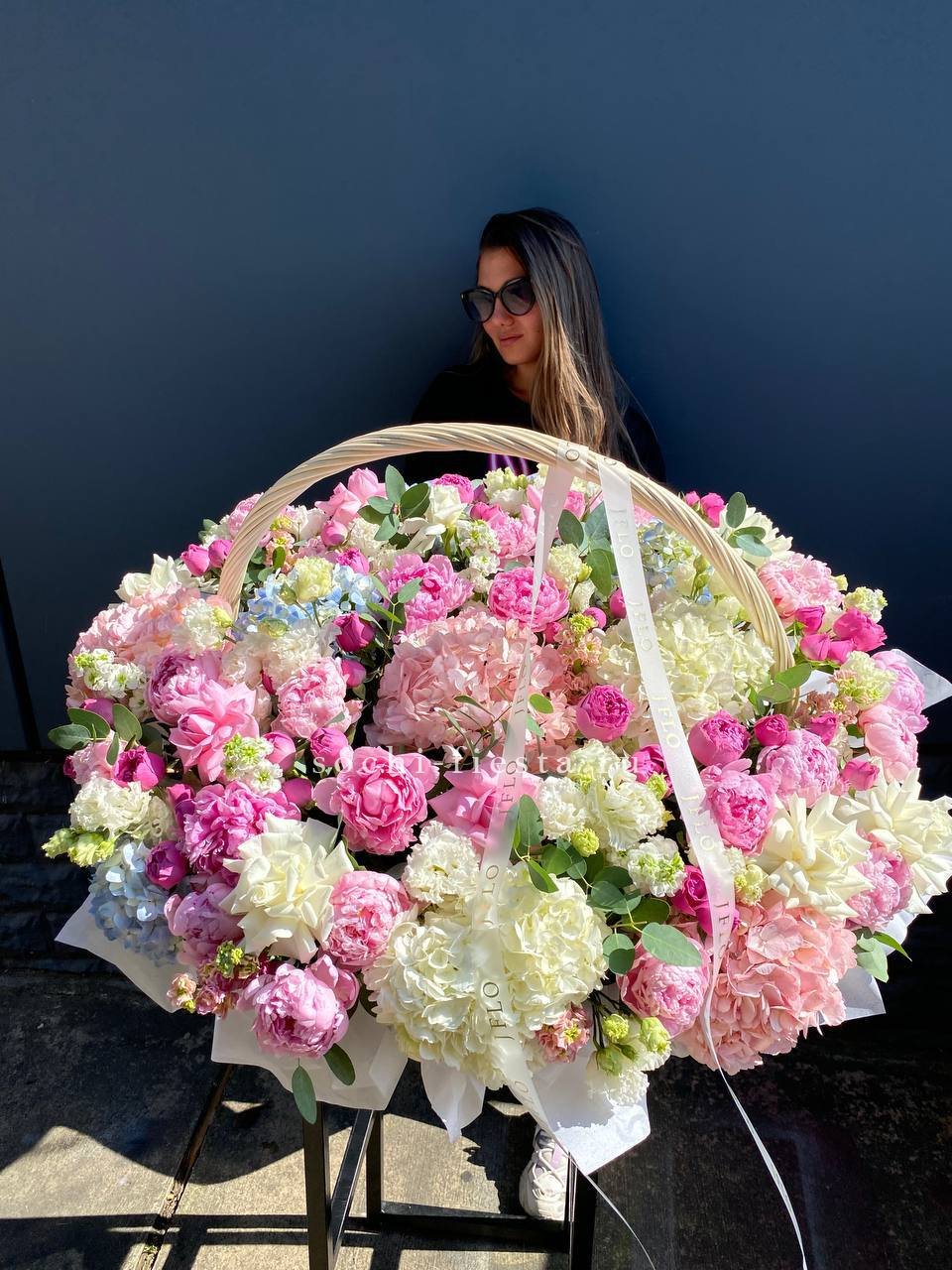
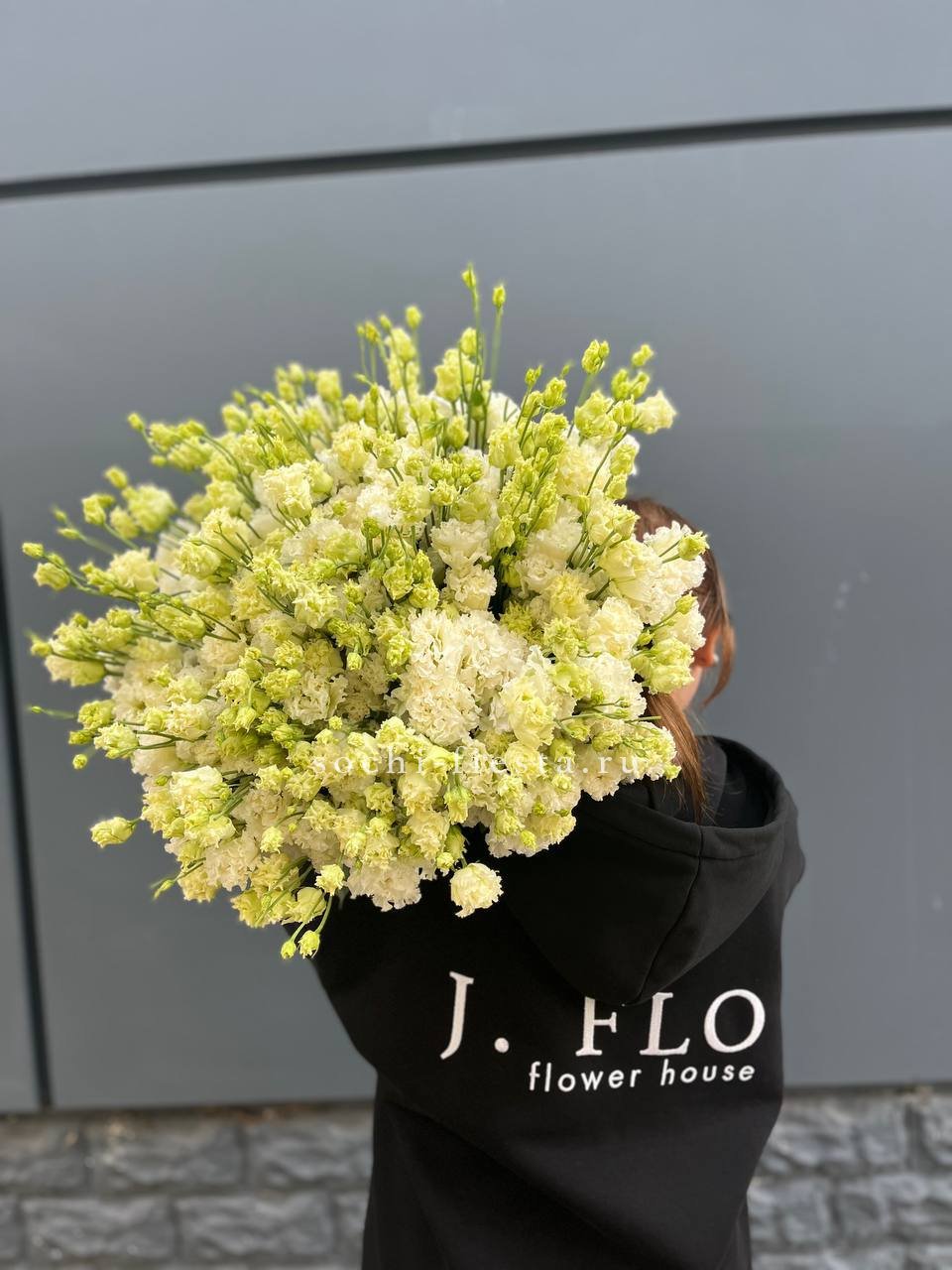
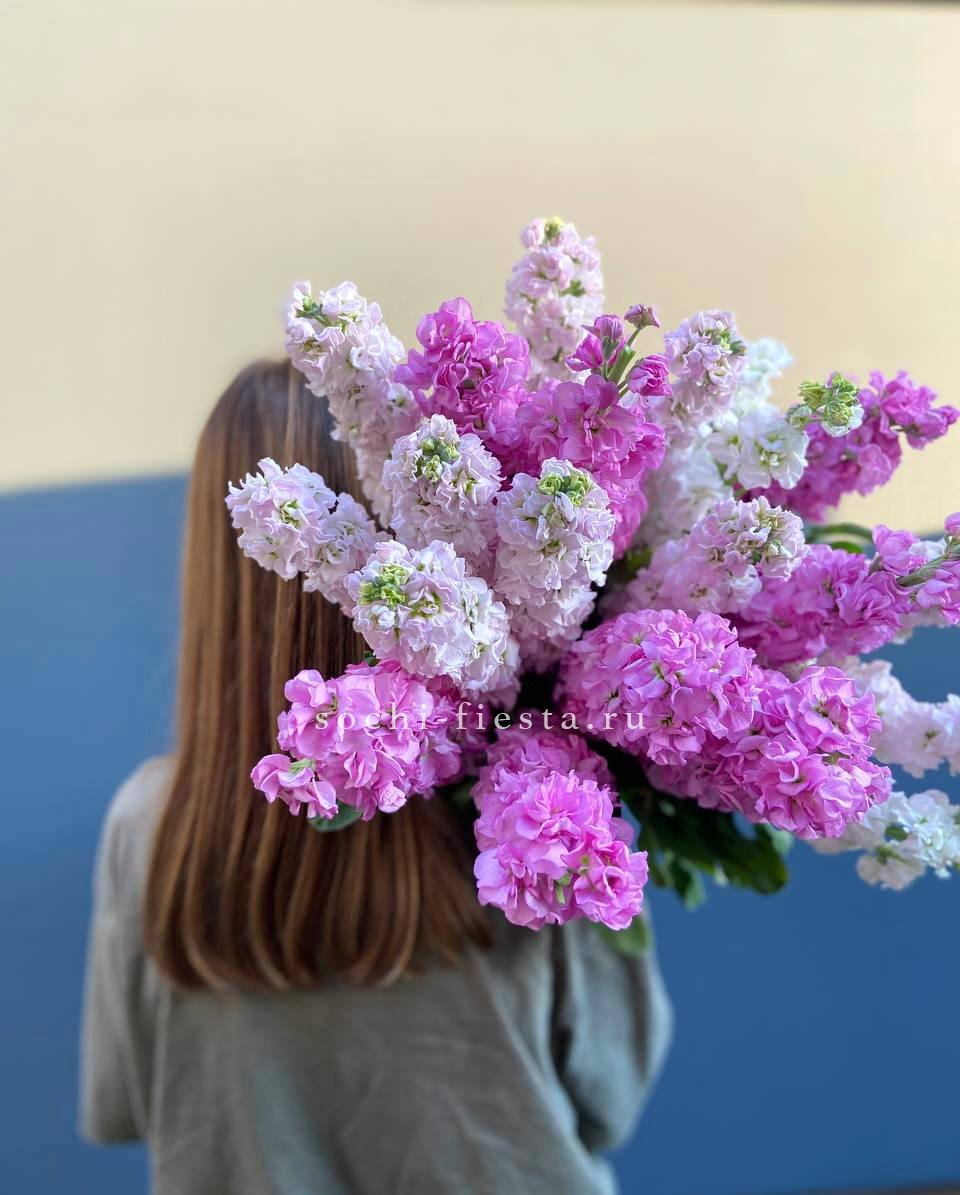
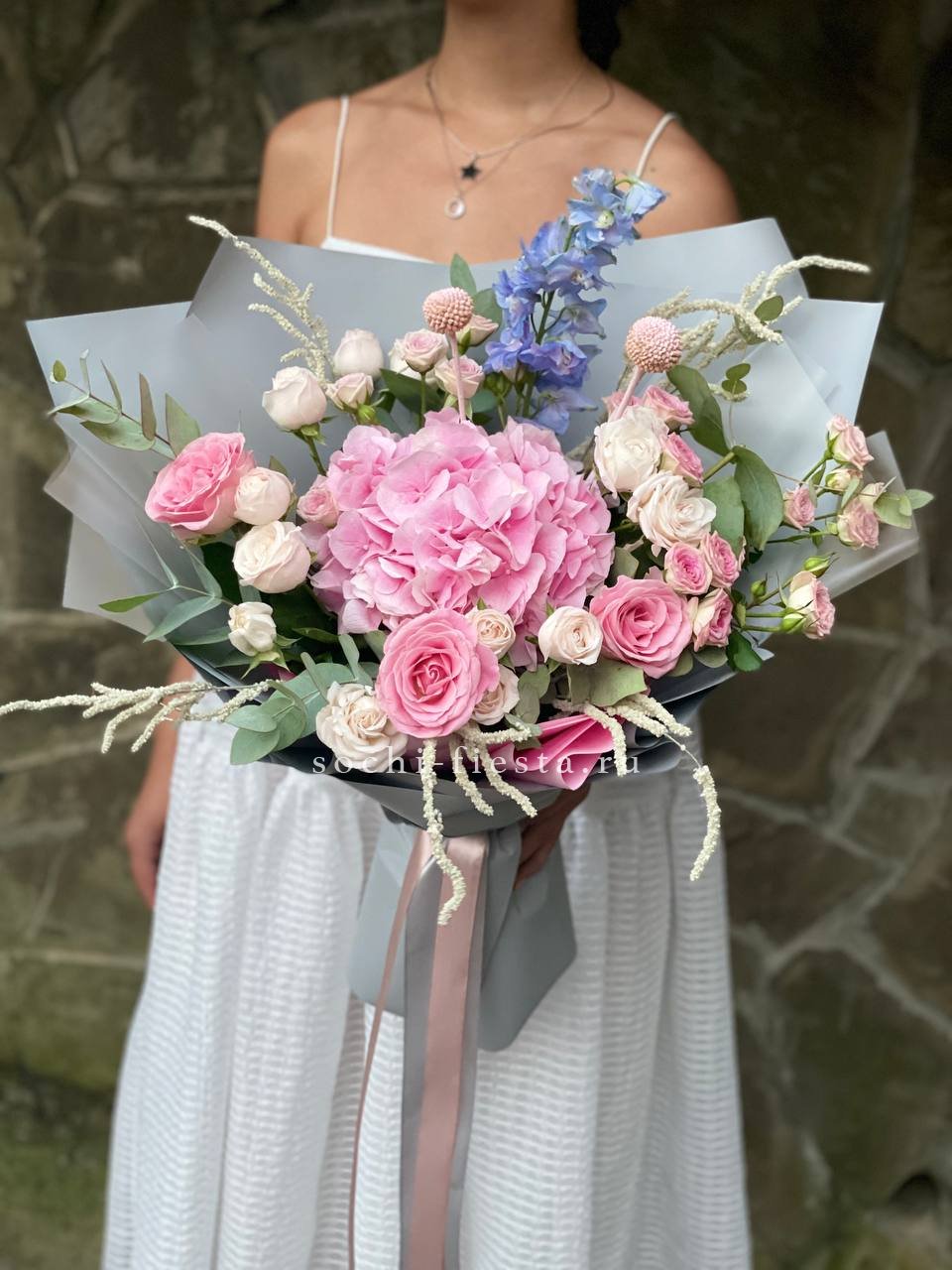
Among the catalogue, roses and mono bouquets sit at the lower end of the price range, flowers in boxes and mixed bouquets cost more, and designer bouquets sit at the top.
Flower delivery in Delhi is free inside the city centre between 7 am and 11 pm, and same-day flower delivery works when the florist already has the bouquet in stock; the bouquet card shows the delivery time. Two further rings cover the rest of the city:
- Nearer districts, delivery is paid — Karol Bagh, Hauz Khas, Saket, Lodhi Colony, Rajouri Garden, Laxmi Nagar
- Further districts, delivery is paid — Dwarka, Vasant Kunj, Rohini, Shahdara
Overnight orders, from 11 pm to 7 am, are arranged individually and priced case by case rather than through the standard ring. Every rate covers one address, and a chosen date and time slot can be booked in any of the three zones, not only the centre.
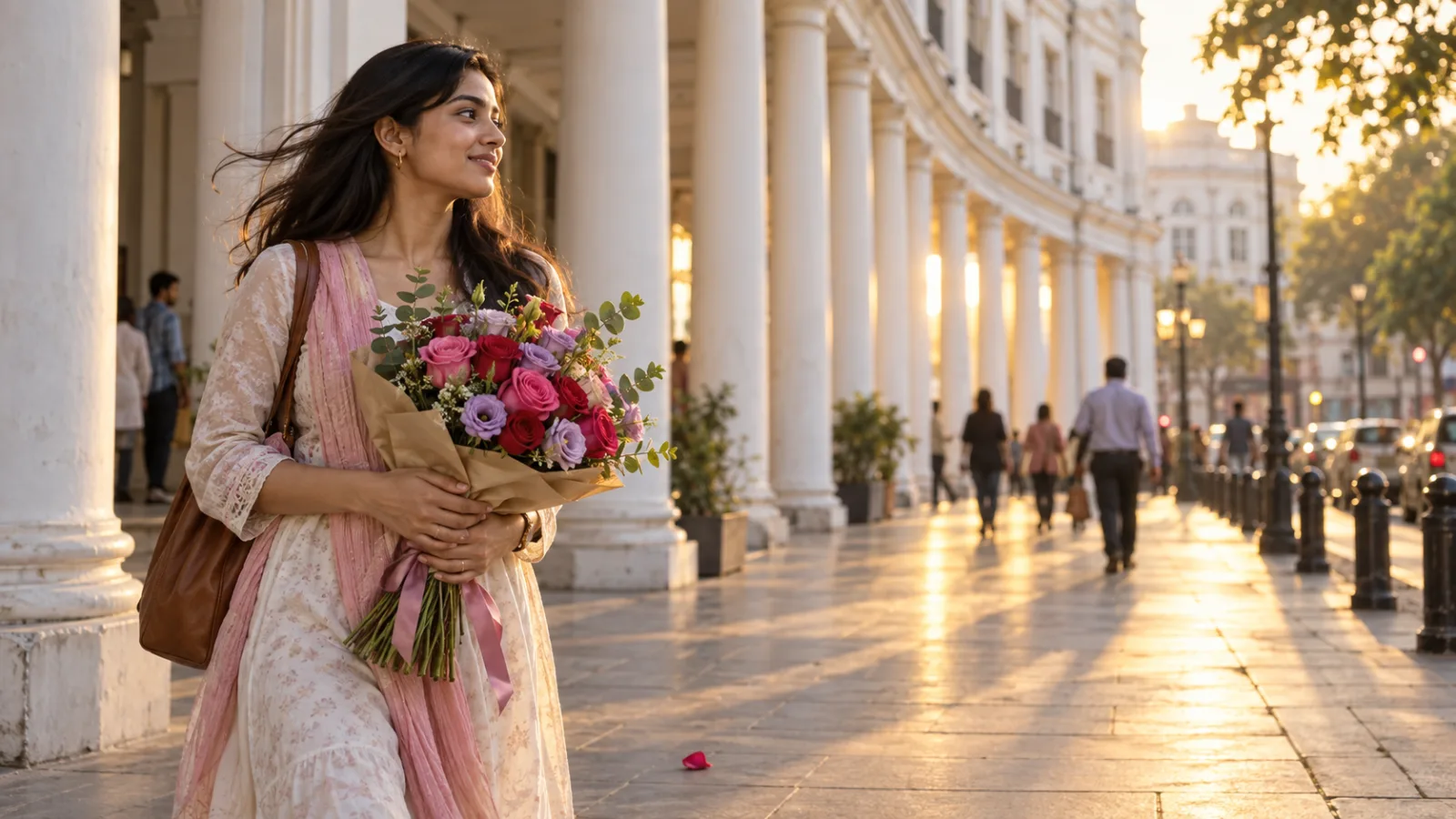
Aerocity, the hotel district by IGI Airport, holds around fifteen hotels, but it sits outside the listed delivery zones, so its price is quoted before payment rather than fixed on a list. An office delivery in Connaught Place needs the company's name and its floor number rather than a street address; if the building operates a security pass system, reception accepts the flowers instead of the courier going up.
For a hotel guest, what matters is the surname used at check-in, plus the room number when it's known; the hotel then decides whether the box reaches the room or stays at the desk. Hospitals need checking beforehand, because wards don't all allow fresh flowers in: if a ward refuses, the bouquet waits at the nurses' station or until the patient is discharged. At the airport a courier waits at the gate with a name sign on request, and Gurugram and Noida are also served on request, without a promised delivery time.
Sending flowers to Delhi from abroad needs little more than the recipient's phone number, since the street address helps but isn't required. Payment runs through Visa or Mastercard, and the currency switch on the site, USD, EUR or RUB, is only there for reference: conversion happens at the sender's own bank rate, with no extra charge from JFLOO. Before the courier leaves, a photo of the finished bouquet goes to the sender's phone.

Ghazipur sits close to Anand Vihar ISBT metro station, about 13 km from Connaught Place, and trade there is heaviest well before the city centre wakes up. Since 2015 a smaller morning market has run again on Baba Kharak Singh Marg, by the Hanuman Mandir, a throwback to the flower trade Connaught Place once hosted itself.
Most of the roses grown for the Indian market come from greenhouses around Pune, Nashik, Bangalore and Hosur, and Delhi is one of the country's largest outlets for them. In JFLOO's catalogue, roses include Ecuadorian and French varieties, and ordering flowers online in Delhi means the stems for a bouquet are bought only after the order is paid for.
Rose Day, Diwali week and the wedding season: colours that fit
Delhi's Valentine week opens with Rose Day on 7 February and Propose Day the next day, and retail rose prices climb noticeably through both, though the catalogue doesn't fix the mark-up to a figure. Delivery slots widen on the busiest days, 14 February, 8 March and Mother's Day, and an exact minute isn't promised on any of them; 8 March itself is an ordinary working day in Delhi, not a holiday. Mother's Day falls on a different Sunday every year, always in May.
Autumn brings its own run of festivals: Karva Chauth, Dhanteras, Diwali and Bhai Dooj follow close together, though the exact date shifts each year. Colleagues also mark Diwali with sweets and dry fruit, which is where gift baskets fit alongside a bouquet. The wedding season opens in November and runs through the winter, with a pause around the middle of December.
Colour carries meaning here. White flowers, frangipani and chrysanthemums are associated with mourning, so white on its own isn't the safe, universal choice it might be elsewhere. Red, maroon, gold, yellow and green work better as wrapping colours for a festive order, while black and plain white are best left out of it.
May at 44 °C and January fog: timing a bouquet around the weather
May is Delhi's hottest month, with an average daily high of 44.3 °C at Safdarjung, and the heat is hard on any stem left waiting in the open. A boxed arrangement, its stems already drinking from soaked foam, copes with that better than paper-wrapped flowers, and booking a slot when the recipient is actually home helps too, since the courier can wait up to 15 minutes at the door.
From mid-December to the end of January, fog and smog settle over the city and can slow deliveries across it, so a fixed date and slot is worth booking ahead of that stretch rather than left to the last day. April brings drier air, with humidity around 25 per cent, and a bouquet in that weather needs its stems recut and its water changed more often than usual.