

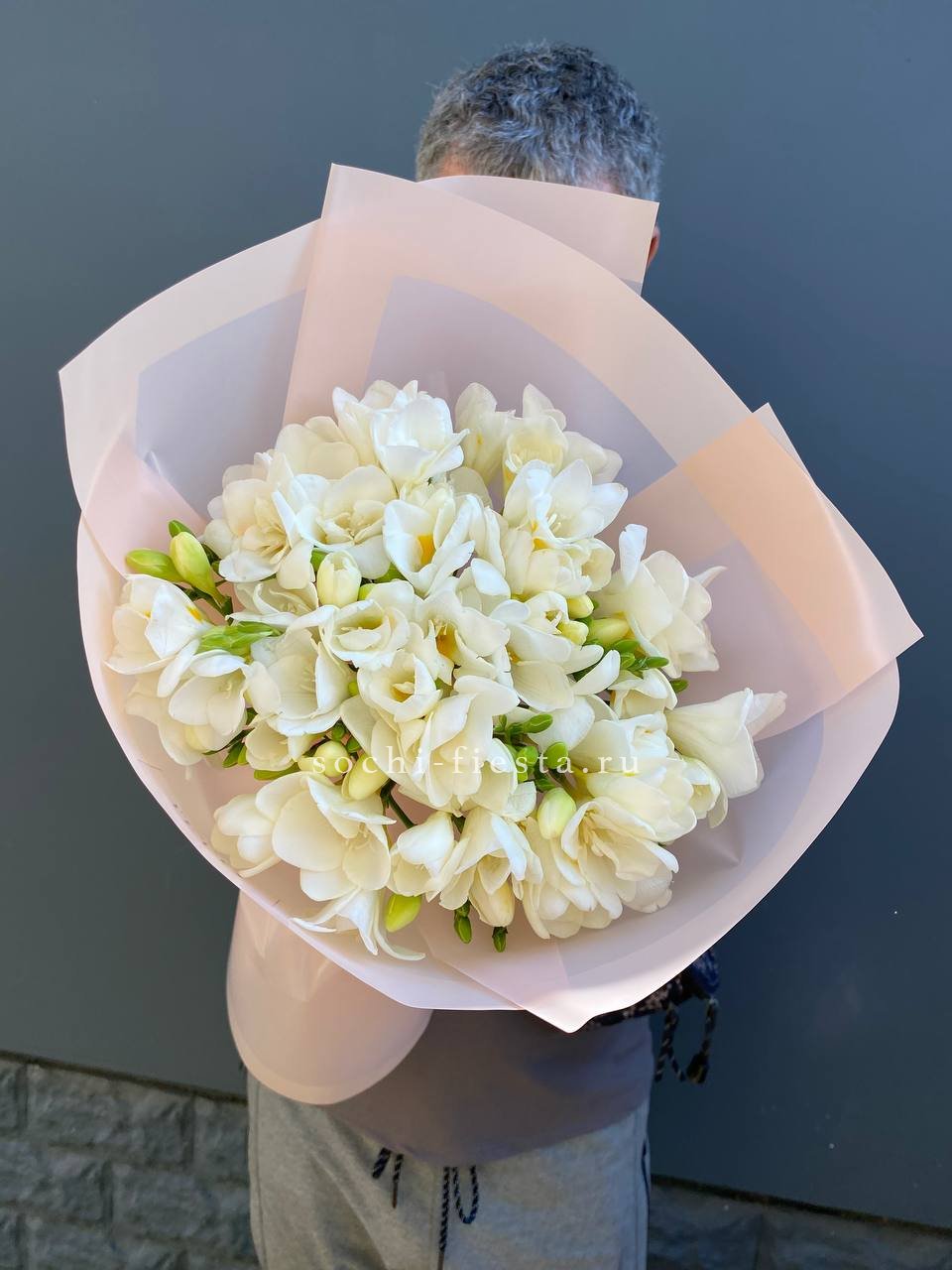


Mono bouquets in Delhi: Shanti Path tulips and one flower for good news
Mono bouquets in Delhi share the shelf with the city's own flower moment: for its Tulip Festival, NDMC planted 5.53 lakh bulbs, many grown in India, on the Shanti Path lawn in Chanakyapuri, opening in late February. A mono bouquet holds one flower and nothing else, so the real choice is which flower, and for what.
Tulips for the weeks Shanti Path and Amrit Udyan are in flower
Spring in Delhi runs from the middle of February to the start of April, and the bulbs that flower here all crowd into that short window. In the same weeks, Amrit Udyan at Rashtrapati Bhavan opens to the public, from early February to late March, filled with tulips and roses; entry is free with an online booking, and the garden is closed on Mondays.
Bulb flowers and ranunculus are cut in spring, while a greenhouse tulip can be cut anywhere from December to May. That calendar is why February and March are the natural months for a single-variety bunch of tulips, hyacinth or ranunculus in Delhi: the flower is simply at its most plentiful then, not because of where it was grown.
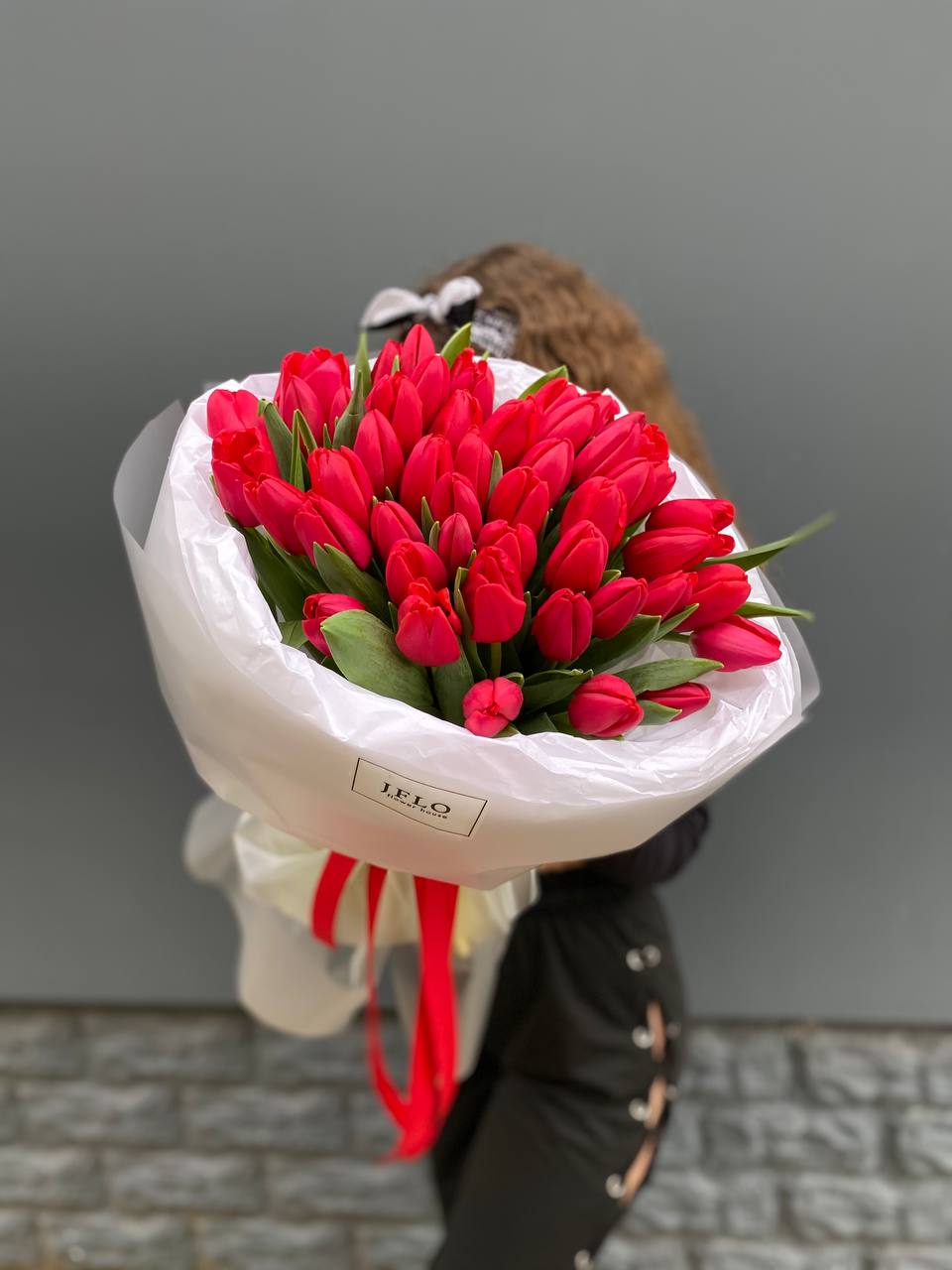
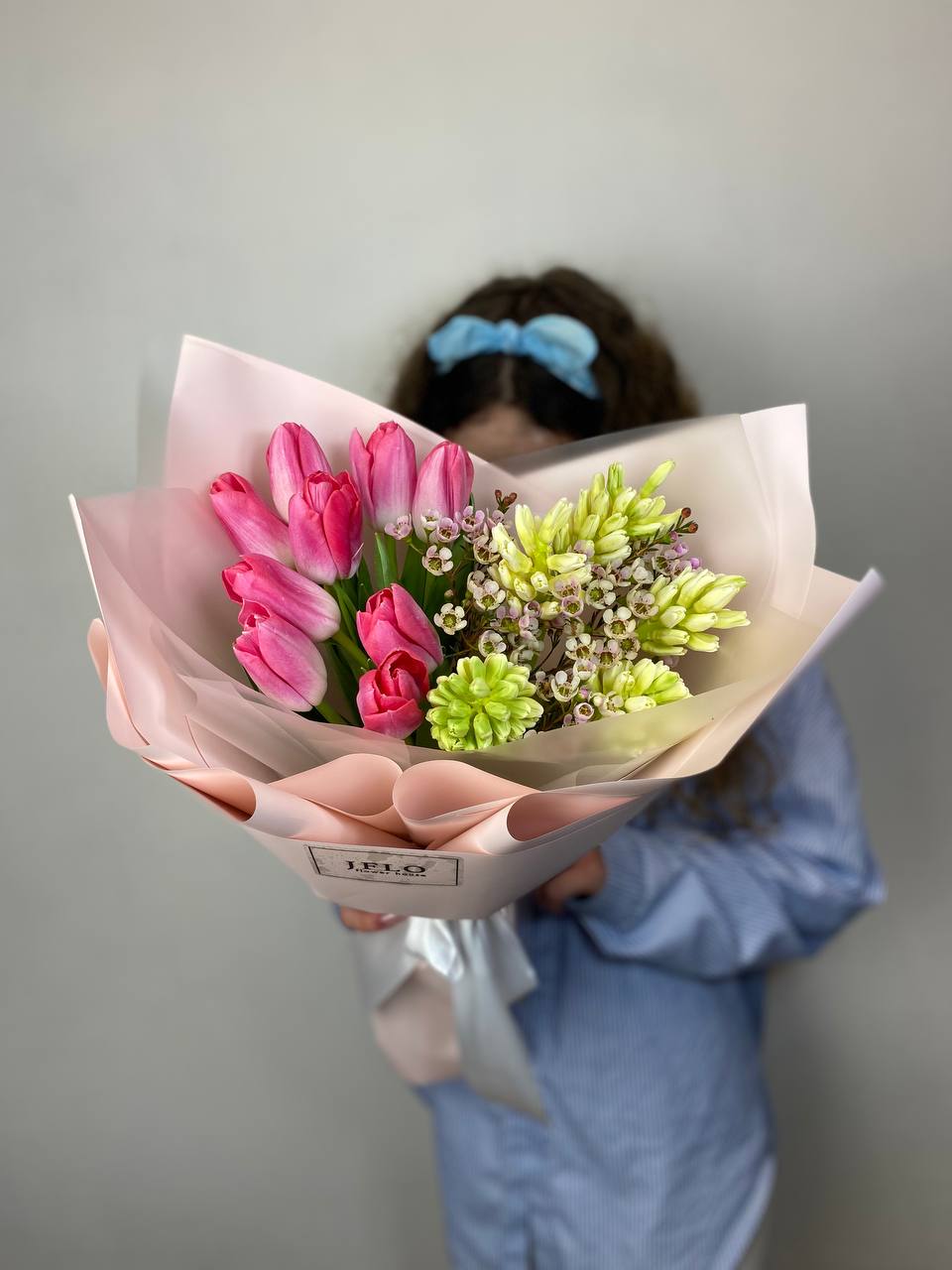
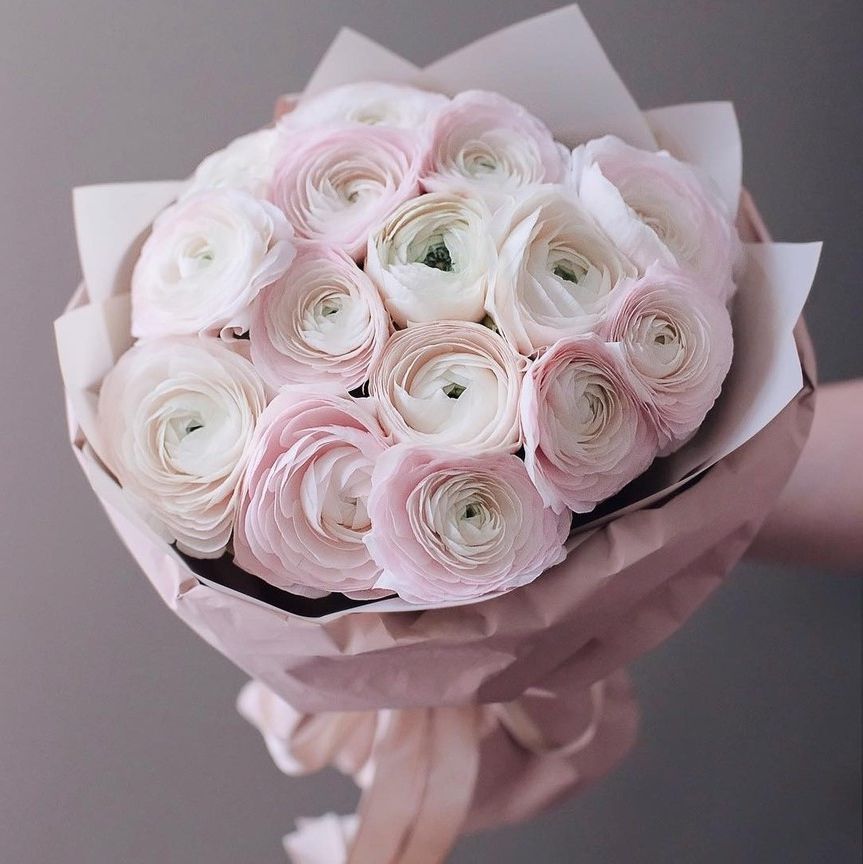
A bunch of single-variety tulips wrapped in kraft paper is light enough to carry in one arm and easy to hand over at the door without rearranging anything. Where the gift is about counting rather than colour, something like 9 Ranunculus makes that point on its own. Hyacinth works the same way, one flower and one scent, for a smaller gesture.
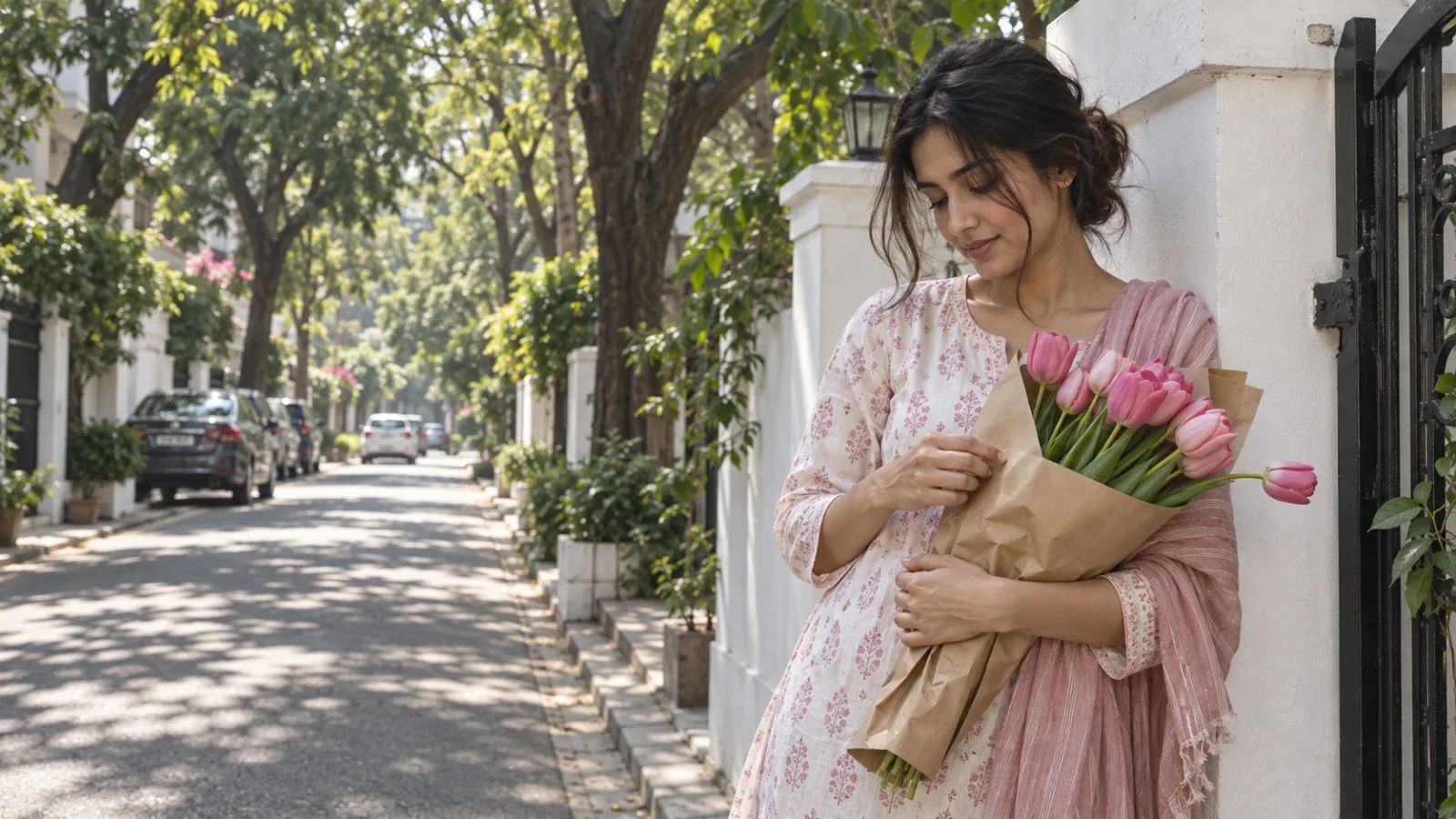
One flower for good news in Delhi, and the ones kept for loss
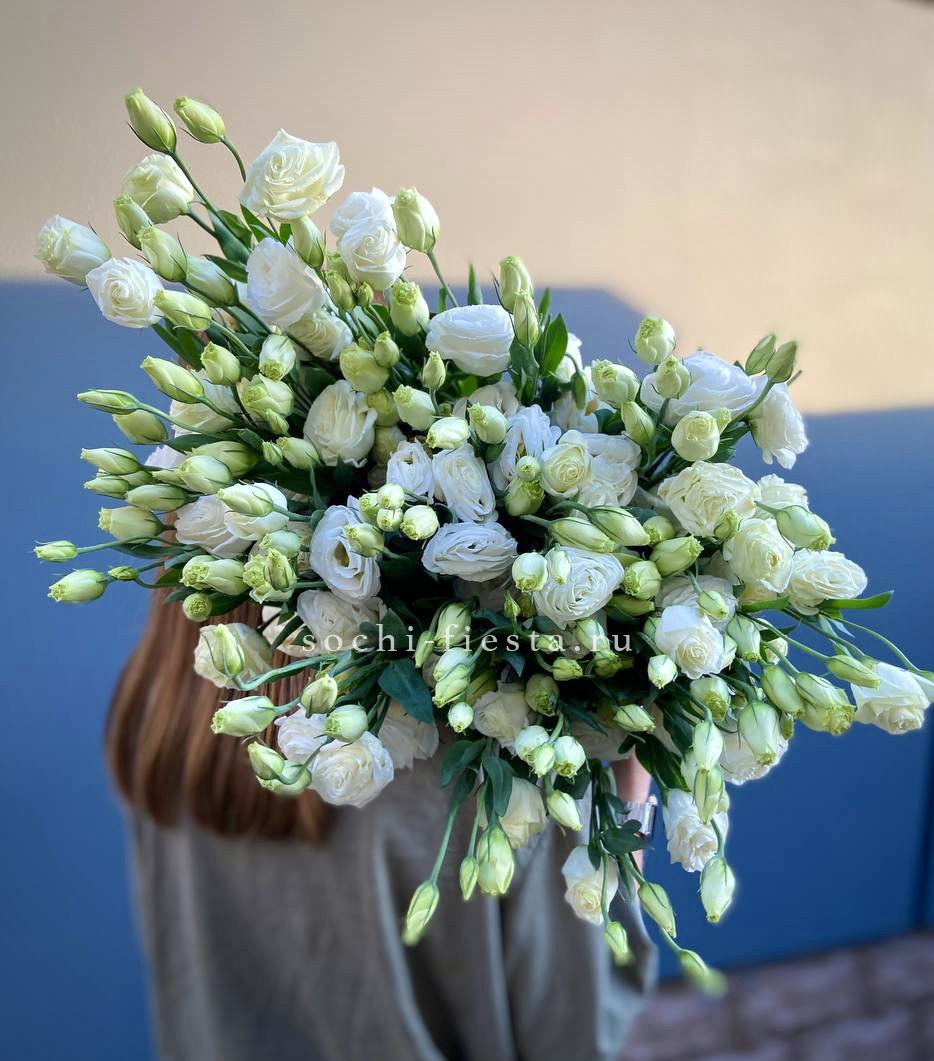
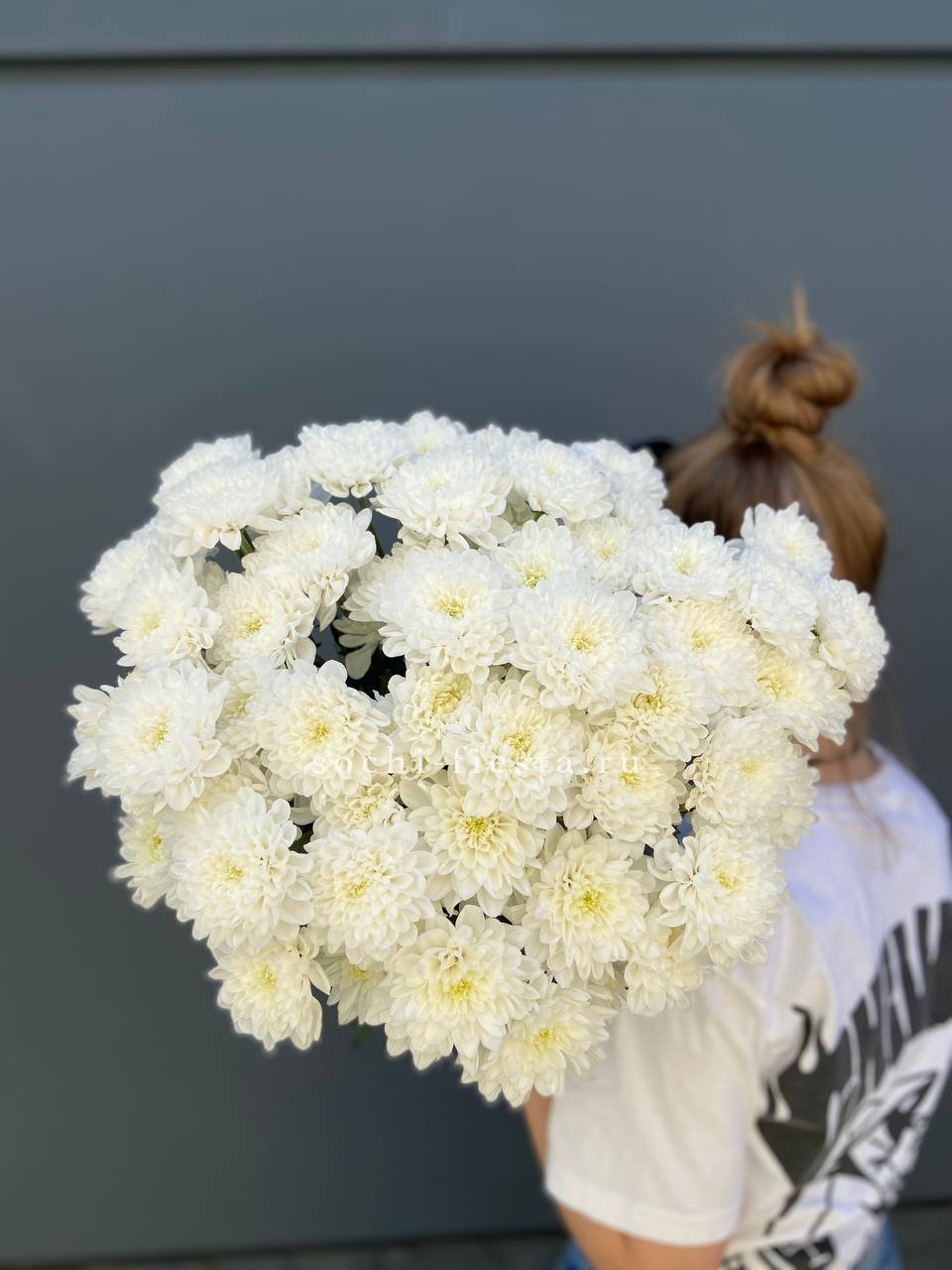
Chrysanthemums carry the opposite meaning. Guides to Indian gift etiquette link chrysanthemums, white flowers — white garlands above all — and frangipani to funerals and mourning, so they sit oddly in a bunch meant for a birthday or a housewarming. That is the appeal of mono bouquets in Delhi: one flower carries the whole message, so getting that flower right matters more than usual.
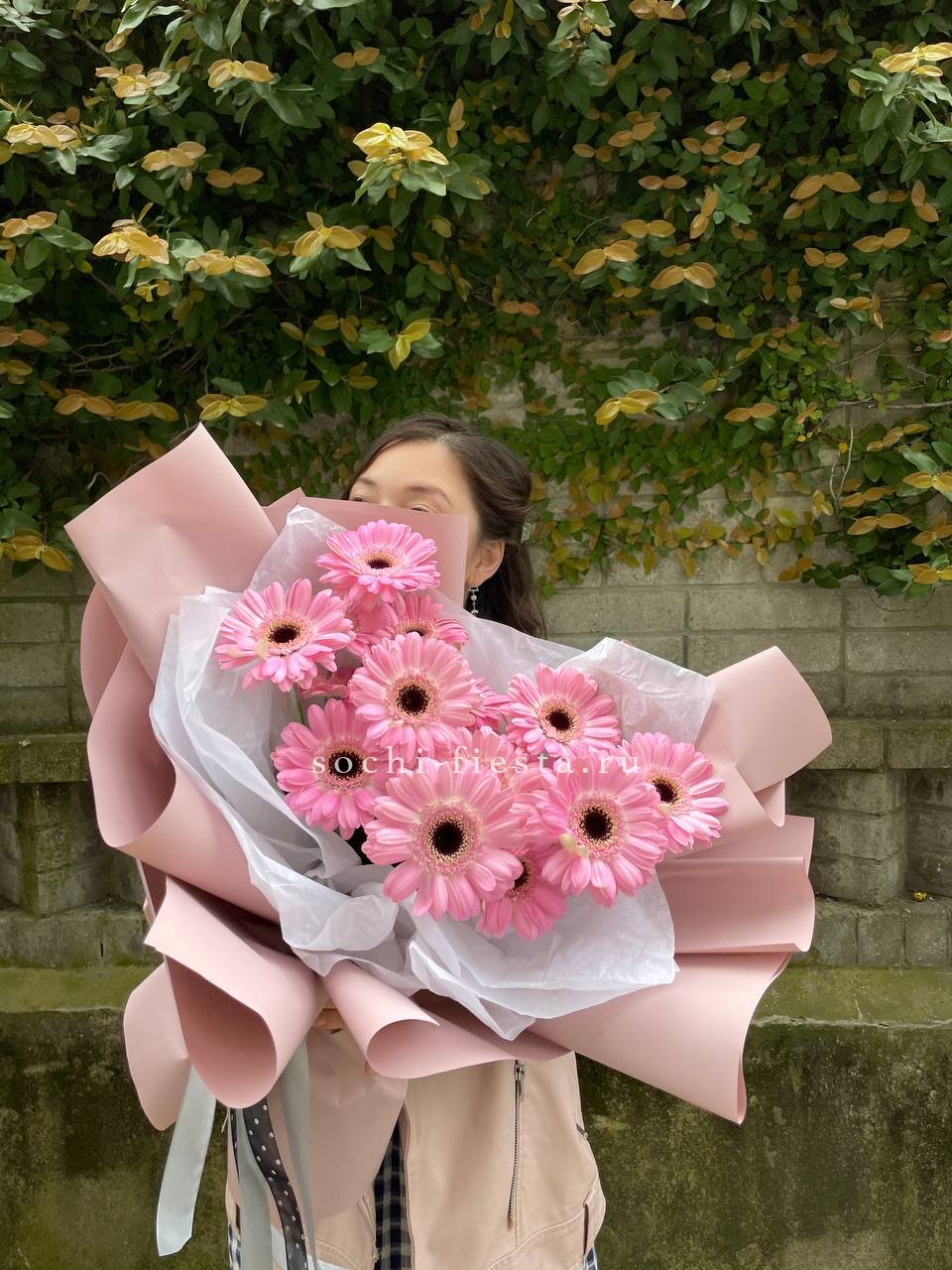
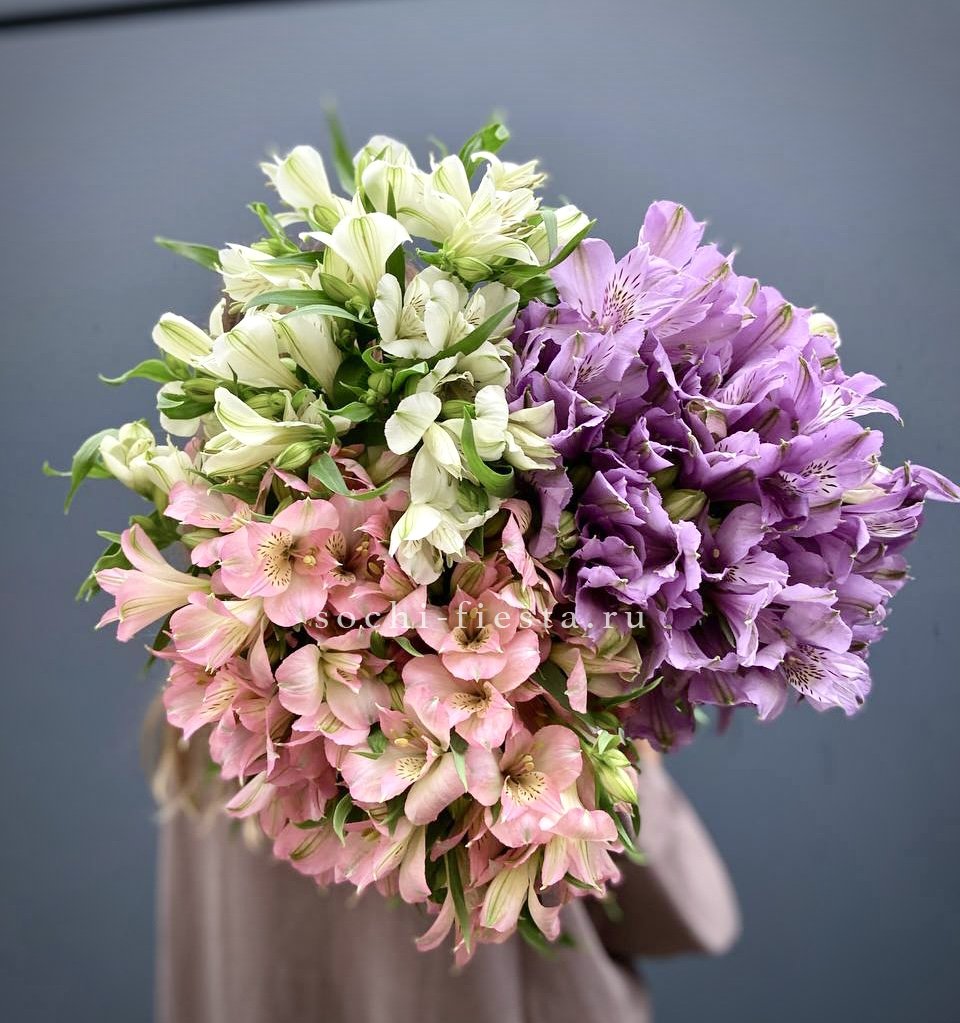
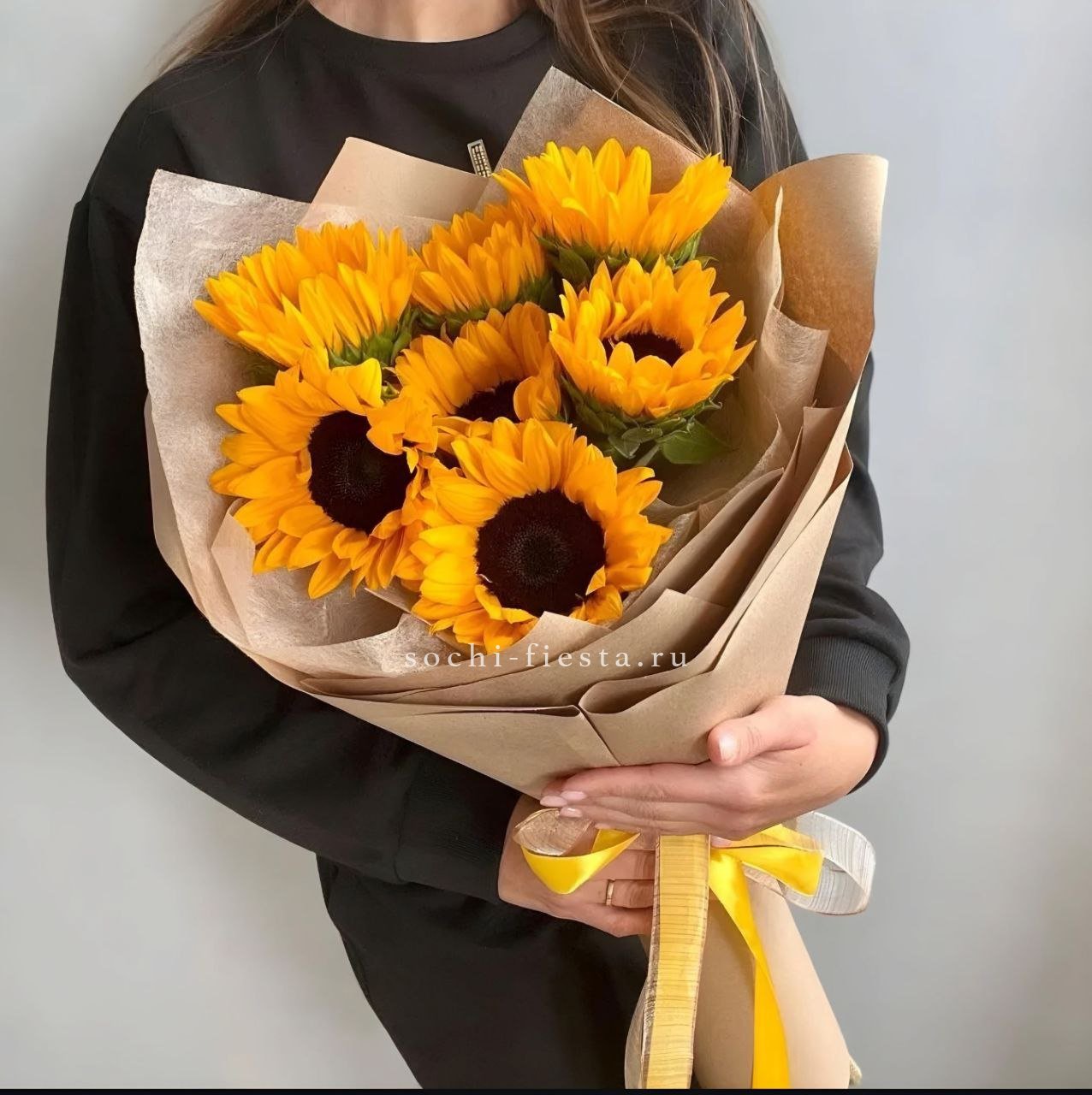
A colourful single-variety bunch reads as good news instead: a bunch of gerberas, sunflowers, tulips or alstroemeria in one shade says the visit is a happy one without any need to explain it. White on its own is not the safe, all-purpose choice it might seem, so it is worth keeping for occasions where white is clearly wanted rather than reaching for it by default.
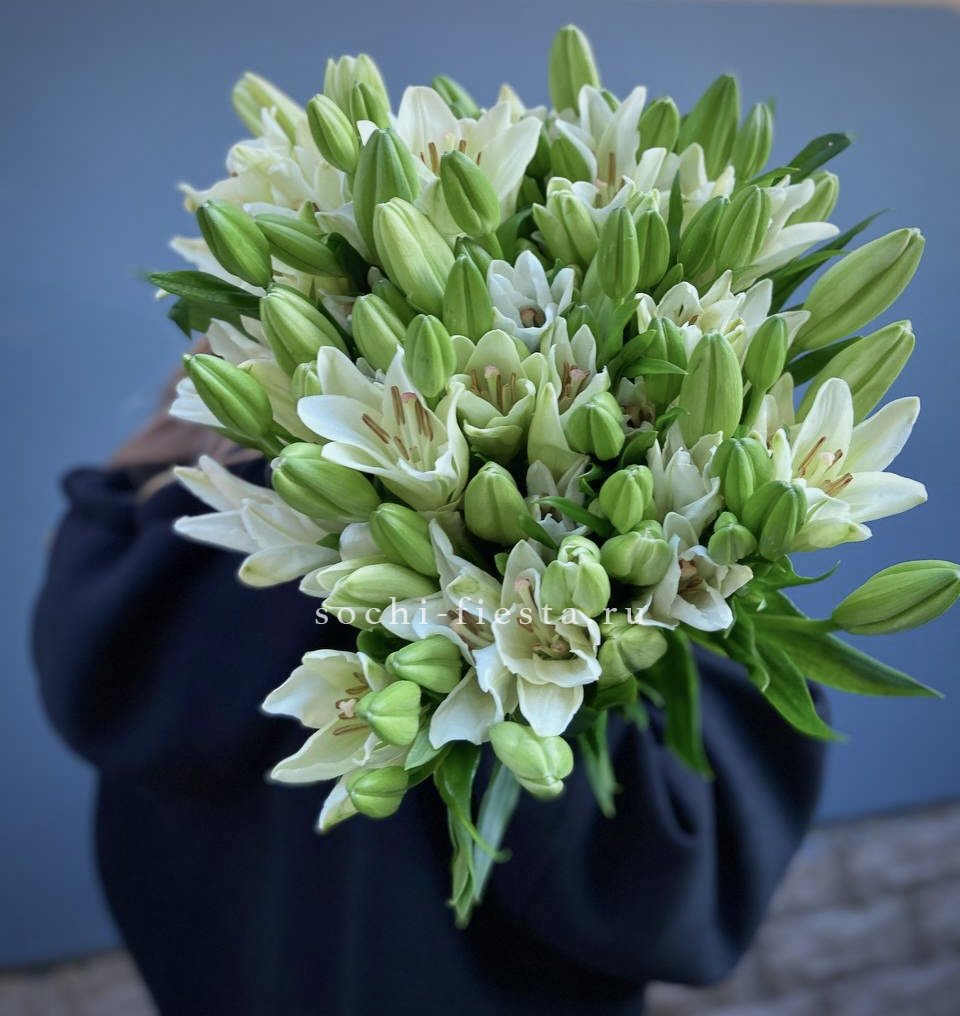
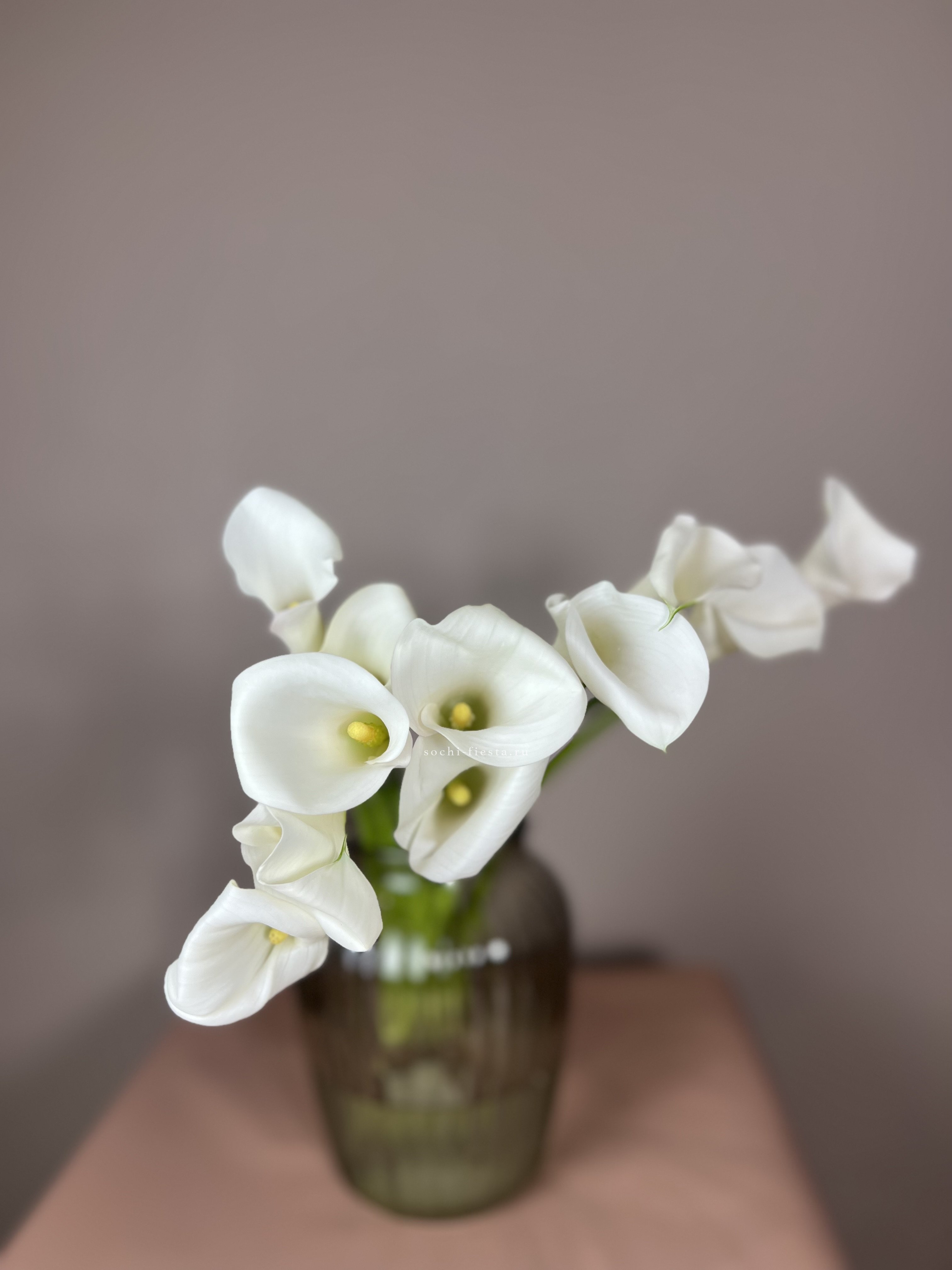
Lilies sit apart from this. Sources disagree on what a lily signals in Delhi, so the honest approach is to choose by colour and leave any symbolism aside, white, pink or yellow, depending on who is receiving it.
The wrapping carries meaning too, even around one flower. Red, maroon, gold, yellow and green paper read as festive, while black and plain white are worth avoiding on a gift. However the bunch is wrapped, it is handed over with both hands, or with the right hand alone.
Mono bouquet delivery in Delhi, and a hydrangea's first hour
Every mono bouquet is put together to order: the florist buys the flowers only after the order is paid for, and photographs the finished bunch before the courier sets off, so any change can still be made at that point. A flower that is out of stock is swapped for something close in shade and price, and that swap is visible on the photo sent to the buyer. Most orders are handed over the same day they are placed, though the exact timing is shown on the bouquet's own page. Delivery is free in the centre; other districts have a fixed zone price, listed on the delivery page.
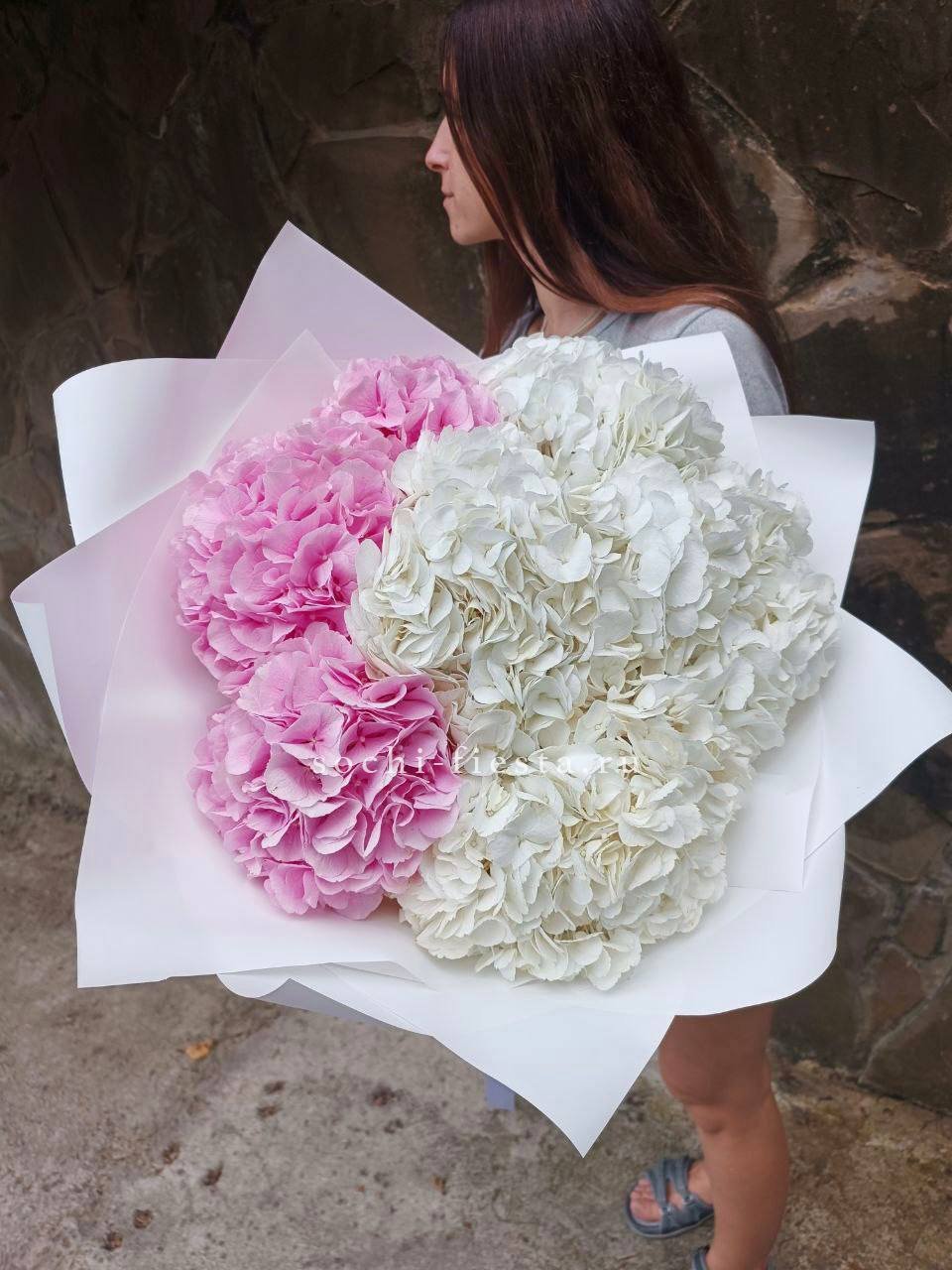
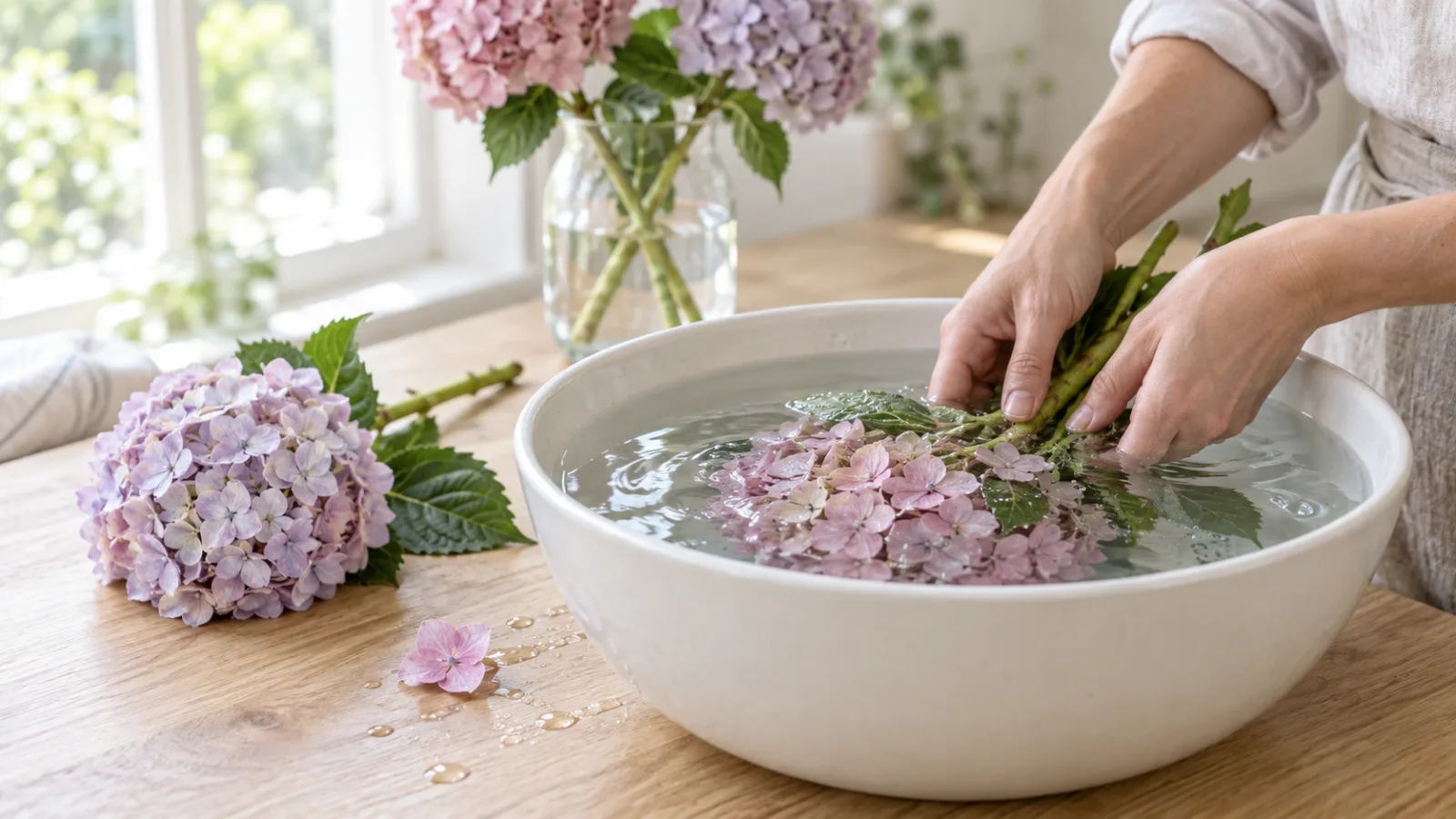
Hydrangea needs the fastest attention once it is indoors. Delhi's dry April brings humidity down to around twenty-five per cent, and a hydrangea drinks more water than most cut flowers, taking some of it in through the petals rather than only through the stem. A head that has drooped goes face down into a bowl of cool water for an hour or two, never longer than four or five, and it comes back up on its own.
Choosing where to start is simple enough: a wilting hydrangea revives in a bowl of water, sunflowers carry a happy visit on their own, and the single-variety tulips are at their best while Shanti Path is still in bloom.