



Flowers in Hong Kong: from Flower Market Road to a Kowloon doorstep
Flower Market Road in Mong Kok has been Hong Kong's wholesale flower centre since the 1970s, when imported stems pushed out the local blooms once sold there, and more than fifty shops now run wholesale and retail over one counter. The street shows how the city buys flowers in bulk, but anyone ordering flowers in Hong Kong for one address cares more about the delivery time, the date and what the recipient expects.
Zones, timing and night orders: flower delivery in Hong Kong
Flower delivery in Hong Kong is priced by ring. In the centre it runs free between 7 am and 11 pm, and two flat zones cover the rest of the territory:
- Inner districts — Sheung Wan and Sai Ying Pun, Tsim Sha Tsui and Yau Ma Tei, North Point and Quarry Bay, Kowloon City and Wong Tai Sin, Aberdeen and the Southern District.
- Outer districts — Sha Tin and Tai Wai, Sai Kung and Tseung Kwan O, Lantau and Discovery Bay.
An express order needs a bouquet already in stock, and the bouquet card shows the delivery time once the order is confirmed. Between 11 pm and 7 am delivery still happens by prior arrangement, and a booked date and time slot reaches any zone outside the express clock. The zone fee is charged once per address, and scheduled-delivery charges sit on the delivery zones and terms page.
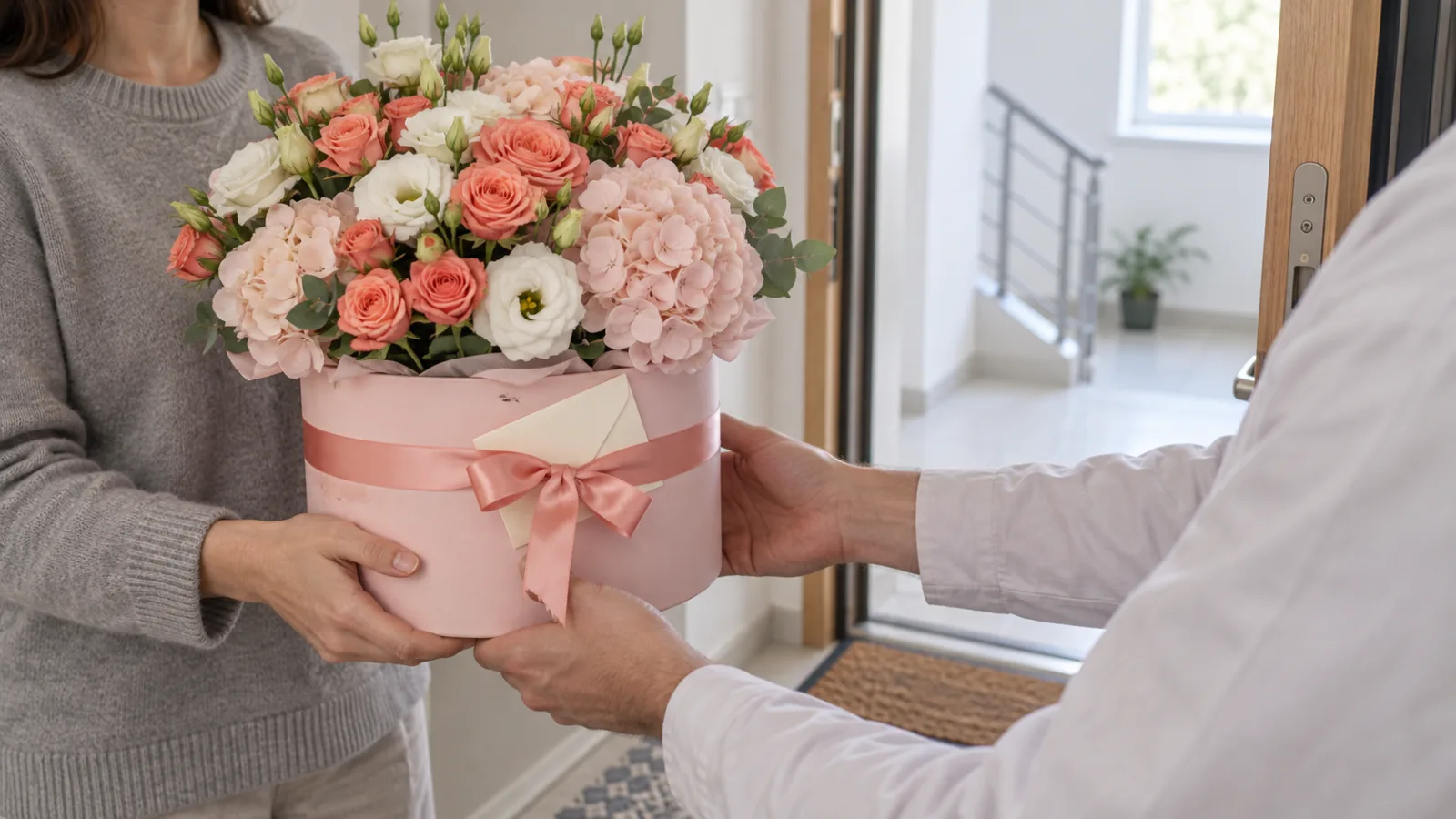
Mono bouquets and roses sit in one price band, and flowers in boxes sit in another. Before the courier leaves, the florist photographs the finished bouquet and sends the picture ahead.
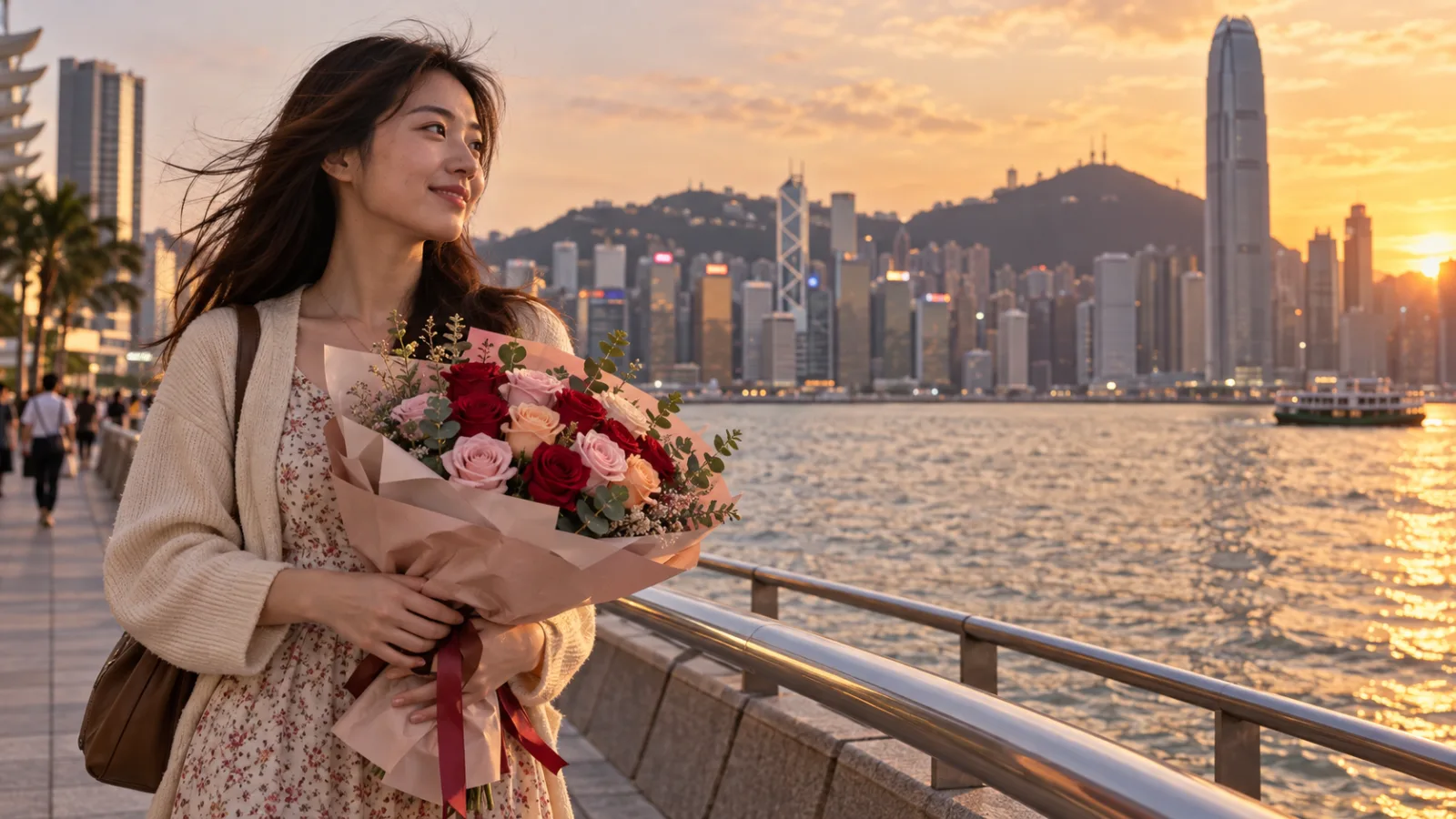
For a hotel, the courier asks for the guest's surname as it appears at check-in and the room number if known; some hotels send the box up, others hold it at reception. Wrapped stems do not enjoy that wait, so flowers in boxes, with stems seated in wet foam, is the safer format for a lobby handover.
An office needs the company name and floor rather than a room number. Where a tower runs a pass system, the box stays at reception and the sender is told who signed for it. A hospital address is worth checking first: wards vary in whether they allow fresh flowers, and where a ward says no, the alternative is the nurses' station or the day of discharge.
Chek Lap Kok, roughly 30 kilometres from the centre, is served on request. The courier waits at the arrivals gate holding a sign with the recipient's name.
Ordering from outside Hong Kong changes nothing about the process. Prices show in Hong Kong dollars, and the currency switch on the site is there to read the total, not to charge in it. Visa and Mastercard payments are converted by the card issuer's own bank, with nothing added locally, and a phone number for the recipient is enough to place the order.
Mainland growers, Dutch stems and a duty-free port
Most flowers sold in Hong Kong arrive from growers on the Chinese mainland, with further shipments from the Netherlands, Malaysia, Vietnam, Japan and other origins. As a duty-free port, Hong Kong lets cut flowers move through without import tariffs.
Local growing has mostly stopped. Since 2002 a farmers' market has opened for one week each year next to Mong Kok Stadium around Lunar New Year, and by 2025 it had shrunk to fewer than 20 stalls. A bouquet ordered today is assembled to order from imported cut flowers, and the florist's photo before departure is the only look a buyer gets at what arrived.
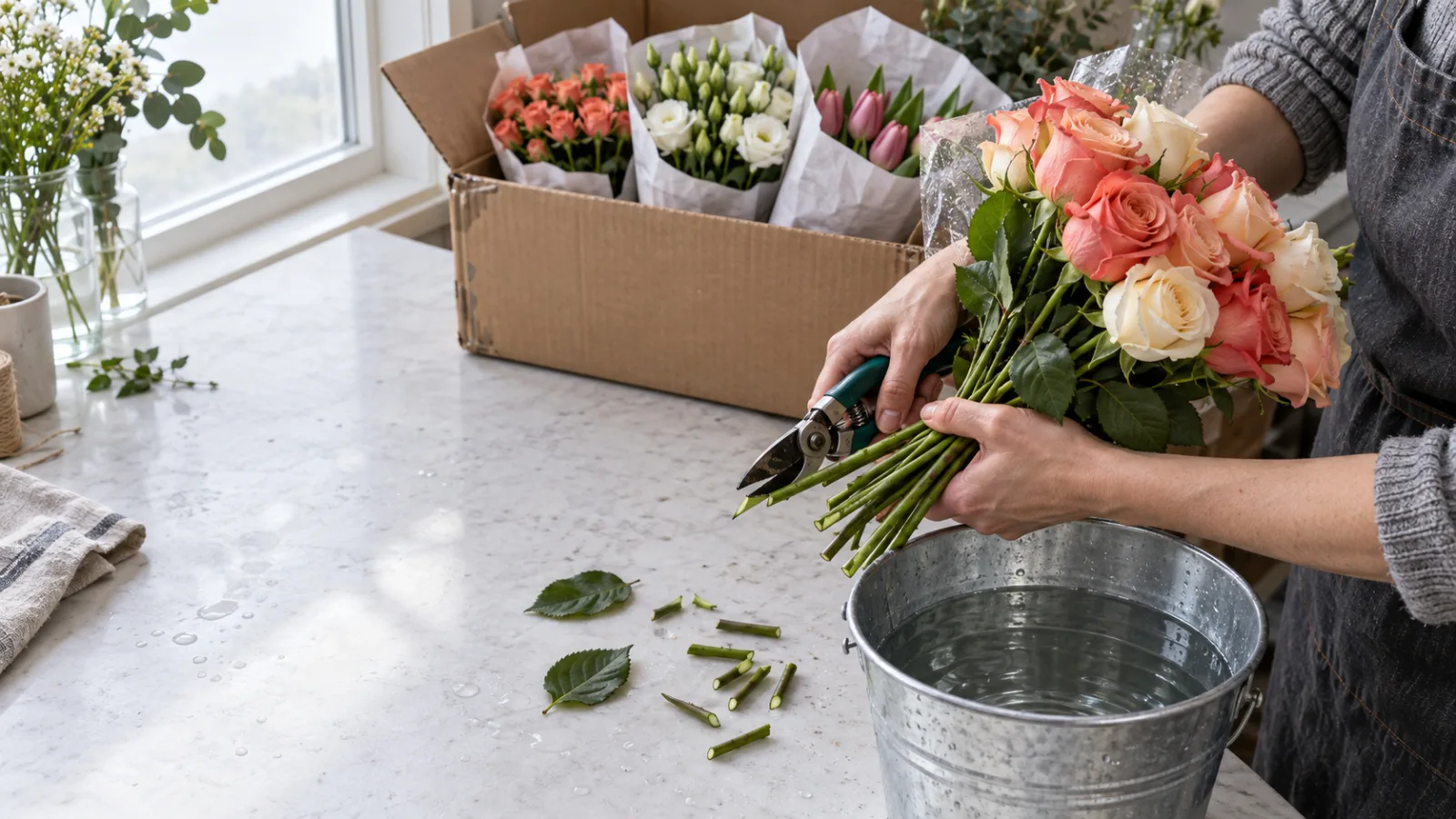
The Cantonese word for four, sei, sounds close to the word for death, and the same syllable sits inside fourteen. Both numbers are avoided in a bouquet, so when choosing mono bouquets or a stem-counted bunch of roses, the number in its name is worth a glance before checkout.
Colour carries its own rules. White chrysanthemums belong to funerals, and white more generally, including white lilies, is kept away from birthdays, anniversaries and weddings; the catalogue's 19 White Ecuadorian Roses bouquet is one to save for a different occasion. For a celebration, red, pink and peach are the safer choices.
Lunar New Year, a Valentine's inside it and carnations in May
Lunar New Year is a moving holiday, with the date shifting each year, and Victoria Park runs its flower fair in the days before it, selling narcissus, peonies, blossoming peach branches and kumquat trees. The crowd peaks close to midnight on New Year's Eve, in what locals call hang nin siu. Valentine's Day, on 14 February, sometimes falls within Lunar New Year week, since the lunar calendar moves each year, and the two occasions can overlap.
Mother's Day is built around carnations and is the busiest day of the year for local florists. On days like this the delivery window widens, so booking ahead matters more than usual.
A flower stand sets up at HKU during graduation season, which runs from October to December. Wedding bookings cluster in October to December and again in February to April, with couples choosing the date from an almanac first.
Typhoon signals, 78% humidity and air-conditioned flats
Hong Kong's average humidity sits at 78%, summer afternoons run to an average high of about 31°C, and June alone brings around 492 millimetres of rain. Indoors, the problem flips: air conditioning dries the air a cut flower is trying to drink from.
Care here is simple: keep the vase away from the window and the air-conditioning draught, and change the water every day or two. A box or basket built on soaked foam skips the vase question altogether; the foam just needs watering every day.
Typhoons run from May to November and peak in July and September. When the Observatory raises Signal No. 8, the city all but stops, and delivery times for that day are not worth promising in advance. Winter is the calmer season for a bouquet, with daytime temperatures closer to 16–18°C.