


Forever roses in London and the glass jar a London doctor sealed in 1829
Forever roses in London often come under glass, in the city where in 1829 the doctor Nathaniel Ward found a fern and grass sprouting inside a sealed jar that stayed shut for about four years. Sellers say a rose kept this way sits nearer the top of its one-to-three-year life, and the guide below follows the same order: dome, case or box, then colour, then how many roses to send. How London's damp winters and radiators treat flowers is a question of its own, worth a look before you settle on a dome.
A rose that is real, but never drinks water
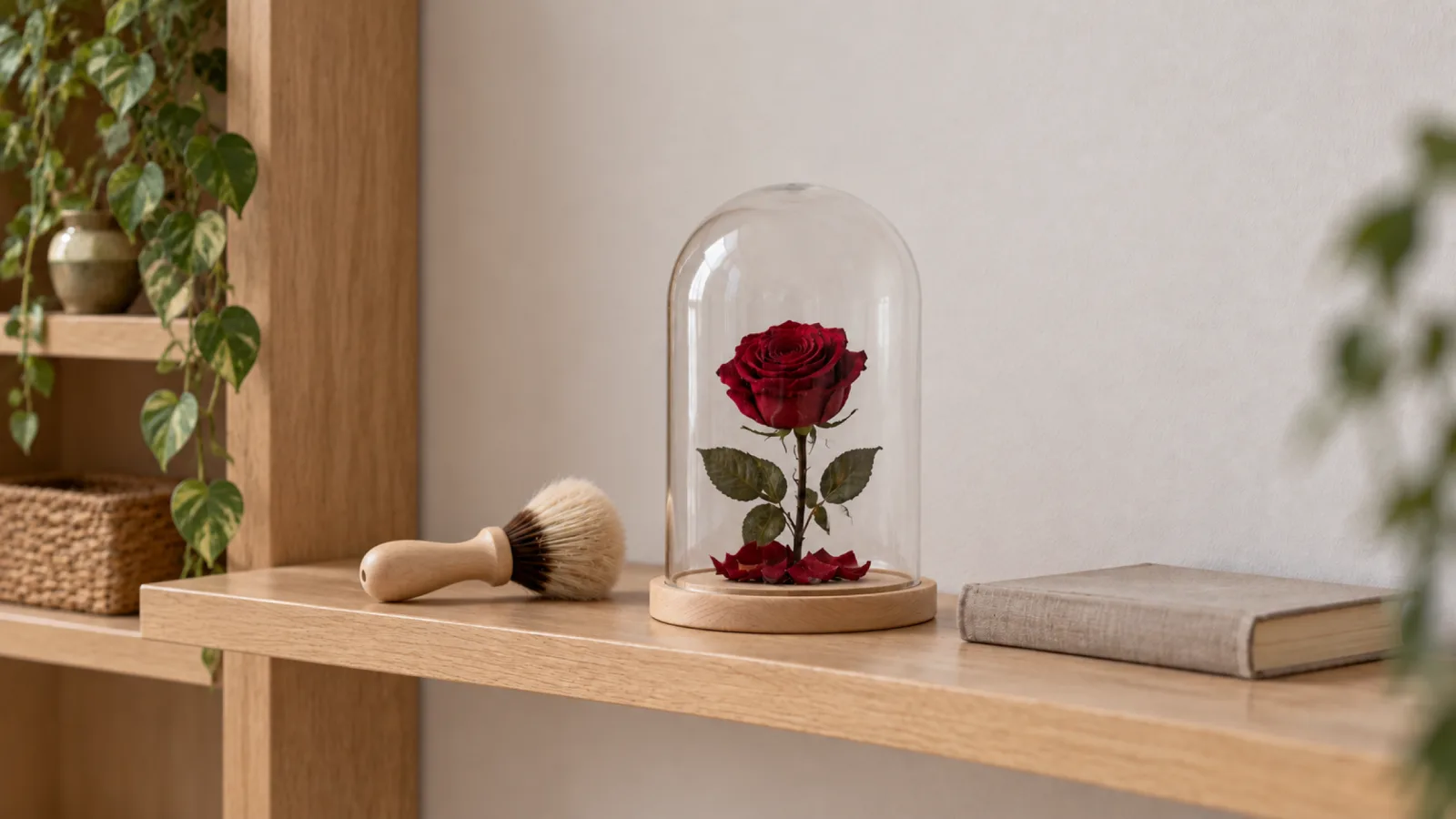
A sealed glass jar from 1829 held a fern and grass that kept growing for about four years, until the lid rusted through. Forever roses in London borrow that era's glass for their domes, though not its moisture.
A forever rose asks for the opposite. It is a real rose, cut from the plant at its fullest opening, with its sap replaced by a glycerine-based solution that leaves the petal soft rather than brittle. It is never watered or misted, and it is kept well away from splashes and damp rooms.
Choose a single rose under a glass dome or three together, and sellers describe a life running from one year to three, with a rose under a dome sitting nearer the longer end of that range.
Blue and purple roses never grow that colour in a garden; a dye goes into the same glycerine solution that preserves the rose, the method also behind black and gold forever roses. The result can be named outright, as with the Forever Blue Rose in Glass Dome.
Victorian flower dictionaries gave red a meaning of passion, pink something gentler and white purity, though no two books agreed on the full list, so the colour is still mostly a matter of taste.
Direct sun fades that dye, so a dome does better on a shelf out of the window's reach than on a sunny sill. Dust on the glass comes off with a soft, dry brush or a can of compressed air, never a damp cloth.
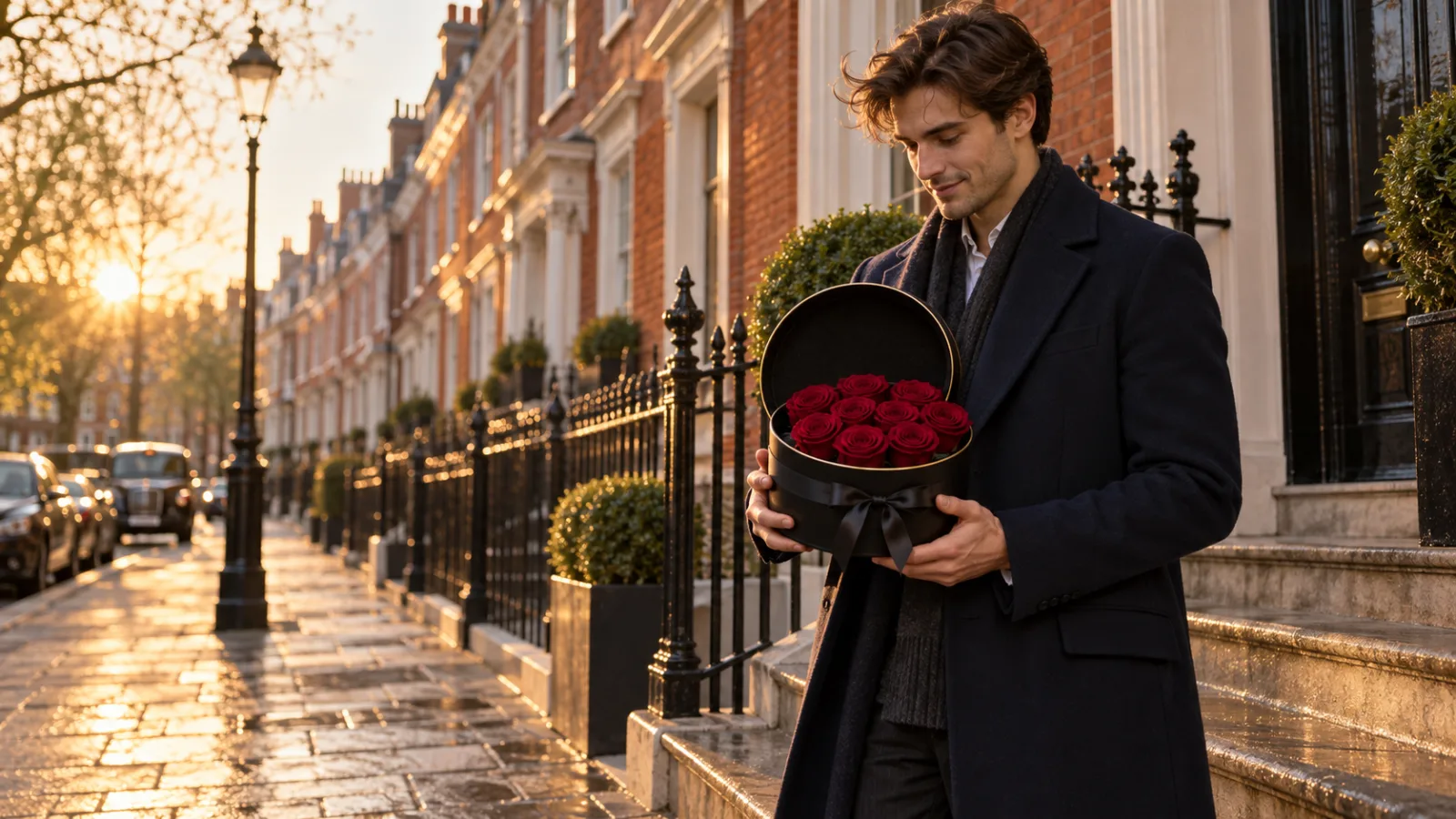
Velvet hat boxes echo the shape of the boxes a milliner once sent a hat home in. The roses inside sit with no vase and no water, already arranged, which suits a box that might travel or simply stand on a shelf; the Nine Forever Red Roses in Velvet Hat Box take that idea as far as one colour can go.
A clear acrylic case shows the roses through its walls instead of hiding them, so the number inside becomes the real decision, from a small handful up to a large cluster.
Britain keeps no rule about even or odd numbers of roses, and a dozen is as ordinary a choice here as any other.
A heart-shaped box turns the format itself into the message, and the Thirteen Forever Red Roses in Heart Box is sold under that name, needing little more explaining.
Forever roses delivery in London is free within the city centre. The florist photographs each arrangement before the courier sets off, and most orders are delivered the same day they are booked, with the exact window shown in the product card. Zones and other details sit on the delivery page. The quickest way into the choice is still the box itself: a dome for one rose or three, a case for a fuller cluster seen from every side, or a hat box for roses that arrive already arranged.