



Flowers in Los Angeles: from the 5 am market to a bouquet at the door
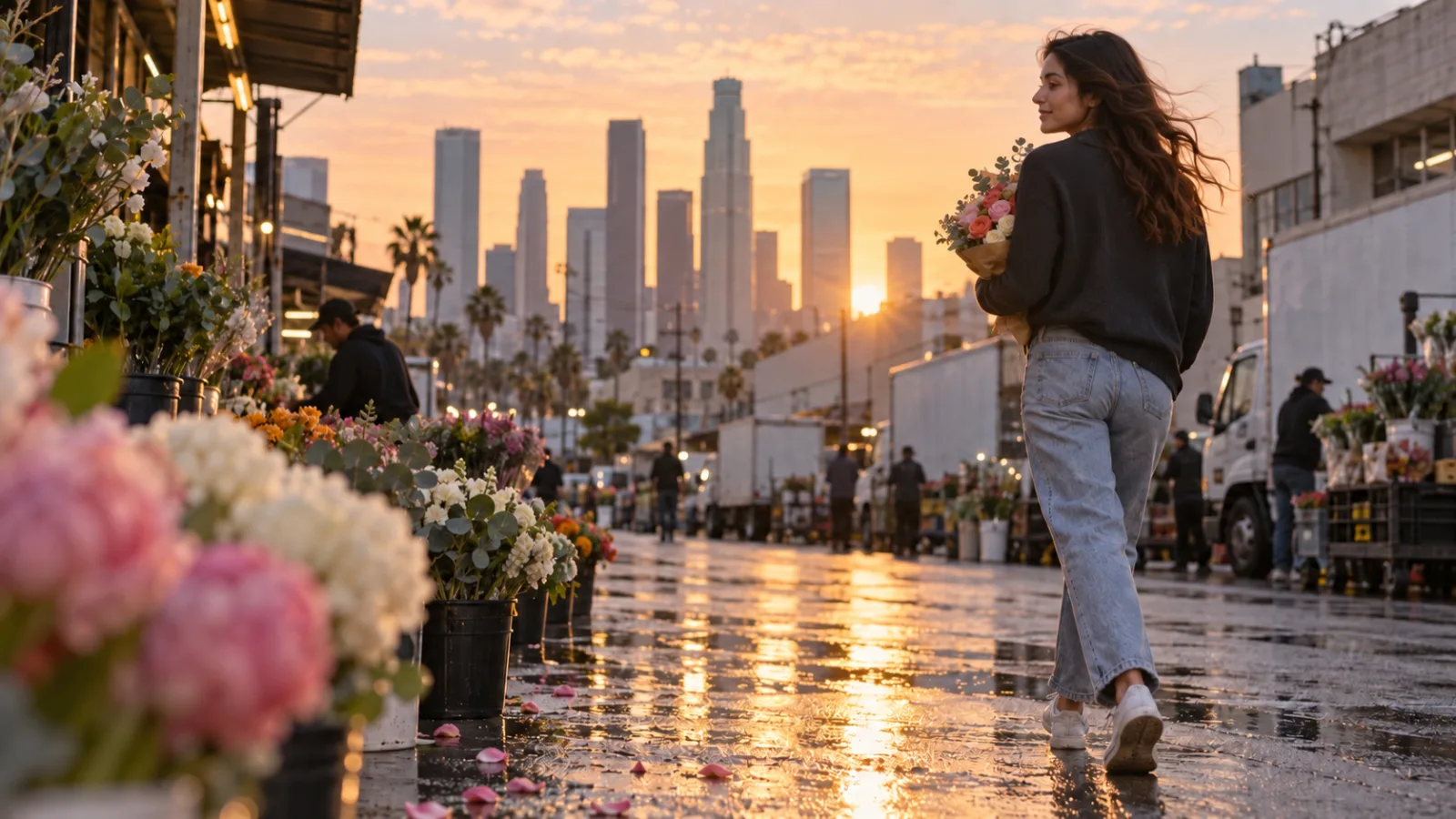
The Original Los Angeles Flower Market on Wall Street opens its doors at 5 am, and the blocks between 7th and 9th Street hold nearly two hundred wholesalers, the largest wholesale flower district in the United States. Most of the cut flowers sold in the country still arrive from abroad, though, so choosing flowers in Los Angeles starts with the stem's route, the season and the address, not with the market itself.
Where the flowers in Los Angeles come from
The Flower District sits in Downtown, inside the Fashion District, running roughly from San Pedro Street to Maple Street. Two historic markets face each other across Wall Street.
The Southern California Flower Market was founded by Japanese-American growers and incorporated in 1912. The Original Los Angeles Flower Market across the street was founded by European immigrant flower growers. Both still open before dawn and close by mid-morning; the public gets in for two dollars, and the market is shut on Sundays.
Los Angeles buys into a national picture that leans heavily on imports. Around eighty per cent of the cut flowers sold in the US come from abroad, and Colombia and Ecuador together account for roughly eighty-five per cent of that volume. Miami is the country's main port of entry for cut flowers, and LAX ranks second. Flights into LAX bring stems from Ecuador, Colombia, the Netherlands, Thailand and Australia, while California itself grows more than three-quarters of the cut flowers grown domestically.
None of this changes how an order at JFLOO is filled: the flowers are bought after the order is paid for, and a photograph of the finished bouquet is sent before the courier sets off.
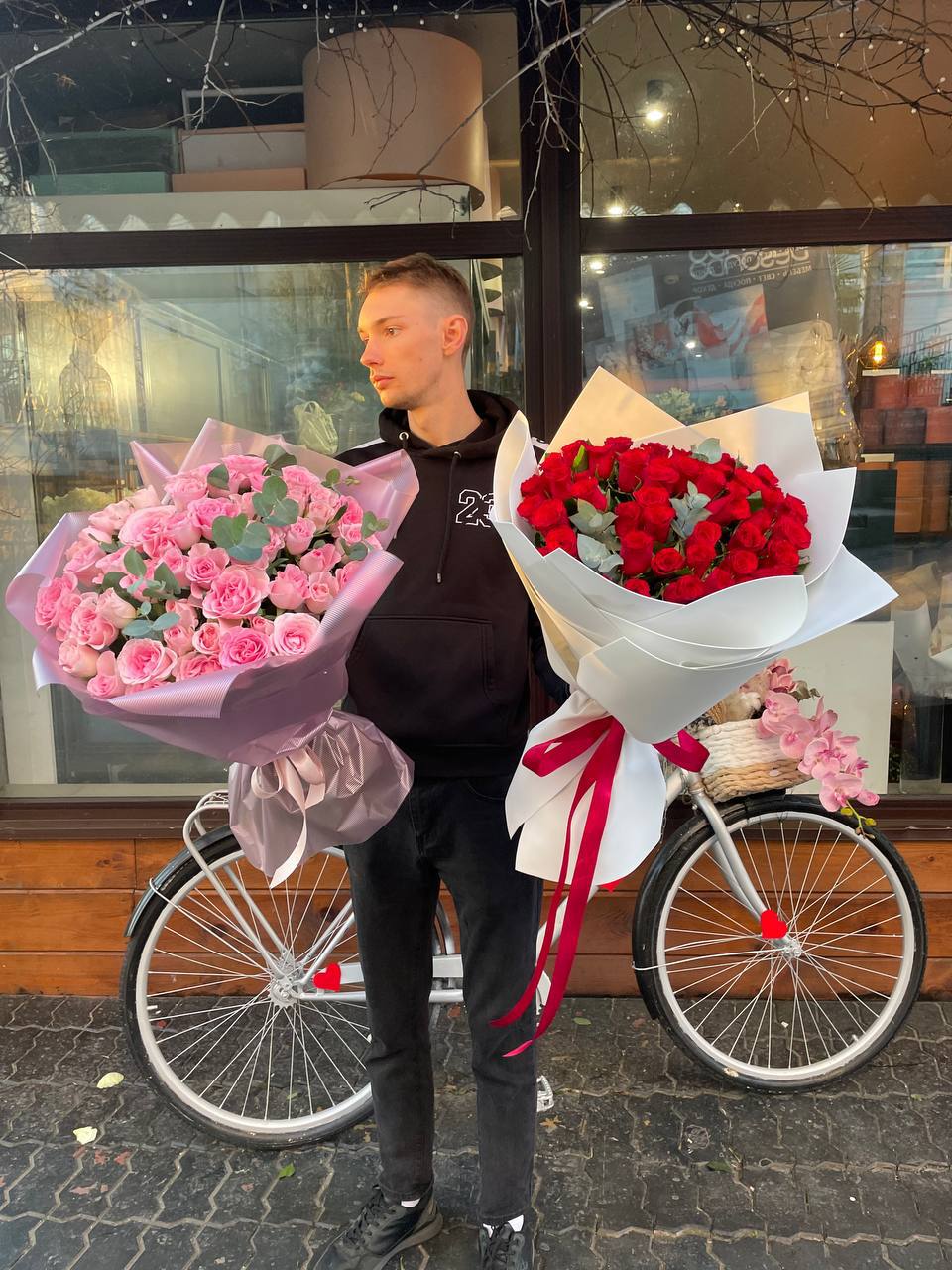
Ecuadorian roses grow at 2,800 to 3,000 metres, where the plants get around twelve hours of daylight every day of the year. French roses are not a variety at all: a florist takes an ordinary rose and turns the outer petals back by hand, which is why they open wider and look fuller than the same stem straight from the box. Between the two, roses stay in the catalogue every month.
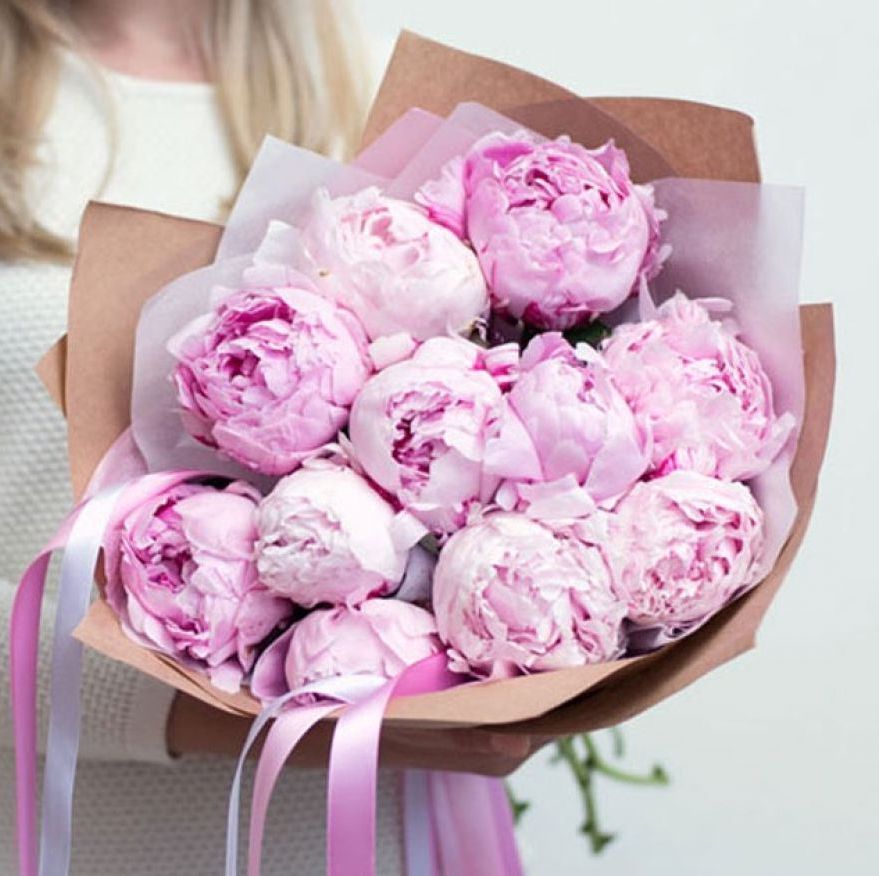
Peonies follow a real calendar rather than a marketing one. In the southern states, growers cut from late March into May. In the Northeast, the season starts later, from late May. Once both regions finish, growers in Chile fill the gap from October to December. The flower never fully disappears this way, only its price and origin change. Peonies bought in season, from a nearer source, generally cost less than the same bouquet built from the Chilean crop.
Lilies, gerberas and lisianthus come from greenhouses that run year-round, which makes them dependable for a fixed date. That reliability is exactly what mono bouquets built from one of these flowers are for: whatever the month, the variety is there.
Los Angeles has its own seasonal colour outside any shop window. Poppies cover the Antelope Valley from mid-March into April, jacarandas bloom purple across the city in May, and marigolds sell everywhere as Día de los Muertos approaches. None of these are flowers a florist delivers, but they set the backdrop the rest of the year works against.
Bouquet, box or basket: matching the format to an LA address
A paper-wrapped bouquet is built for one moment: handed straight from a courier into someone's hands. It is not built to sit and wait.
A box or a basket is different: the stems sit in soaked floral foam, so there is no vase to find at the other end. That matters at a hotel or an office, where nobody can be sure a vase exists, and it matters just as much at a hospital. Flowers in boxes and flower baskets both work this way.
What the courier needs changes with the address. At a hotel, the guest's surname as given at check-in and the room number, where known. At an office, the company name and the floor. Many hospital intensive care units in the US do not allow fresh flowers on the ward at all, so the order manager checks in advance; where the ward says no, the handover moves to the nurses' station or waits for the day of discharge.
Where the audience is a whole room rather than one person, armfuls spread flowers across a table without any container at all, and for a stage or a large event space, designer giants are built at a scale a hand-tied bouquet cannot reach.
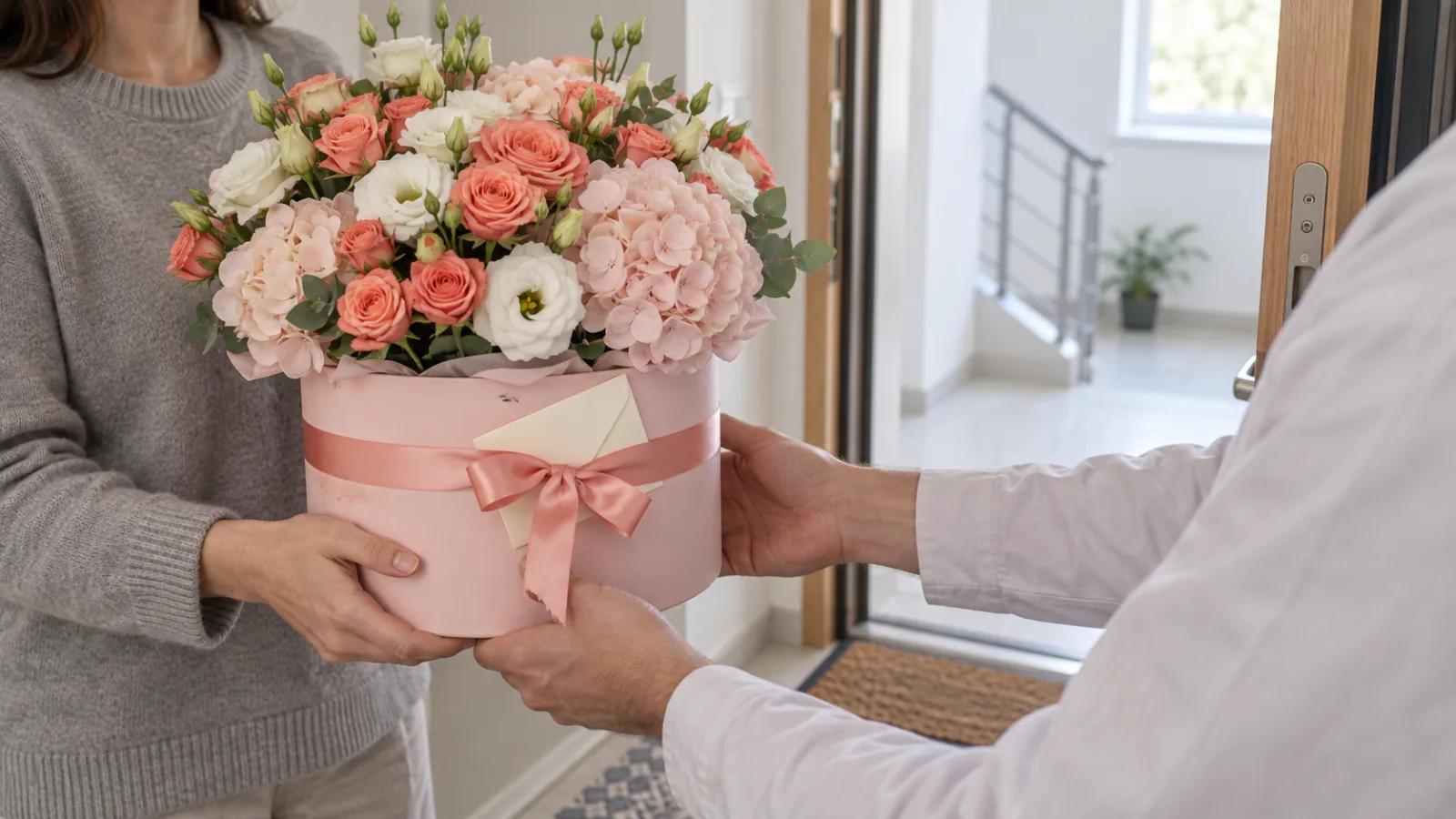
What moves a bouquet above its starting price is rarely the flower alone. A long-stemmed Ecuadorian rose costs more than a shorter one of the same colour. A box or a basket adds the cost of the container and the foam on top of the flowers. Demand around a fixed date also pushes wholesale prices up before it reaches the shelf.
Mother's Day falls on the second Sunday of May, and the scale of the season is real: in 2022 alone, customs officers inspected more than thirty-six million stems arriving through LAX in the run-up to it. Delivery windows widen on days like this, so ordering ahead is worth the extra day. A steadier way to keep the price down at any time of year is to buy what is in season and let the florist swap a scarce variety for one close in shade and price. The substitution is visible on the photo sent before the courier leaves.
Flower delivery in Los Angeles: zones, timing and the photo
Delivery is priced in three bands:
- Free, 7:00 AM–11:00 PM, from 45 minutes — the centre
- Paid delivery — Mid-Wilshire and Koreatown, Marina del Rey and Playa Vista
- Paid delivery — Pasadena and Glendale, Sherman Oaks and the San Fernando Valley, Long Beach and the South Bay, Orange County including Irvine and Anaheim
Outside these hours, night-time delivery to any zone runs by prior arrangement. All of the times above count from the moment an order is confirmed, and only apply to a bouquet the florist already has in stock.
A date and a time slot can be booked for any zone, and an exact delivery time to the minute can be arranged through the order manager for an extra fee. An address that falls outside the zones listed is not refused, it is simply priced before payment rather than after, and each tariff covers one address. The recipient is not called ahead of time unless the building is gated and needs advance notice to let the courier in; once there, the courier waits up to fifteen minutes.
Sending flowers to Los Angeles from another country
The order form asks for very little: a name and a phone number for the recipient, day or night, with no account needed. Without a street address, the recipient's phone number alone is enough for the manager to arrange the rest.
Payment is taken by Visa or Mastercard before the florist buys anything, and a card issued abroad is simply converted at the bank's own rate, with nothing added on top. Whatever was set at checkout, the date, the address, the message on the card, can still be changed up to six hours before delivery. Whether the sender's name appears at all is entirely optional.
Numbers carry no fixed meaning around flowers in the US the way they can elsewhere; a dozen roses is simply the classic order, not a rule. A Russian-speaking recipient may still read an even number of stems as something sent for a funeral, so an odd count is the safer default for that audience. In Korean and Chinese households, white chrysanthemums and lilies are associated with mourning, and the number four is avoided altogether.
Keeping a bouquet fresh between the coast and the Valley
Los Angeles is not one climate. The coastline runs six to eight degrees cooler than neighbourhoods just eight kilometres inland, and on a hot day the San Fernando Valley can run as much as twenty degrees hotter than Santa Monica or Venice.
- Santa Ana winds are hot and dry: do not leave the bouquet in a car or under an air-conditioning vent.
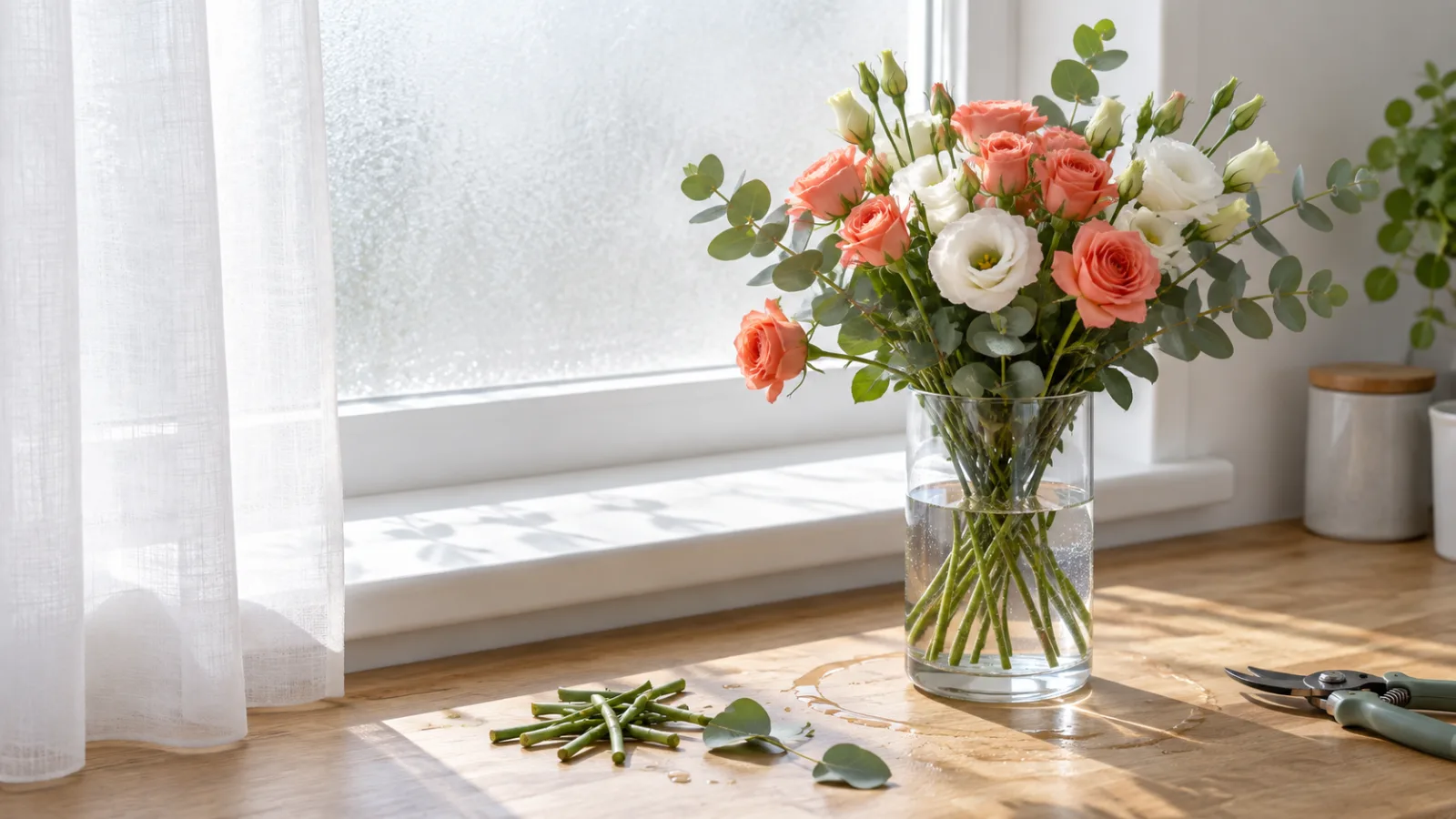
- Recut the stems at an angle with a clean blade after receiving them.
- Strip any leaf that would sit below the waterline before it rots and clouds the water.
- Change the water daily, and top up the foam in a box or basket rather than tilting it.
- Hydrangea that has gone limp is the exception: submerge the whole flower head in cool water for an hour or two and it usually recovers.
Lilies are toxic to cats, so a bouquet that includes them is best kept somewhere a curious cat cannot reach.